Categories
Book Reviews Literature Poetry

Some remarks on the Poetry of Alun Lewis

Postscript: For Gweno

If I should go away,
Beloved, do not say
‘He has forgotten me’.
For you abide,
A singing rib within my dreaming side;
You always stay.
And in the mad tormented valley
Where blood and hunger rally
And Death the wild beast is uncaught, untamed,
Our soul withstands the terror
And has its quiet honour
Among the glittering stars your voices named.

Alun Lewis is a poet whose writing is associated with the Second World War in which he died in Burma in 1944. It is then naturally a poetry of partings, separation and yet shows the tenderness which is expressed in the poem above. See also https://allpoetry.com/Alun-Lewis

However, it is the following lines which grasped my attention and which are shown here from a poem called Destruction:-
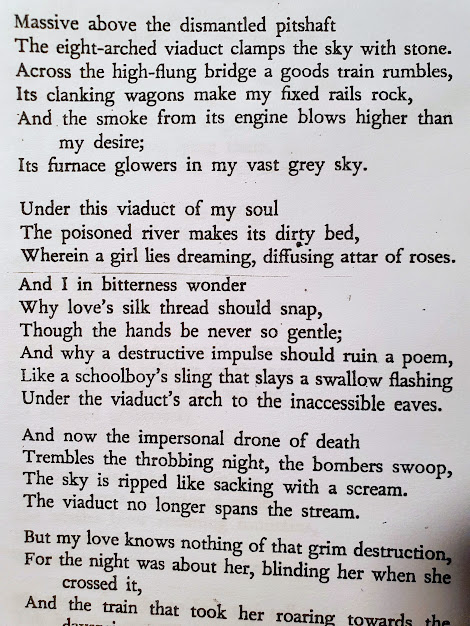
In this intriguing passage, the viaduct arches feels like an image, perhaps from a dream suggesting transportation, crossing a gulf as well as the industrial Welsh scenery which it also evokes. The polluted river contrasts remarkably with the dreaming girl. I discover that attar of roses, also called otto of rose, essence of rose, or rose oil, fragrant, colourless or pale-yellow liquid is an essential oil distilled from fresh petals. This is followed by a striking consideration of the fragility of the poet’s writing and how it can be affected by the sudden hostility of his own feelings- the destructive feelings which he acknowledges. This too is beautifully expressed in a line of tragic s sounds- “Like a schoolboy’s sling that slays a swallow.” A swallow that might be otherwise be free to rise to otherwise unreachable places. Lewis goes on to compare this to the devastation of war with words that must remind a contemporary reader of the current conflict in Ukraine-“the impersonal drone of death Trembles the throbbing night” so that possible connection is broken as the viaduct is destroyed.

This link for what is possibly Alun Lewis’s most famous poem is also worth exploring:-

https://shows.acast.com/the-daily-poem/episodes/alun-lewis-today-it-has-rained

Categories
Uncategorized

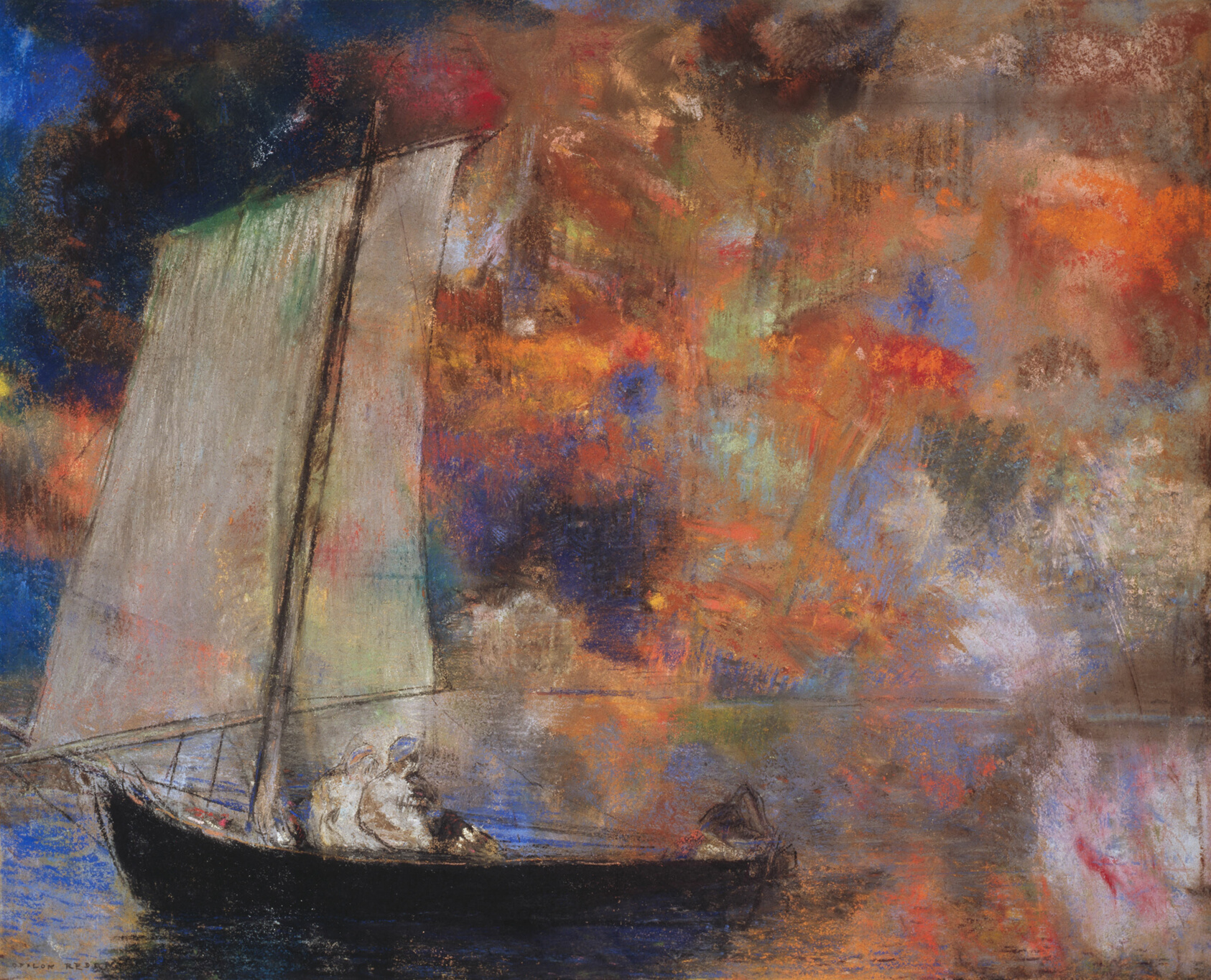
Odilon Redon: Flower Clouds (c.1903)

Lovely how Redon burst from melancholic black and white into lyrical and subtle colour.

At Sunnyside - Where Truth and Beauty Meet's avatarAt Sunnyside - Where Truth and Beauty Meet

Flower Clouds, by Odilon Redon, c.1903, Pastel, with touches of stumping, incising, and brushwork, on blue-gray wove paper with multi-colored fibers altered to tan, perimeter mounted to cardboard, Image Source: Art Institute of Chicago

The evocative, symbolic art of Odilon Redon drew its inspiration from the internal world of his imagination. For years this student of Rodolphe Bresdin worked only in black and white, producing powerful and haunting charcoal drawings, lithographs, and etchings. Just as these black works, or Noirs, began to receive critical and public acclaim in the 1890s, Redon discovered the marvels of color through the use of pastel. His immersion in color and this new technique brought about a change in the artist’s approach to his subject matter as well. Flower Clouds is one of a number of pastels executed around 1905 that are dominated by spiritual overtones. Here a sailboat bears two figures, perhaps two…

View original post 56 more words

Categories
Uncategorized

Dora Carrington

Absolutely love Carrington thanks to Michael Holroyd!

httpartistichorizons's avatarArtistic Horizons

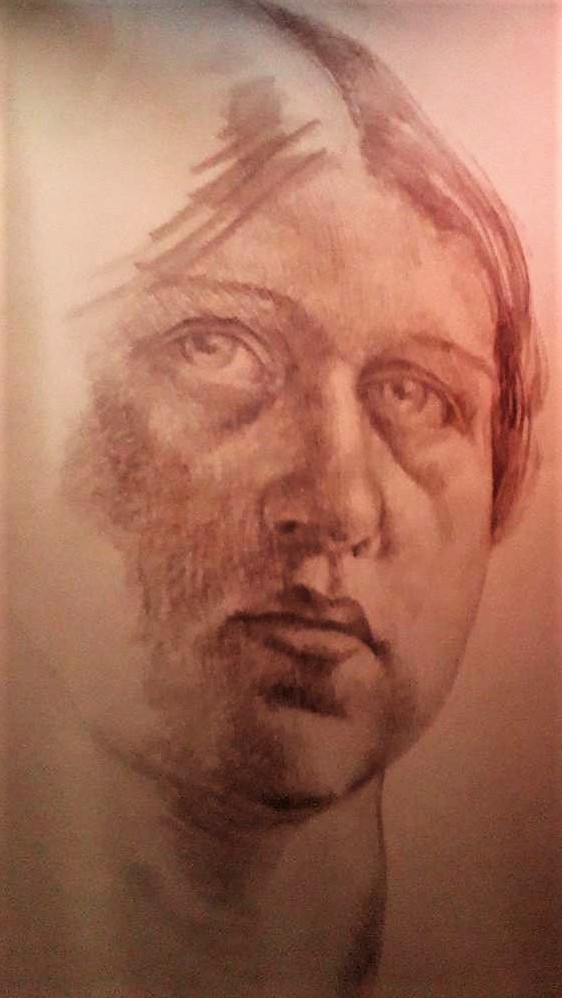
Self Portrait 1910

Dora de Houghton Carrington(29 March 1893 – 11 March 1932), known generally asCarrington, is described by art critic and former director of the Tate Sir John Rothenstein, as “the most neglected serious painter of her time.”

Born in Hereford she attended the all-girls’ Bedford High School before entering the Slade School of Art in 1910. Now calling herself just ‘Carrington’ her fellow students included Dorothy Brett, Christopher R W. Nevinson, Mark Gertler and Paul Nash, all at one time or another in love with her, as was Nash’s younger brother, John Nash who hoped to marry her. After graduating from the Slade, although short of money, Carrington stayed in London, living inSoho with a studio inChelsea.

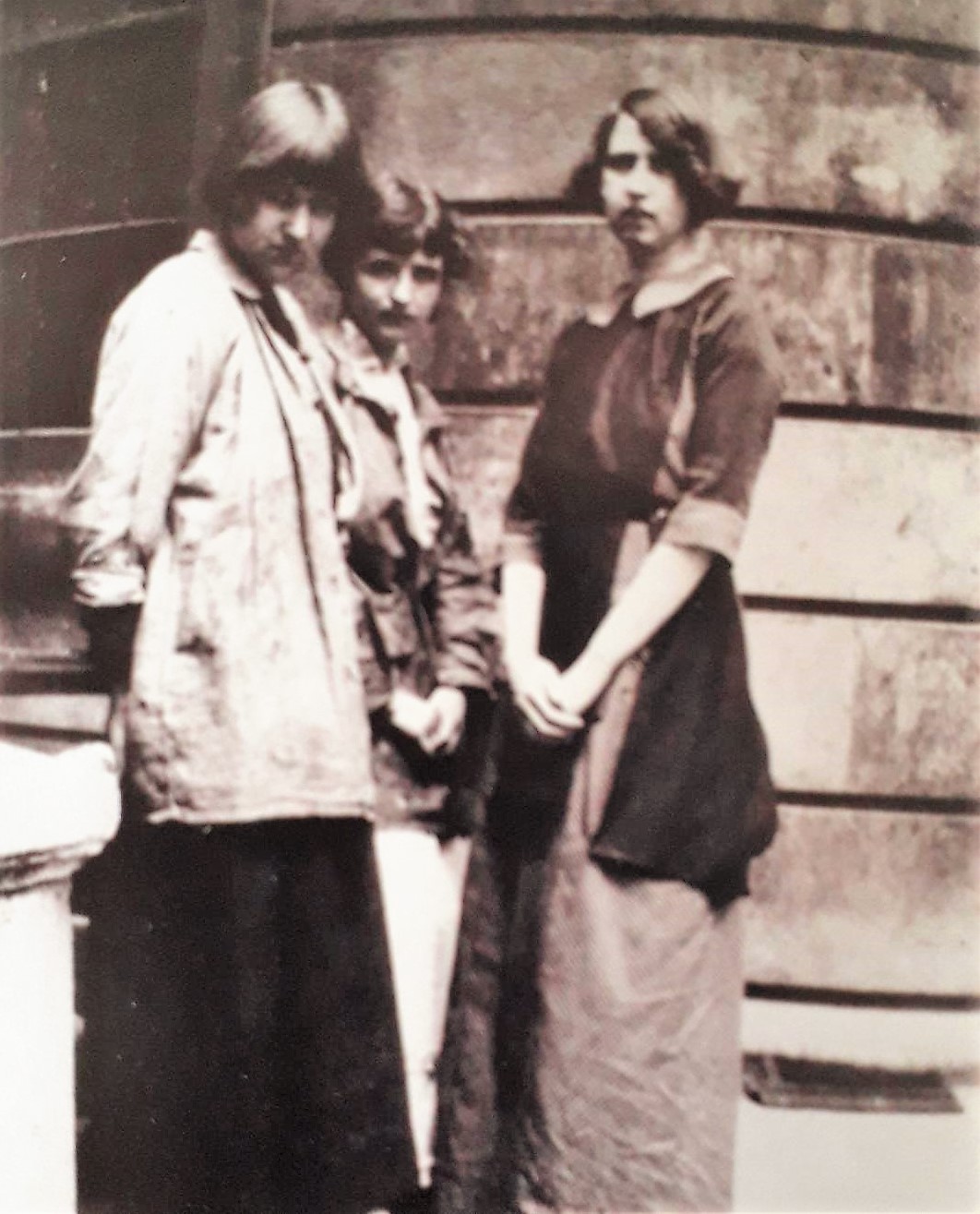
Pastel portrait of Dora Carrington at the Slade by Elsie McNaught, c1911.The ‘Cropheads’….Carringron, Barbara Hiles and Dorothy Brett 1912.

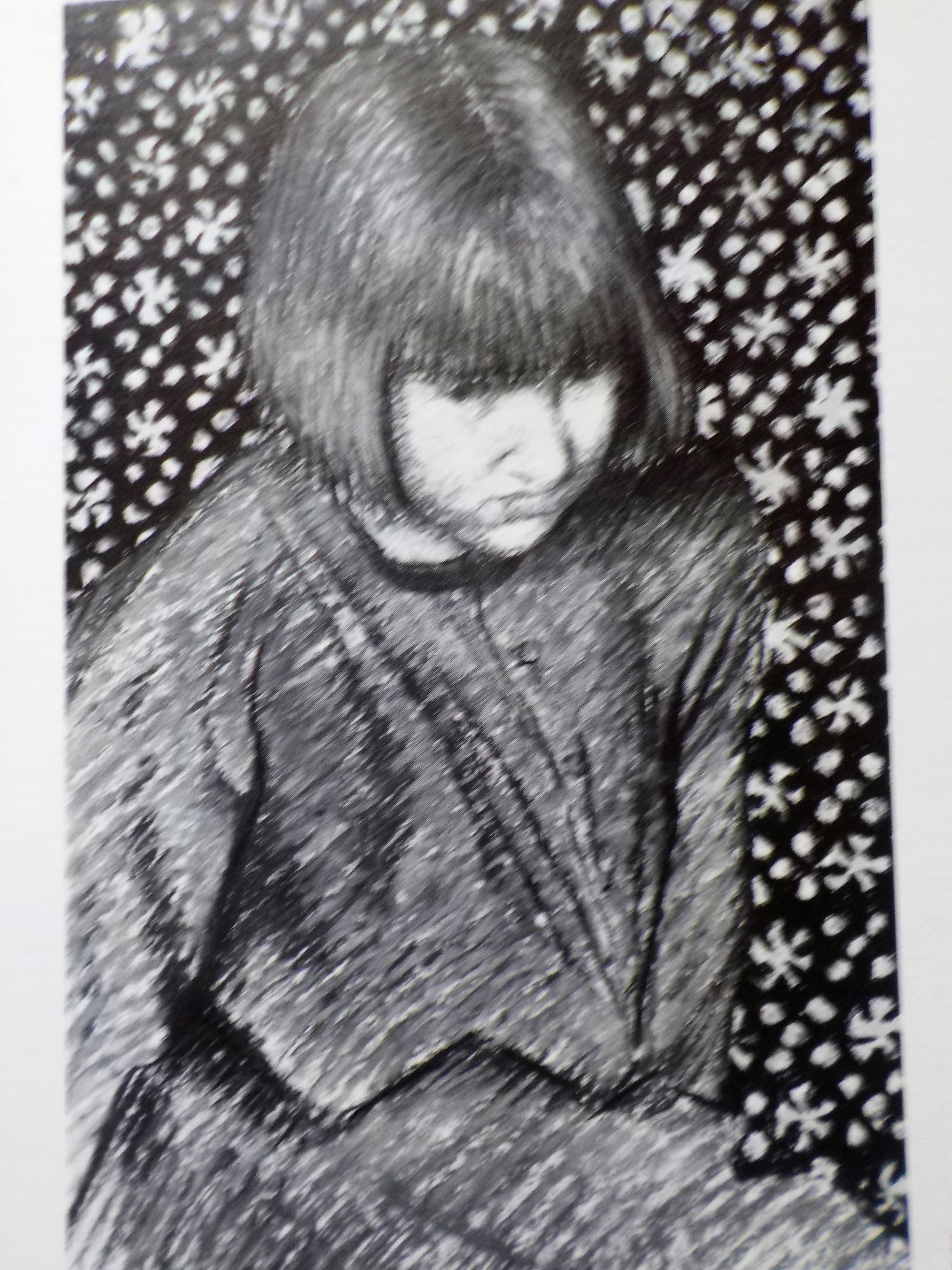
Carrington produced a number of wood-cuts working as…

View original post 888 more words

Categories
Uncategorized

Enchanted Forest, Tulsa, Oklahoma

Categories
Uncategorized

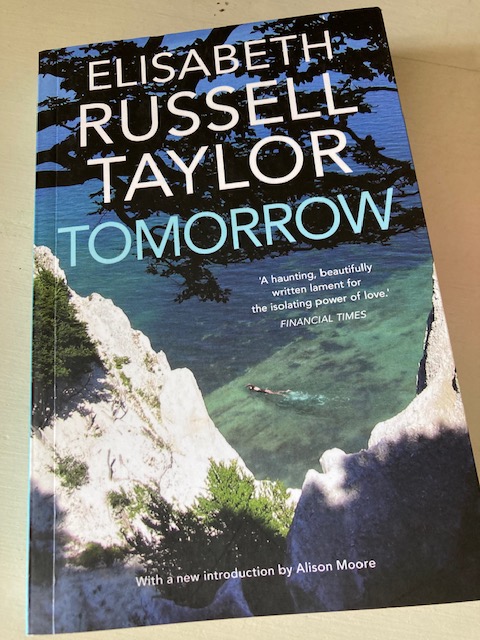
Tomorrow by Elisabeth Taylor Russell

Sounds very interesting stuff and worth reading too!

JacquiWine's avatarJacquiWine's Journal

Born in London in 1930, the English writer Elisabeth Russell Taylor – not to be confused with the other Elizabeth Taylor – wrote six novels and three short-story collections during her lifetime. The most prominent of these is perhaps Tomorrow, first published in 1991 and reissued by Daunt Books in 2018. Fans of Anita Brookner’s work will find much to enjoy here. It’s an exquisitely written story of love and loss – a deeply poignant lament to the sweeping away of a glorious existence, a world of innocence and sanctuary in the run-up to WW2.

Tomorrow revolves around Elisabeth Danzinger, a quiet, solitary forty-year-old woman who works as a housekeeper in London. Every summer, Elisabeth returns to The Tamarisks, a beautifully furnished guest house on the Danish island of Møn, a place that holds many memories of a once-idyllic past, particularly the time she spent there with her…

View original post 1,172 more words

Categories
Uncategorized

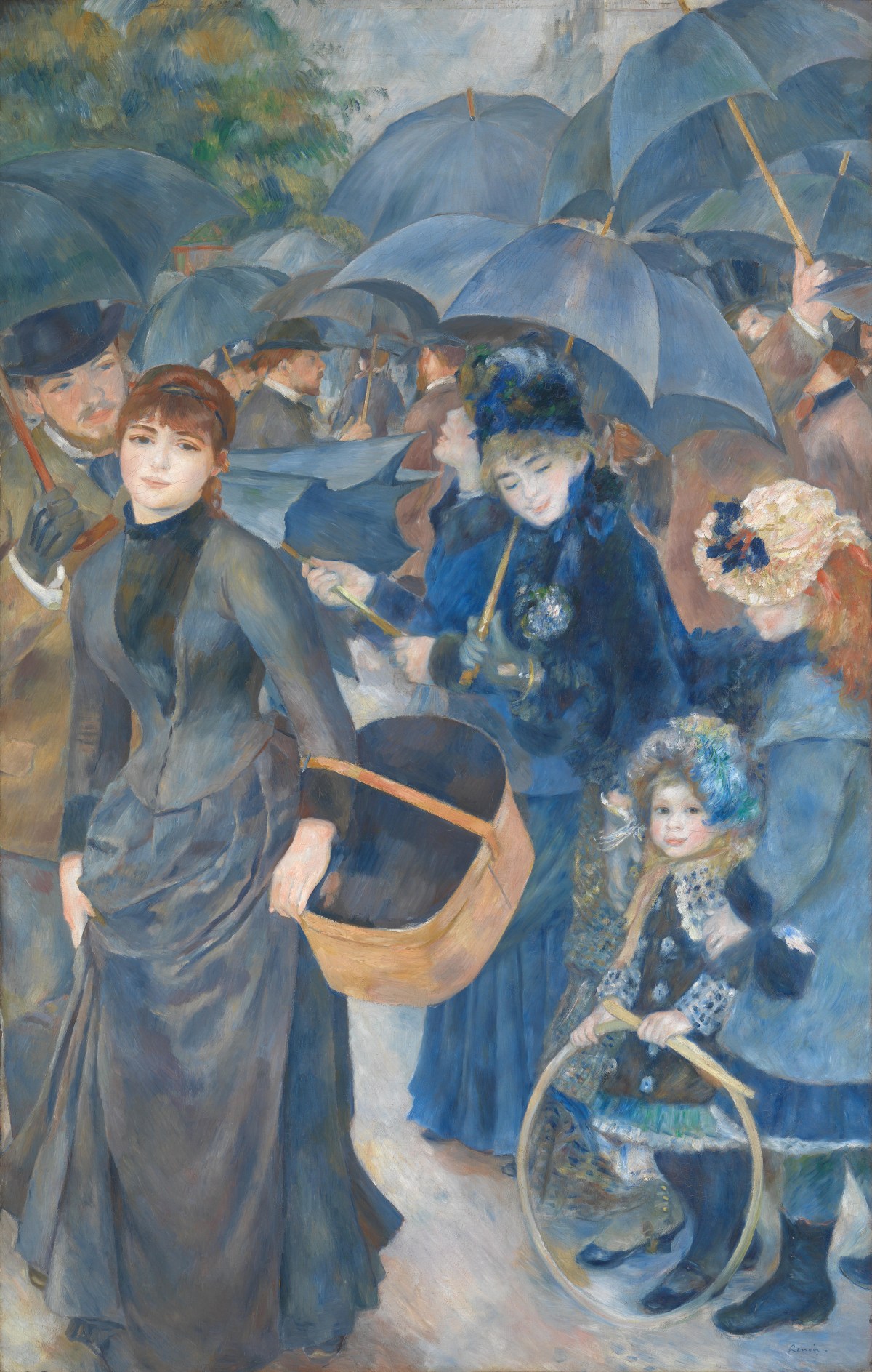
Renoir: The Umbrellas (1881-1886)

At Sunnyside - Where Truth and Beauty Meet's avatarAt Sunnyside - Where Truth and Beauty Meet

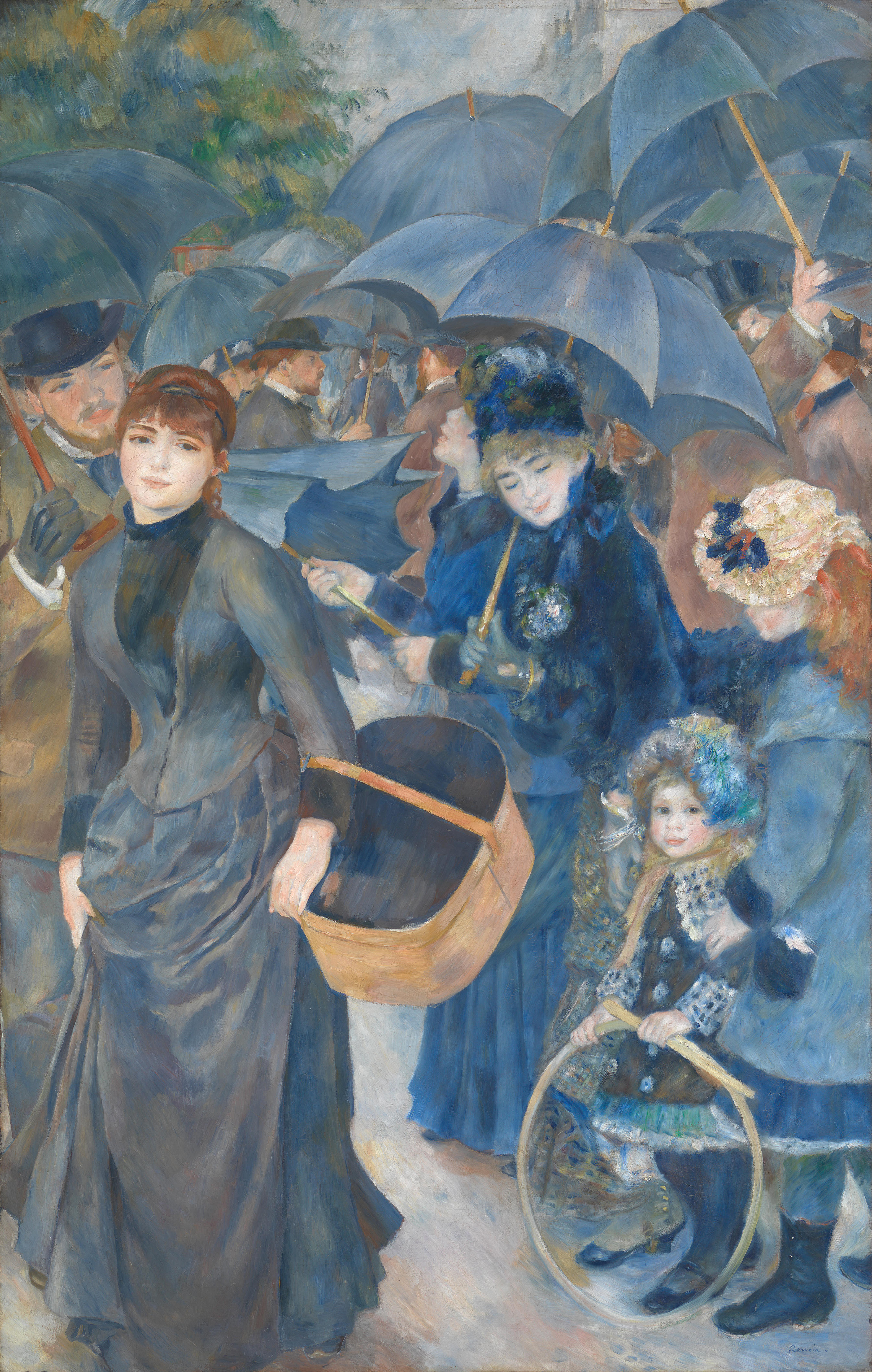
The Umbrellas c. 1881-86, Pierre-Auguste Renoir (1841-1919) oil on canvas, 71 x 45.2 inches, National Gallery, London, Image Source: wikimedia

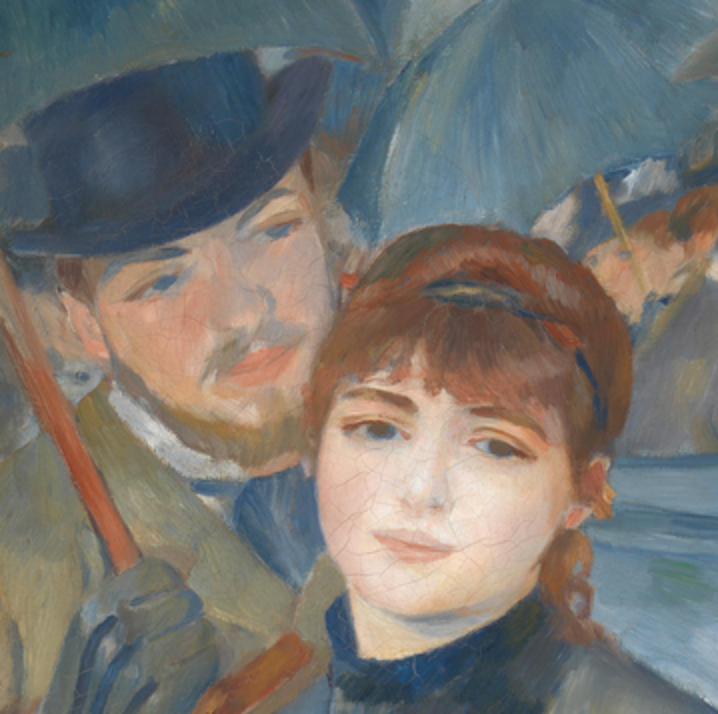
“Painted in two stages, with a gap of around four years between each stage, it shows the change in Renoir’s art during the 1880s, when he was beginning to move away from Impressionism and looking instead to classical art. The group on the right, which includes a mother and her two daughters and the woman in profile in the centre, is painted in a characteristically Impressionist manner with delicate feathery touches of rich luminous tones. On the left of the composition, completed during the second stage, Renoir adopted a more linear style. The figures here, including the full-length young woman and the man standing behind her, have clearly defined outlines, precisely drawn features and a greater sense of three-dimensional form.”

National Gallery, London

The Umbrellas c. 1881-86, Pierre-Auguste Renoir…

View original post 83 more words

Categories
Uncategorized

Impressions of Berlin – by night

Lyrix's avatarKlapperhorn

Picture by Lyrix, Berlin, Germany, 2020

near Wittenbergplatz, including lots of typical german cabs 😉

I liked the mood that evening… not sure if it was my own or the one lying over the city.

View original post

Categories
Uncategorized

Fairytale House, Sheffield, England

Categories
Uncategorized

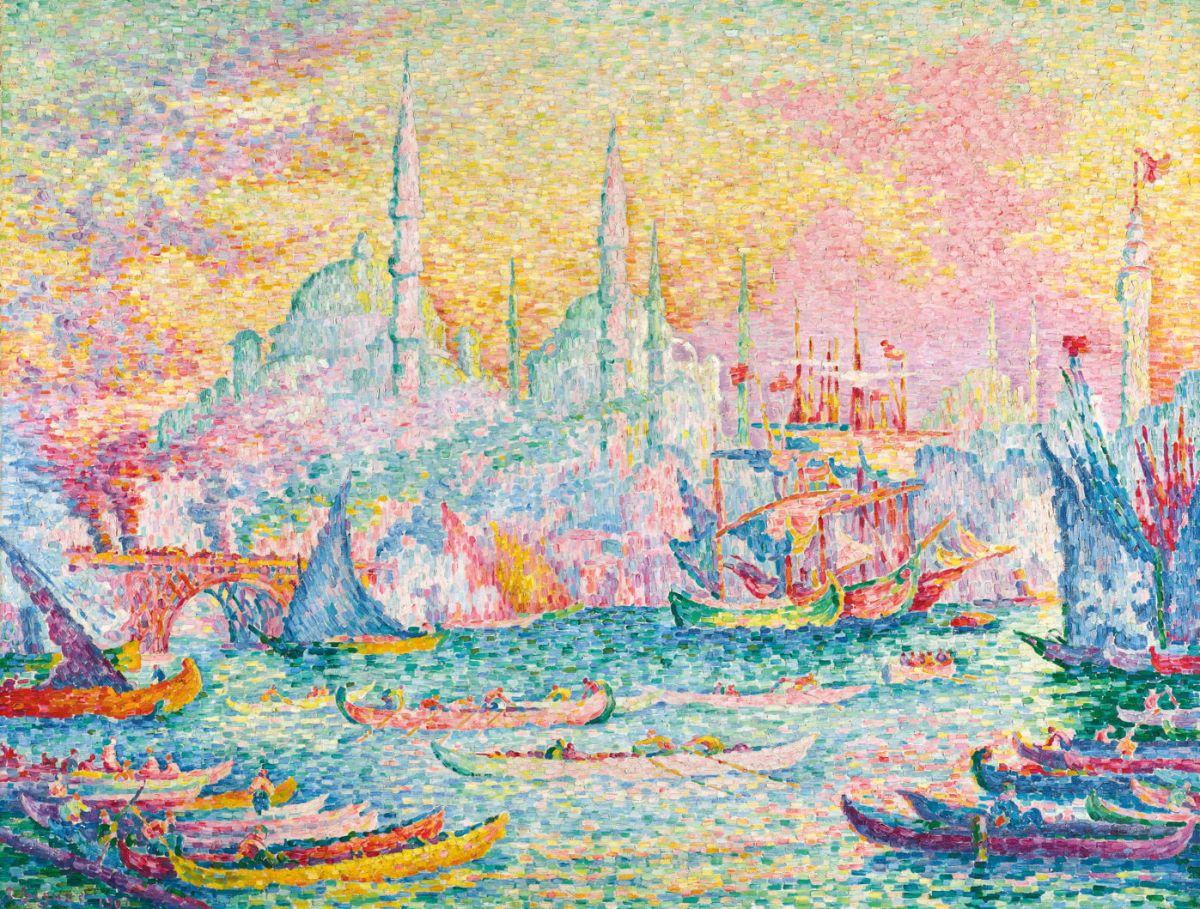
Paintings of Paul Signac 9: The Golden Horn

Such lovely work contrasting with the commercial drear of these major ports.

hoakley's avatarThe Eclectic Light Company

In early 1906, as Paul Signac (1863-1935) was completing his large painting of the church of Notre-Dame-de-la-Garde and the port of Marseilles, he was visited by the former Nabi Maurice Denis, and Ker-Xavier Roussel, who had a house nearby. After that, Signac visited Spain briefly, then went to Paris for the annual Salon des Indépendants, where that painting was exhibited alongside six other landscapes of his.

In the Spring, he travelled to the Netherlands, where he visited Rotterdam and Amsterdam for the second time, and painted watercolour sketches. During the summer he cruised the Mediterranean on board a friend’s yacht. For much of the rest of the year, he was busy turning his sketches into finished oil paintings.

Paul Signac, Steamboats, Rotterdam (1906), oil on canvas, 73 x 92 cm, Shimane Art Museum, Shimane, Japan. WikiArt. Paul Signac (1863-1935), Steamboats, Rotterdam (Cachin 436) (1906), oil on canvas, 73 x 92 cm, Shimane Art Museum, Shimane, Japan. WikiArt.

Signac’s finished painting of Steamboats, Rotterdam (1906) is remarkable in retaining…

View original post 677 more words

Categories
Uncategorized

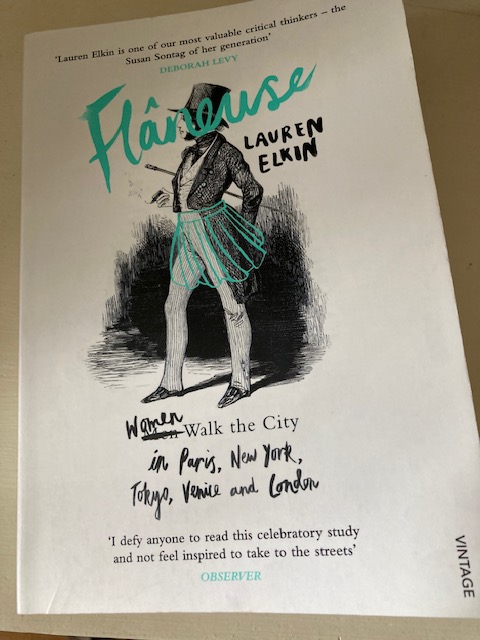
Flâneuse by Lauren Elkin

Sounds brilliant and an interesting exploration in psychogeography. This sounds like a book that I must read. Perception of cities has come up in my reading too. Chicago in “Humbolt’s Gift” and Toibin’s Dublin in his poetry collection.

JacquiWine's avatarJacquiWine's Journal

When we hear the word ‘flâneur’, we probably think of some well-to-do chap nonchalantly wandering the streets of 19th-century Paris, idling away his time in cafés and bars, casually watching the inhabitants of the city at work and play. Irrespective of the specific figure we have in mind, the flâneur is almost certainly a man – a well-dressed dandy, possibly like the central pen-and-ink sketch on the cover of this Vintage edition of Flâneuse. The flâneur is a consummate observer, looking without participating, preferring to remain somewhat distanced from the action in his leisurely pursuits.

In this fascinating book, the critically-acclaimed writer and translator Lauren Elkin shows us another side of flâneusing, highlighting the existence of the female equivalent, the eponymous flâneuse. While the male flâneur has been well documented over time, much less has been written about his female counterpart…

View original post 1,044 more words