Categories
Art and Photographic History Film Poetry

 Trump story sends criminals to Ballard’s Wharf.

It is always interesting to surmise what was happening in the world when you were a very small child. This intriguing black and white film from 1947, Hue and Cry has some of the answers. It is set in the feral landscapes of bombed out London. However, the spirit and humour of the kids captures some of the trauma of the recent blitz but much more the youngsters resilience. The following clip shows a little of what I mean.

I found this DvD in one of my local charity shops and was intrigued by the fact that the plot revolves around a children’s comic called The Trump. The blurb on the reverse also mentioned that it was the first of the famous Ealing Comedies and there were fascinating shots of post-war London’s exterior locations. In fact as I watched the film it in some parts reminded me of seeing the recent gang wars of Sondheim’s West Side Story as filmed by Spielberg. Indeed some of the visual tropes or tricks were similar too. This second clip gives details about the locations of the film and how they look today.

Passing beyond the psychogeography of “Hue and Cry” I also thought there was a sort of undertext. The working class children with their naïve and energetic enthusiasm overcome the sharks and spivs in their criminal activities. Very much the product of those heroic times when the Atlee government brought so much to recovery. There was something democratic if somewhat frenetic here which vividly contrasts with life here today. The hectic has become frenetic in a Governent of the Posh Boys and what used to be known in Lambeth as Wide Boys.

https://en.wikipedia.org/wiki/Wide_boy#Fictional_portrayals

To finish on a more upbeat note; this film has amusing glimpses of life in the old Covent Garden Market. It is worth watching for that alone. However, the acting of Lambeth born Harry Fowler, Jack Warner and especially Alastair Sim is superb. Talking of markets let me conclude with these lines from Charlotte Mew’s Saturday Market.

Categories
Uncategorized

Why My Son Likes Cities

Interesting- I like cities too but hate intrusive sounds like the advertisements on YouTube or Classic FM!

Categories
Uncategorized

Snow Lanterns, Vienna, Austria

Would be so nice to be in Wien mit ein Glühwein zu trinken!

Categories
Literature Poetry

Thoughts inspired by “From a Window” by Charlotte Mew

From a Window 

                  Up here, with June, the sycamore throws 

                      Across the window a whispering screen; 

        I shall miss the sycamore more, I suppose, 

Than anything else on this earth that is out in green. 

             But I mean to go through the door without fear, 

             Not caring much what happens here 

                           When I’m away:— 

How green the screen is across the panes 

              Or who goes laughing along the lanes 

        With my old lover all summer day. 
 

By Charlotte Mew 

The poem begins by locating the poet both in place and time; the high elevation suggests an oracular tone which pervades the poem. The poet is contemplating not just leaving the house or building but also the loss of life- that is to say death itself.

I seem to recall a final interview of the playwright Dennis Potter talking in a moving way about a tree in blossom and the poignant feelings this aroused in him. The poem evoked his memory.

In Mew’s poem however the tree appears as a green screen which might conceivably fill an entire window where foliage whispering might suggest some maternal comforting. Indeed it becomes a kind of screen memory, that is a distorted memory, generally of a visual rather than verbal nature, deriving from childhood. The term was coined by Sigmund Freud, .

Mew talks about not caring much about what happens when she is away. It seems that the word “much” suggests that actually, largely unconsciously, she actually really does care about what happens when she leaves. Indeed the real difficulty in leaving is about what is left behind and perhaps who is left behind doing exactly what. The separation involves a felt loss of control. Her previous lover is laughing along the lanes and perhaps there might be some faint suggestion of the poet feeling perhaps jeered at as well. There is a beautiful melancholy feel to the internal rhythms of the line “How green the screen is across the panes” and the now obvious pane/pain pairing.

This programme is moving about Charlotte Mew and worth a listen-

Categories
Uncategorized

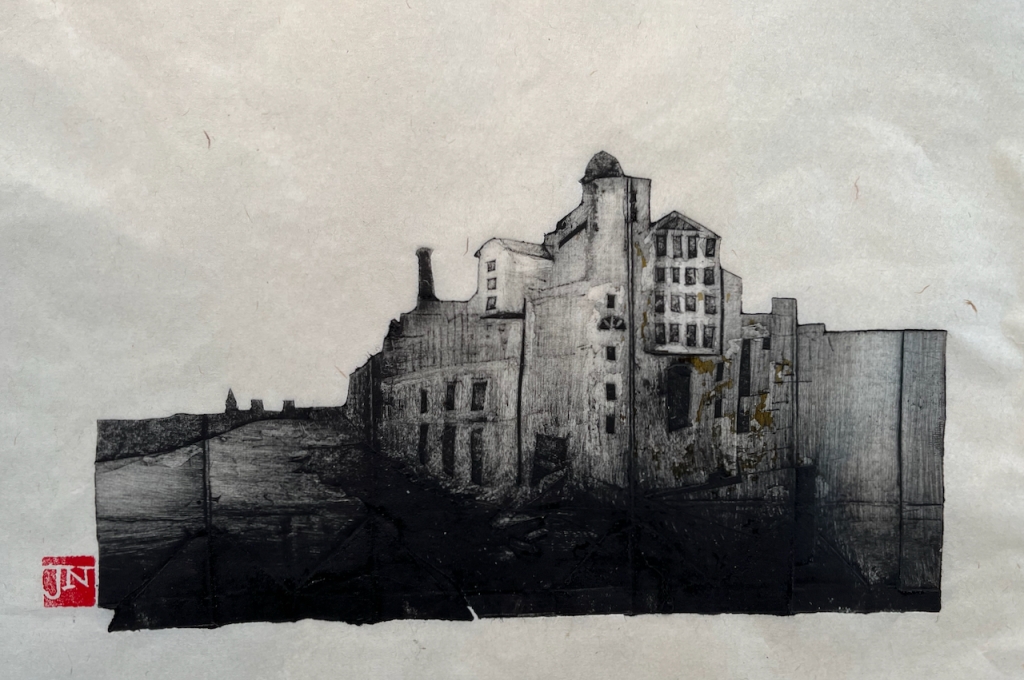
Anchor Brewhouse, Horsleydown Old Steps, SE1

Very clever printing techniques. Brilliant, interesting!!

Jane's avatarJane Sketching

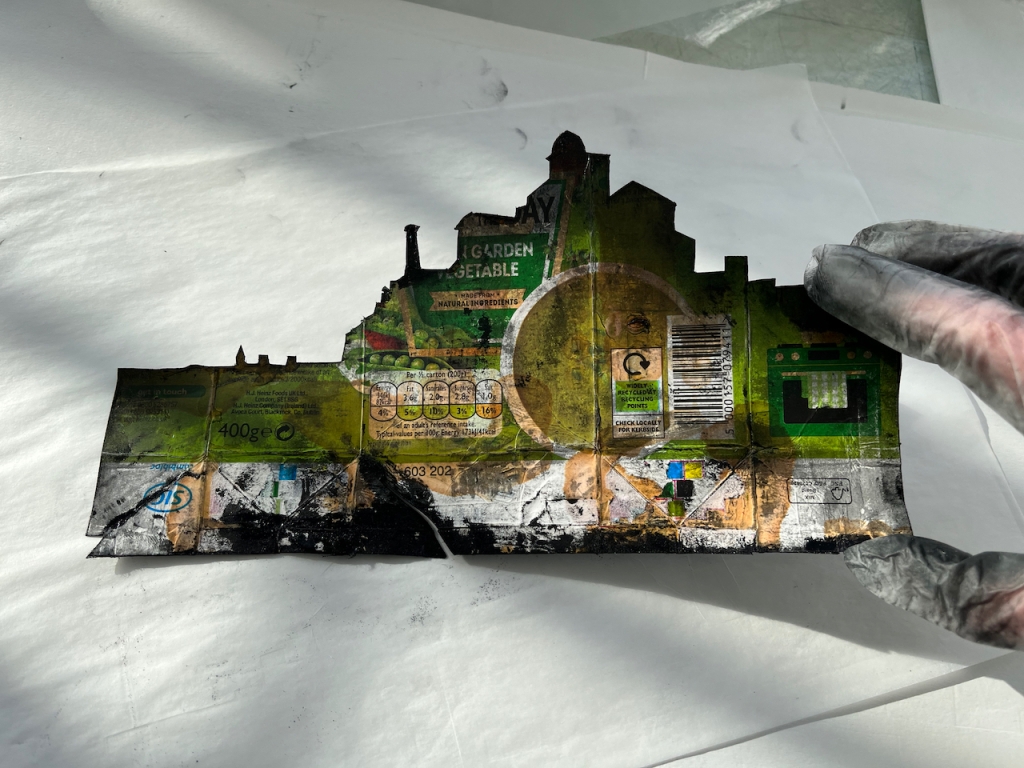
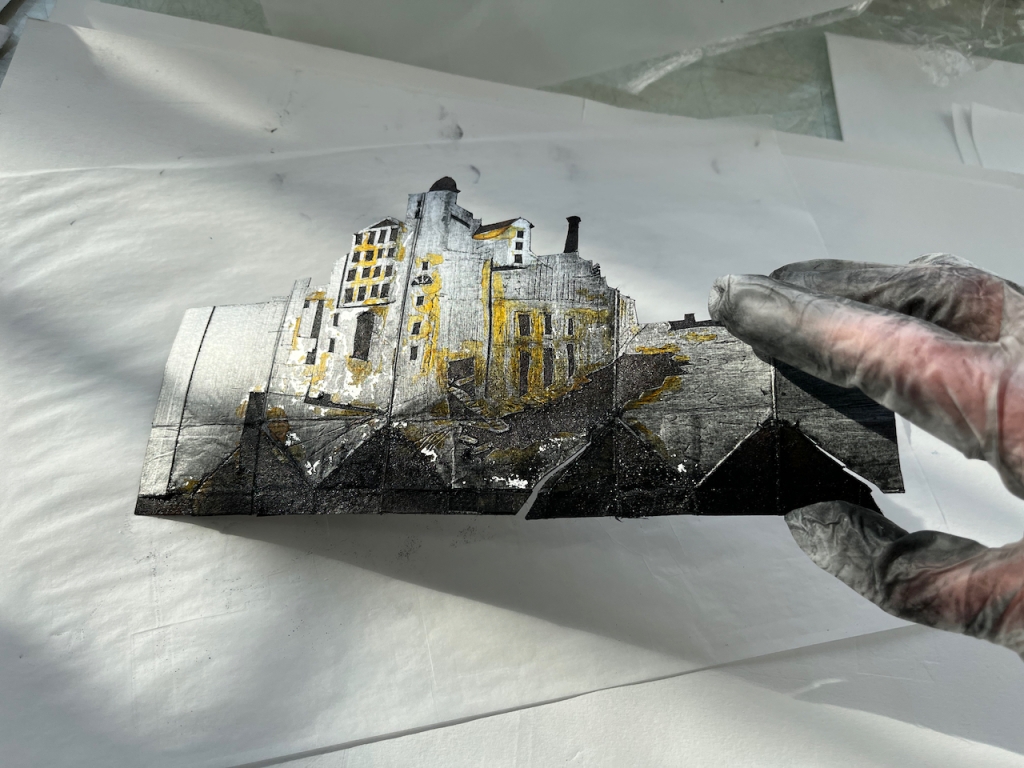
I am trying an experimental monoprint technique. The idea is to use packaging material to make intaglio “plates” which are then printed using an etching press. This is the first one. I printed it yesterday on the Henderson Press at East London Printmakers.

Anchor Brewhouse and Horseleydown Old Steps, Monoprint. Image size 10″ x 6″

This is a real building, a former brewery, just to the South and East of Tower Bridge. That’s the river Thames you see on the left of the picture.

The “plates” are fragile, so I could only make 6 prints before the plate started deteriorating and the contrast started to go. Here is a picture of the plate, front and back. It is made out of a box of soup. I made the picture on the shiny, metallic-looking side, which is the former inside of the soup box.

View original post 217 more words

Categories
Book Reviews Film Psychoanalysis

Thoughts on the Skin in Psychoanalysis-a lecture by Leon Brenner

Leon Brenner is an energetic and creative Philosopher and Lacanian Psychoanalyst who lives and works in Berlin. Last week he gave a Zoom talk on the subject of The Dermic Drive in Autism in which he followed this, his schema:-

Counter to the ways it is conceived through both cognitive and identitarian approaches, autism might be productively thought of as a unique subjective structure that sits alongside the classical Freudian structures of psychosis, neurosis, and perversion. Earlier psychoanalytic thinkers have linked autism and the onset of autism to the supposed experience of early disturbances in ‘skin function’. In this talk Dr Leon Brenner will expand this notion of ‘skin function’, exploring its relation to and confection in language. Conceiving the skin as a potential modality of the Freudian drive (Trieb) – the dermic drive – Dr Leon Brenner will seek to unpack how the different relations to and with the Other such a drive would instantiate allow fresh insights into our understandings of autism.

Dr Brenner’s blog may be found at https://leonbrenner.com/

Here are some points of clarification-

  1. Here is what R,D.Hinshelwood has to say in clarification in his book, A Dictonary of Kleinian Thought-Among the previous psychoanalysts studying this subject three in particular drew my attention. Esther Bick whose work included infant observation, the relation between skin sensations and feeling contained, the creation of the experience of the body as an internal space. Bick worked with Donald Meltzer and together they arrived at the concept of Adhesive identification: The possible failure to develop such an integrating primary object (space) appears to be confirmed in work with autistic children (Meltzer et al., 1975) [see AUTISM]. Bick and Meltzer (Meltzer, 1975, 1986) collaborated in describing the ways in which autistic children develop without a sense of internal or external space. Their relationship with objects appears to be a ‘sticking on to’ the object, a mechanism called adhesive identification.

2 Hinshelwood also explains the manner in which mimicry replaces the normal development of internal psychic space-

projective identification cannot be properly employed because of an absent sense of internal space (see INTERNAL REALITY). Meltzer (Meltzer et al., 1975) took up these ideas and found them important in research into a child-analytic technique with autistic children. Meltzer described a child who

tended to draw pictures of houses, in which there was a house on this side of the paper, and there was a house on the other side of the paper and when you held it up to the light, you saw that the doors were superimposed, you know, a kind of house where you open the front door and step out the back door at the same time. (Meltzer, 1975, p. 300)

In the course of this collaboration, Bick and Meltzer began to recognize a pattern in these ‘second-skin’ formations (see SKIN]. Bick typically called it an act of mimicry. However, what they began to realize was that the mimicry represented the experience, and phantasy, of sticking to an object as opposed to projecting into it [see 13. PROJECTIVE IDENTIFICATION]. A lapse in developing a sense of internal spaces leads to a tendency to relate to objects in a two dimensional way, without depth [see AUTISM]:

The following are some thoughts in no particular order which I had during this engaging seminar:-

  1. This evocative song has been in the background since contemplating this whole issue with it’s phrase “wake up to reality”. Sung here by Frank Sinatra https://youtu.be/C1AHec7sfZ8
  2. There is a body of work which talks about the use of makeup which can become of huge importance in certain stages of life applied so as to display a perfect impression. Frequently referred to interestingly as “warpaint” and acting as a mask or perhaps a second skin. See for instance this https://discover.hubpages.com/education/The-Gallery-of-the-Fool and the work of Joan Riviere https://psychoanalysis.org.uk/our-authors-and-theorists/joan-riviere
  3. There is a particularly interesting chapter in Betty Joseph’s collection “Psychic Equilibrium and Psychic Change” on the analysis of a patient with a rubber fetish in which she discusses the use of projective identification of excitement, oral sadism and how she was able to contain, explain and resolve these issues within the analytic sessions.
  4. It would seem that the elastic and adhesive properties of relationships can be expressed vividly by means of cartoon characters. In particular it is possible to think of matters like “bouncing back” being “caught on the rebound” as well as “sticking together through thick and thin” as well as someone “sticking to another like glue” somewhat unpleasantly or uncomfortably.
Categories
Uncategorized

Orlando Figes: Natasha’s Dance

Interesting about the Orthodox Church which has quite recently become independent from Russia in the Ukraine. Altogether a complex topic, don’t you think? It is on my lengthening tbr list!!

litgaz's avatarLIT.GAZ.

Anyone who has read any Russian literature or history must be aware of how different a nation Russia feels compared with ourselves or other European nations; sadly this awareness never seems to percolate down to politicians… Agains the current backdrop of the Ukraine crisis, I was constantly struck by the lack of ability or willingness ofWestern leaders and politicians to see the world from the perspective of Russia and its people, which might actually inform a more helpful and sensible response to them. But we are incapable of going beyond the triumphalism of “we won the Cold War”. It was in the hope of digging deeper and understanding more, that I finally opened this tome which I’d bought nearly 20 years ago.

Figes offers an excellent, clear and detailed contextual background at the start, and this is possibly the best part…

View original post 794 more words

Categories
Uncategorized

Lacan in Scotland Talk: The Dermic Drive in Autism

A truly fascinating talk and most thought provoking. The links between autistic relations and topology engaging. Melanie Klein and the Klein bottle. Leon’s enthusiasm is thoroughly engaging.

leonbrennerblog's avatarLeon Brenner

I am very much looking forward for my talk at the Lacan in Scotland monthly seminar. Particularly, I am delighted to be discussing my latest work on the skin, the skin function, and the dermic drive with my friends and colleagues Amanda Diserholt and Calum Neill. Here is a short blurb about the event that will be broadcasted on Zoom for free:

Counter to the ways it is conceived through both cognitive and identitarian approaches, autism might be productively thought of as a unique subjective structure that sits alongside the classical Freudian structures of psychosis, neurosis, and perversion. Earlier psychoanalytic thinkers have linked autism and the onset of autism to the supposed experience of early disturbances in ‘skin function’. In this talk Dr Leon Brenner will expand this notion of ‘skin function’, exploring its relation to and confection in language. Conceiving the skin as a potential modality of the…

View original post 124 more words

Categories
Uncategorized

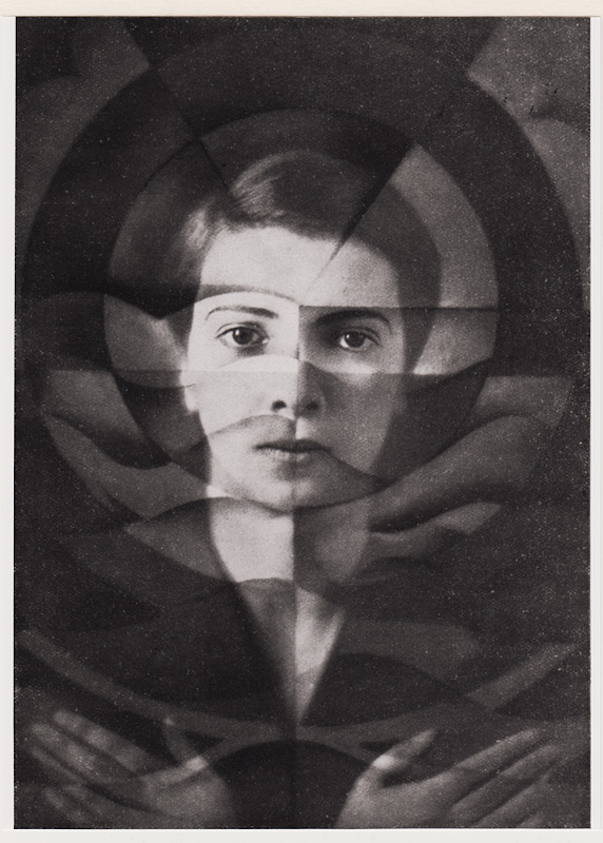
Autoportrait Day 32~ Yva

Has a very modernist feel- brilliant!!

Christy's avatarThe Misty Miss Christy

A random survey of self-portraits created by women through the centuries

Yva (Else Ernestine Neuländer-Simon)(1900-1944)

Self-portrait, 1926 / Gelatin silver print / photo source: Das Verborgene Museum, Berlin, DE

[2 embedded links above]

View original post

Categories
Uncategorized

Sketches of home and more: January 2022

Lovely and lively sketches!!

Marlena Wyman's avatarUrban Sketchers Edmonton

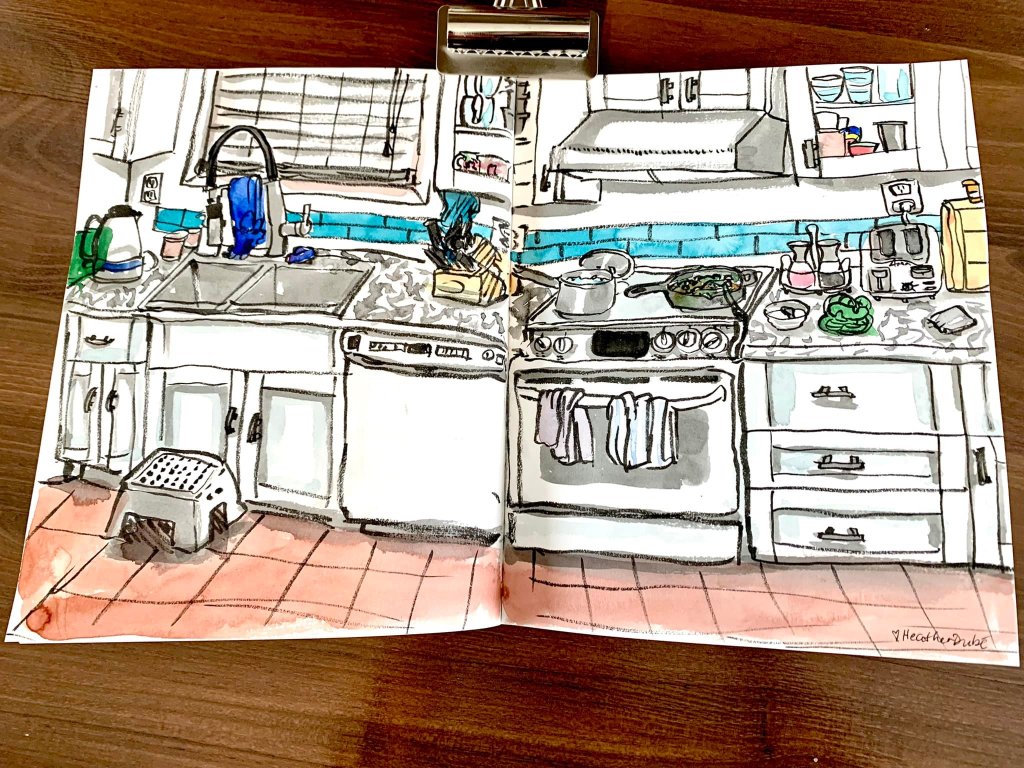
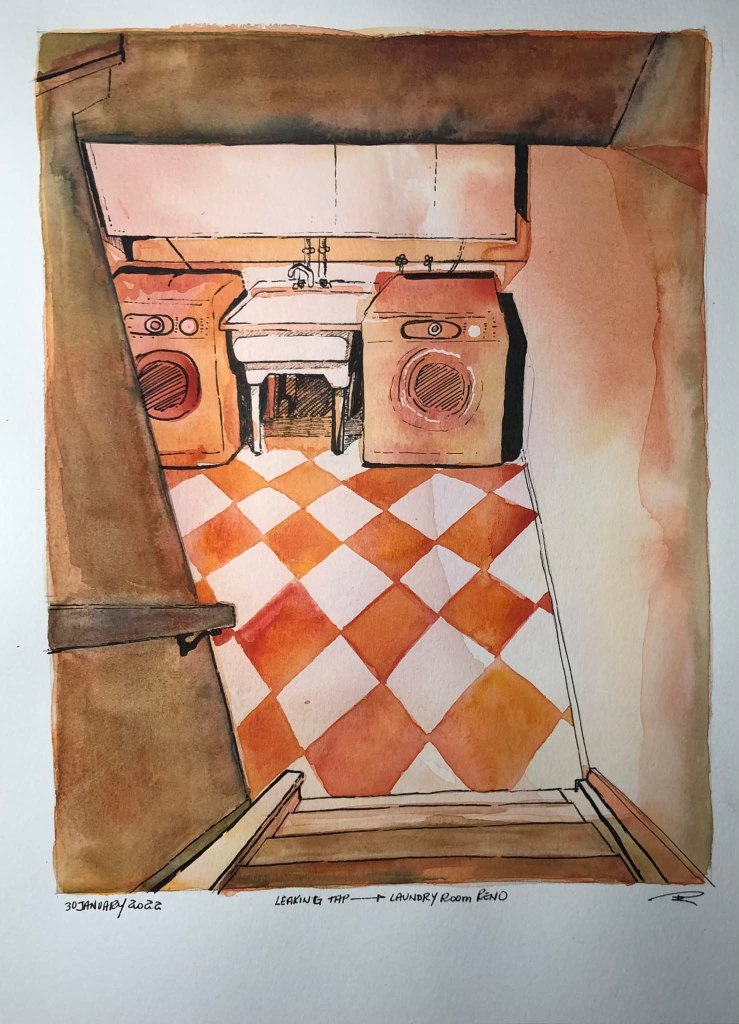
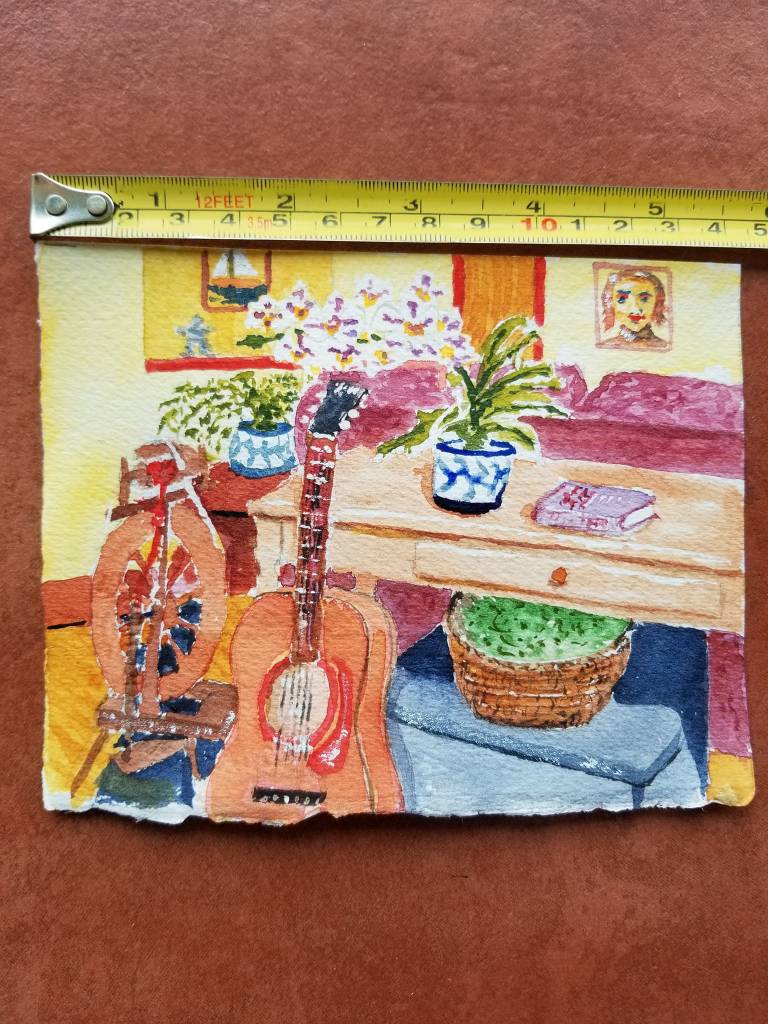
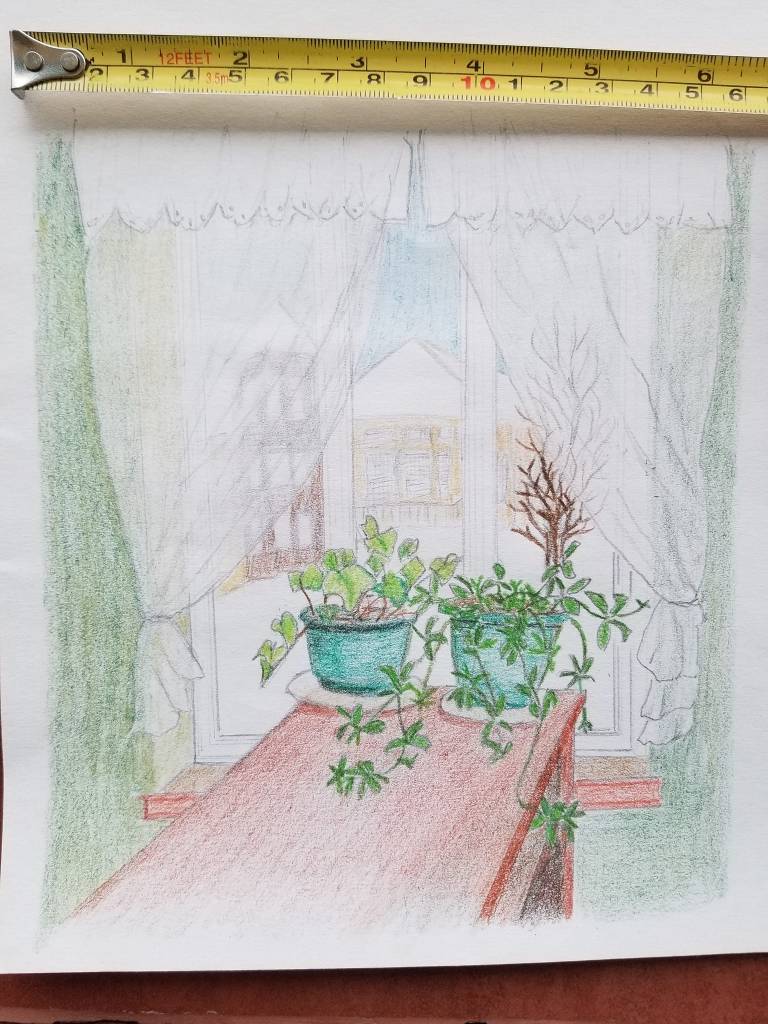
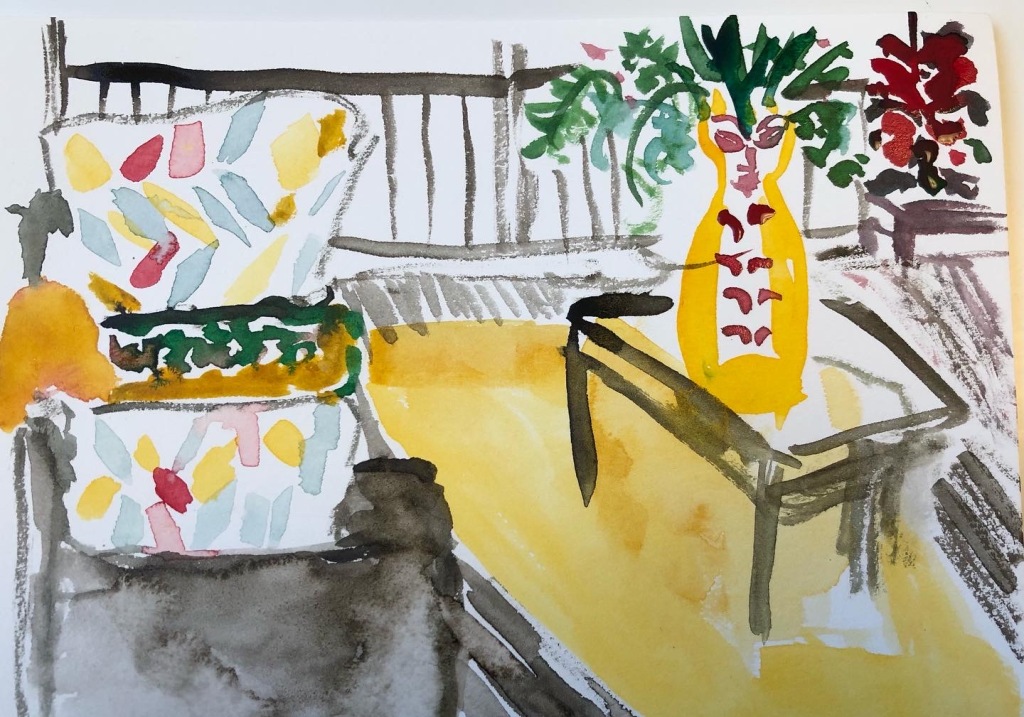
Our first sketching theme of 2022 was “Home”, and with the crazy winter weather and the crazy continuing pandemic, home is a good sketching venue.

Heather Dubé’s kitchen

Brenda Raynard’s laundry room

Beth George’s bedroom

Jack Twells’ living room

Ivy Trumpour’s window view

Luciana Erregue’s apartment balcony

Sarah Lee’s home brewery

Diane Smarsh’s grandsons’ toys

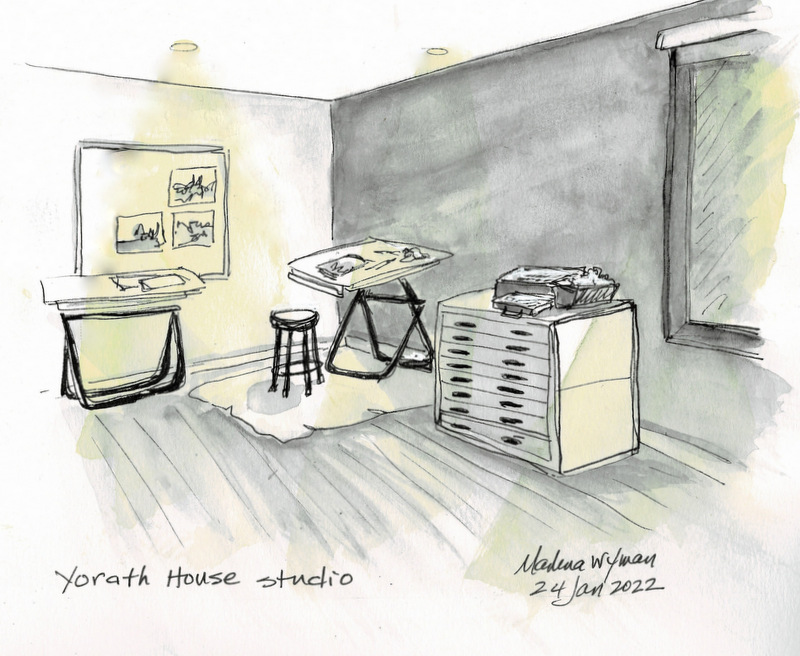
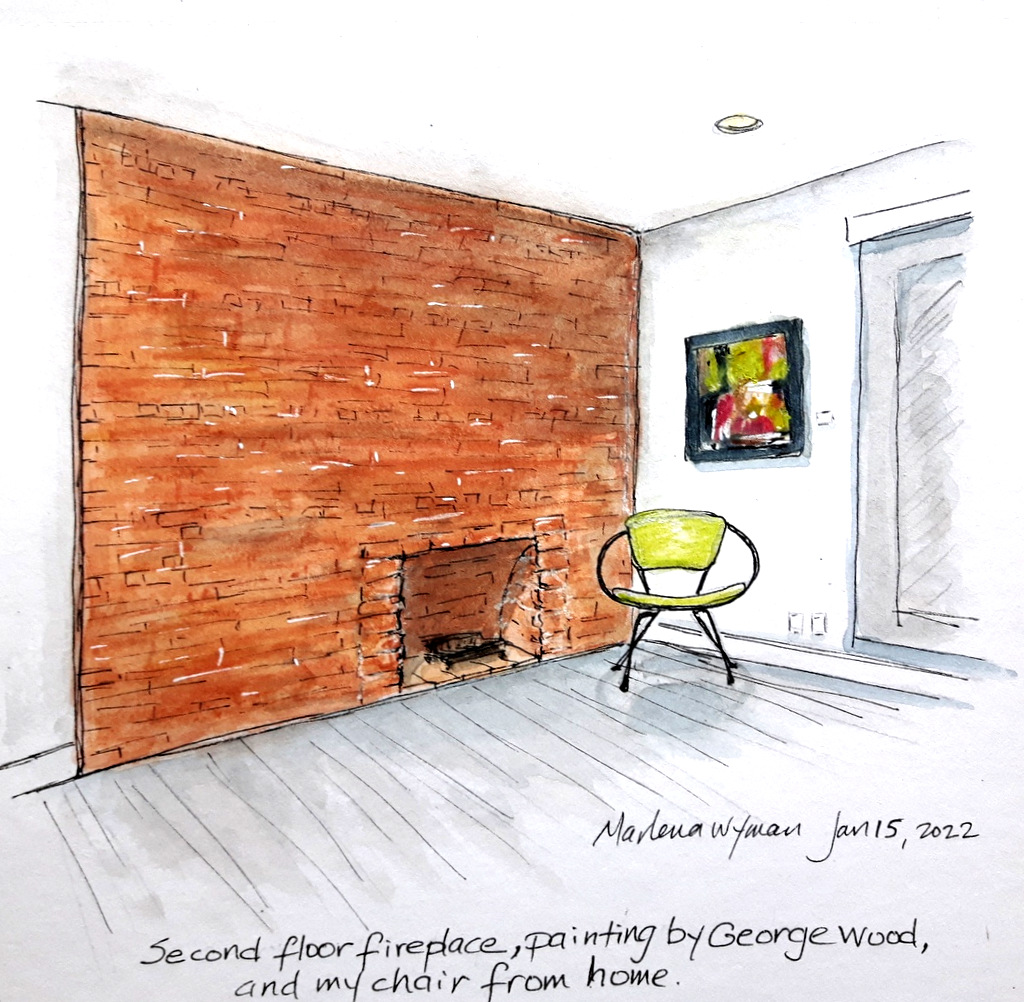
Marlena Wyman’s home away from home artist residency studio

Marlena Wyman’s home away from home artist residency at Yorath House, Edmonton

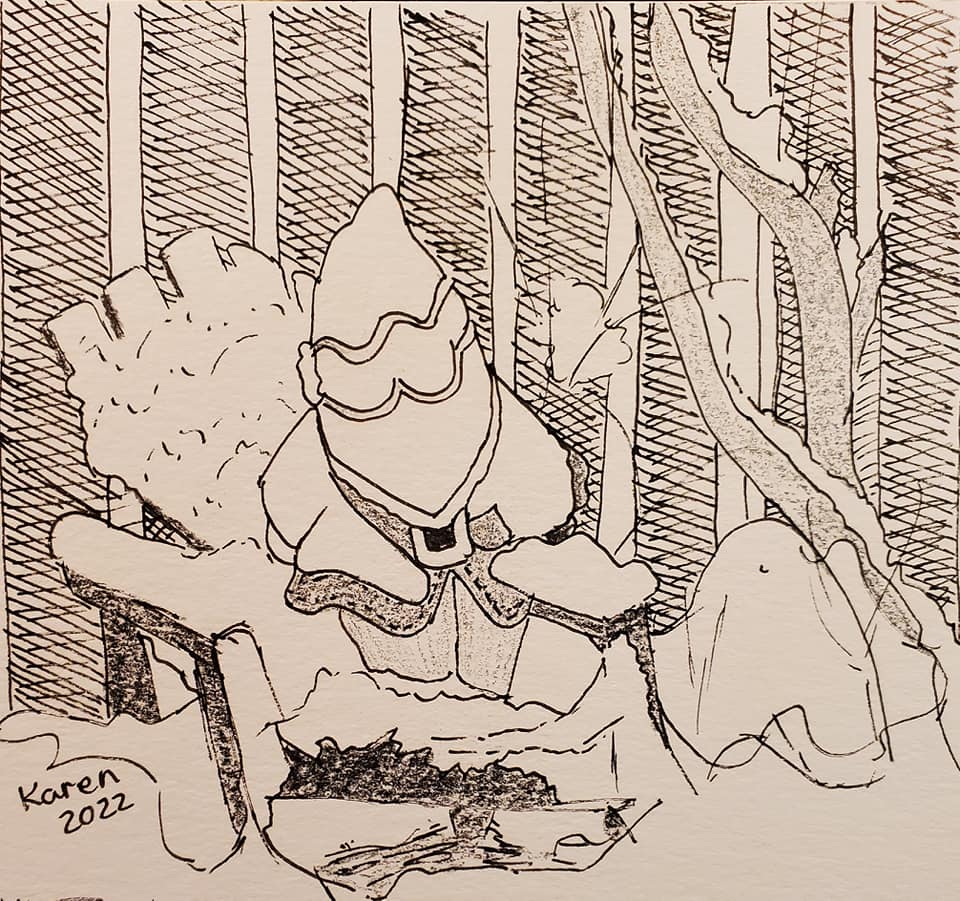
Karen Boschee’s backyard gnomes

Karen Boschee’s backyard snowmen

Melissa Baron’s studio plant

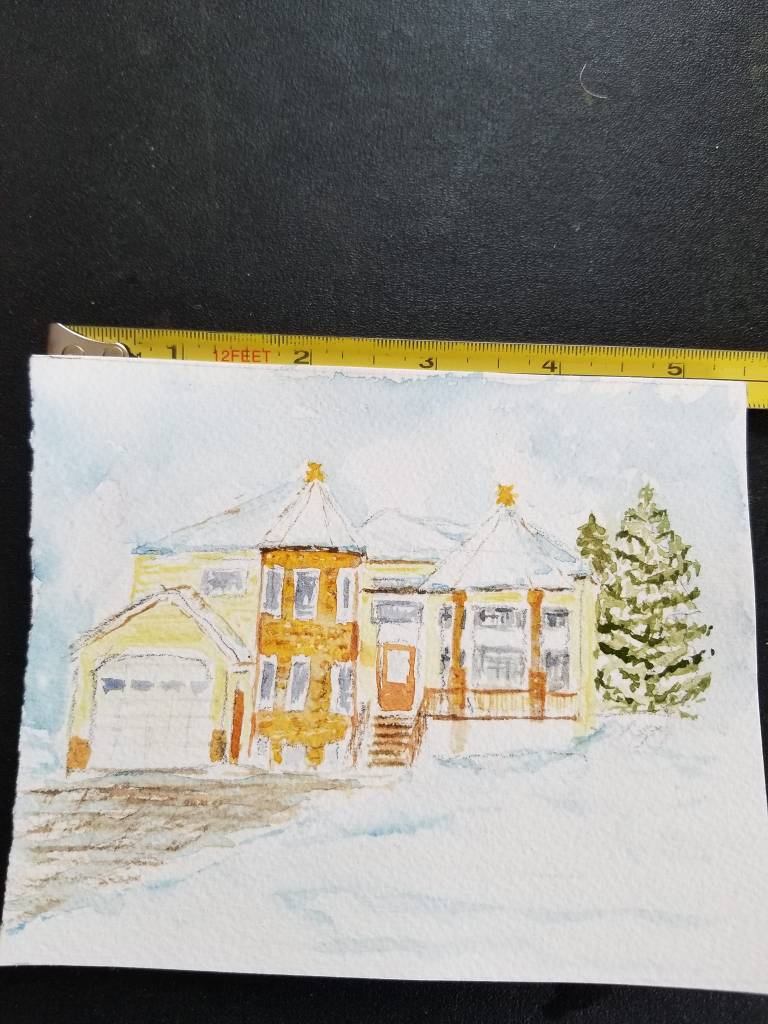
Jack Twell’s neighbour’s house

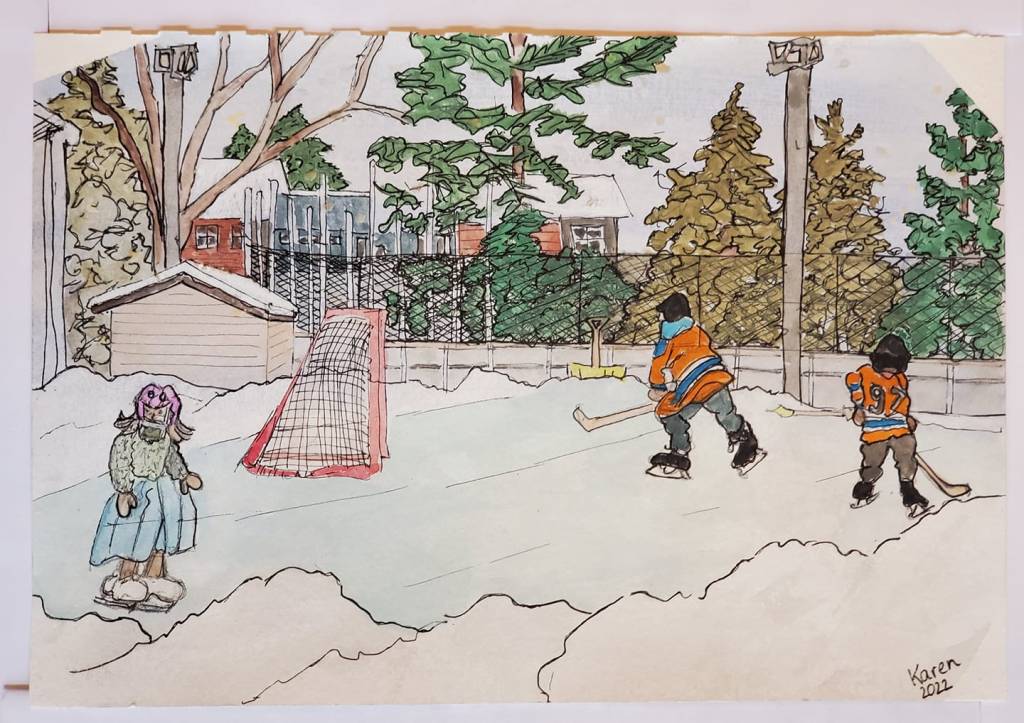
Crestwood community rink skaters by Karen Boschee

Old Strathcona High School by Gordon Ramsey

High Level Bridge looking SE by Gordon Ramsey

Inland Cement Plant by Beth George

Neighbour’s pickup truck in Barranquilla, Columbia by Zulima Acuña

Plants hanging from a tree in Barranquilla, Columbia by Zulima Acuña

February’s theme will be coming soon!

Posted by Marlena Wyman

View original post