Categories
Literature Poetry

“In Exile” and “Quarantine” – two poems by Eavan Boland

This poem may be found in Eavan Boland’s book of collected poems on page 157 and it is from her sequence outside history. It starts thus:-

The German girls that came to us that winter and

the winter after and who helped my mother fuel

the iron stove and arranged our clothes in wet

thicknesses on the wooden rail after tea was over,


spoke no English, understood no French.

We are in Boland’s childhood in Ireland and the political situation in Europe has isolated these girls and put them into linguistic isolation, perhaps similar to that experienced in childhood. This long starting sentence sets the lamenting pace with which this poem is infused. She continues to say that they spoke rapidly; “syllables in which pain was radical, integral; and with what sense of injury the language angled for an unhurt kingdom….I never knew

Renowned poet Professor Eavan Boland dies at 75 | Stanford News


The memory of these exile voices reminds Boland of her own exile from the darkness of Ireland and “the drizzle in the lilac, the dusk at the back door” but also of “the tinkers I was threatened with” She is imagining the guttural voices some forty years on and the sadness and pain mixed with these sounds as she reexperiences her loss of her homeland, now teaching in America.

These searing memories she recalls in a very different place-

Among these salt boxes, marshes and the glove-tanned colours of the sugar maples, in this New England town at the start of winter. ” She appears to miss the past and its pains and ends by saying memorably that; “Here in this scalding air my speech will not heal.I do not want it to heal”

This poem I find appealing to the sense we presently have of dislocation due to the Covid crisis. Trying to retrieve some sense of the normal everyday and usual social interaction. In a sense we have all become exiles and I hear Leonard Cohen’s “and all men shall be sailors then until the sea shall free them” There are reminders for me in this poem of the sense of loss of control which so many feel with Brexit and the separation from the cultural and political values which Europe aspires.

 

Categories
Uncategorized

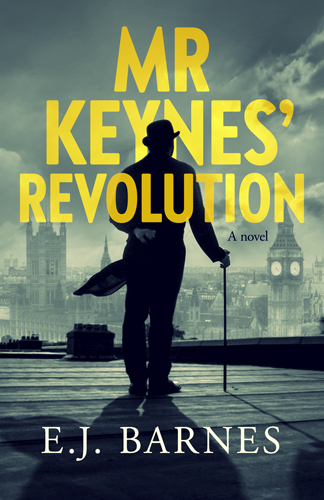
Emma Barnes ~ Mr Keynes’ Revolution

Maynard- the man who got the magic money tree to multiply!

Charlie Bury's avatarCharlie Finch

John Maynard Keynes wanted to change the world through economics. Arguably, he succeeded, because he had to. The world was in a giant slump after the Great War, and Britain had an unprecedented unemployment crisis. He was the intellectual as well as the governmental voice behind, namely, higher government expenditure and lowering of tax rates to help economic demand during the instability between the wars. Yet putting all that aside, Keynes also lived a personal life of great fascination. It is the brilliance of Emma Barnes’ book about him that she manages to capture both the man and the mind in a highly informative and charming novel; one trusts in an important history lesson, whilst one also joins in with the joys and quarrels of ‘high society’.

Lydia Lopokova, a pretty, quirky Russian ballet dancer, is another key element to the tale and our understanding of Keynes’ life. An unlikely…

View original post 307 more words

Categories
Uncategorized

Root Vegetables and Exotic Fruits Month~ December 20

Lovely print!!

Christy's avatarThe Misty Miss Christy

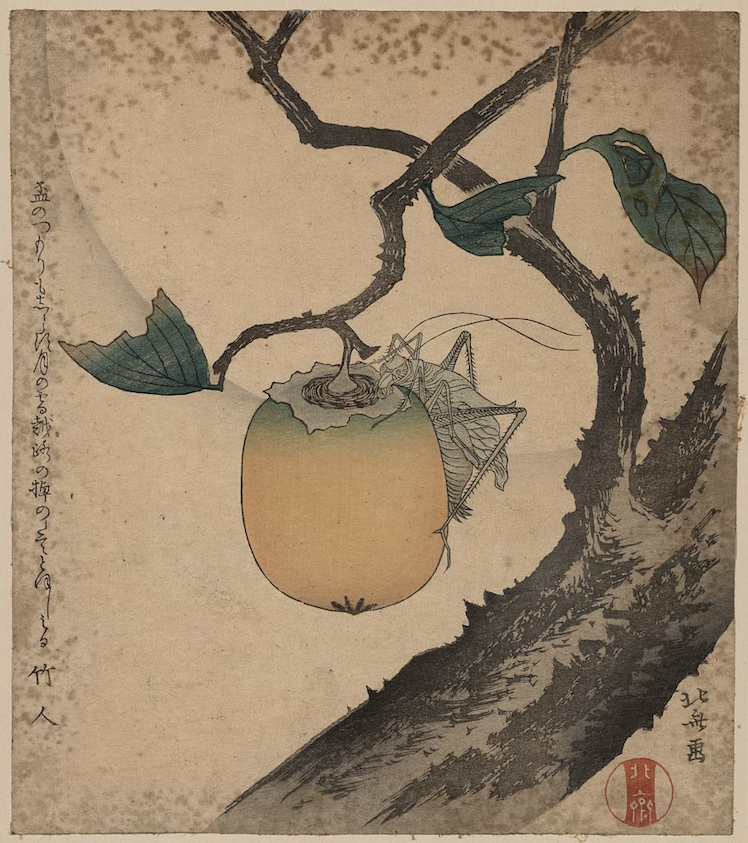
Persimmon and Cicada, with poem by Chikujin (or Takehito)
Attributed to Katsushika Hokusai

Edo period / Surimono woodblock print in shikishiban format
7 11/16″x6 13/16″ / Various collections, including Harvard Art Museums, Cambridge, MA

[There are five embedded links above]

View original post

Categories
Uncategorized

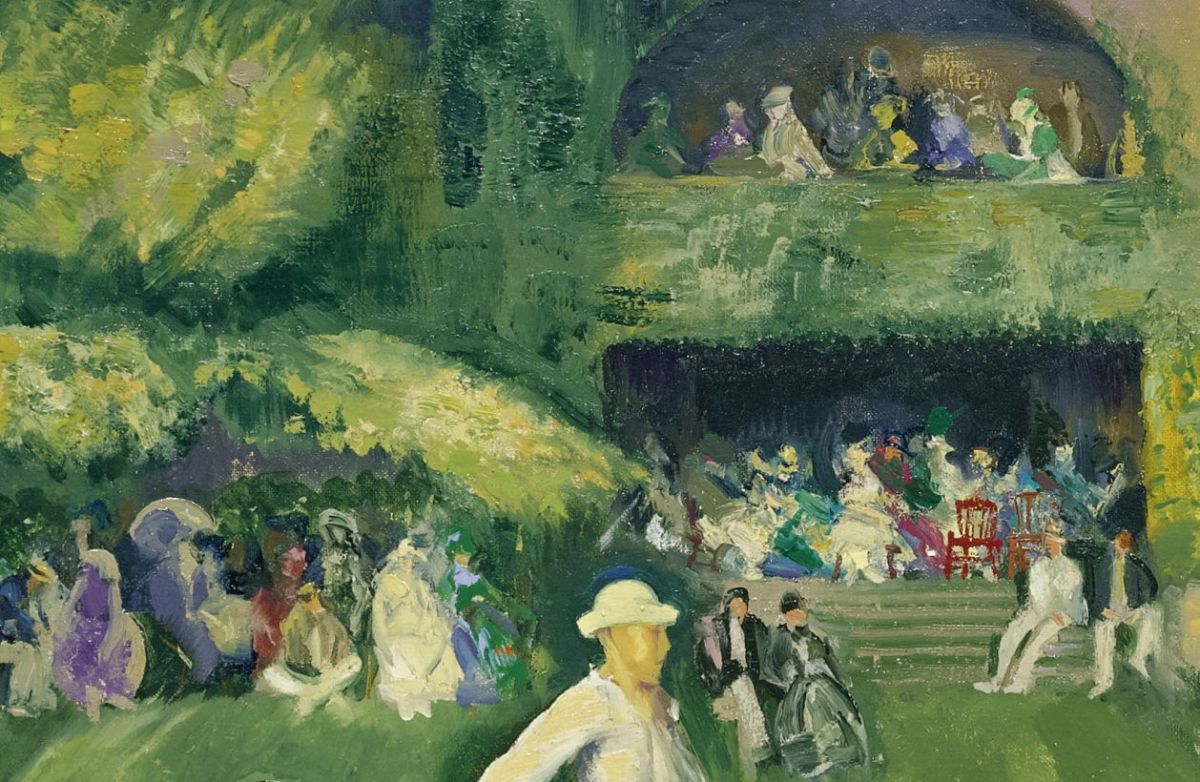
Paintings of 1920: Genre and landscapes 1

An interesting range of styles of work here from 100 years ago. Only the vivid colours in the last few pictures seem more modern.

hoakley's avatarThe Eclectic Light Company

This week’s look back at paintings from exactly a century ago moves on from the narrative and figurative works I showed last week to a selection of genre paintings, and makes a start on the many landscapes to come.

Although Naturalism and ‘social realism’ are supposed to have faded away by the twentieth century, after the Great War there were still plenty of fine painters who were depicting scenes from everyday life in realist style. Among them was Friedrich Eckenfelder, who reminds us that, while motor taxis may have been crowding the streets of the cities, in the German countryside little had changed.

eckenfelderwhitehorsesjolly Friedrich Eckenfelder (1861–1938), White Horses with a Jolly Peasant Group in the Wagon (c 1920), oil on canvas, 86.5 x 112.5 cm, Private collection. Wikimedia Commons.

White Horses with a Jolly Peasant Group in the Wagon is one of Eckenfelder’s largest studio paintings, and shows a merry…

View original post 786 more words

Categories
Book Reviews Literature Poetry St Ives

Histories of War as seen by two indispensible Poets-Part Two

The St Ives September Festival had a range of controversial poets come to visit. I remember there being a huge stir when D.M.Thomas came to read and the proctor’s of moral rectitude in the unlikely form of delegates from the Town Council were said to have occupied the back row to ensure that an unseemly did not take place. Then Gavin Ewart arrived one evening to give a reading in the decorative surroundings of the Penwith Gallery. I am most vague as to when I heard him -around the mid eighties I think. I remember how he was said to have been influenced by Auden and spending a very entertaining evening listening to the poet reading in an amusing and cultured voice that sounded very English some edgy and clever poems. I have been reading Martial at the moment and I have an inkling that Ewart might well have been entranced by that Latin satirist.

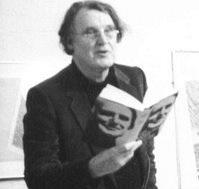
Gavin Ewart : London Remembers, Aiming to capture all memorials in London

Consider the poem which is entitled “The Death of W.S.Gilbert at Harrow Weald” which may be found on the net. It tells of the demise of the famous lyricist of the Gilbert and Sullivan operettas:-

Imagine that flat glassy lake in 1911,

a very Victorian part of the prosperous house,

(architect: Norman Shaw),

a beautiful hot summer’s day in 1911.

It proceeds to describe how two Victorian ladies in “decorous bathing garments” enter the lake where the younger gets into difficulties and Gilbert plunges to the rescue:-

He swims to her, shouts advice: ‘Put your hands on my shoulders!’

She feels him sink under her. He doesn’t come up.

She struggles to the bank, he is dead of heart failure.

and finishes with a typical Ewart touch in the next stanza with sweet advice to older men not to fool about with ladies –

But all the same it is good to die brave 

on a beautiful hot summer’s day in 1911.

Returning to the theme of my previous posting I think this a great poem-

This sanitisation of what war means and how it can falsely be portrayed parallels my previous posting of the poem by Tom Paulin.


Categories
Uncategorized

“Sonnet 39: O, how thy worth with manners may I sing” by William Shakespeare

Interesting Sonnet and separated from another interestingly at 37 on a similar theme. Patterson mentions the restless quality of the final sestet.

Categories
Classics Literature Poetry Uncategorized

Histories of War as seen by two indispensible Poets-Part One

Tony Harrison: The bard of Beeston | Prospect Magazine


Tony Harrison is a poet whom I feel I know rather well from his television appearances. He seemed to be on the box quite a lot around 2000 or so. By any criteria his is a radical poet from Leeds. In my imagination I see him as a radical voice from that period along with another favourite poet, Tom Paulin. Harrison is an engaged poet from Leeds and is probably best known for his long poem “V” which was published in 1985. He is an immensely clever poet immersed in his Northern background with which is radicalism is associated and his broad knowledge of the classics. He is a playwright, a film-maker and a translator. https://en.wikipedia.org/wiki/Tony_Harrison

In the poem which I discovered recently he is addressing his view of history. How the past has been recorded is an issue that perhaps becomes more pressing as we age. There is much debate about statues currently, who we should remember and what is both consciously and unconsciously addressed. What should we pass on to future generations and how to counteract distressingly current propoganda. This poem comes from the new edition of Selected Poems by Tony Harrison published by Penguin – you can find it here https://en.wikipedia.org/wiki/Tony_Harrison He is travelling with his children over moorland-

Past scenic laybys and stag warning signs

the British borderlands roll into view.

They read: Beware of Unexploded Mines

I tell my children that was World War II.

Those borderlands are becoming politically more controversial, there is a simple rhyme-scheme with those dangerous residues beneath the surface. The poem makes the link between khaki uniforms and cavalry twill. It brins to mind the smart casual wear demanded of upper ranks in their so called leisure time. The areas forbidden to play are those marked off by signs and fences which remind the reader of enclosures and the imperial system of trade providing employment in a regulated manner to mill workers. The latter similarly having their time divided by tolling bells.

Mill angelus, and church tower twice as high.

One foundry cast the work-and rest-day bells-

the same red cottons in the flags that fly

for ranges, revolutions, and rough swells.

The alliterative Rs remind us not only of the Union Jack but that to some it was considered the butcher’s apron. The rough swells is almost classical ( Homer’s wine-dark sea) and rowdy posh boys with the ambivalent firing ranges in the background.

 
Categories
Uncategorized

Paper Memories

Very interesting perceptions raised here and philisophical ideas about contingency and social aspects of knowledge etc.

tashtasticblog's avatartashtastic

No surprises – the peak of freshness revealing itself only in virtual unreality.
The gritty everyday mere variations on a theme grown grey.
A card in the post injects tales of different lives, all struggling within similar scenes,
but with different characters and different dreams.
Outdoors we become more distant; not only in physicality but in personality, venting inner frustrations in public confrontations as we queue for packaged food in stiff winding formation.
One thing – nature remains the same, takes no heed of gradual change; the conclusion of casual encounters or the fearful flinching or the braving of traffic and thorns in homage to our new motto ‘social distancing.’
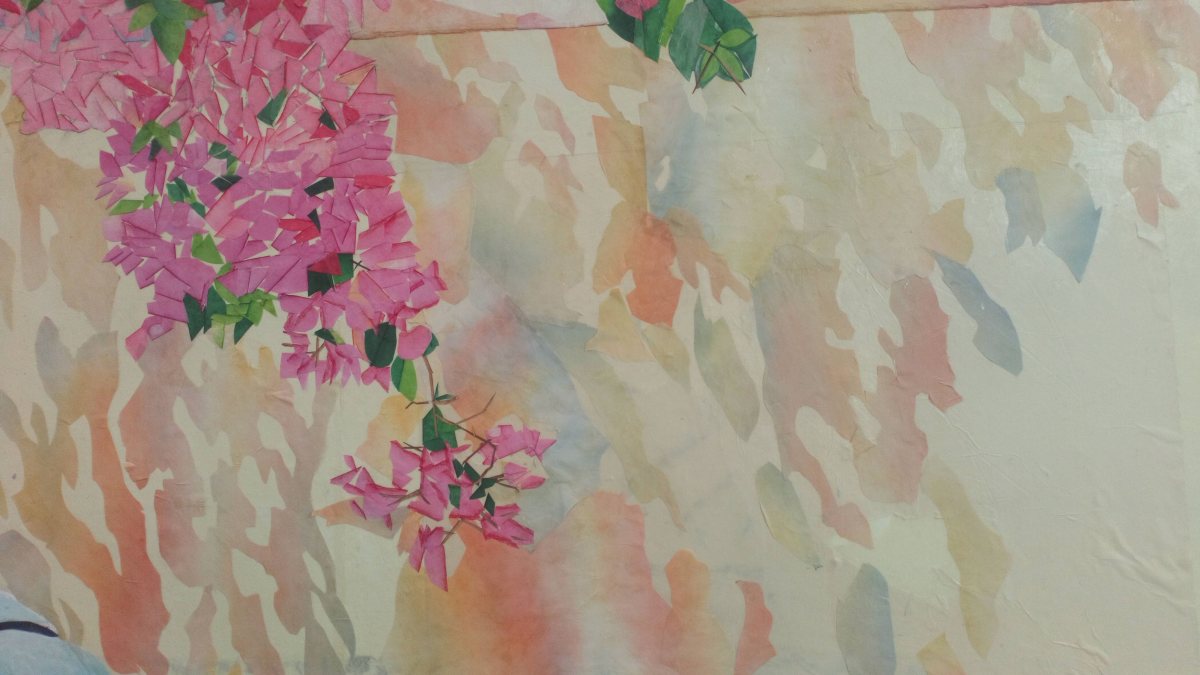
I fill my time with paper cuttings, shaping paper realities and marvelling how paper nothings become paper somethings, distinct from my static surroundings.
I cling to paper memories, remnants of unwelcome worlds – tickets sacred in their very materiality –…

View original post 42 more words

Categories
Uncategorized

Oh joy! Oh rapture! The Library in Penzance!

Thank you for that- normal service will return at the Morrab as soon as possible!

Gail A. Sisolak's avatarWroteTrips™

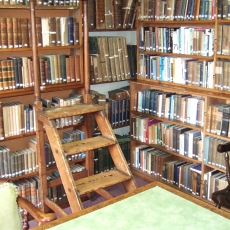
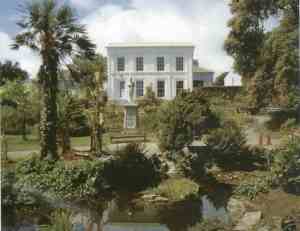
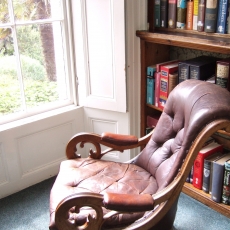
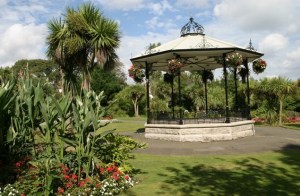
Image Courtesy of the Morrab Library Image Courtesy of the Morrab Library

Okay, that’s a bit of a stretch, but surely Gilbert & Sullivan would have had their pirates sing about the Morrab , an independent library situated in Penzance’s Morrab Gardens if they could have fit it in.

Image Courtesy of the Morrab Library Image Courtesy of the Morrab Library

The Morrab sounds like an ideal location for a Victorian operetta penned by the famous duo. Even the name seems apt. Morrab is derived from the Cornish words “mor,” meaning sea, and “app” meaning shore or coastal land.

Image Courtesy of Morrab Library Image Courtesy of Morrab Library

Set amidst beautiful gardens overlooking the sea, The Morrab is the sixth largest independent library in the United Kingdom.

Image Courtesy of Morrab Library Image Courtesy of Morrab Library

It is remarkable because it houses a marvelous series of collections which have gradually been acquired since the library was founded in 1818. The Morrab houses more than 55,000 volumes and is strong in literature…

View original post 96 more words

Categories
Classics Poetry Uncategorized

Martial 10.85 – Paradoxical use for a sunken old boat in retirement

Image may contain: outdoor

§ 10.85  ON LADON:
Ladon, a boatman on the Tiber,

bought himself when grown old,

a bit of land on the banks of his beloved stream,

.But as the overflowing Tiber often invaded it with raging floods,

breaking into his ploughed fields,

converting them in winter into a lake,

he filled his worn-out boat,

which was drawn up on the beach, with stones,

making it a barrier against the floods.

By this means he repelled the inundation. who would have believed it?

An unseaworthy boat became the protector of the boatman!

Harbour and River Boats of Ancient Rome

Iam senior Ladon Tiberinae nauta carinae

 Proxima dilectis rura paravit aquis.

Quae cum saepe vagus premeret torrentibus undis

 Thybris et hiberno rumperet arva lacu, 

Emeritam puppem, ripa quae stabat in alta,

 Inplevit saxis obposuitque vadis.

 Sic nimias avertit aquas. Quis credere posset? 

Auxilium domino mersa carina tulit.

Moving on from ancient boats protecting retired boatmen, I was intriged by the article in the New Scientist telling how an unmanned ship has just made it’s way with very little remote steerage through the Panama Canal.

https://www.newscientist.com/article/2260008-us-navys-huge-uncrewed-robot-ship-has-journeyed-through-panama-canal/