Categories
Uncategorized

Farewell Uderzo, illustrator of Asterix

europeancollections's avatarLanguages across Borders

Albert_Uderzo_2012 Albert Uderzo in 2012 (via Wikipedia)

Albert Uderzo, illustrator of the popular Asterix adventures saga, passed away on March 24th at the age of 92, a few months after the comic strip, co-created with René Goscinny, turned 60 years old. This anniversary was much celebrated last year in France. Furthermore, 2020 is the bande dessineé (BD) year at the BnF (this will be covered later in another post).

The Asterix adventures have entertained, amused and captivated generations of young and less young readers. The two protagonists of the series, Asterix and Obelix, and their village of indomitable Gauls who always repel the Roman troops, have become universally known, and their series is one of the most popular created in the history of comics. Its remarkable success has not faded with time, it is the best selling European bande dessinée saga (370 million copies) and the most translated comic (111 languages).

View original post 623 more words

Categories
Uncategorized

Jazz Appreciation Month: Album Cover Art~ April 9

Christy's avatarThe Misty Miss Christy

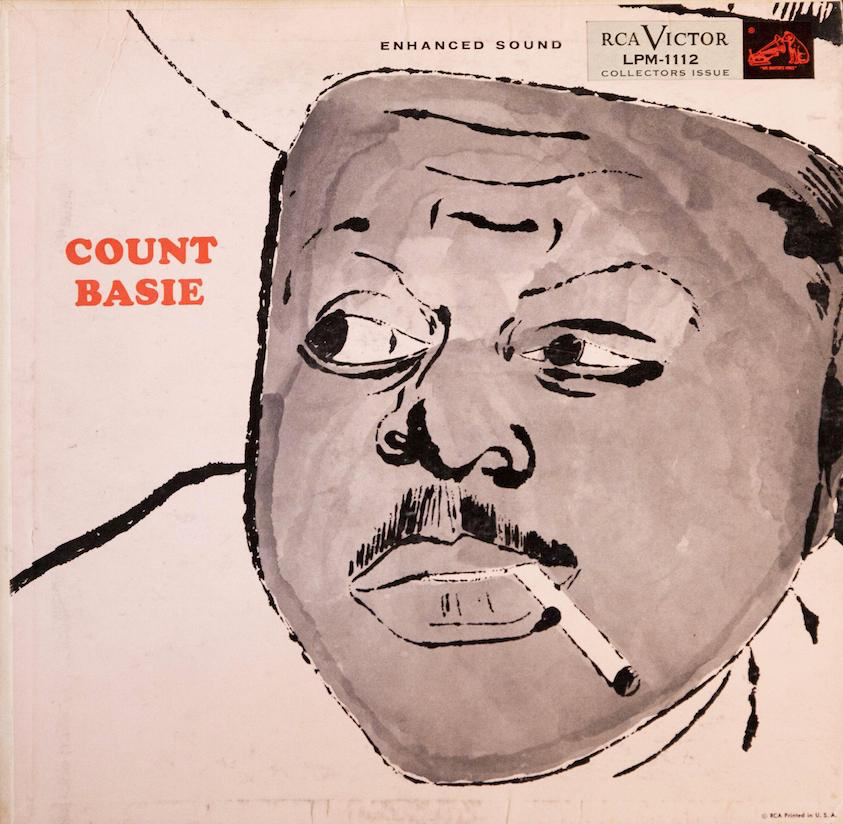
Count BasieAnd His Orchestra

1955 / RCA Victor LPM-1112 / 12″ 33 1/3 RPM / Cover Illustration by Andy Warhol

[There are four embedded links above]

View original post

Categories
Art and Photographic History Art Exhibition Reviews

Musee Antoine Bourdelle- Montparnasse -Entry Nine Euros

I did not know when I arrived here that students in the 18th Century used to stand on a nearby hill  and recite their poems. Hence the nickname Mount Parnassus. Like many a modern flaneur, however. I associated the quartier with the jazz loving Americans of the 1920s. The habitués of the Café du Dôme rubbed shoulders with the ‘crowd’ as they called themselves; Ernest Hemmingway, Sylvia Beach, John Rodrigo Dos Passos and Ezra Pound. This was the Lost Generation fleeing prohibition living it up in cheap dodgy hotels – later to be followed by Henry Miller. These fading lyrical echoes in the shade contrasted with the undistinguished entrance to the hidden charms of the Musee.

Once into the museum, you enter the creative space of Antoine Bourdelle(1861-1928), the pupil of Rodin and the teacher of both Matisse and Giacometti. It was in 1926 that this typical Parisian atelier was to be turned into a museum. The quiet sanctuary of the front garden gave me the first glimpse of four sculpted figures including La Victoire (Victory) and l’Eloquence (Eloquence) surrounded by a secluded peristyle. At the time of my visit, I was unaware that there were over 500 works of art here. I simply sat and made a few sketches of the first few of these impressive statues.

Passing into the Great Hall, which was built in 1961, for the centenary of the artist’s birth, I encountered an impressive array of magnificent figures some of which towered way above the visitors. Interspersed between these at the further end were brightly colourful dresses by famous contemporary couturiers. This museum has frequently had special exhibitions and this focussed on the fashion of dresses from the back. (Dos à la mode}.However my attention was taken by the famously energetic sculpture of Hercules the Archer.

Bourdieu made some 12 versions of this dynamic sculpture. The model was a certain athletic Commandant Doyen-Parigot who twisted his muscular body into the required difficult posture. He contorted his body in demanding fifteen-minute sessions. Bourdelle also famously used his rather primitive Kodak camera to facilitate his project. A wealthy financier, Gabriel Thomas was deeply impressed by this statue of Hercules in 1910. Thomas together with Gabriel Astruc, the impresario that brought Rubenstein, Caruso, Toscanini and famously Diaghilev to Paris, set up a real estate company to build a new theatre. This became the Theatre des Champs-Elysee, the façade and inner atrium were, under Thomas auspices, to be decorated by Bourdelle. This was to be the debut of Art Deco style, a feature of the new modernism.

Returning through the studios there were many fine sketches by Bourdelle including those he made of the dancer Isadora Duncan. Proceeding through an outlying corridor I came across the Beethoven heads. These imaginative and expressive works began around the time he started his association of 15 years with Rodin. Altogether he made some 40 of such masterpieces.

In the tranquillity of the ivy leafed inner garden I encountered a huge and towering bronze. This was the statue of Centaure Mourant. From just where I stood, I could not see more than the torso of the horse and only by moving gingerly around the piece could I discern the twisted direction in which the head lay. Inspired by classical myth and considering its construction in 1914, Bourdelle was asked why does the centaur die? Bourdelle replied in Nietzschean mode, “He dies like all the gods- because no one believes in him any more.”


Categories
Literature Penwith Poetry St Ives West Cornwall (and local history)

West Penwith by Adrian Stokes

This poem interests me and looks fairly simple – let us  consider one or two lines and see if we can explore some more deeply. Indeed, this is a poem about surfaces and depth with a number of words that suggest rest- abolish pace, slow, apart and torpor. There is too a general feeling for sculpture as is expressed in his remarks about stone and it’s weathering or erosion by water. Details about Stokes may be found at his Wikipedia entry where it states about his early writing;” In The Quattro Cento he characterized the intense Early Renaissance feeling for material and space as ‘mass-effect’ and ‘stone-blossom’. The stone—deeply respected as a medium – is, he said, ‘carved to flower’ thereby bringing to the surface the fantasies the artist reads in its depths.” Let us continue to dig beneath the surface of these lines.

There seems to be a general feeling of relief perhaps reflecting Stokes returning to Cornwall. The lines about outhouses and stone retrace unmeagre time seems somewhat demanding. Does this mean that such structures seem and suggest aeons of time? Meagre is a synonym for sparse. So this may mean that the scene implies the extensive nature of time. As Stokes studied philosophy, then it is quite possible that some sort of Bergsonian concept of time.{See https://www.bbc.co.uk/programmes/m0004s9w }

In the next line herd is somewhat unusual- maybe the light from the shining mica in the granite is being collected by the eye. It also is a homophone for heard which brings a whimsical feeling of  synaesthesia together with the metal clang of time colliding with rhyme. In the next stanza there is hoard and heart which may be associated with the unusual word hurd, the coarse parts of flax or hemp that adhere to the fiber after it is separated. — called also hards. This sounds very much like the Golden Fleece and adds to the reference to the early Cornish tinners. A milksop is a person who is indecisive and lacks courage. Milksop can be a piece of bread dipped in milk. The flower might mean a milkwort  or just a general term for any flower in a field which may have cows in it!

Cow Dairy Happy Stock Photos - Download 2,051 Royalty Free Photos

The word also brings to mind that Stokes was deeply interested in psychoanalysis and was in fact an analysand of Melanie Klein whose work focused around infantile phantasy at the breast. He was also a friend of Barbara Hepworth whom he brought to St Ives where he lived near The Cornish Arms pub with his wife Margaret Mellis, The feelings of support, skin texture and associated tactile imagery come out in the second section where closeness is increased by the use of our. This underlying emotion of support and nursing passivity brings to an end this interesting poem.

The background about Adrian Stokes and his leading contribution to modernism in St Ives may be found at https://www.stivesart.info/lyrical-light/

A useful discussion on Margaret Mellis is at http://www.artcornwall.org/interviews/Margaret_mellis.htm

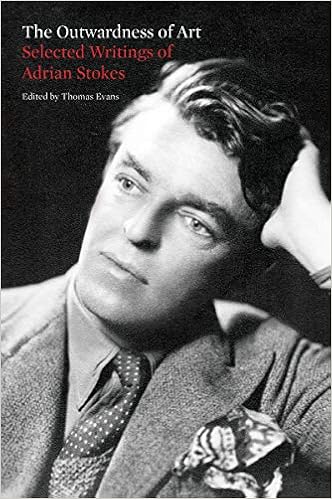
The Outwardness of Art: Selected Writings of Adrian Stokes: Amazon ...


Categories
Uncategorized

Wayne Gudmundson (b. 1949)

Categories
Art and Photographic History Poetry

A Rispetto on Edward Hopper’s Cape Cod Morning, 1950

From window bay she looks out towards morning

light.  Sun rays illuminate pale blue wooden

cladding. Bent forward in desperate longing,

she seeks relief from her worries. Chiming ten

the clock is unheard by the woman leaning,

scanning beach and beyond  urgently searching

for her son’s return.She discerns no footstep

nor boy coming with wet net dragging to drop.


I have been reading about John Berryman and Robert Lowell on the Cape and looking at photographs of this interesting location. Next day, after trying to write this fairly simple verse form I came across an article about the topicality of Edward Hopper in The Guardian and this can be seen at https://www.theguardian.com/artanddesign/2020/mar/27/we-are-all-edward-hopper-paintings-now-artist-coronavirus-age

Details of the Italian form Rispetto can be found along with other simple fotms at

https://owlcation.com/humanities/10-Types-of-Short-Poetic-Forms


Categories
Classics Literature Poetry Uncategorized

More Lowell and some recommended reading

Sailing Home from Rapallo
BY ROBERT LOWELL
[February 1954]

Your nurse could only speak Italian,
but after twenty minutes I could imagine your final week,
and tears ran down my cheeks….

When I embarked from Italy with my Mother’s body,
the whole shoreline of the Golfo di Genova
was breaking into fiery flower.
The crazy yellow and azure sea-sleds
blasting like jack-hammers across
the spumante-bubbling wake of our liner,
recalled the clashing colors of my Ford.
Mother traveled first-class in the hold;
her Risorgimento black and gold casket
was like Napoleon’s at the Invalides….

While the passengers were tanning
on the Mediterranean in deck-chairs,
our family cemetery in Dunbarton
lay under the White Mountains
in the sub-zero weather.
The graveyard’s soil was changing to stone—
so many of its deaths had been midwinter.
Dour and dark against the blinding snowdrifts,
its black brook and fir trunks were as smooth as masts.
A fence of iron spear-hafts
black-bordered its mostly Colonial grave-slates.
The only “unhistoric” soul to come here
was Father, now buried beneath his recent
unweathered pink-veined slice of marble.
Even the Latin of his Lowell motto:
Occasionem cognosce,

seemed too businesslike and pushing here,
where the burning cold illuminated
the hewn inscriptions of Mother’s relatives:
twenty or thirty Winslows and Starks.
Frost had given their names a diamond edge….

In the grandiloquent lettering on Mother’s coffin,
Lowell had been misspelled LOVEL.
The corpse
was wrapped like panettone in Italian tinfoil.


There is a truly fascinating analysis of this poem in one of my favourite books. That is to say -The Secret Life of Poems by Tom Paulin. This useful book gives an excellent insight into the way poetry works. That may sound a cliche but in Paulin’s review of this poem you can see just how the critic discovers the levels of meaning within the poem and finally expresses his open appreciation of it. There are a number of introductions to poetry that I have found helpful – Ruth Padel has done this for me in her two anthologies-

52 Ways Of Looking At A Poem: or How Reading Modern Poetry Can Change Your Life

and

The Poem and the Journey: 60 Poems for the Journey of Life

Poetry In The Library Michael Hofmann - Events - Shakespeare and ...

Michael Hofmann (photo) is yet another poet and critic as well as a brilliant translator. Yesterday I was reading his introduction to John Berryman’s Selected Poems which was also very clear and enlightening.


Categories
Book Reviews Literature Poetry

John Berryman as seen by Eileen Simpson

Well with social distancing in vogue, John Berryman may not be an entirely inappropriate choice for this, my 1000th post! Lots of my friends are writing Haikus which is very good practice, I think for trying to count syllables. So reading Eileen Simpson’s Poets in their Youth, here is my effort about Berryman at Harvard during the war, an early period in their marriage after a cold winter:-

The late spring drove ice

and snow away.Trees were in

leaf, John returned books.

There is a very useful and interesting review of this book by the London Review of Books by Christopher Reid https://www.lrb.co.uk/the-paper/v04/n22/christopher-reid/john-and-henry

Personally, I find Simpson’s book well written, with engaging descriptions of a wide variety of poets; Delmore Schwartz, R.P.Blackmur and Robert Lowell among others. It shows the struggle of Berryman to deal with his difficult upbringing and offers a vignette of academic life at Boston and Harvard as well as the pressure of life on the dole in New York. Eileen Simpson became a psychotherapist and she shows both considerable insight and sympathy for the young poets she met.

Philip Levine on Lowell and Berryman


Here is a sonnet by Berryman and I would be interested in what you make of it;-

Great citadels whereon the gold sun falls
Miss you O Chris sequestered to the West
Which wears you Mayday lily at its breast,
Part and not part, proper to balls and brawls,
Plains, cities, or the yellow shore, not false
Anywhere, free, native and Danishest
Profane and elegant flower,—whom suggest
Frail and not frail, blond rocks and madrigals.

Once in the car (cave of our radical love)
Your darker hair I saw than golden hair,
And where the dashboard lit faintly your least
Enlarged scene, O the midnight bloomed… the East
Less gorgeous, wearing you like a long white glove!


Categories
German Matters Literature Poetry

Suggestions for reading material when confined to barracks

Ex-Premier Harold MacMillan’s reputation has had it’s vacillations. However, many recall his stoically reading in a trench Aeschylus’ Prometheus in Greek. So whatever isolation we are advised or requested to endure in our very much more comfortable domestic surroundings, suitable reading matter might become Chicken Soup for the Soul. Glancing around the town’s charity shops and my own bookshelves has given me the opportunity to select some books suitable for longer reading. Here are my suggestions:-

A Pacifist’s War by Frances Partridge
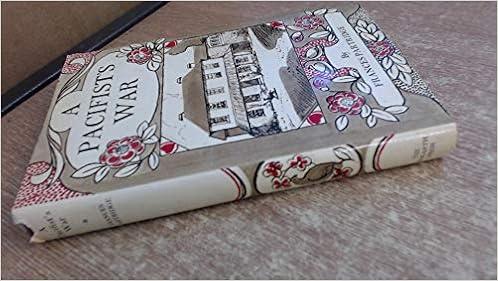
Diaries by Frances Partridge, dating from 1945-60, which provide an account of her association with the Bloomsbury group and focus on her life at Ham Spray in the Wiltshire downs with her partner Ralph, where they exchanged visits with a variety of notable friends. It is an engaging read set against the backdrop of uncertain news. The pace of life in the country in wartime is described with underlying courage and compassion.

Prisoners of Geography: Ten Maps That Tell You Everything You Need to Know About Global Politics

This volume is listed as a New York Times Best Seller as well as a Sunday Times Bestseller by a prominent journalist and broadcaster, Tim Marshall. When you are felling imprisoned and suffering from severe cabin fever then the spatial constraints of geography assist a useful understanding of the consequent political history. This is what one Amazon reviewer  writes, “I found this book to be an excellent concise summary of how the political world has developed to where it is today. I found the section on Russia particularly interesting and it opened my eyes to some factors driving the current position.The author has an incredible grasp of world affairs and our history. It made me wish I had spent more time in this area and has given me a thirst to spend more time in future.
It has turned me into even more of a dinner bore as I am now able to explain the background behind many of the current world conflicts with such confidence that I go unchallenged! “(Tri Jules)#

Fabled Shore – From the Pyrenees to Portugal by Rose Macaulay 

The author wrote, when this book was published in 1949, “A Greek mariner from Marseilles compiled in the sixth century B.C. a topographical sailing book of his voyage from the Lands of Tin in the northern seas, down the western coast of Portugal and round the Sacred Cape, and so along the southern coast of the Iberian peninsula, through the Pillars, and along the Mediterranean coast to Marseilles, his home. The later part of this sailing book, from the Tartessos region (near Cadiz) to Marseilles, had great detail, describing each bay, each cape, each port, for the benefit of those Greek merchant mariners who adventured and trafficked down that far and fabulous coast to the Pillars of Hercules, and beyond these into the dark and questionable Atlantic where the silver mountains stood back from the Tartessian shore.”#

Fluent in Greek and Latin this book is fluently written and also an introduction to Rose Macaulay’s novels and other writings. There is an interesting biography of Macaulay –

Rose Macaulay: A Biography by Sarah LeFanu

1606: Shakespeare and the Year of Lear by James Shapiro

Well, it was the year of terrorist activity and also the return of the plague but this is book, now available in paperback, traces Shakespeare’s life and times from the autumn of 1605, when he took an old and anonymous Elizabethan play, The Chronicle History of King Leir, and transformed it into his most searing tragedy, King Lear. Well researched and written this is a,fine sequel to the author’s earlier book, 1599.

If, however, you prefer to take it on the chin you could always read Thomas MannDer Tod in Venedig in German or even Albert Camus’s La Peste in French. You might be better off reading Proust in the original if your language skills are up to it- I have an easier version;
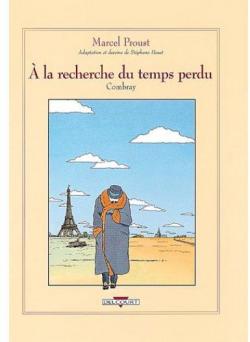
Image result for les temps perdus en BD 


Categories
Uncategorized

Realist Paintings of Piet Mondrian 2

hoakley's avatarThe Eclectic Light Company

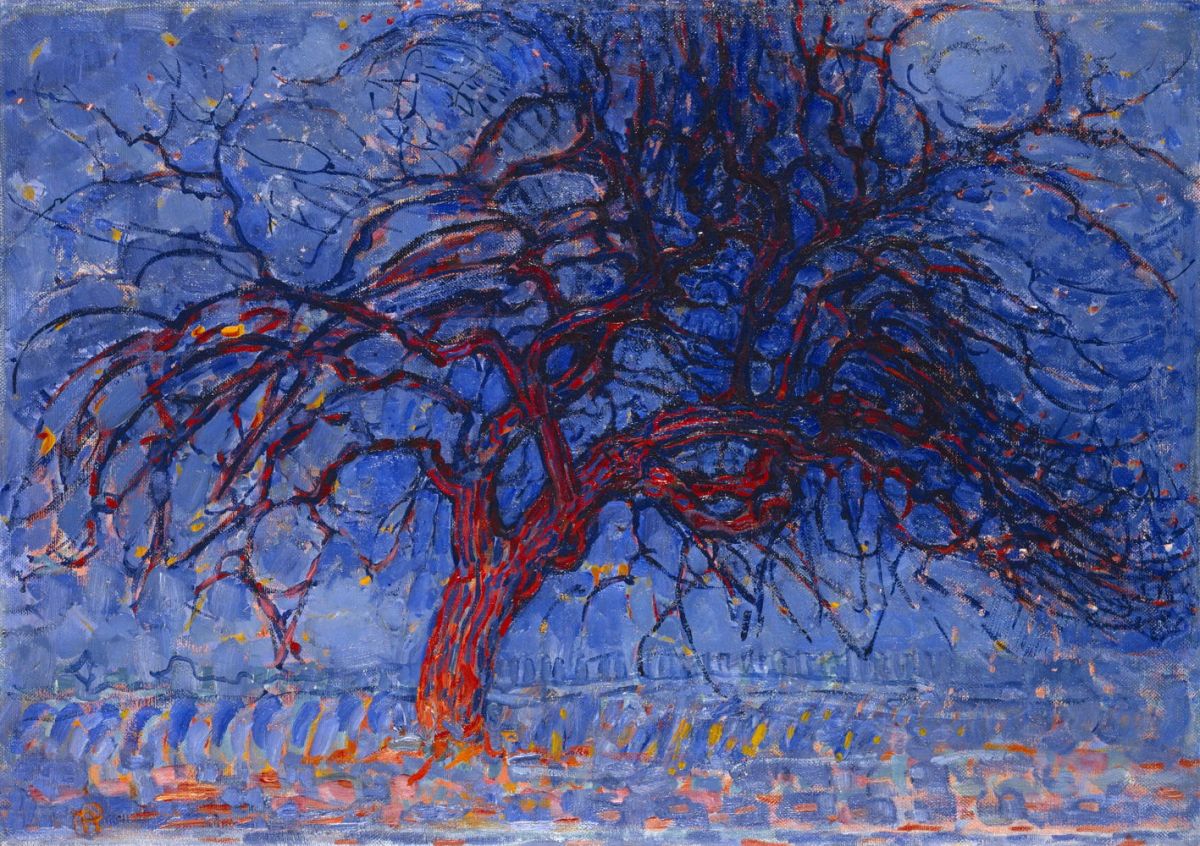
Around 1908, the Dutch artist Piet Mondrian (1872–1944) started to paint his first works which radically departed from the realist landscapes which he had been painting over the previous decade or more. He had also become increasingly attracted to spiritual movements, including the writing of Helena Petrovna Blavatsky, who founded the theosophical movement, and Rudolf Steiner’s Anthroposophy. These emphasise the attainment of deeper knowledge of nature by spiritual means, which was significant to his exploratory painting.

mondrianwinkelmill1908 Piet Mondrian (1872–1944), The Winkel Mill (Pointillist Version) (1908), oil on canvas, 44.4 x 34.2 cm, Dallas Museum of Art, Dallas, TX. Wikimedia Commons.

In this ‘Pointillist’ version of The Winkel Mill which he painted in 1908, his brushstrokes have become shorter and more prominent, resembling the small tiles used by some of the Divisionists, and his chroma has become almost shockingly intense.

Devotion, by Piet Mondriaan Piet Mondrian (1872–1944), Devotion (1908), oil on canvas, 94 x 61…

View original post 463 more words