I enjoyed reading this too- interesting approach but I put it down having been distracted by some other tome. I think people who enjoyed this might be interested in the French historian, Fernand Braudel who also takes a broad approach to historical themes. Thanks for posting.
Author: penwithlit
Freelance writer and radio presenter
Categories
The Blue, by Nancy Bilyeau

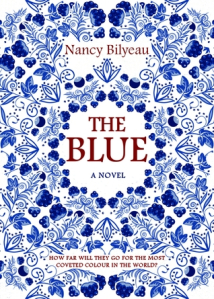 I enjoyed this historical novel, recommended to me by Emma from Words and Peace when she came across my review of Robyn Cadwallader’s Book of Colours which features a 14th century family of limners who create exquisite illuminated bibles and devotional prayer books. The Blue is likewise an historical novel about art, but it’s about 18th century porcelain, and the quest to create the colour blue.
The story features a lively young woman called Genevieve Planché, born in London after her parents fled the persecution of the Protestant Huguenots in Catholic France. Like many a contemporary heroine in commercial historical novels she is feisty, fearless and ambitious, and she accomplishes remarkable feats despite the constraints of her era. There have, of course, always been remarkable women, but still, the reader must often suspend disbelief, especially towards the end of the story when Genevieve is impudent towards people who might easily…
View original post 1,267 more words
“Small Boy”, the Headmaster shouts and points
as the sixth-formers snigger on the balcony above.
The lad in question trembles a little in the assembly beneath.
Another small boy before me into the green space.
“Sorry” he says as he cuts swiftly before me through the entrance.
He is heavily laden with a quart milk
bottle grasped under his desperate arm.
His earnest apology surprises and charms me.
He is in a hurry and speedily treads across
the muddy field.
A little lad with a worried hurried pace
or so it appears to me.
He seems keen to assuage some overbearing
parent figure.
I imagine some awful row between his mum and dad-
all he can do perhaps is help fetch the distant provisions.
As I watch his rapid progress in the cold and wet morning,
I sense his small act of restitution will be insufficient.
The parents will not be speaking hours into the afternoon
and my eyes tearfully respond at this thought.

Categories
on poetry

Without the poetic element in our own being, and without our poets and their great poetry, we would be brutes, or what is worse and what we are most like today: vicious automata of self will.
Albert Hofstadter
Not easy to keep up here with this area so this looks appealing. Sad that we have lost Clive James. Been catching up on Lee Murray as his new collected poems make a further impact.
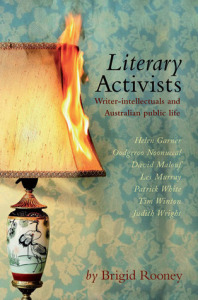 I wish I had time to finish this book, but it’s due back at the library. (As usual, *shrug* I have borrowed too many books at once).
However, it’s the ideas in the Introduction that interest me most. Brigid Rooney surveys the literary landscape from the 1940s to the present (i.e. the early 2000s at her time of writing) and so her primary interest is in the activism of Judith Wright, Patrick White, Oodgeroo Noonuccal, Les Murray, David Malouf , Helen Garner and Tim Winton. Of these only the last three are still living: Malouf is in his 80s, and Garner is not far behind; only Winton is younger than I am. However, I am more interested in the writer-activists that spring to mind from my recent reading: Indigenous writers exposing Australia’s Black history such as Alexis Wright, Marie Munkara, and Anita Heiss; authors tackling the issue of climate change…
View original post 828 more words
I totally agree with placing a high value on Fitzgerald. Her biographies of Charlotte Mew and her own curious intellectual uncles are fascinating too.

Penelope Fitzgerald ought to be to the novel of the next two hundred years what Jane Austen was to the last two hundred. Her irony is better, her observations sharper and she writes with the wisdom of age and misery not youth and precocity. Having initially squandered her gifts and then suffered hard luck she was able to choose more ambiguous moral stories then she might have done if she’d flourished earlier on.
Her moral vision was enhanced because she was an underdog. Her husband was an alcoholic who lost his career. They lived on a houseboat on the Thames which sank. She had to move into a small council estate flat and teach undergraduate entry to Oxbridge. She was, briefly, homeless. Her old-world snobbery and upper middle class upbringing were less than useless to her in these conditions.
Her unworldliness was extensive. Her children said she didn’t know what…
View original post 748 more words

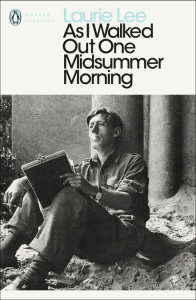
I first read this book about twenty-five years ago when I was little older than Laurie Lee was in this memoir. It begins in 1934 with Laurie embarking on a journey from his home in the Cotswolds where he heads eastwards along the south coast of England and then towards London. He is young, clueless and naive, but therein lies the appeal of the book. The young Laurie is looking for adventure but doesn’t quite know where or how to find it. Coming to the end of a labouring job in London Laurie decides to travel abroad and when he notes that he knows the Spanish phrase for ‘Will you please give me a glass of water?’ he decides to get a one-way ticket to Spain. Arriving in the north-west city of Vigo he walks slowly southwards, with his fiddle-playing being his only source of income. By the end of…
View original post 219 more words
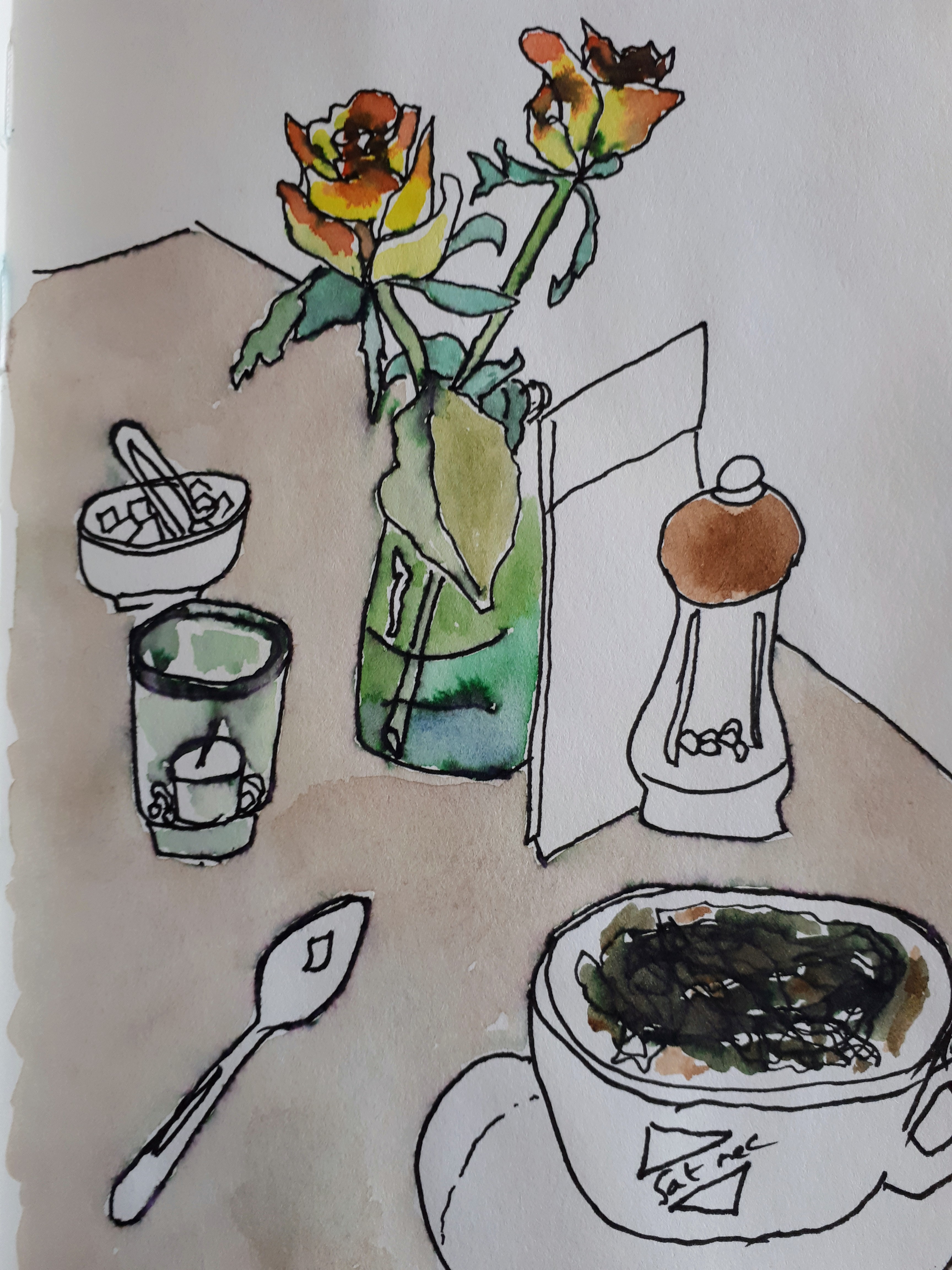
Bacon sandwich by special arrangement delivered!
A woman sits in the open boot of her car
across the way smoking.
In this cafe gunstig the garlanded kugeln are enormous in
subdued shades of green, transparent red with
broad, unsubtle white-stripes.
During the day, the unlit Christmas street decorations
make a telegraph exchange of wires.
People come and go moving swiftly in the busy street;
it is cold.
Everyone has survived the stormy, windy night,
looking somewhat self-congratulatory.
The board outside reads:-
“Two slices of toast with jam
and filtered coffee, two pounds fifty.”
Good Cornish value. Over opposite
on the dark green facade and neon-lit Subway
window daubed with large white snowflakes.
Further up in the carpet shop blue lights flicker reassuringly.
Pigeons gobble contentedly from windowsills above.
Penelope Fitzgerald is a wonderful writer and this is not actually her best novel. Her biography by Hermione Lee is also a wonderful read.
This has everything I want in a novel. It’s a good old-fashioned love story, there’s a trial with a shocking revelation, and it’s set in Cambridge in 1912 in a fictional college run by a blind master that’s never had anything female in apart from Starlings. There’s also an asylum run by an eccentric, although we never visit it. The London scenes are as vibrant as the Cambridge ones. The depictions of rain, cycle accidents, high table, London bridges, newspaper offices, rectories and hospital wards are all excellent. Penelope Fitzgerald has a genius for detail. She believed in ghosts (there’s a poltergeist in The Bookshop), but this novel is not definitive either way. It is a book about mystery and certainty; anyone who reads it as being in favour of science of the occult is not reading it closely enough. The discussion of physics reminds me of what someone…
View original post 57 more words
Categories
Une vie cachée

Après Tree of Life, auréolé de la Palme d’or en 2011, Terrence Malick revient en compétition au Festival de Cannes 2019 avec Une vie cachée.
View original post 64 more words
 penwithlit