Categories
Uncategorized

‘America’ by Franz Kafka (GLM VIII)

Jonathan's avatarIntermittencies of the Mind

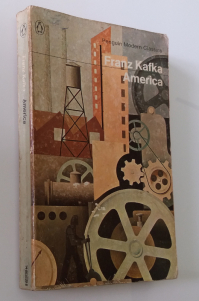
Although I would class Franz Kafka as one of my favourite authors I haven’t read anything by him for many years and I know very little about his life. The Trial was the first book that I read by Kafka which was then followed with The Castle, Amerika (I’m sure the copy I initially read retained the Germanic title though it must have been the same translation as here) and a few short stories including Metamorphosis, of course. I remember finding Amerika a bit dull in comparison to the other novels but recently I had begun to wonder what I’d make of it now—so I thought I’d read it for this year’s German Literature Month. My Penguin copy makes use of the 1938 translation by Willa and Edwin Muir together with an introduction by Edwin Muir and a short postscript by Max Brod, Kafka’s literary executor, both…

View original post 1,188 more words

Categories
Uncategorized

Out of the Shadows: Form and figures

Highspot for me this year was seeing the magnificent paintings of Joseph Wright in Derby.

hoakley's avatarThe Eclectic Light Company

According to ancient legend, the person who ‘invented’ painting was not a man, and did so by tracing the shadow of her boyfriend.

Dibutades, a maid of Corinth in Greece, was about to see her boyfriend sent away from the city on military service. As the daughter of a potter, she devised an ingenious way of making a portrait to remember him by: when he was asleep, she positioned a light to cast his shadow against a wall behind him, then she traced the outline of that shadow in the plaster. Once he had gone, her father then transformed his painted silhouette into the first relief sculpture by daubing clay within the silhouette.

jwrightcorinthianmaid Joseph Wright of Derby (1734–1797), The Corinthian Maid (c 1782-5), oil on canvas, 106.3 x 130.8 cm, The National Gallery of Art, Washington, DC. Wikimedia Commons.

In 1778, William Hayley told this story succinctly in his poem

View original post 1,503 more words

Categories
Uncategorized

Cornflower

apolla13's avatarNames Throughout the Ages

Cornflower is the name of a flower (also known as bachelor’s button) so named because it grew in cornfields. It’s made up of corn (a grain or seed of a cereal crop such as oats, wheat, and barley) which comes from Proto-Germanic *kurną (corn, grain, cereal) derived from a PIE root word meaning “grain”; and flower. Cornflower blue is also a color of a bright blue with a tint of purple.

Origin: Proto-Indo-European

23477d52214ac5792411234afcde5db5Pinterest

Variants:

  • Kornflower (English)

View original post

Categories
Literature Poetry Uncategorized

An Emily Dickinson -There is another sky

There is another sky,
Ever serene and fair,
And there is another sunshine,
Though it be darkness there;
Never mind faded forests, Austin,
Never mind silent fields—
Here is a little forest,
Whose leaf is ever green;
Here is a brighter garden,
Where not a frost has been;
In its unfading flowers
I hear the bright bee hum:
Prithee, my brother,
Into my garden come!

by Emily Dickinson

Categories
Uncategorized

Im Tunnel – Obdachlos – Zeichnung von Susanne Haun

Susanne Haun's avatarSusanne Haun

Der Tag der Eröffnung der Ausstellung Querbrüche Obdachlos nähert sich. Morgen ist es schon soweit (siehe hier).

Ich möchte euch nicht meine Arbeiten der letzten Woche für die Ausstellung vorenthalten. Alle ausgewählten Arbeiten sind inzwischen gerahmt, es war nicht so einfach zu entscheiden, welche Arbeiten in in das Café Motte und welche ich in der Schillerbibliothek hängen werde.

Die Austellung Querbrüche Obdachlos wird am 2. November 2018  im  Café Motte , Nazarethkirchstraße 40, 13347 Berlin ab 19 Uhr eröffnet.

Das Café Motte ist gleichzeitig Café, Bar und Galerie und wurde im Mai diesen Jahres von der Familie Kottmann eröffnet. Hier im Weddingweiser erfahrt ihr mehr über dieses ungewöhnliche Café darüber.

Die Kunsthistorikerin Meike Lander wird eine Einführung in die Ausstellung geben.

Die Ausstellung im Café Motte ist vom 2. – 11. November zu besichtigen. Öffnungszeiten von 12 bis 0 Uhr.

Gleichzeitig werden Werke von uns in der Schiller-Bibliothek, Müllerstraße 149…

View original post 25 more words

Categories
Uncategorized

The Naturalist Andersens: HA Brendekilde 1889-1894

I find these interesting – from their historical context as well as the combination of colours.

hoakley's avatarThe Eclectic Light Company

By the end of the 1880s, Hans Andersen Brendekilde (1857–1942) was still a good friend of L A Ring, but the latter spent more of his time with the Wilde family. Brendekilde had also been making good progress exhibiting at Charlottenborg, and 1889 completed what must be his best-known work.

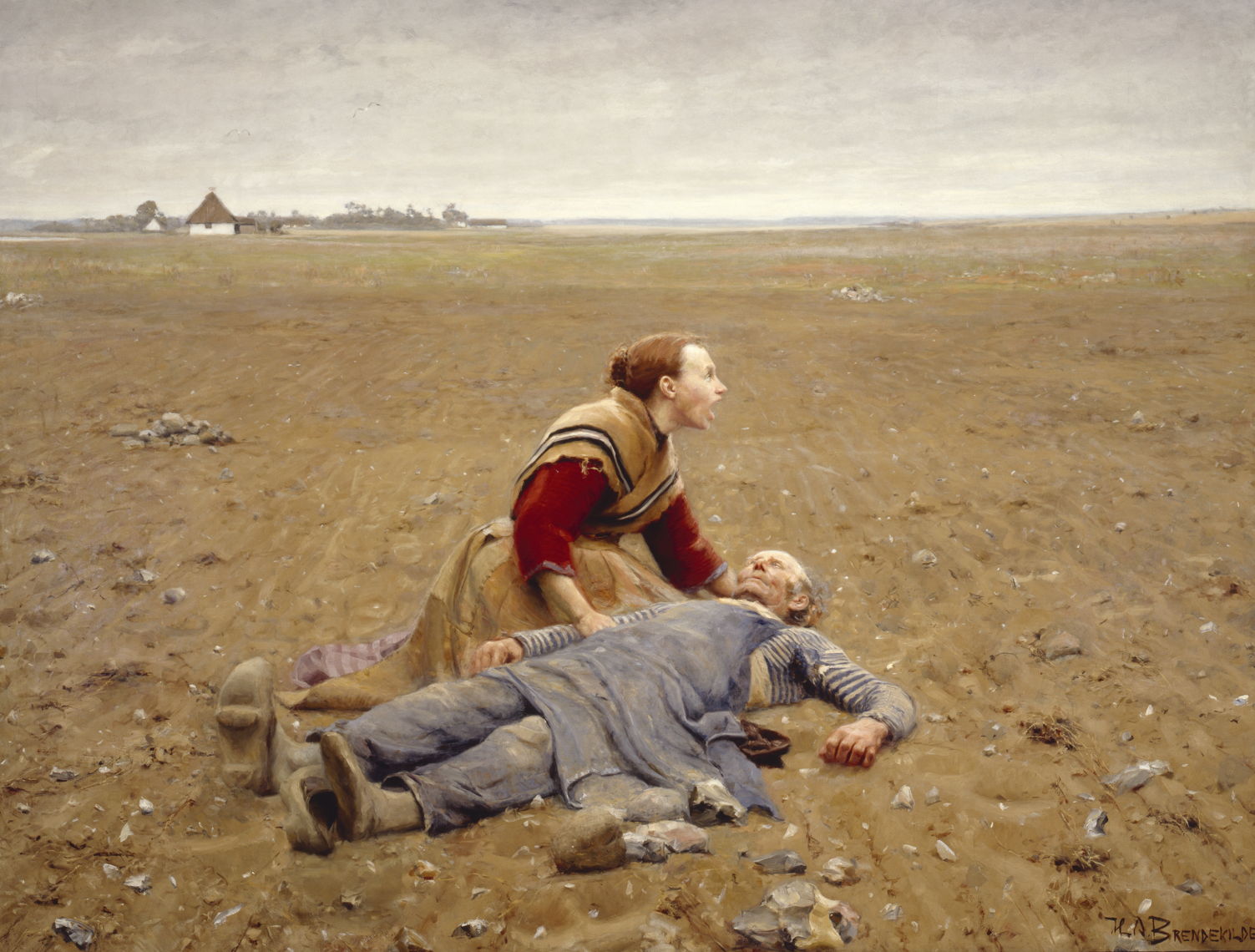
brendekildewornout Hans Andersen Brendekilde (1857–1942), Worn Out (1889), oil on canvas, 207 x 270 cm, Fyns Kunstmuseum, Odense, Denmark. Wikimedia Commons.

Worn Out (1889) is a painting which follows in the tradition of Jules Bastien-Lepage. An old man has collapsed when working in the fields. A younger woman, perhaps his daughter, is giving him aid and shouting for all she’s worth to summon assistance. The soil around them is poor, and full of flints; the two were engaged in the toil of the poorest of the poor, picking out the large stones and putting them into piles for collection. It’s backbreaking…

View original post 816 more words

Categories
Uncategorized

Green

…in a green shade!

Mathias LK's avatarFotografi

Green 15 juli 2010

View original post

Categories
Uncategorized

Obdachlos in der Stadt – Collage von Susanne Haun

Susanne Haun's avatarSusanne Haun

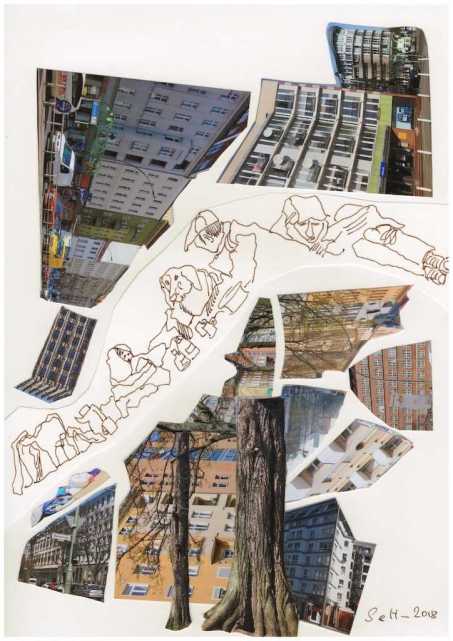
Obdachlos in der Stadt - 20 x 30 cm - Collage von Susanne Haun (c) VG Bild Kunst, Bonn 2018Obdachlos in der Stadt – 20 x 30 cm – Collage von Susanne Haun (c) VG Bild Kunst, Bonn 2018
Gestern habe ich die Arbeiten für die Ausstellung Querbrüche Obdachlos gerahmt. Es ist nicht mehr weit bis zur Ausstellungseröffnung,  in einer Woche geht es los. Heute habe ich die oben gezeigte kleine Collage geklebt, bzw. gezeichnet. Bei all den vielen Wohnungen in der Stadt sollte man doch eigentlich meinen, dass es auch ein Plätzchen für die Wohnungslosen gibt.

Heute habe ich Jörg, den Obdachlosen, der vor dem Karstadt in der Müllerstraße sitzt, eine Einladung gebracht. Er stand Modell für das von mir gezeichnete Portrait, das auch auf der Einladungskarte abgebildet ist, gestanden. Inzwischen hängen im Wedding einige Plakate zur Ausstellung und die “Obdachlosenszene” haben Jörg erkannt und auch Jörg selber hat sich erkannt.

Wenn ihr dem Link folgt findet ihr die genauen Daten zur Ausstellung und zu den Ausstellungsevents.

View original post

Categories
Uncategorized

Autobiography, a Very Short Introduction, by Laura Marcus #BookReview

Very interesting and most useful!

Lisa Hill's avatarANZ LitLovers LitBlog

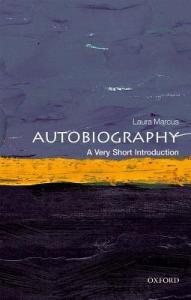
Life Writing is incredibly popular these days, and it came as no surprise to me to learn from This Very Short Introduction to Autobiography that Michel Foucault thinks that we have become ‘confessing animals’. The plethora of memoirs, autobiographies and ‘true confessions’ today seems to be evidence of a compulsion to record the complexities of human life, experience and memory, though it has to be said that some life writing seems of more lasting value than others.  Autobiography, a Very Short Introduction by Laura Marcus, a Professor at Oxford, is a fascinating exploration of this kind of writing, starting with the Confessions of St Augustine in the 4th century, through to its modern manifestations in multimedia, autobiographical novels and autofiction.
After the Introduction, there are eight chapters in this VSI (as well as the usual references, suggestions for further reading, and an index).

  1. Confession, conversion, testimony
  2. The journeying self
  3. Autobiographical…

View original post 1,550 more words

Categories
Uncategorized

Radical Views: Egon Schiele 4, 1915-16

Fascinated by the colour combinations and also by the different manner in which his work is carried out in different contexts.

hoakley's avatarThe Eclectic Light Company

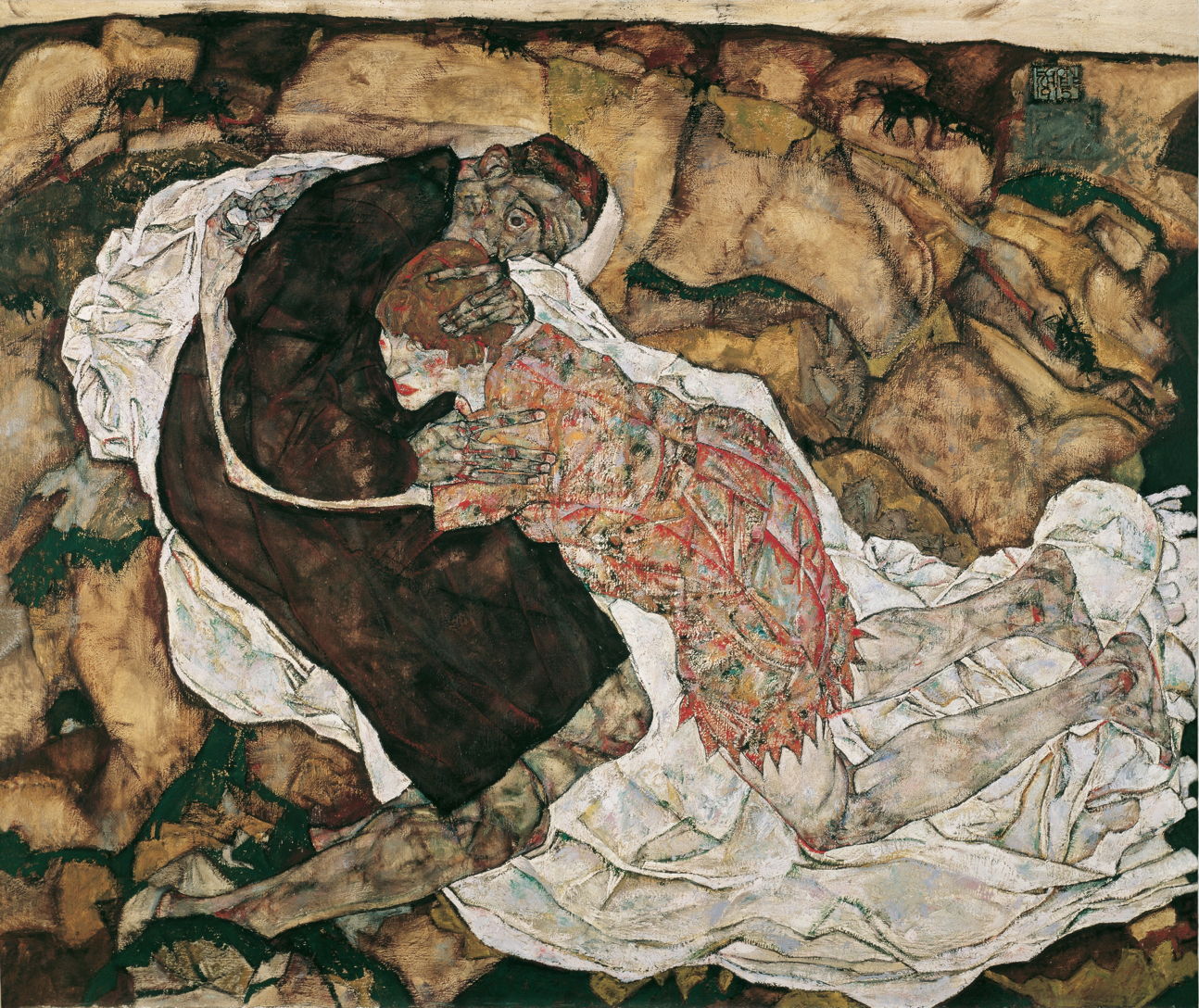
Egon Schiele’s landscape paintings from the early years of the First World War were innovative and exciting; his figurative work, which was even more radical, I find more of a challenge. Many of those works from 1915 centre on his personal relationships.

It appears that, when he married Edith Harms, Schiele had expected to maintain his relationship with Wally (Walburga Neuzil), with whom he had lived for four years. When he tried to explain this to Wally, she – perhaps not unsurprisingly – abandoned him immediately, and they apparently never met again.

schieledeathmaiden Egon Schiele (1890–1918), Death and the Maiden (1915), oil on canvas, 150 x 180 cm, Österreichische Galerie Belvedere, Vienna, Austria. Wikimedia Commons.

Schiele expressed this in his major painting of Death and the Maiden (1915), which was exhibited the following year in Berlin. The young woman is based on his earlier paintings of Wally, and the man is…

View original post 641 more words