Categories
Art and Photographic History Art Exhibition Reviews Uncategorized

British Surrealism at Falmouth Art Gallery

Agar, Eileen (1899-1991): Untitled, signed, inscribed 18/75, lithograph, 75.5 x 57 cms. Presented by Tremayne Applied Arts, St Ives.

There has been a renewed interest in works of British Surrealism in recent years. In summing up an exhibition in The Independent on the 26th May 2008 at The Middlesborough Institute of Modern Art- http://www.independent.co.uk/arts-entertainment/art/features/british-surrealists-minor-league-but-major-players-834236.html -Tom Lubbock wrote,” People have said that Britain was Surrealism’s original native land Alice’s Adventures in Wonderland, William Blake, the gothic novel, Gulliver’s Travels etc. Perhaps we didn’t need the whole movement-and-manifesto thing. But it produced, slightly by accident, a group of very interesting pictures that ought to have a wider showing, and which the Sherwin Collection is willing to lend.” Clearly symbolism and surrealism have obvious links in mythology and archetypes and such matters were thrown into the generally creative and tempestuous furore which grasped interest in the period between the wars.This climaxed in in the organisation of the International Surrealist Exhibition in London in 1936. There is some evidence of these issues in the paintings displayed in the current exhibition, mostly on loan in Falmouth from the Southampton Gallery. The artists on show include PAUL NASH,CECIL COLLINS, CERI RICHARDS, ROLAND PENROSE, JOHN TUNNARD, EILEEN AGAR &ITHELL COLQHOUN.

Some idea of the range of the Exhibition may be gained from the images to be found at this website, http://www.thisiscornwall.co.uk/pictures/Photos-British-Surrealists-Falmouth-Art-Gallery/pictures-16910494-detail/pictures.html

However, the most exuberant and baroque piece was a comparatively recent work by David Kemp – entitled “The Hanging Gardens of Basildon”. On his blog, Kemp comments, “It is one of a series of a dozen large plant forms, all influenced by “THE GARDEN OF EARTHLY DELIGHTS” an enigmatic painting by the great Hieronymus Bosch, which  explored many  aspects of medieval life, many of which might still be seen as relevant to the human condition, in our modern world?” This comment on the fantastic botanical forms and the connection with Bosch is reminiscent of the work of the VienneseSchool of Fantastic Realism as explified by Arik Brauer whose interest in Bosch he derived from his own tutor, Albert Paris von Gütersloh.

Arik Erich Brauer Die Honigkaeuferin

No visitor can possibly fail to be impressed by the peculiar botanical drawing, named “Prophylactic sea-mouth” by Edith Rimmington. The haunting form appears as some kind of elongated mutation of a dogfish egg-case with a coiling eel like flagellum.

However, for those interested in the development of the work of Paul Nash, his oil painting, “The Archer” will doubtless attract attention both for its muted complementary colours and the charmingly odd bucolic setting. A friend comments in a personal communication, “The Nash is one of his complex compositions worked on for years with bits from all over the place.  There is a letter by Nash about it in Tate Archives. The central ‘archer’ feature was a structure he made from an old toy boat, glass tube, twig, seaweed etc.  I don’t think it exists anymore other than as a photo. It looks more compelling in the photo with strong echoes of surrealist sculptures by Giacometti, Man Ray etc.  He constructed (like Lanyon), collected and photographed sculptural objects from which he derived elements of his paintings.

Paul Nash The Archer

The ‘target’ is from Men-An-Tol of course + mirrors etc; the shadow of the girl bottom right, sampled from De Chirico etc.etc.  All very sexual with the ineffective arrow being merely the shadow of the archer….. I’m not convinced that he managed to get it to cohere as an image.  I wish he had left the landscape dominant as with ‘Landscape at Iden’ http://www.tate.org.uk/art/artworks/nash-landscape-at-iden-n05047 where the symbolic elements infuse the composition naturally.”

Those interested in Roland Penrose’s work can consult http://www.rolandpenrose.co.uk/works.aspx

Categories
Literature Poetry

Autumn and Rilke, Keats usw.

René Karl Wilhelm Johann Josef Maria Rilke


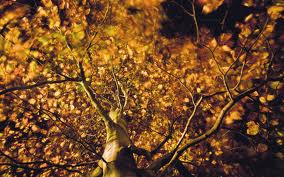
Rilke’s poem seems apt for the time of the year, although the recent summer might be difficult to describe exactly as  groß.

Herbsttag

Herr: es ist Zeit. Der Sommer war seht groß.
Leg deinen Schatten auf die Sonnenuhren,
und auf den Fluren laß die Winde los.

Befiehl den letzten Früchten voll zu sein;
gieb ihnen noch zwei südlichere Tage,
dränge sie zur Vollendung hin und jage
die letzte Süße in den schweren Wein.

Wer jetzt kein Haus hat, baut sich keines mehr.
Wer jetzt allein ist, wird es lange bleiben,
wird wachen, lesen, lange Briefe schreiben
und wird in den Alleen hin und her
unruhig wandern, wenn die Blätter treiben.

One translation may be found at http://picture-poems.com/rilke/images.html#Herbsttag

The phrase “picture-poems” is suggestive of imagism and Pound and Wyndham Lewis somehow seem to be current in the zeitgeist with the excellent production of Parade’s End on BBC2 adapted by Tom Stoppard in currently much in vogue. There are certainly lines which capture the visual imagination such as,” auf den Fluren laß die Winde los.” Although time and season are obviously central to the poem. This dynamic is reinforced in the second stanza with,” Befiehl den letzten Früchten voll zu sein;
gieb ihnen noch zwei südlichere Tage,
dränge sie zur Vollendung hin…..” Befiehlen here probably being an invocation so as to arrange, allow or ordain matters so that the fruits attain full ripeness.

The wind, frequently and beautifully referred to in Shakespeare’s sonnets, also connected with time for example Sonnet 54 as wanton, (” As the perfumed tincture of the roses,

Hang on such thorns, and play as wantonly

When summer’s breath their masked buds discloses:”) adds to the unruly, random, dégringole quality and to the sadness, possibly of the poet himself, in the final stanza.

Wer jetzt allein ist, wird es lange bleiben,
wird wachen, lesen, lange Briefe schreiben
und wird in den Alleen hin und her
unruhig wandern, wenn die Blätter treiben.

Of course, most English readers will immediately be reminded in this poem of Keats’s Ode to Autumn.

Season of mists and mellow fruitfulness!
Close bosom-friend of the maturing sun;
Conspiring with him how to load and bless
With fruit the vines that round the thatch-eaves run;
To bend with apples the mossed cottage-trees,
And fill all fruit with ripeness to the core;
To swell the gourd, and plump the hazel shells
With a sweet kernel; to set budding more,
And still more, later flowers for the bees,
Until they think warm days will never cease,
For Summer has o’erbrimmed their clammy cells.

Who hath not seen thee oft amid thy store?
Sometimes whoever seeks abroad may find
Thee sitting careless on a granary floor,
Thy hair soft-lifted by the winnowing wind;
Or on a half-reaped furrow sound asleep,
Drowsed with the fume of poppies, while thy hook
Spares the next swath and all its twined flowers;
And sometimes like a gleaner thou dost keep
Steady thy laden head across a brook;
Or by a cider-press, with patient look,
Thou watchest the last oozings, hours by hours.

Where are the songs of Spring? Ay, where are they?
Think not of them, thou hast thy music too, –
While barred clouds bloom the soft-dying day
And touch the stubble-plains with rosy hue;
Then in a wailful choir the small gnats mourn
Among the river sallows, borne aloft
Or sinking as the light wind lives or dies;
And full-grown lambs loud bleat from hilly bourn;
Hedge-crickets sing, and now with treble soft
The redbreast whistles from a garden-croft;
And gathering swallows twitter in the skies.

Keats wrote in 1819, ‘How beautiful the season is now–How fine the air. A temperate sharpness about it. Really, without joking, chaste weather–Dian skies–I never liked stubble-fields so much as now.”

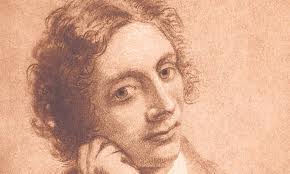
John Keats

For an insightful and a radical and political reading of Keats’s poem, it is worth looking at A Poetry Primer, The Secret Life of Poems by Tom Paulin (http://www.amazon.co.uk/Secret-Life-Poems-Poetry-Primer/dp/057127871X/ref=sr_1_1?s=books&ie=UTF8&qid=1346952035&sr=1-1)

in which the poppies are associated with the repressive/reactionary use of the Redcoats of the British Army and the grim reaper’s sickle with the cavalryman’s sword. If Rilke knew of Keats’s Ode as one imagines he did, he is unlikely to have been aware of such associations.

There is an entertaining discussion of Rilke in Clive James’s splendid collection, Cultural Amnesia: Notes in the Margin of My Time.

There is a detailed website in German at http://www.rilke.de/

Another discussion of Keats’s Ode is at http://www.guardian.co.uk/books/2012/mar/23/john-keats-autumnal-idealist-social-commentator

Categories
Book Reviews Uncategorized

Bomber County: The Lost Airmen of World War Two by Daniel Swift

BomberCounty is, of course, Lincolnshire where squadrons of Beaufighters, Wellingtons, Halifaxes and Lancasters were huddled in hangars for combined raids against enemy targets in German occupied Europe. As the war progressed the targets escalated, from attacks against the German Fleet, the industrial complex of the Ruhr and later, with the aim of breaking enemy morale, the targets included the cities-including Hamburg, Berlin, Dresden and Cologne. Night after night, crews already warmly dressed in jerseys and thick woollen socks zipped themselves into flying suits and made their way towards the enemy coast. Conditions were cramped and the temperatures plummeted as they gained altitude flying by the light of the moon to their appointed destinations.

By Daniel Swift

Later in the War, navigators were able to use the hazy reflected signals of H2S to guide them over the changing relief of the land towards enemy territory. Ack-ack batteries, enemy nightfighters and heavy flax over the target took a heavy toll on crews. This book relates the loss of one pilot, James Eric Swift of 83 Squadron on a raid on Munster, early in June 1943. His body was later discovered washed up on a beach in Holland. In this multi-layered book Daniel Swift, his grandson, sensitively retells this family story. He is further inspired to explore a range of related issues from poetry and literature to the morality of the bombing campaign as it was conducted later in the War.

The cover of this handsomely produced volume depicts the distorted perspective of aerial warfare as depicted by Paul Nash; it shows that visual arts produced effective responses to combat. The contrasting situation in poetry is examined throughout the book in counterpoint to the narrative. From classical times Virgil declared Arma virumque cano ( I sing of arms and man) in The Aeneid but this kind of warfare has weaponry that operates at speed and men have little time for reflection unlike the poets of The Great War; Owen, Rosenberg and Sassoon. Daniel Swift refers to the dirge like rhythms of Dylan Thomas’s A Refusal to Mourn the Death, by Fire, of a child in Londonwhich despite the title, is a deeply moving elegy. The author also has much to say of interest on TS Eliot and Virginia Woolf’s responses to the Luftwaffe’s raids.

Swift makes mention of a small number of poems written by pilots like those encouraged by C Day Lewis. There is an exhilaration in flight which has been memorably captured by the lyrical French writer Antoine de St Expurey. Poetry is also inspired by heroism and myths such as that of Ovid’s Daedulus and Icarus, Such matters prompt Swift to tender family reflections and musings on the writings of Auden and Isherwood. These considerations make this an unusual memoir for his Squadron Leader Grandfather about whom Swift has thoroughly researched the archives.

Poetry was very popular during the Blitz, however, it sits awkwardly with mass bombing and firestorming and its effect on civilian populations. Swift who teaches English Literature at SkidmoreCollege in upstate New York is aware of the arguments concerning the morality of debates on such issues which continue to rage on and indeed intensify in relation to more recent conflicts. Arguments and emotions proposed and expressed by Orwell, Churchill and the ethical arguments on the effect of such destructiveness by AC Grayling and other philosophers are briefly outlined.

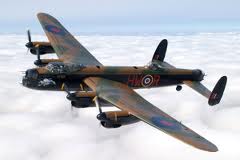
The Avro Lancaster Bomber

Did the barbarism of the Nazis justify the adoption of the ruthless means of waging war that led to Slaughterhouse V? The poetry falters as we consider events that ended that conflict; the use of Nuclear Weapons and the emerging political doctrine of Mutual Assured Destruction. Swift examines and acknowledges many of the issues including the guilt about delivering death at a distance –especially in relation to the poetic recollections of James Dickey; a poet to thank the author for here introducing to a wider audience.

This interesting, informative and hybrid book should remind us all that the poetry as Wilfred Owen stated, lies in the pity. This pity must eventually bring reconciliation. However, UN estimates on August 10th, less than a month ago, quoted in the Guardian of that date; show the number of child casualities in Afghanistan has soared by 55%, despite strict rules on the use of airpower by NATO troops. This heartfelt first book reminds us that the best memorial to lost  grandparents is to earnestly strive for peace for our grandchilldren

Categories
Art and Photographic History

De Kooning and friends


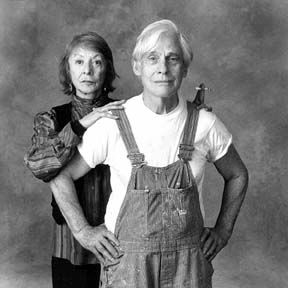
This photograph of de Kooning and his wife, Elaine is engaging in its own right and may be found on a very useful and visually appealing website, at http://artistandstudio.tumblr.com/archive a site which includes self-portraits, painters and their models, their ateliers in pictures and photographs. Looking at this handsome couple prompts further work into abstract impressionism, its history and associated figures. The photograph is particularly engaging and was taken by Ibram Lassaw.

Willem de Kooning(April 24, 1904 – March 19, 1997) was born in Rotterdam in the Netherlands and journeyed to New York at the age of twenty, he was a stowaway and was very taken by Jazz. He came to prominence when he painted the 105 public murals for the 1939 New York World’s Fair. As the Wikapedia article about him states,” As his work progressed, the heightened colors and elegant lines of the abstractions began to creep into the more figurative works, and the coincidence of figures and abstractions continued well into the 1940s”. At http://www.theartstory.org/artist-de-kooning-elaine.htm it states of the couple,” Elaine and Willem de Kooning endured a long and, at times, very tumultuous marriage. As much as each artist benefited from one another’s paintings and teachings, they mutually suffered due to constant infidelities and struggles with alcoholism.”

Of particular interest is the abstract expressionism developed by de Kooning’s erstwhile colleague, whose fascinating work can be viewed at http://www.tumblr.com/tagged/adolph-gottlieb?before=1338654139 Gottlieb joined de Kooning and others, including Mark Rothko from 1935 to 1940 in a group known as “The Ten” http://www.louisschanker.info/tendisc.htm. Some of Gottlieb’s ouevre is somewhat reminiscent of Paul Klee.


Mariner
Man Looking at Woman by Adolph Gottlieb

Gravity
Gravity


Categories
Uncategorized

Give me excess of it, that, surfeiting,
The appetite may sicken, and so die.
That strain again! it had a dying fall:
O, it came o’er my ear like the sweet sound,
That breathes upon a bank of violets,
Stealing and giving odour!,,,,,,,,

Fëanor's avatarArt of the Russias

If you were paying attention, you may have noted Konstantin Korovin’s painting of a woman holding a guitar in a post from about a week ago. It appears that lots of artists have been attracted to this theme, and many of them are Russian. There are also other great names – notably Renoir and Matisse and Botero and Braque. In fact, Vermeer also painted a guitar-playing woman, and she bears a strange resemblance to Alanis Morissette – at least to my eye.

I’ll tell you what I’ll do. I stick the images of the Russian (and I hope you recall that when I say ‘Russian’ I continue to mean ‘of the erstwhile Russian / Soviet empires / diaspora / modern Russia / post-Soviet republics’) artworks first, and then point you to a few links for the depictions of women with guitars from the rest of the planet. How about that?

View original post 282 more words

Categories
Uncategorized

Maud & Minet

Love these sketches-

Categories
Uncategorized

About “A SILENCE THAT SPEAKS” by Susan Soyinka

Interesting conversation with Susan today. This will be a great read later this year:-

Categories
Uncategorized

Friends have been telling me to read Grossman:-

Lisa Hill's avatarANZ LitLovers LitBlog

As part of my Year of Russian Reading, I have begun Life and Fate, Vasily Grossman’s magnum opus which was ‘arrested’ by the KGB in 1961.  It was the book that was arrested, not its author, because he was the highly esteemed Soviet journalist who had documented the Battle of Stalingrad, and the first to document the horrors of Nazism when Treblinka was liberated.  So the Soviets were careful not to make a martyr of him.

Grossman was allowed to go on writing, but Life and Fate was stuck in the censor’s office.  Beyond the USSR nobody knew about him or his work, so there were no campaigns for freedom of speech on his behalf as there were for other dissident writers, and he died in 1964 with the novel unpublished.  But a copy had been smuggled out on microfilm, and in 1980 it was translated by Robert Chandler.  It was recently reissued under the Vintage Classics imprint as…

View original post 623 more words

Categories
Uncategorized

An interesting review:-

Lisa Hill's avatarANZ LitLovers LitBlog

Although I count myself as more of a tourist than a traveller these days, I do like to know something about the countries that I plan to visit, more than I can get from the usual DK Guides.  And so because I’d come across Robert Cole’s excellent and very readable Traveller’s History of Paris, I got hold of a copy of A Traveller’s History of Russia, by Peter Neville in the same series.  But it was a bit of a disappointment.

Of course, it’s much easier to write about a tourist-friendly place like Paris than it is to write about a vast and complex place that has been hostile to western visitors for most of the twentieth century.  In fact, you have to admire any academic or author taking on the Russians as a field to specialise in, because until glasnost the country was difficult to visit without restrictions,  and it was obstructionist to anyone trying to find out what…

View original post 1,451 more words

Categories
Art and Photographic History Art Exhibition Reviews Uncategorized

Michael Ayrton, William Walton and John Minton

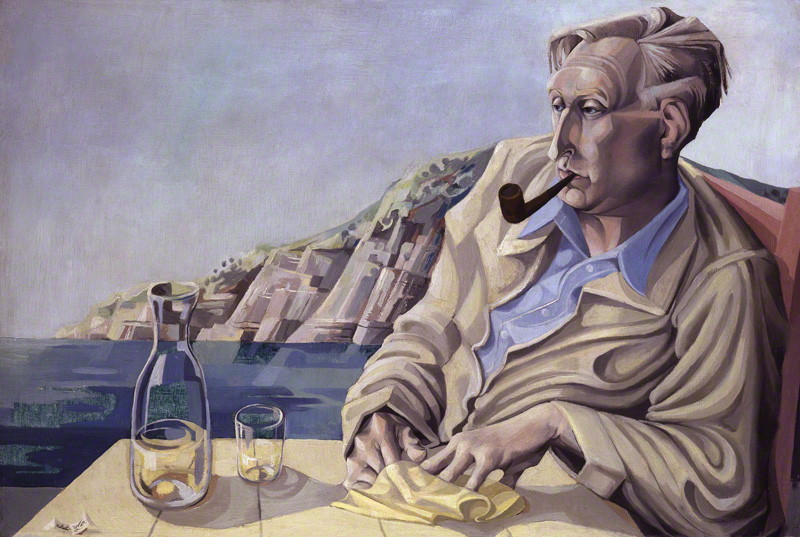
Sir William Turner Walton by Michael Ayrton

This painting can be found in the National Portrait Gallery in London and shows the celebrated composer, Sir William Walton in 1948 in Capri where he was recovering from jaundice. Its atmosphere suggests recuperation and the date also reminds us that Europe was slowly convalescing from the devastation of war. Walton was to permanently settle the following year on Ischia, a volcanic island in the Tyrrhenian Sea some 30 km from Naples, of which it is a province. The painting with its remarkable diagonal composition and repeated dynamic lines is reminiscent of Wyndham Lewis, who was a significant influence on Ayrton and whose portrait he was to paint, a few years later in 1955; this is discussed at this link- http://www.tate.org.uk/art/artworks/ayrton-portrait-of-wyndham-lewis-t07133. It is perhaps interesting to compare Wyndham Lewis’s well-known portrait of Ezra Pound with Ayrton’s Walton. The subject in the latter case looking a good deal more awake and serenely pondering the pleasures of the view and the prospects of reloading his pipe from the tobacco pouch.

In the portrait, Walton almost seems to be couched against the rocky promontory which cascades down to the sea-where the line of the cliff appears submerged rather than reflected by the water surface. The pale tones in grey, purple, reds and blues convey serenity to the composition. The repeated folds and linear motif however add a contrasting energy to the figure that is captured as though by a camera and achieve a monumental charm at what might otherwise not seem a particularly significant moment. The subject has a contemplative gaze which will be prolonged, indeed deepened by the next twist from the “fragrant weed”. The glass, decanter and bill/slip of paper seem to encourage the viewer to share into his own pensive mood.

Ayrton photograph
Ezra Pound 1939 Wyndham Lewis 1882-1957
Lewis was inspired by Lewis

Ayrton’s body of work at the Tate can be viewed as a slideshow at: – http://www.tate.org.uk/art/artists/michael-ayrton-681

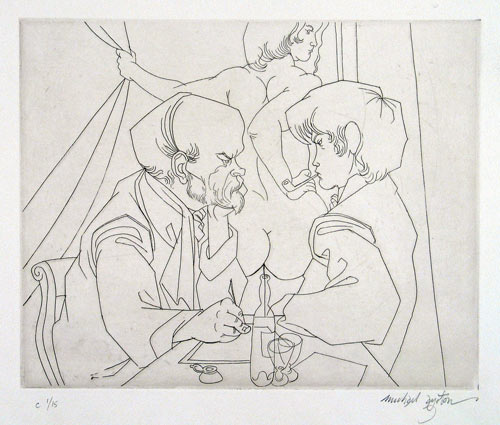
Verlaine and Rimbaud, Sketch by Ayrton

The Oxford Companion to Western Art, says this about English Neo-Romanticism, the movement which both Ayrton and as we shall see Minton both belonged, “Never more than loosely affiliated, its painters took inspiration from the early 19th-century landscapists: from SAMUEL PALMER and his circle at Shoreham, and from TURNER. They were also influenced by French post-CUBIST developments during the 1930s. The beginnings of the movement were dominated by GRAHAM SUTHERLAND and PAUL NASH, and, to an extent, by JOHN PIPER. Their conception of the anthropomorphic potential of natural landscapes and the objects within them had a powerful influence on the younger generation of artists who became popular in the early 1940s, developing a style of agonized and sinister landscape very different from their early exemplars. MICHAEL AYRTONJOHN MINTON, and John Craxton (1922– ) were the most expressive and innovative of the painters involved; others who shared the concerns of the movement for a time included Keith Vaughan (1912–77) and the Scottish artists Robert Colquhoun (1914–62) and Robert MacBryde (1913–66).”

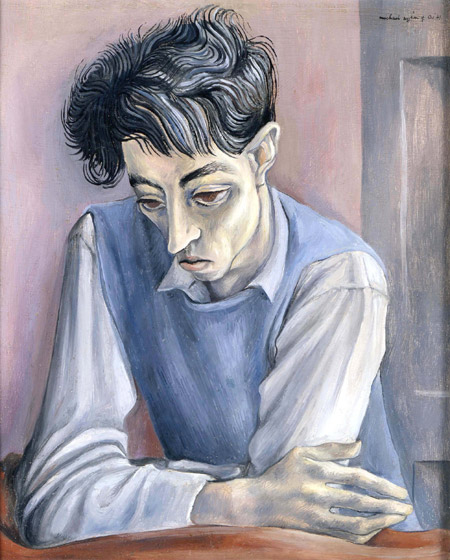
Minton by Michael Ayrton

John Minton (1917- 57) was a talented but troubled teacher,painter and stage designer who trained at St John’s Wood School along with Ayrton who strongly influenced him. This period between 1935 and 1938 was a time when neo-romanticism seems to have flourished, again the Oxford Companion to Western Art writes of him, “British painter, graphic artist, and designer, born at Great Shelford (Cambs.). After studying in London at St John’s Wood School of Art, 1936–8, he spent a year in Paris, where he shared a studio with MICHAEL AYRTON (with whom he later collaborated on designs for John Gielgud’s production of Macbeth at the Piccadilly Theatre, London, in 1942). Among the artists whose work he saw in Paris, he was particularly influenced by the brooding sadness of Eugene Berman (1899–1972) (More information also at http://www.sullivangoss.com/eugene-berman/) and Pavel Tchelitchew (1898–1957). (There is a You–tube, in Italian at http://www.encyclopedia.com/video/aQpp6epASaQ-la-danza-delle-ombre-pavel.aspx) In 1941–3 he served in the Pioneer Corps, and after being released on medical grounds he had a studio in London at 77 Bedford Gardens (the house in which RobertColquhoun (1914–62), Robert MacBryde (1913–66), and Jankel Adler (1895–1949) lived), 1943–6. From 1946 to 1952 he lived with Keith Vaughan (1912–77). Minton was a leading exponent of NEO-ROMANTICISM and an influential figure through his teaching at Camberwell School of Art (1943–7), the Central School of Arts and Crafts (1947–8), and the Royal College of Art (1948–56).

John Minton Self-Portrait

He was extremely energetic, travelling widely and producing a large body of work as a painter (of portraits, landscapes, and figure compositions), book illustrator, and designer. After about 1950, however, his work went increasingly out of fashion. He made an effort to keep up with the times with subjects such as The Death of James Dean (1957; London, Tate), but stylistically he changed little. Minton was renowned for his charm and generosity, but he was also melancholic and troubled by self-doubt. He committed suicide with an overdose of drugs.”

It has recently come to my notice that Lucien Freud also painted John Minton in 1952.http://www.leninimports.com/lucian_freud_gallery_5.html and that Bratby painted at least two portraits, one of which, a watercolour sketch was up for sale at Bonhams in Jan 2011 see http://www.artvalue.com/auctionresult–bratby-john-randall-1928-1992-portrait-of-john-minton-2824129.htm and another was available at this year’s International Art Fair and is shown below.

Minton by John Randall Bratby


  John Minton as painted by Lucien Freud
Modern Stage by Eugene Berman