Categories
Author: penwithlit
Freelance writer and radio presenter
Categories
A Room with Another View
Categories
Beautiful Light by the Sea
Wonderful work of the imagination. Brilliant!

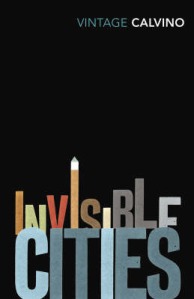 Invisible Cities is one of six entries for Italo Calvino (1923-1985) in 1001 Books You Must Read Before You Die. The other five are
- The Castle of Crossed Destinies(1969, translated into English 1977, on my TBR);
- If On a Winter’s Night, a Traveller(1979, translated 1981, see my review;
- Our Ancestors (1960, translated into English 1962. This is the ‘heraldic trio’ comprising The Cloven Viscount, (1952, translated 1959) The Baron in the Trees(1957, translated 1959, on my TBR) and The Nonexistent Knight, 1959, translated 1962);
- The Path to the Nest of Spiders(1947, translated 1947 and revised 1998. I have this on order); and
- Six Memos for the Next Millennium (1988, essays, translated 1993)
(Links on the titles are to Wikipedia.)
(1001 Books does not include The Complete Cosmicomics (1997), probably because it’s not a novel, it’s a collection of short stories, one of which…
View original post 1,334 more words
Sounds like some powerful and deep themes here and much of current interest.
If anything in this review raises issues for you, help is available at Beyond Blue.
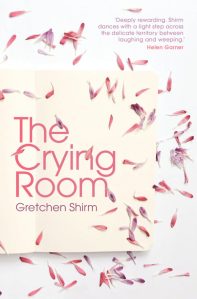 The Crying Room is Gretchen Shirm’s second novel: you can read my review of Where the Light Falls (2016) here. The novels share similar preoccupations: failures of communication, mismatched personalities and an enigmatic disappearance that leaves damaged people in its wake. But though both novels are quiet, reflective meditations that reveal the inner worlds of introspective characters, The Crying Room begins with a striking evocation of the commodification of grief in our time.
The Crying Room is literally, just that. Susie, who cries easily, is employed to monitor people who use it, who come in to shed their tears and then leave. She intervenes only if someone comes in on three consecutive days because it is her job to determine whether or not these recurrent visitors would benefit from counselling sessions. There is…
View original post 701 more words
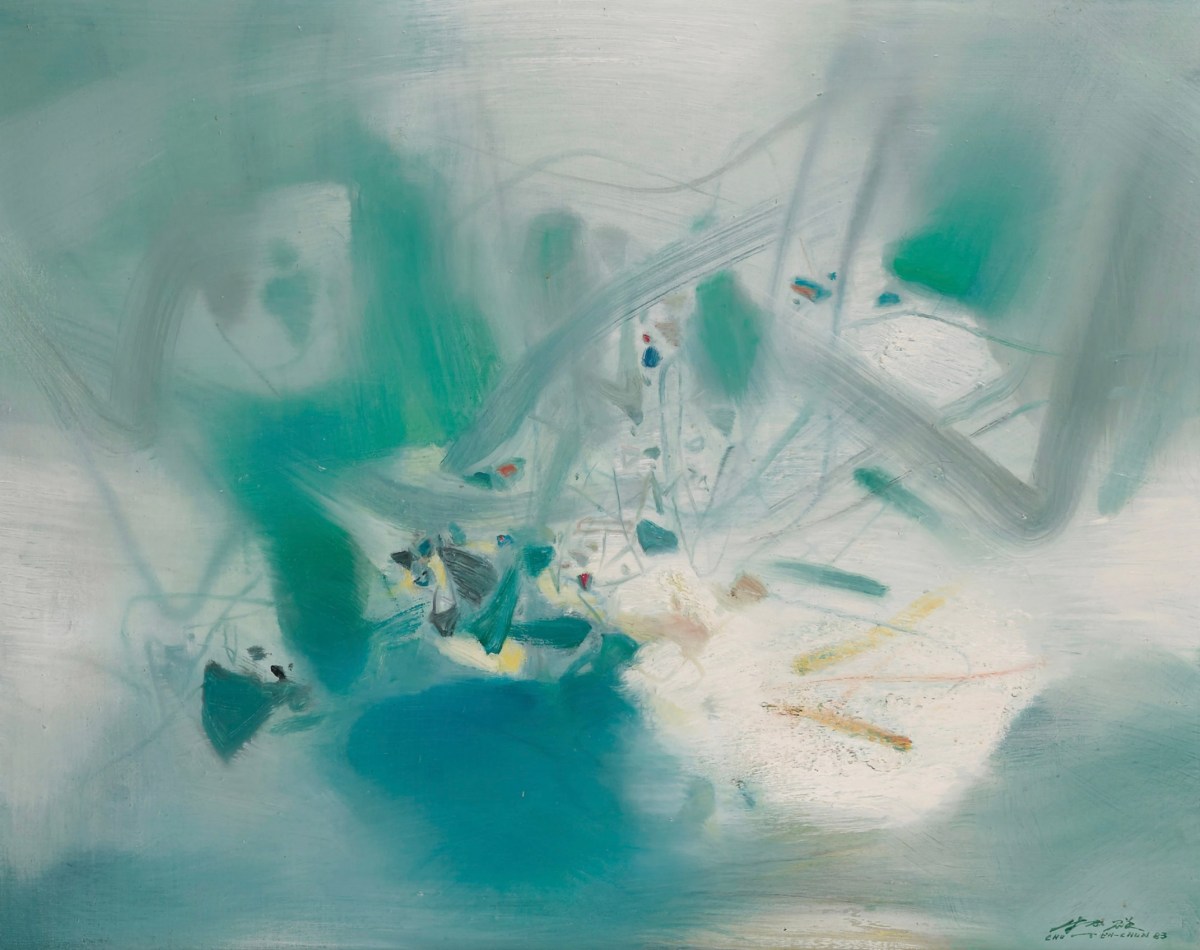
Lovely painting!

“From the heights of Montmartre in Paris, trumpeter Lucienne Renaudin Vary and accordionist Félicien Brut play “Le Temps des Cerises” (“The Time of Cherries”), a legendary love song composed in 1866 by Antoine Renard with lyrics by Jean-Baptiste Clément and reimagined in this duet version by Domi Emorine.”
See More
Read More
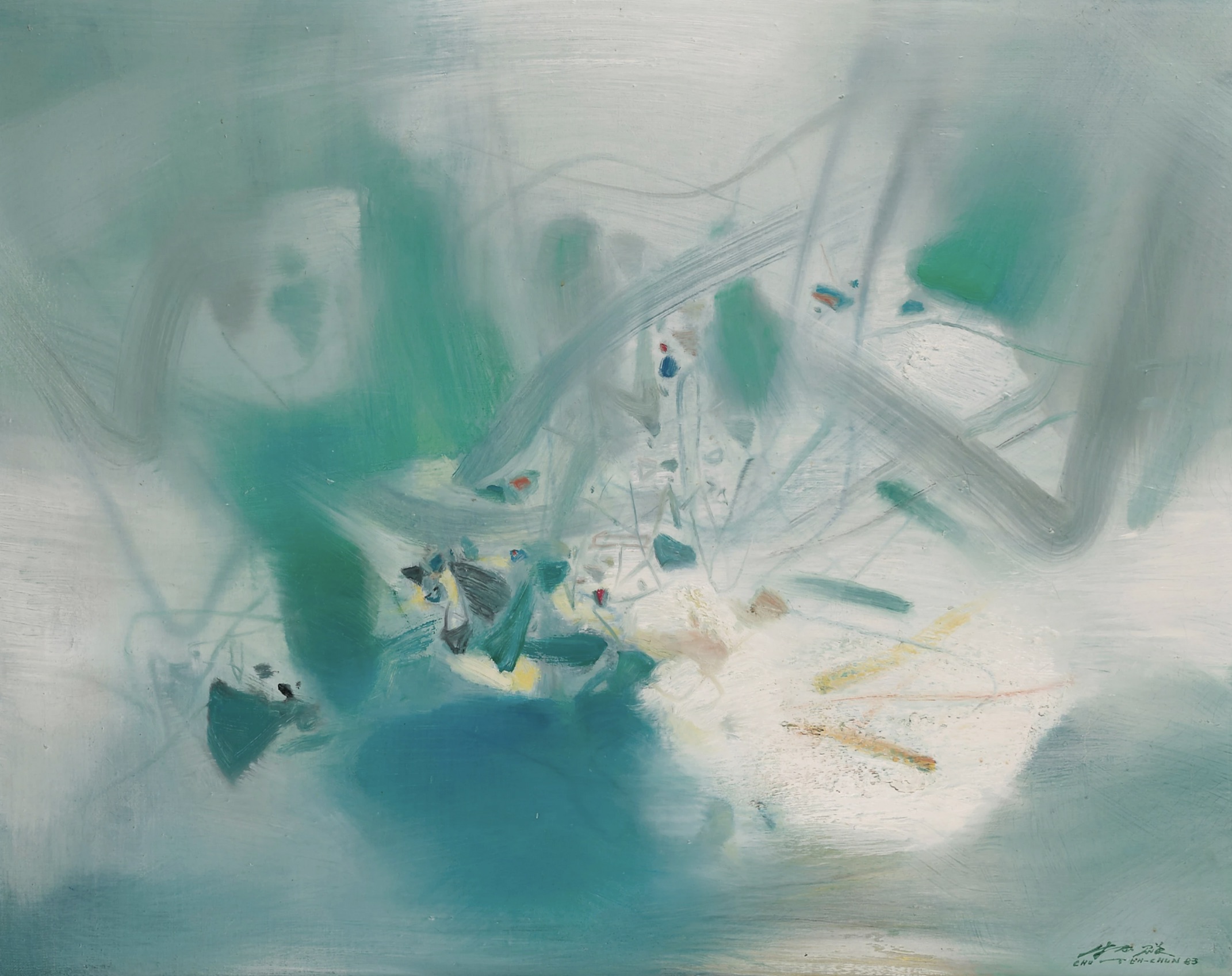
10 things to know about poet painter Chu Teh-Chun
Chu Teh chun: The Man Behind the Legendary Painter
Chu Teh-Chun in Three Works: Symphonic, Calligraphic, Lyrical
Thanks for Visiting 🙂
~Sunnyside
Categories
The Power of Delusions

What happens when political leaders show such grandiose characteristics? We are still learning, I think.
Herbert Rosenfeld is generally very interesting on this topic. Details about him are on the Melanie Klein Trust website. Thanks for this posting.

Self-importance is akin to cocaine.
Social Psychologist David Myers discovered what he labeled “The Lake Wobegon Effect.” Based on a fictitious town where everyone considers themselves to be above average, Myers noted the human propensity to have a somewhat aggrandized view of oneself. Other psychologists describe self-enhancing beliefs. But while many of us fancy ourselves, a select few have managed to convince themselves of their god-like specialness. These individuals are the apparent revolutionaries sent to fundamentally change the world.
And all of them hate the establishment.
In If It Sounds Like a Quack…, journalist Matthew Hongoltz-Hetling wrote about various practitioners of alternative medicine, who rose to prominence, or infamy, by means of their varied medical inventions. One created a laser, another harnessed the power of leeches, and there was also a bleach injection. Each individual story was a type of heroic journey, wherein the revolutionary thinker resolved to take…
View original post 611 more words
Categories
Ukrainian Painters: Ilia Repin


No, I’m not about to try to tell you that Ilia Repin is just a Ukrainian painter. What I’d like to do is show how he was more than the Russian painter that he’s normally labelled as.
Ilia Repin, or Ilya Yefimovich Repin, (1844-1930) was born in the town of Chuhuiv, to the south-east of the city of Kharkiv in eastern Ukraine. His father was an itinerant horse-seller who was a veteran of three major wars. Repin was schooled locally, and started his working life as an apprentice to an icon painter. In the autumn of 1863, when he was nineteen, he moved to Saint Petersburg to try to gain entry to the Imperial Academy of Arts there. He was successful at his second attempt early the following year.
 Ilya Yefimovich Repin (1844-1930), Barge Haulers on the Volga (1870-3), oil on canvas, 131.5 x 281 cm, State Russian Museum…
View original post 977 more words
 penwithlit