Interestingly paradoxical line; connection with buried trauma. Surely detachment is at a distance to trauma? The Lincolnshire image, with which you conclude sounds like an echo of Sebald in this context.
I’m circling back to writing up the last of the Lithuania-related cultural events that I experienced last year, with a Lithuanian psychological thriller that I saw in October at the second London Baltic Film Festival, held at Riverside Studios. I could have watched several Baltic movies over the course of a weekend, but in the end only made it to only the one screening, which was followed by a Q&A with writer and director Laurynas Bareiša.
Pilgrims (Pilgrimai) is a gritty 92-minute film, which was screened in Lithuanian with English subtitles. It was shot during lockdown on a low budget, in and around a B&B that is featured in the film, and was selected to represent Lithuania in the Best International Feature Film category at the 2023 Oscars. It won the Orrizonti award for Best Film at the Venice Biennale in 2021.
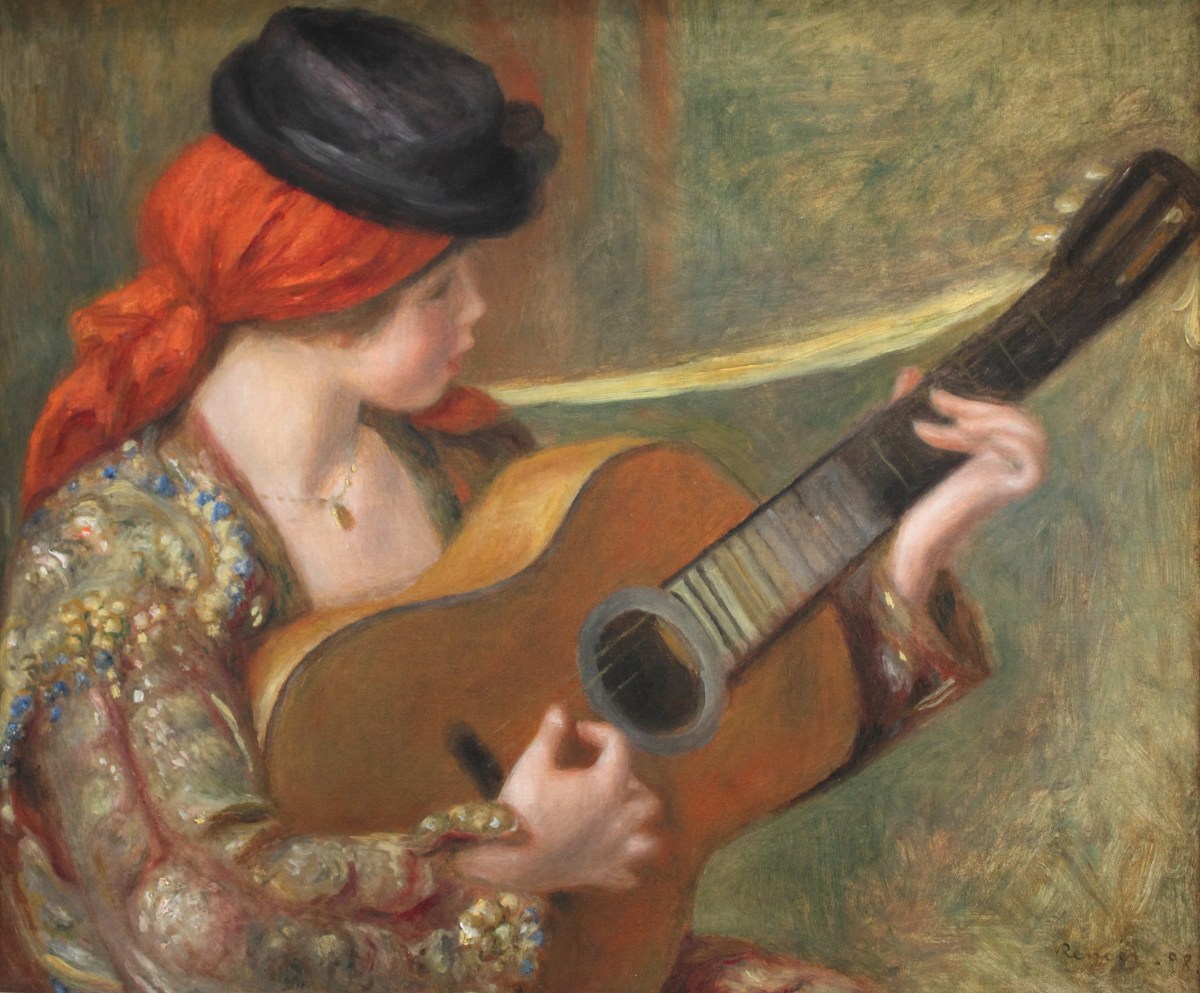
Pierre-Auguste Renoir, Young Spanish Woman with a Guitar, 1898, oil on canvas, National Gallery of Art (U.S.), Image source: Wikimedia
“…the best pieces from Spanish composers. Music written or transcribed for guitar by composers such as Tárrega, Albéniz, Sainz de la Maza, Sanz and Mompou.”
For those of us whose childhood featured radio rather than TV, nostalgic memories of favourite programs are of children’s programs. (The family lore is that I was named at my sister’s command after a character from Listen with Mother on the BBC.) But for adults, it was radio dramas. In England there was The Archers, which is apparently still going, and here in Australia, there was Gwen Meredith’sBlue Hills. Blue Hills was broadcast from 1949 to 1976, but I never heard it. My parents were oblivious to popular culture. By the time I was old enough to choose my radio programs (and have my own ‘wireless’ in my bedroom!) I was listening to The Beatles…
Still, I seem always to have known about Blue Hills. I can even hum its theme music because the introductory bars and the announcement (archived at the NFSA’s Australian Screen, listen here
The London Review of Books editions that arrive every two weeks seem to vary in their interest value. The most recent edition, however, grabbed my interest in a short article on the life of the German Expressionist, George Grosz. Then I went on to read about the amazing Adolfo Kaminsky, the brave photographer and forger on behalf of radical causes. Two good articles and it puts you in the mood to read the rest before the next explosion of magazines arrive with more information having to be processed. (LRB Volume 45 Number 4 -16th Februrary 2023)
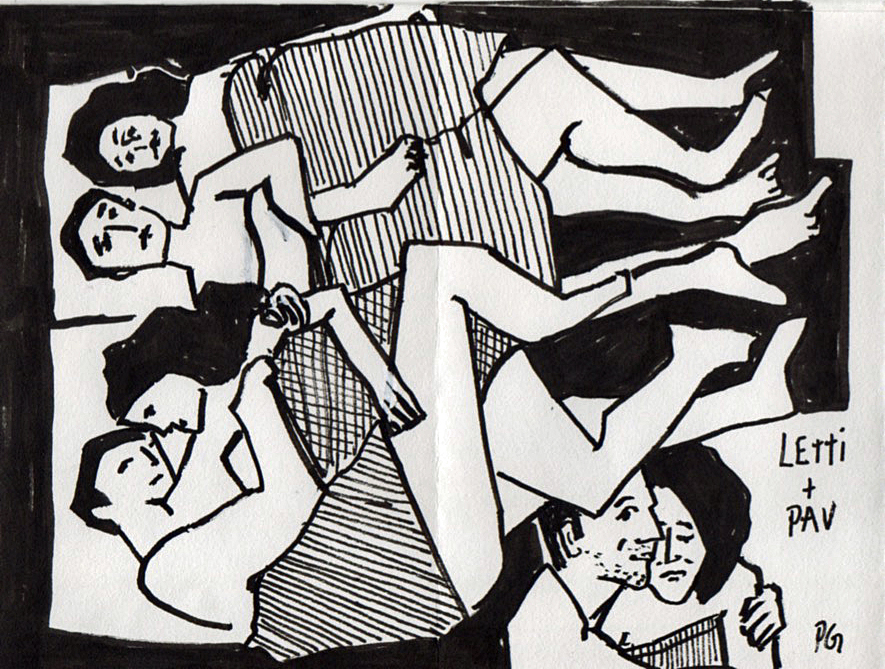
Thomas Meaney has visited the Staatsgalerie in Stuttgart and his review of Grosz is particularly interesting from a psychological viewpoint with informative quotations from Walter Benjamin, Hannah Arendt; the former claiming that Grosz’s caricatures were not satire but reportage. His transition to America in 1933 marked a point at which he seems to have attempted to subdue, what he considered, his former arrogance and nihilistic tendencies. Yet he seemed out of sympathy with American society, its cultural interests and the false persona he felt he had to adopt in his teaching of drawing. By 1954 he appears to be in some sort of deep decline. Meaney quotes the Dadaist and friend Schlicter –
“Rarely have I seen a person with such self-destructive rage…..It is a depressing spectacle to see a man whom one once cherished go to the dogs in this way.”
Returning to Berlin where he died in 1958 seems to have exacerbated matters still keenly aware of past issues unresolved.
Secondly, last week there was a dearth of anything but Tory supporting newspapers at Sainsbury’s so I decided to buy the Morning Star. I came across an interview by Chris Searle with the veteran Bassist Dave Green. He and his friend, Evan Parker have just issued a new CD called Raise Four.
The clip above is almost 20 years old but in this recent interview, Green highlights his favourite artists; Roland Kirk, Coleman Hawkins and among British Jazz musicians, Bruce Turner. Green has been a dedicated anti-racist and an ardent believer in constant experimental freedom to develop his craft.
This article is a review of the Women’s Abstract Exhibition (1940-1970) to be found at the Whitechapel Gallery until 7th May. I particularly was taken by the dark variegated shades of Li Fang’s work of 1969.
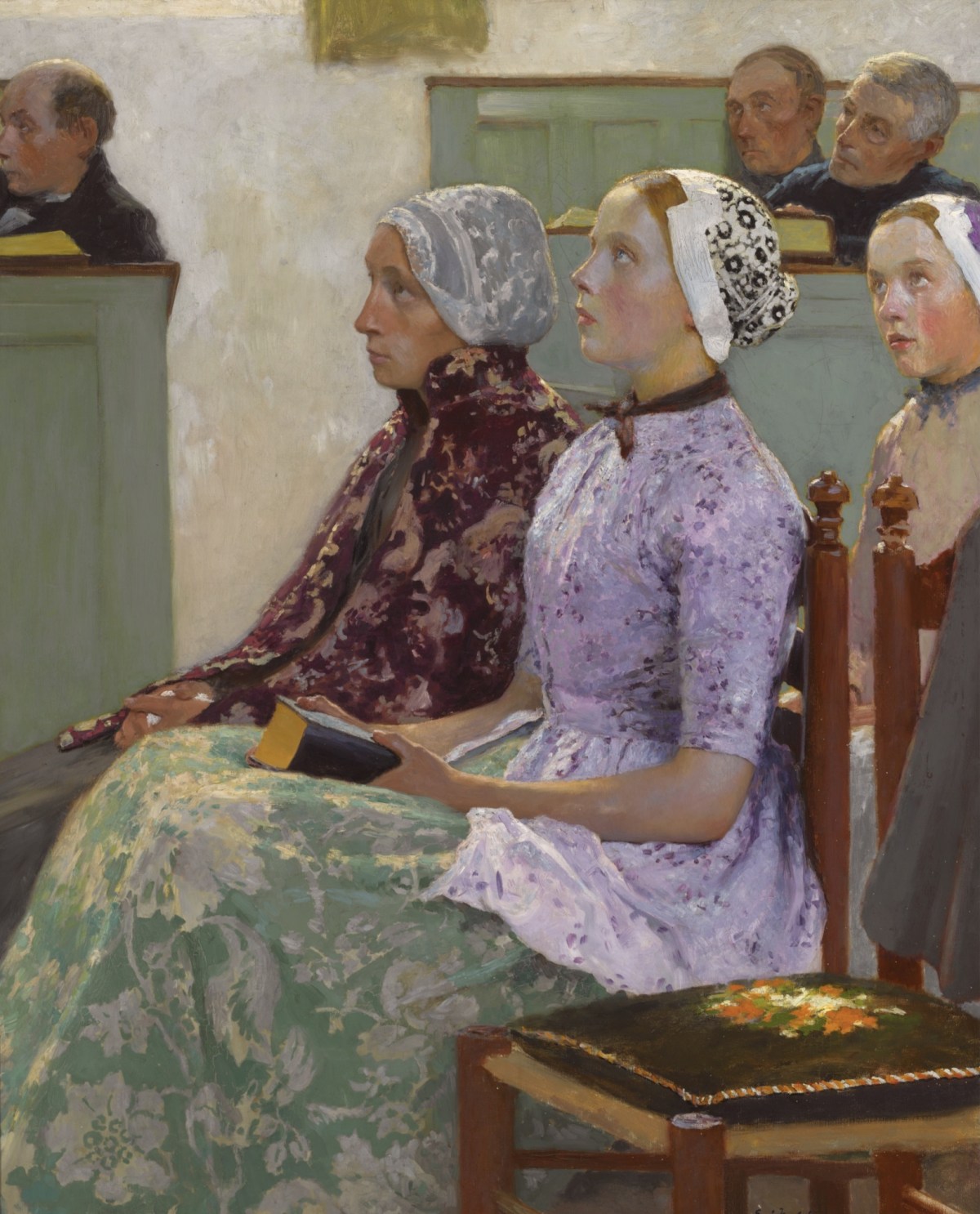
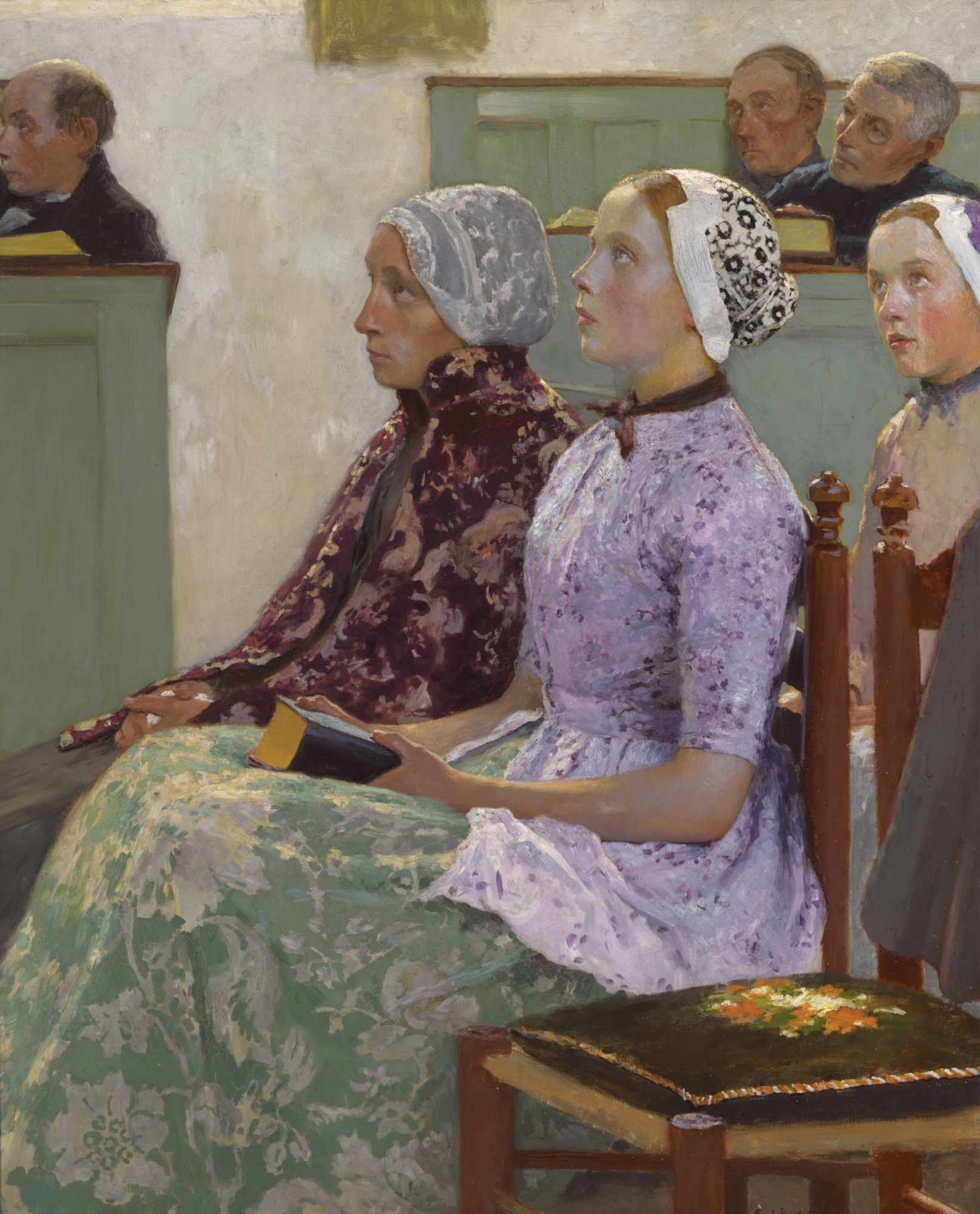
Gari Melchers (American,1860-1932), Sunday Mass, signed l.r., oil on canvas, 120,5 by 97 cm., Image Source: wikimedia
“In the present lot the influence of the Hague School has disappeared. Instead the fresh green, red and purple colours show impressionistic influences. The painting shows the interior of a church, possibly the Reformed Church of Egmond-Binnen. The attention given by Melchers to depicting the different figures demonstrates Melchers’ qualities as a storyteller. Not only their faces, but also their poses are carefully depicted. Their traditional Dutch clothes, of which Melchers owned a large collection from all over Holland, are also shown to the smallest detail. In this painting he combined the regional Veluwe cap with a North Holland dress on the center figure and placed a worshipper in typical Egmond headdress next to her. Like the famous Dutch flower painters who mixed winter, spring and summer blossoms in one picture, Melchers…







 penwithlit

,_In_church,_Sotheby%27s.jpg)
