Categories
Uncategorized

Music review: South African late 20th century classics

Great music- brilliant!!

imogen's avatarImogen is Reading and Watching the World: On Books, Film, Art & More

Miriam Makeba by Miriam Makeba (1960)

I couldn’t spend a month ‘in’ South Africa without listening to some South African music, and this album by Miriam Makeba (who to this point I only knew for ‘Pata Pata’) features in the 1001 albums list, which describes it thus: “traditional Xhosa wedding songs swing into airy African jazz moods, melilifluous Indonesian lullabies and infectious Calypso romps”. A link to Makeba’s amazing “Click Song” is provided at the end of of this post.

The album was recorded in exile in New York in 1960, when she was 28; in the same year she was prevented by the South African country from returning to that country for her mother’s funeral.

Nicknamed ‘Mama Africa’, Makeba was one of the first African musicians to receive global acclaim. She returned to South Africa after the end of apartheid, and died during a performance in 2008.

Ladysmith Black…

View original post 136 more words

Categories
Uncategorized

I Think Too Much by Bartholomew Barker

Thats a sweet poem which might be described as “confessional”. Thanks for posting.

Tiffany Renee Harmon's avatarEphemeral Elegies

It was a good thing at school
or the office where I'm paid
to sit still and think
for eight hours a day
but it's a problem
the rest of the time

Does she want to be more than friends?
Why hasn't she texted me back?
Am I being too clingy?

Like a vaudeville plate spinning act
my thoughts spiral to desperation
I should learn to trust my instincts

I'm a moth and she's the flame
I just have to accept the singed wings

Photo by sk on Pexels.com

About the Poet:

Bartholomew Barker is one of the organizers of Living Poetry, a collection of poets and poetry lovers in the Triangle region of North Carolina. His first poetry collection, Wednesday Night Regular, written in and about strip clubs, was published in 2013. His second, Milkshakes and Chilidogs, a chapbook of food inspired poetry was served in 2017. He was…

View original post 40 more words

Categories
Uncategorized

Ancient Stone Bridge, Lancashire, England

Categories
Uncategorized

Aspen Cathedral, Vail, Colorado

Categories
Uncategorized

Lake Reflection, Hungary

What a beautiful country …..

Categories
Uncategorized

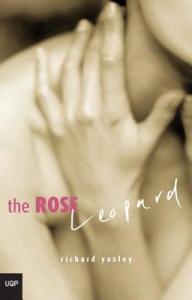
The Rose Leopard (2003), by Richard Yaxley

An interesting resolution- perhaps not an easy read- more challenging however,

Lisa Hill's avatarANZ LitLovers LitBlog

The Rose Leopard is a debut novel that’s now two decades old. The author, secondary school teacher Richard Yaxley, has gone on to have a distinguished literary career, receiving an OAM (Order of Australia) in 2011 for services to education, literature and performing arts. He writes across genres, and has won or been nominated for many awards, mainly in YA and Children’s Lit.  The following is a list of his novels from his website:

  • Harmony (Scholastic 2021; Long-listed for the ARA Historical Prize – CYA Section)
  • A New Kind of Everything (Scholastic 2020)
  • The Happiness Quest (Scholastic 2018; CBCA Notable Book for Older Readers 2019)
  • This Is My Song (Scholastic 2017; ACU Book Of The Year 2019; Winner of the 2018 Prime Minister’s Literary Award for Young Adult Literature; Finalist in the 2017 Queensland Literary Awards; also published in the Czech Republic by Albatros Media)
  • Joyous and Moonbeam (Scholastic…

View original post 1,090 more words

Categories
Uncategorized

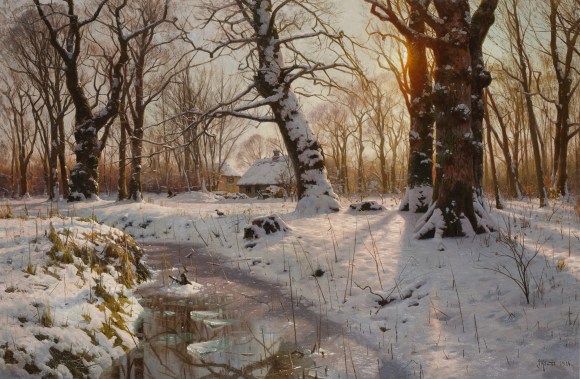
Peder Mork Monsted: Winter (1914)

Very lovely, deep and crisp and even….in most places.

At Sunnyside - Where Truth and Beauty Meet's avatarAt Sunnyside - Where Truth and Beauty Meet

Peder Mork Monsted (Danish 1859 – 1941), Winter , signed and dated P. Monsted. 1914.(lower right), oil on canvas, canvas: 32 by 47¾ in.; 83.5 by 122 cm, Image Source: Sotheby’s

“This snowy scene epitomizes Mønsted’s photographically crisp winter landscapes. True to his paintings of verdant forests with streams running through them, here too his masterful observation of water and surrounding snowis central to the composition….While visiting Paris in 1883, he worked in the studio ofWilliam Bouguereau, under whose tutelage he further honed his rigorous academic style which he applied to landscape.”

READ FULL ESSAY: Sotheby’s

See More

Peder Mork Monsted at Sotheby’s

Peder Mork Monsted at Christie’s

Peder Mork Monsted at wikimedia commons

Read More

Peder Mork Monsted at wikiwand

Thanks for Visiting 🙂

~Sunnyside

View original post

Categories
Uncategorized

before and again

Some great sketches very colourful!

Aletha Kuschan's avatarFantabulous Koi

Bowl of Fruits on Colorful Cloths, by Aletha Kuschan, neopastel on pastel paper.
Bowl of Fruits on Colorful Cloths, neopastel on pastel paper

I had made small drawings as preparations for paintings before. I like using pastel when I work directly from a motif because it’s so easy to use. You open the box of pastels and begin drawing. There’s no mixing of paints (though you can blend sticks of color together on the page). And as the light changes, you find that you’ve spent most of the time actually describing the scene rather than pausing for cleaning a brush or refreshing the paint. Then the drawings are there to use to create a painting, and the painting is thus slightly removed from the actual objects and opens a passage for imagination. Or so it seems to me. Every artist has his own way of working that feels right.

I paint in different ways. The idea of creating fully realized drawings to then…

View original post 278 more words

Categories
Uncategorized

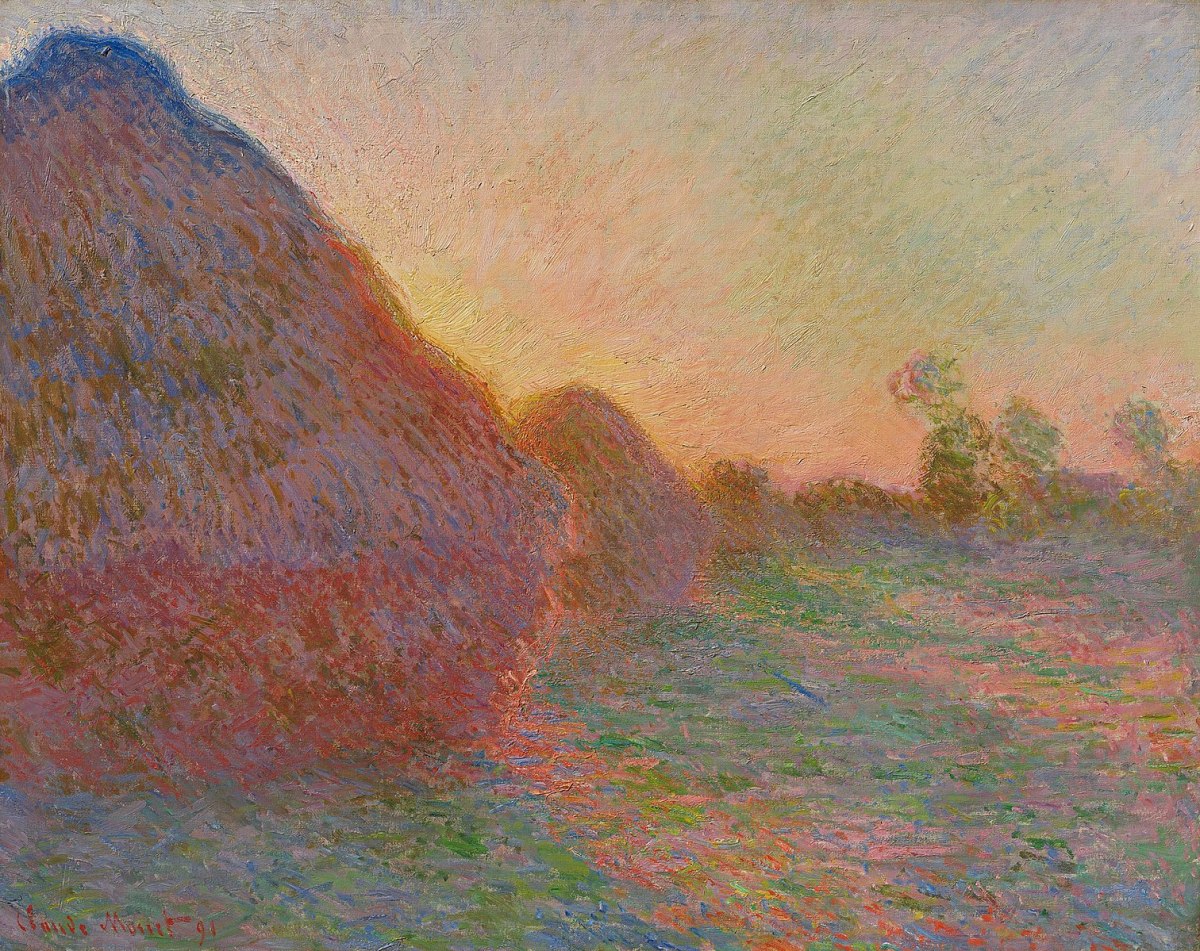
Monet’s Grainstacks II

Wonderful paintings!

At Sunnyside - Where Truth and Beauty Meet's avatarAt Sunnyside - Where Truth and Beauty Meet

Claude Monet, Grainstack, 1891, oil on canvas, 73 x 92,5 cm, Signed and dated lower left: Claude Monet 91, Museum Barberini, Image Source: wikimedia

“Monet’s paintings from this series bear the French title Meules, a word that can be translated as “stacks.” For a long time the title was misinterpreted as Haystacks; however, the objects in Monet’s paintings are actually sheaves of grain. In the agriculture of nineteenth-century Normandy, conical stacks of unthreshed grain were covered with straw or hay to protect the valuable harvest from moisture and rot. Monet, who had a fine sensibility for the structure of the landscape, must have been fascinated by these quasi-sculptural objects of considerable size that appeared at the same time every year in the fields surrounding his house, covering the meadows in a kind of temporary installation. The motif also had symbolic character for the predominantly agricultural community of Giverny…

View original post 212 more words

Categories
Uncategorized

Snow Lake, Stevens Point, Wisconsin