Categories
Uncategorized

Cedric Morris: May Flowering Irises No. 2 (1935)

Cedric Morris hugely influential …including I believe the great Maggie Hambling.

At Sunnyside - Where Truth and Beauty Meet's avatarAt Sunnyside - Where Truth and Beauty Meet

Cedric Morris,(1889-1982), May Flowering Irises No. 2, 1935, Oil on canvas, 25 3/4 x 21 1/4 in. (65 x 54 cm), Image Source: Philip Mould and Co

“By 1935, when this work was painted, Morris’s fascination with irises had firmly taken hold. He established a studio in the garden where he would sit and paint his flower subjects for days on end, and one ex-student, Joan Warburton, poignantly reminisced how ‘to go in there quietly when Cedric was painting the favourite of all his flowers, Irises, was a revelation.’[2] Morris’s thorough understanding of the iris is evident in the present work which explores each flower individually, using colour and texture to give them mood and personality.”

Philip Mould and Co

Thanks for Visiting 🙂

~Sunnyside

View original post

Categories
Uncategorized

Artist Paula Rego (Portugal)

Watched an interesting documentary on the BBC about Rego- she sounded a very brave woman.

imogen's avatarImogen is Reading and Watching the World: On Books, Film, Art & More

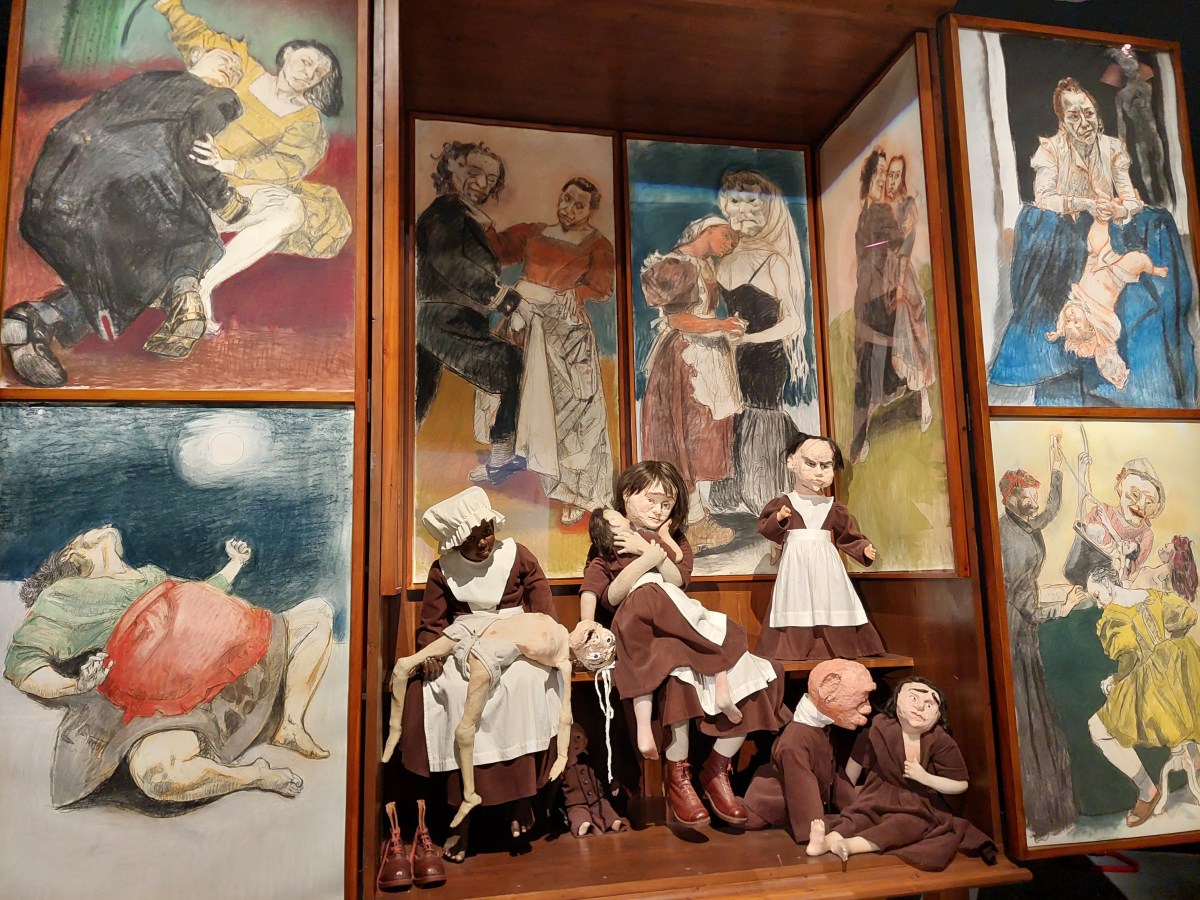
Just after the UK’s last COVID lockdown, and longing to visit galleries again, my mum and I did an online City Lit course on major artists whose work was to be exhibited in London over the summer of 2021.

One of those discussed was renowned Portuguese artist Paula Rego (1935-2022), an artist known for her feminist and political stance, along with skewed references to fairy tales, nursery rhymes and Portuguese fables, reminiscent of a painterly Angela Carter. Other interests and influences include traditionally female crafts such as embroidery and dollmaking (subtly subverted), Jungian psychology and surrealism.

I wasn’t particularly taken with Rego’s work when it was presented to me on screen, but when I went to see the large-scale retrospective of her work at Tate Britain that autumn I was converted. Mum and I saw more of her work on display at the Venice Biennale this year, when we escaped…

View original post 396 more words

Categories
Uncategorized

St Martin-in-the-Fields, WC2

Amazing- and such a very busy place to sketch with an Art shop nearby for supplies!!

Jane's avatarJane Sketching

On the way back from a visit to the West End, I passed St-Martin-in-the-Fields, standing out against the cold sky.

St Martin-in-the-Fields, Trafalgar Square. Sketched 2nd Dec 2022, in sketchbook 12

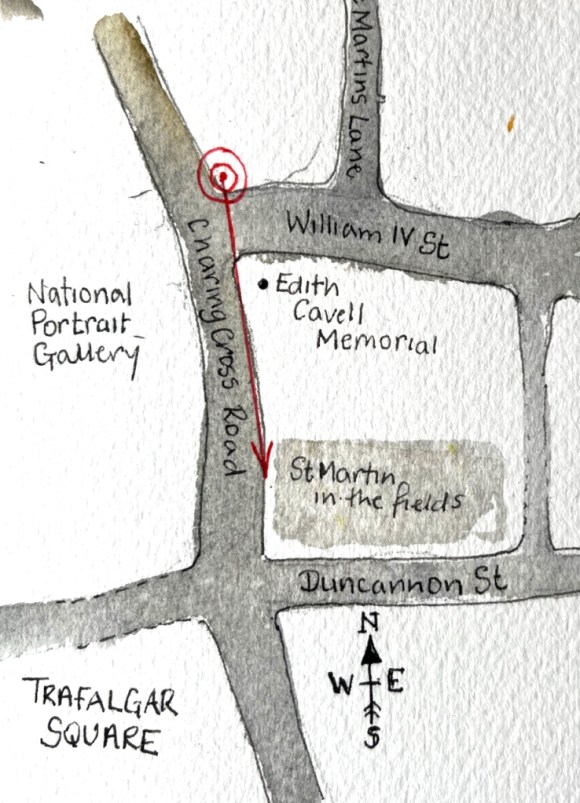
The statue in the foreground, left, is the Edith Cavell Memorial, seen from the back. Edith Cavell (1865-1915) was a British nurse. In German-occupied Belgium, guided by her principles of humanity and her Christian faith, she provided medical care to soldiers irrespective of which side they were on. She was executed by a German firing squad 1915, because she had helped Belgian, British and French soldiers to escape the German occupation and reach Britain. Her grave is in Norwich Cathedral.

I sketched standing on a corner of the Charing Cross road, see map above. This turned out to be a very noisy location. The National Portrait Gallery is being refurbished and there was continuous drilling and banging. Buses and…

View original post 40 more words

Categories
Uncategorized

Autoportrait Day 292~ Jiab Prachakul

Categories
Uncategorized

Fridericus – 1937

paulskin's avatarPreußische Kuriositäten

A very enjoyable film, and no obvious dodgy propaganda, given the time it was made…

I particularly enjoyed the little cameo obviously intended to portray Johann Friedrich Adolf von der Marwitz (Friedrich August Ludwig’s uncle) at Hubertusburg.
Wählte Ungnade, wo Gehorsam nicht Ehre brachte”. Indeed.

View original post

Categories
Uncategorized

Dame Laura Knight: ‘I Paint Today’

Wonderful painter!

At Sunnyside - Where Truth and Beauty Meet's avatarAt Sunnyside - Where Truth and Beauty Meet

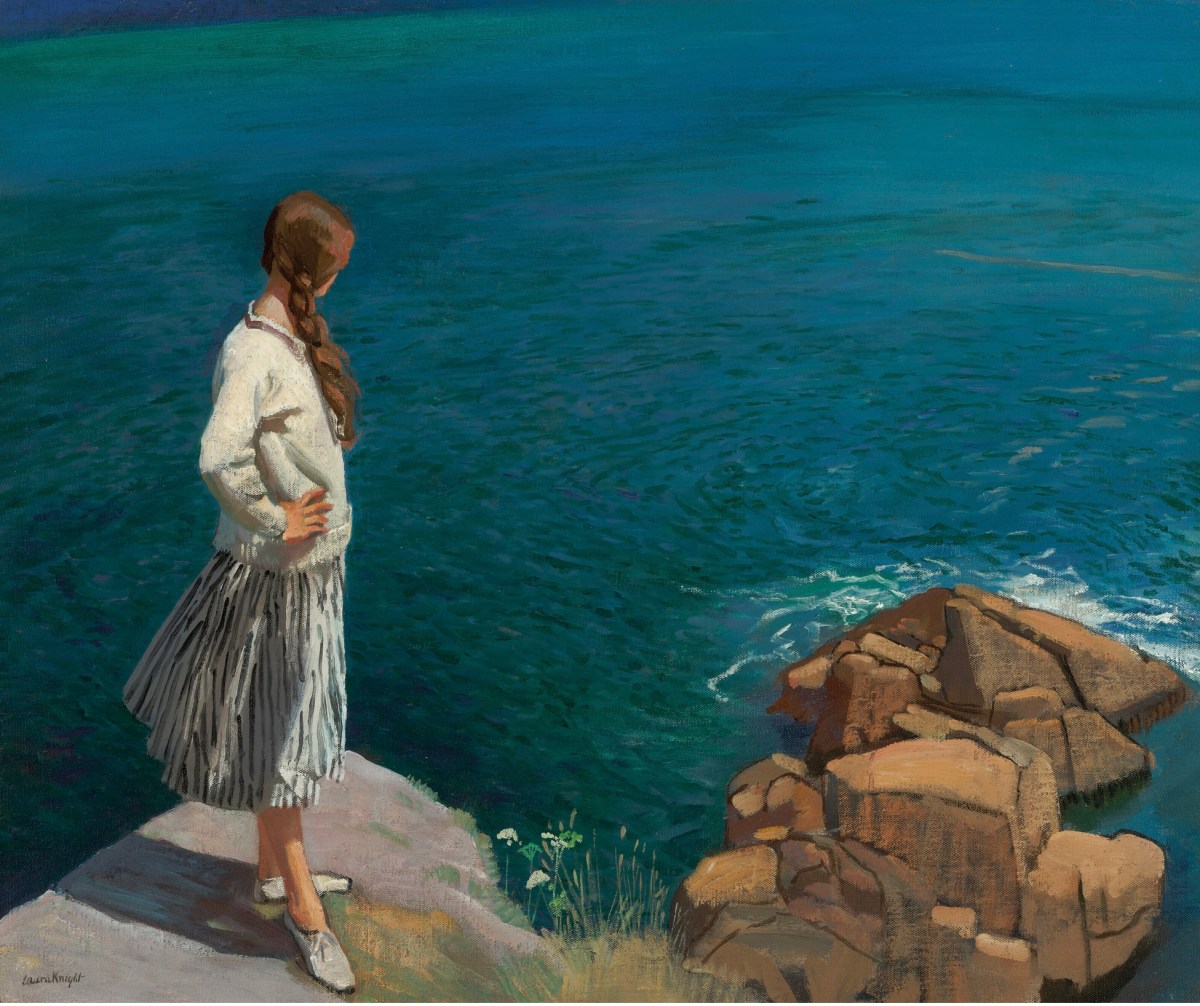
DAME LAURA KNIGHT, R.A., R.W.S. (BRITISH, 1877-1970), At the Edge of the Cliff, signed ‘Laura Knight’ (lower left), oil on canvas, 23 x 28 in. (58.4 x 71.1 cm.), Painted circa 1917, Image Source: Christie’s

At the Edge of the Cliffis one of the strongest works in this clifftop series. The young woman in her striking striped blue and white skirt and white jumper has a timeless quality to her, her outfit feeling as modern to a contemporary audience as it did over 100 years ago. She stands on the cliffs at the top of Lamorna Cove, gazing out at the turquoise and deep blue sea, lost in thought.”

READ FULL ESSAY: Christie’s

What is demonstrably clear is that Knight was, as her biographer Alice Strickland recently said, ‘a woman of firsts’. She was the first female artist to be made a Dame of the British Empire, in…

View original post 151 more words

Categories
Uncategorized

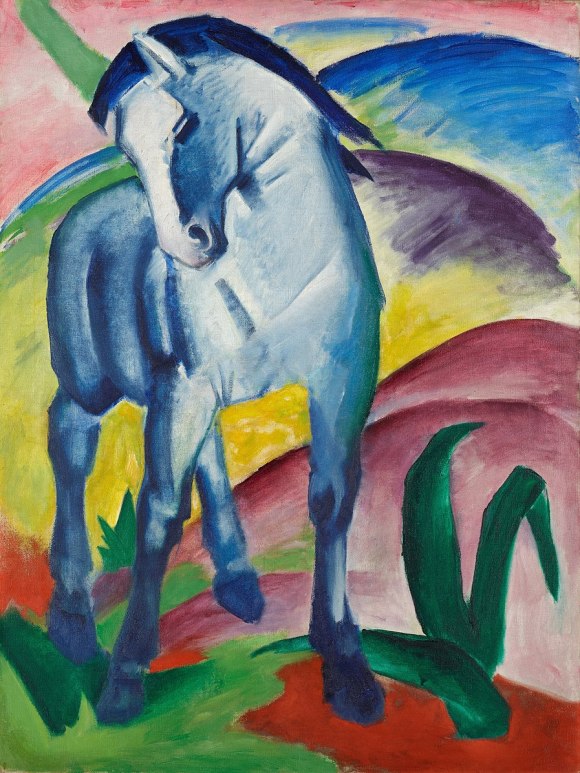
Franz Marc: Blue Horse I (1911)

Splendid- love Marc and Macke!!

At Sunnyside - Where Truth and Beauty Meet's avatarAt Sunnyside - Where Truth and Beauty Meet

Franz Marc, Blue Horse I, 1911, oil on canvas, Lenbachhaus in Munich, Image Source: wikimedia

Read More

Franz Marc at wikiwand

Franz Marc at Art Story

Franz Marc: The Painter Who Loved Horses

Franz Marc’s artist page at Guggenheim

Franz Marc Museum website

See More

Tag: Franz Marc At Sunnyside

Thanks for Visiting 🙂

~Sunnyside

View original post

Categories
Uncategorized

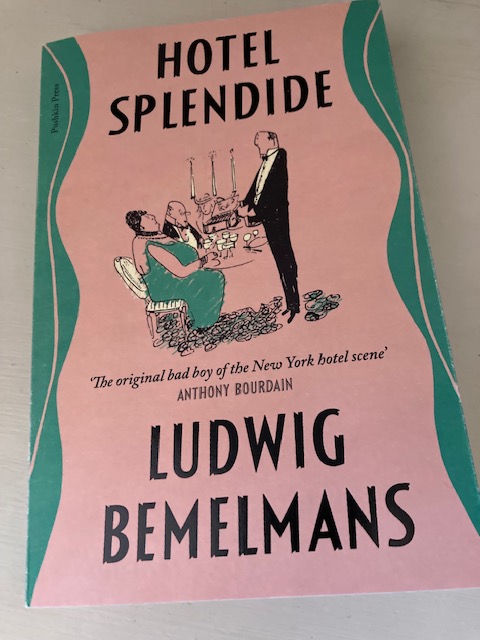
Hotel Splendide by Ludwig Bemelmans  

Compare and contrast with Joseph Roth’s “Hotel Savoy”. Sounds a great read this!

JacquiWine's avatarJacquiWine's Journal

The Austrian-born writer and illustrator Ludwig Bemelmans is perhaps best known for the Madeline series, a much-loved collection of children’s picture books, mostly from the 1950s. But before he made his name as an artist and writer, Bemelmans spent several years in the New York hotel industry, working his way through the ranks from lowly bus boy to assistant manager of the private banqueting suite at the Ritz-Carlton Hotel.

Hotel Splendide is an affectionate series of vignettes recounting Bemelmans time at the Ritz-Carlton during the decadent 1920s – an utterly charming book that reflects the author’s eye for an amusing anecdote or observation while still maintaining a genuine sense of humanity. It’s a delightful collection of sketches, perfectly capturing the rituals and idiosyncrasies of a bygone age, perfect for dipping into during the dark days of winter.

Hotels frequently have a culture all of their own, and Bemelmans captures the

View original post 1,159 more words

Categories
Uncategorized

New Literary History of Australia (1988), edited by Laurie Hergenan (Decolonising a Blog… a work in progress #4)

Sounds intriguing and significant.

Lisa Hill's avatarANZ LitLovers LitBlog

Cultural warning: this post contains the names of First Nations authors who have died.


Laurie Hergenan PhD AO FAHA(1931 – 2019) was an Australian literary scholar. Educated at the University of Sydney and Birkbeck College in London, he held academic positions in Tasmania and Queensland.  He was the founder and former editor of Australian Literary Studies (1963) and he published on Xavier Herbert.

And he was also the editor of the 1988 Penguin New Literary History of Australia. 

This literary history, published in Australia’s bicentennial year, has been sitting on the shelf for a while.  I picked it up to see what it had to say about Frank Moorhouse (and The Electrical Experience in particular) and ended up reading it, chapter by chapter, at bedtime.  (Yes, a tad nerdy, I know.)

Even at university, I was not a scholarly reader.  I’ve always been much more interested in the book than…

View original post 1,171 more words

Categories
Uncategorized

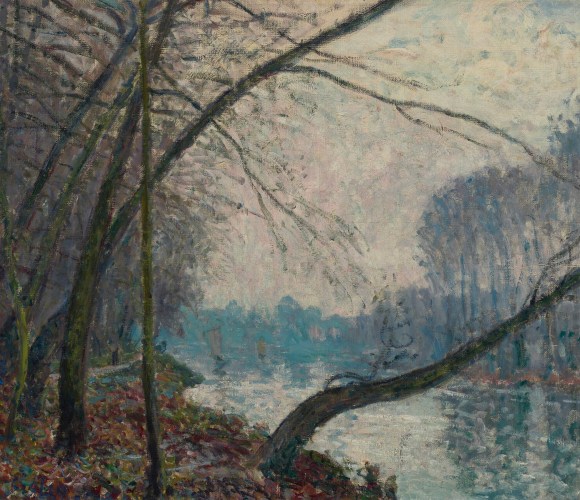
Alfred Sisley: Matinée d’octobre près de Port-Marly (c1876)

At Sunnyside - Where Truth and Beauty Meet's avatarAt Sunnyside - Where Truth and Beauty Meet

ALFRED SISLEY (1839-1899), Matinée d’octobre près de Port-Marly, signed ‘Sisley.’ (lower left), oil on canvas, 18 3/8 x 21 3/8 in. (46.5 x 54.3 cm.) Painted circa 1876, Image Source: Christie’s

“Painted following the First Impressionist Exhibition in April 1874—which had opened the eyes of the public to the revolutionary Impressionist aesthetic—and around the time of its second iteration which helped cement the validity of its new, modern terminology,Matinée d’octobre près de Port-Marlypays fitting homage to the movement’s pursuit of paintingen plein air. Determined to capture the fleeting, atmospheric beauty of the cool, early morning light, one can almost imagine Sisley waking early in order to secure the perfect location from which to paint—dismissing the icy autumn chill which must have no doubt plagued his fingers as he began to work the canvas.”

READ FULL ESSAY: Christie’s

Read More

Alfred Sisley at wikiwand

See More

List…

View original post 10 more words