Categories
Uncategorized

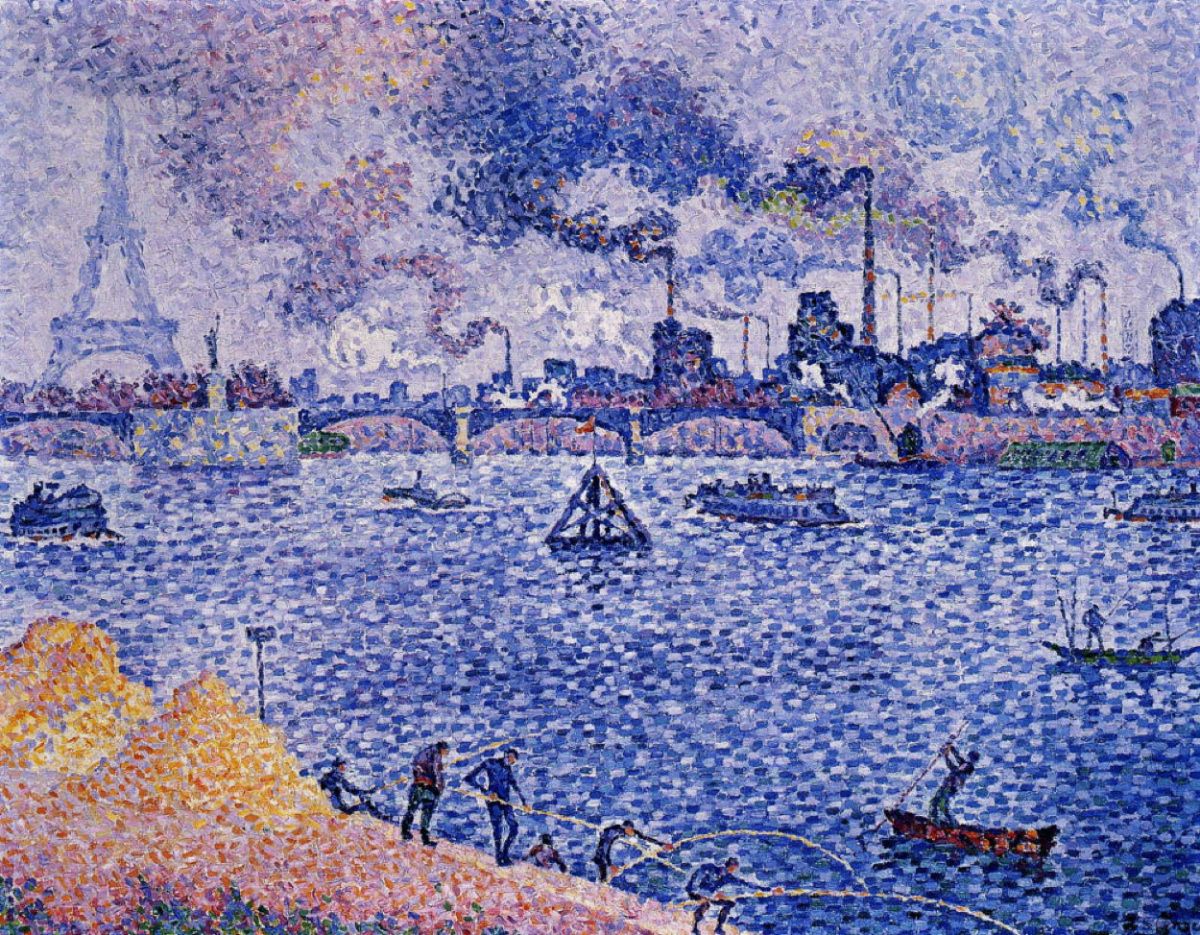
Paintings of Paul Signac 6: Consumption and demolition

Wonderful work and interesting context politically too.

hoakley's avatarThe Eclectic Light Company

Just before the end of 1895, Siegfried Bing opened his gallery l’Art Nouveau in Paris. Its first exhibition included paintings by Cross, Van Rysselberghe and Paul Signac (1863-1935). In the New Year, Signac made his annual visit to Brussels, after which he and Van Rysselberghe toured the Netherlands together. In the Spring, it was time once again for the Salon des Indépendants, followed by the summer spent at Saint-Tropez, with the Van Rysselberghes as guests. Signac started preliminary work for The Demolisher (1897-9, see later) by way of a lithograph, which was published in an anarchist review.

During the winter of 1896-97, Signac continued to develop his etching and lithography with the aid of Théo van Rysselberghe. His itinerary in 1897 omitted the winter visit to Belgium, replacing it with a couple of weeks sketching and painting Mont-Saint-Michel, the famous tidal island on the Normandy coast. Before the annual Salon…

View original post 889 more words

Categories
Uncategorized

New Publication: “Autistic Rims and Their Vicissitudes”

Useful and interesting though I am not thoroughly au fait with Lacan.

leonbrennerblog's avatarLeon Brenner

My latest paper entitled “Autistic Rims and Their Vicissitudes” has just been published in the European Journal of Psychoanalysis. The paper is open-access, so it’s a good opportunity to get updated about my latest developments of the notion fo the rim of the drive.

For those of you interested, here is the abstract:

Lacan states that the rim of the drive is involved in the initiation and preservation of the relationship between the body and language. In the study of autism, a major hypothesis states that the rim of the drive is foreclosed for the autistic subject. This foreclosure causes the drive circuit to short-circuit, thus jeopardizing the preservation of the relationship between the body and language. This paper puts forward the idea that autistic subjects supplement this privation through the construction of secondary rims that enable the “delimitation” of jouissance, giving rise to a…

View original post 128 more words

Categories
Uncategorized

Middlemarch by George Eliot (UK)

Middlemarch isn’t an easy read. I stumbled over the speech of Casaubon until I realised that was partly the point. I partially glimpsed that the novel works on several levels and encapsulated the individual with the social. F.R.Leavis would applaude our efforts!!

imogen's avatarImogen is Reading and Watching the World: On Books, Film, Art & More

I have made up my mind to take Middlemarch as it comes, and shall be much obliged if the town will take me in the same way” – (the all too fallible) Dr Lydgate

I tried to read Middlemarch in January, but my poor addled brain refused to decipher the text or concentrate on the storyline. Have I spend so much time scrolling through Instagram that I can no longer focus on huge, dry Victorian tomes?

Finally, determined to see this through, I switched to the audio book. It was nearly 40 hours long and it took me three months to get through. My kids would wander into the kitchen (listening was usually an accompaniment to domestic tasks) and marvel: “are you STILL really listening to that?”.

It’d odd that I was quite so compelled to persist with Middlemarch, given my longstanding aversion to Eliot’s Silas Marner

View original post 288 more words

Categories
Uncategorized

#20BooksOfSummer22 Reading list

The Periodic Table is very worthwhile reading.It is a little similar in its chemistry to Uncle Tungsten by Oliver Sacks. The biography of Stephan Zweig is on my list as well.

Categories
Uncategorized

In Which Barbara Pym Gets a Glamorous Makeover, Courtesy of Virago Press!

When I think of her novels, I see chinless curates and Church jumble sales. She was rediscovered by the excellent David Cecil. Her biography appeared quite recently and her taste in right wing members of the Herrenvolk worrying. Good to see the novels relaunched, however.

JacquiWine's avatarJacquiWine's Journal

Something a little different from me today, a little celebration of one of my favourite women writers, the inimitable Barbara Pym. I have written before about my love of Pym’s novels with their unassuming women, hapless clergymen and fusty academics, moving in a world that feels both strangely absurd and highly relatable.

In the context of most Barbara Pym novels, the most pressing concerns are what to serve the new vicar when he comes over for tea and how to dress for the forthcoming church fete. (If only real life were like that, everything would be so much simpler!) On the surface, they may appear to be light social comedies, amusing sketches of village life; but dig a little deeper and you’ll discover a satisfying amount of depth. Pym wrote insightfully about unrequited love, often based on her own experiences of relationships and middle-class life. Through her engaging fiction…

View original post 1,049 more words

Categories
Uncategorized

Postcards from Crete

Many, many lovely and detailed sketches. Makes me want to go away and definitely take watercolours!

Jane's avatarJane Sketching

I sent some hand-drawn postcards from Crete.

An experimental view from a restaurant:

Kalyves, looking inland to the church

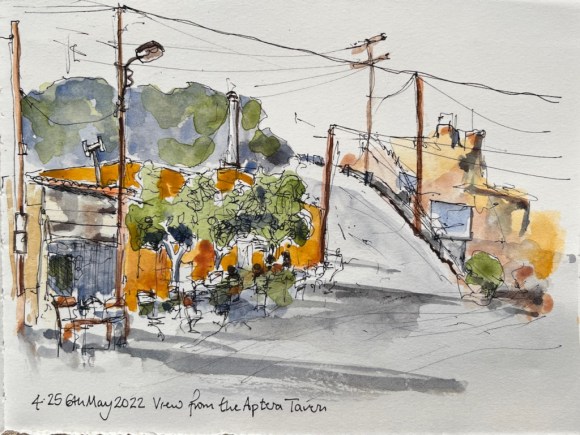
Another view from a restaurant:

View from the Aptera Tavern

The Roman water cisterns at Aptera:

Roman water cisterns. Totally amazing. Still here, strong and standing.

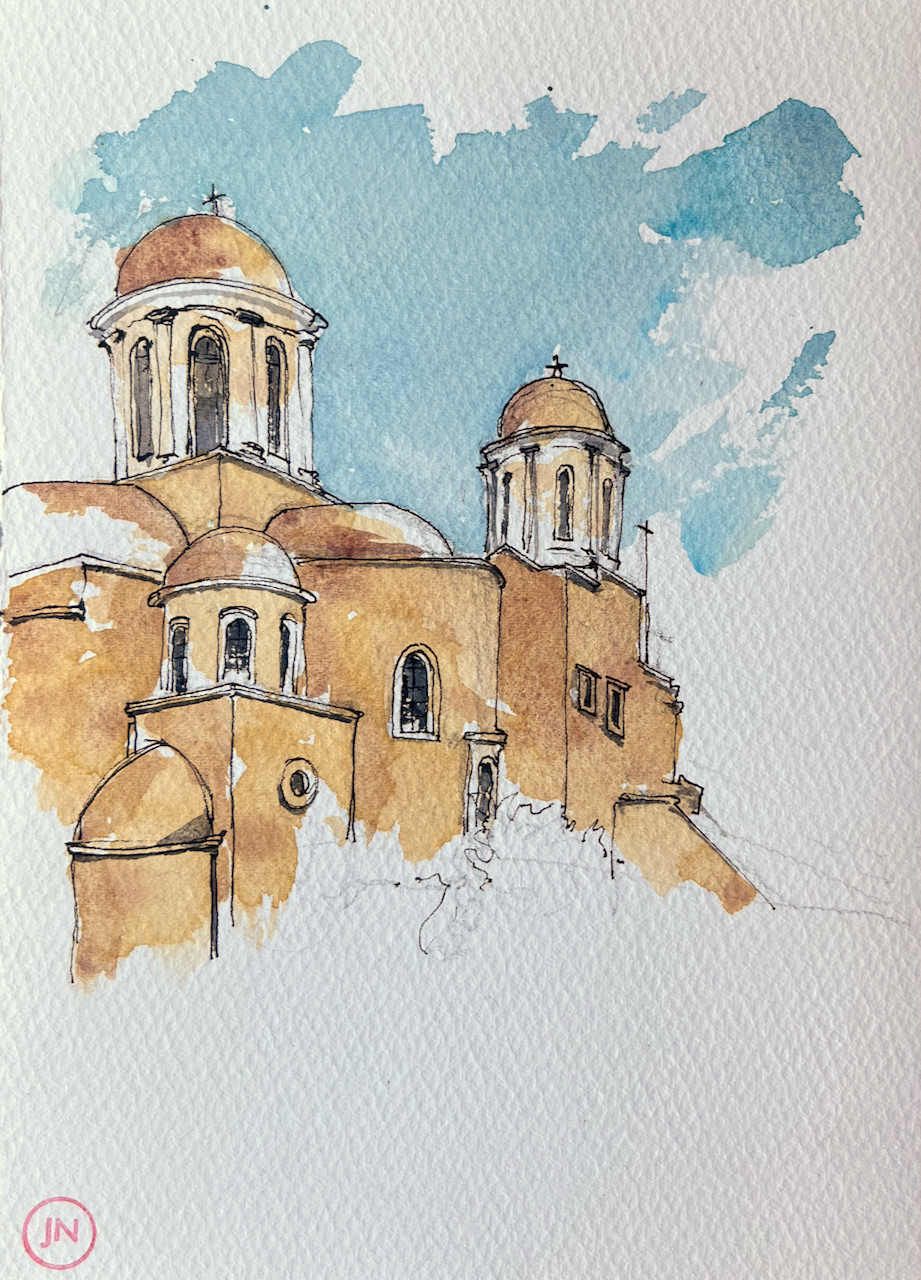
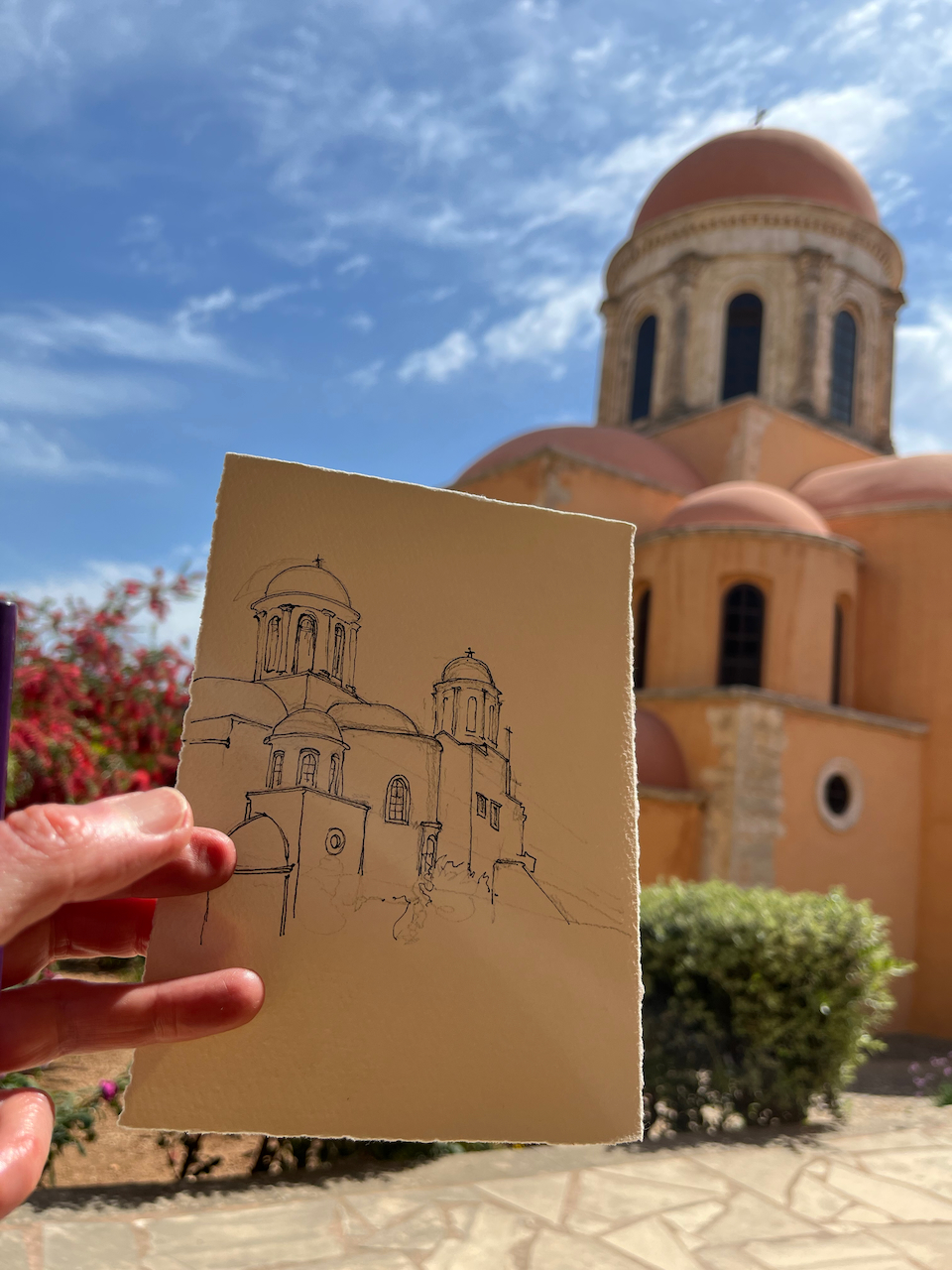
The beautiful monastery of Agias Triados:

Paint dries really quickly here!

Crete blog posts:


View original post

Categories
Uncategorized

Colour Notes 5: Fauvism in mainstream painting

I like Bevan’s paintings which have an element of social realism and show how much horses were used to deliver goods. Wasn’t he on the fringes of the Camden group?

hoakley's avatarThe Eclectic Light Company

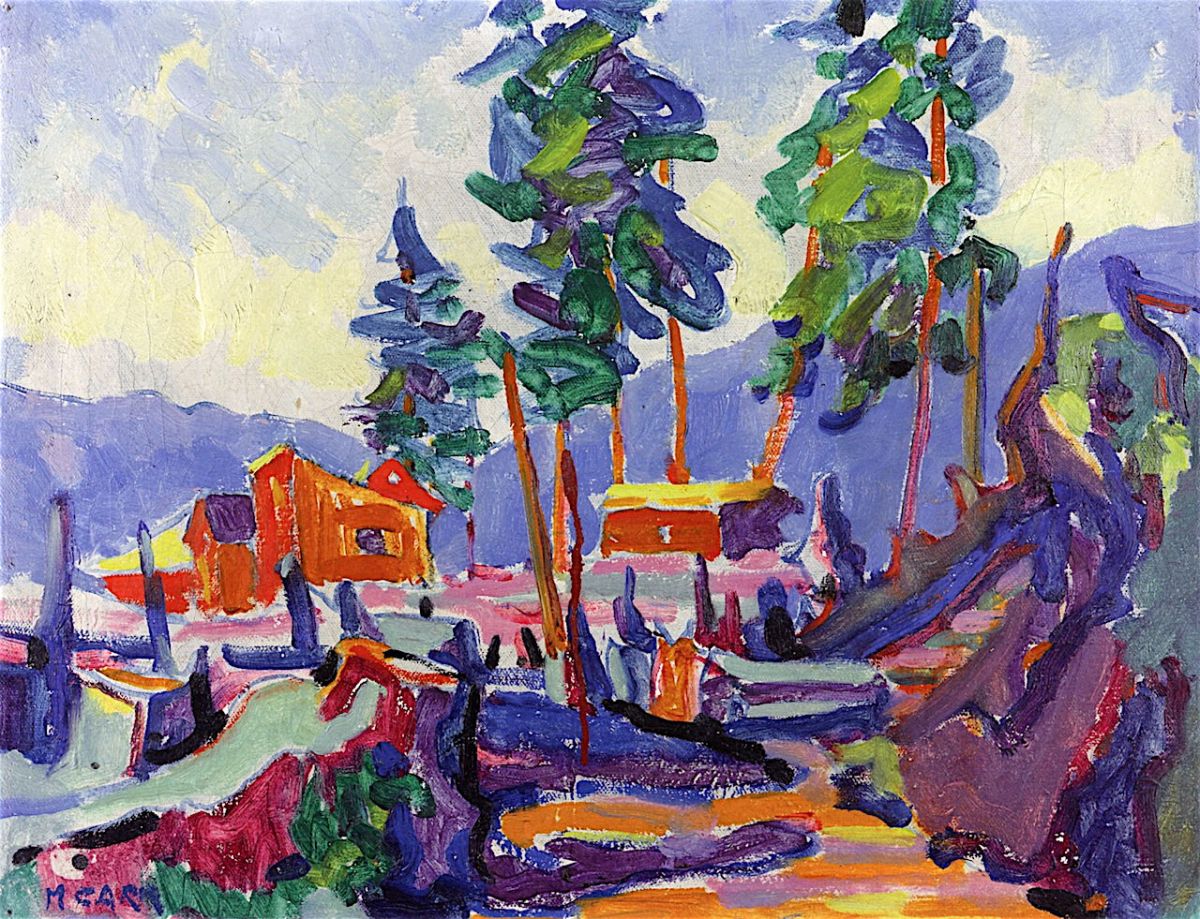
For a few years in the early twentieth century, André Derain, Henri Matisse and others known as the Fauves (‘wild beasts’) dazzled those who viewed their avant garde art. Not only were their colours intense, often raw from the tube, but they were so inappropriate. Flesh became vivid green, buildings and horses blue, and skies blood red. For most it was a passing phase, and by 1908 the wild beasts had stampeded on to the next fad as modernism evolved volcanically.

Their influence was more lasting and general, though, affecting other artists until the Second World War. In this article I look at how other, more mainstream painters had their own Fauvist phase.

In some ways a continuation of the changes seen in Post-Impressionism, high chroma paintings had become common among those painting in the south of France, the Midi, with its brilliant and different light.

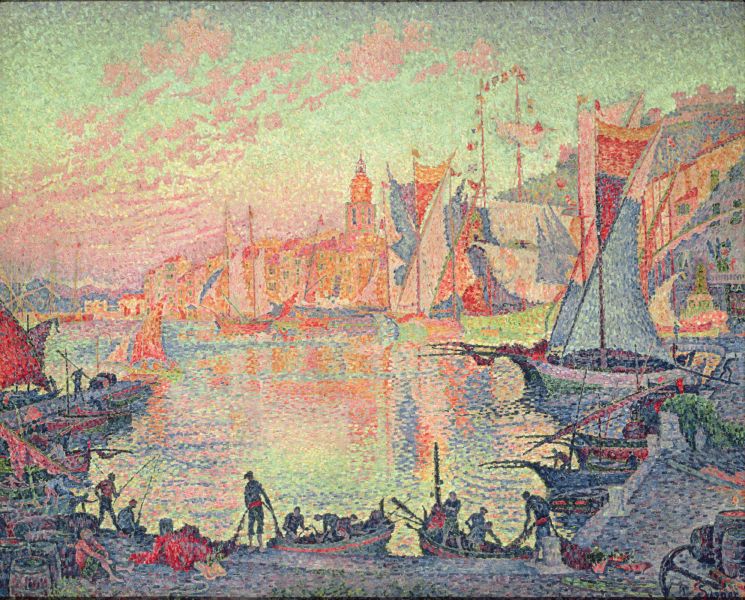
Paul Signac, The Port of Saint-Tropez (1901-2), oil on canvas, 131 x 161.5 cm, National Museum of Western Art, Tokyo. WikiArt. Paul Signac (1863-1935), The…

View original post 861 more words

Categories
Uncategorized

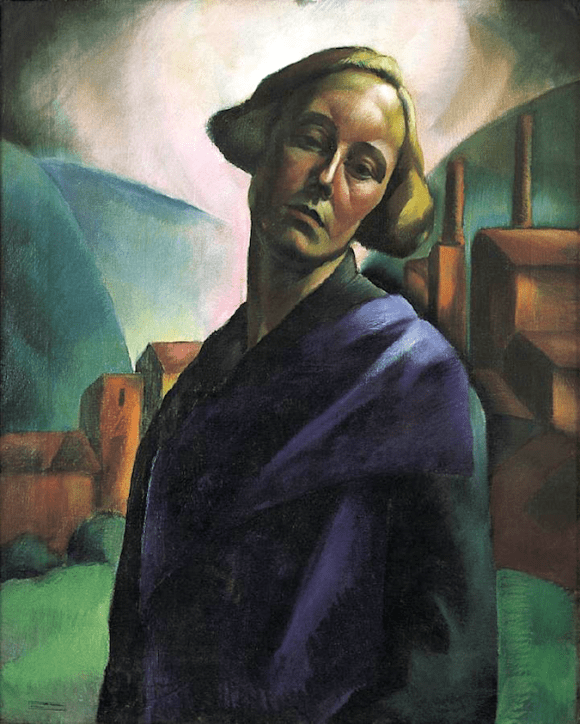
Autoportrait Day 138~ Erzsébet Korb

Somewhat austere and contemplative.

Christy's avatarThe Misty Miss Christy

View original post

Categories
Uncategorized

Autoportrait Day 137~ Yana Movchan

Categories
Uncategorized

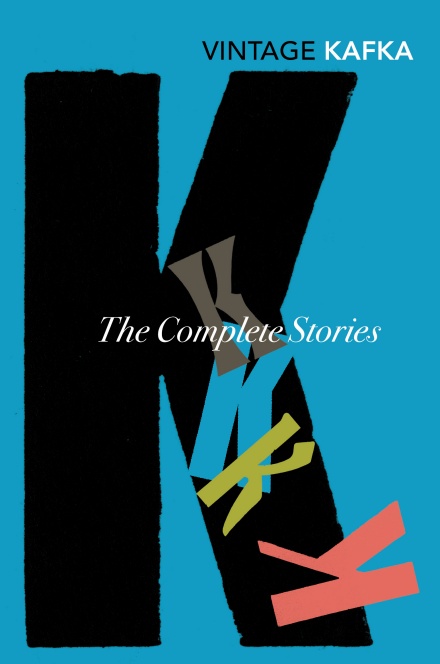
Franz Kafka – The Top (short story)

That story about the top is new to me but yet seems oddly familiar. Along with spirals and Yeats use of “gyre” it seems both mystical and philosophical. Then there was that magnificent musical, “Carousel” which had a huge effect on me when I was about twelve years old!

Jonathan's avatarIntermittencies of the Mind

I recently read Kafka’s (unfinished) novel The Castle, which I had last read about thirty or so years ago. I thought The Trial, The Castle and The Metamorphosis were the bees’ knees when I originally read them, and still do, but didn’t really think much of Amerika or the other short stories at the time. I think I didn’t like them much because they were not like The Trial etc., but my relatively recent re-read of Amerika showed me that it was worth attempting these other works without expecting them to be another version of The Trial.

The Vintage collection I read is split between ‘Longer’ and ‘Shorter’ stories, with some of the shorter stories being less than a page long; some were just fragments of stories and many were only published posthumously. Having finished the collection, I’m beginning to appreciate just how inventive Kafka was as…

View original post 365 more words