Categories
Uncategorized

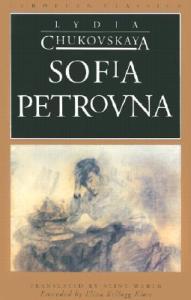
Sofia Petrovna, by Lydia Chukovskaya, translated by Aline Worth

Reminds me of what I have read about Osip and Nadezhda Mandelstam. Helen Dunmore has written along these lines as well. Thanks for posting.

Lisa Hill's avatarANZ LitLovers LitBlog

I bought Sofia Petrovna after reading Judith Armstrong’s article ‘Hidden Women of History: Lydia Chukovskaya, editor, writer, heroic friend’ in The Guardian, and I’ve read it now for the 1965 Club hosted by Stuck in a Book and Kaggsy’s Bookish Ramblings.  Although the novella is a rare – possibly unique – example of fiction written about Stalin’s Great Purge (1936-1938) when it was actually happening, it was of course not published at the time.  Chukovskaya (1907-1996) kept it hidden until after Krushchev’s Thaw in 1956 when the story was first circulated in Samizdat (manuscript form). Official publication faltered, however, in 1963 when it was decided that the book contained ‘ideological distortions’.  An unauthorised copy in English was published in Paris in 1965 (which makes the book eligible for the 1965 club) but there were changes made without the author’s permission and the title The Deserted House was absurd, given…

View original post 1,023 more words
Categories
Uncategorized

Circus: Spectacle

hoakley's avatarThe Eclectic Light Company

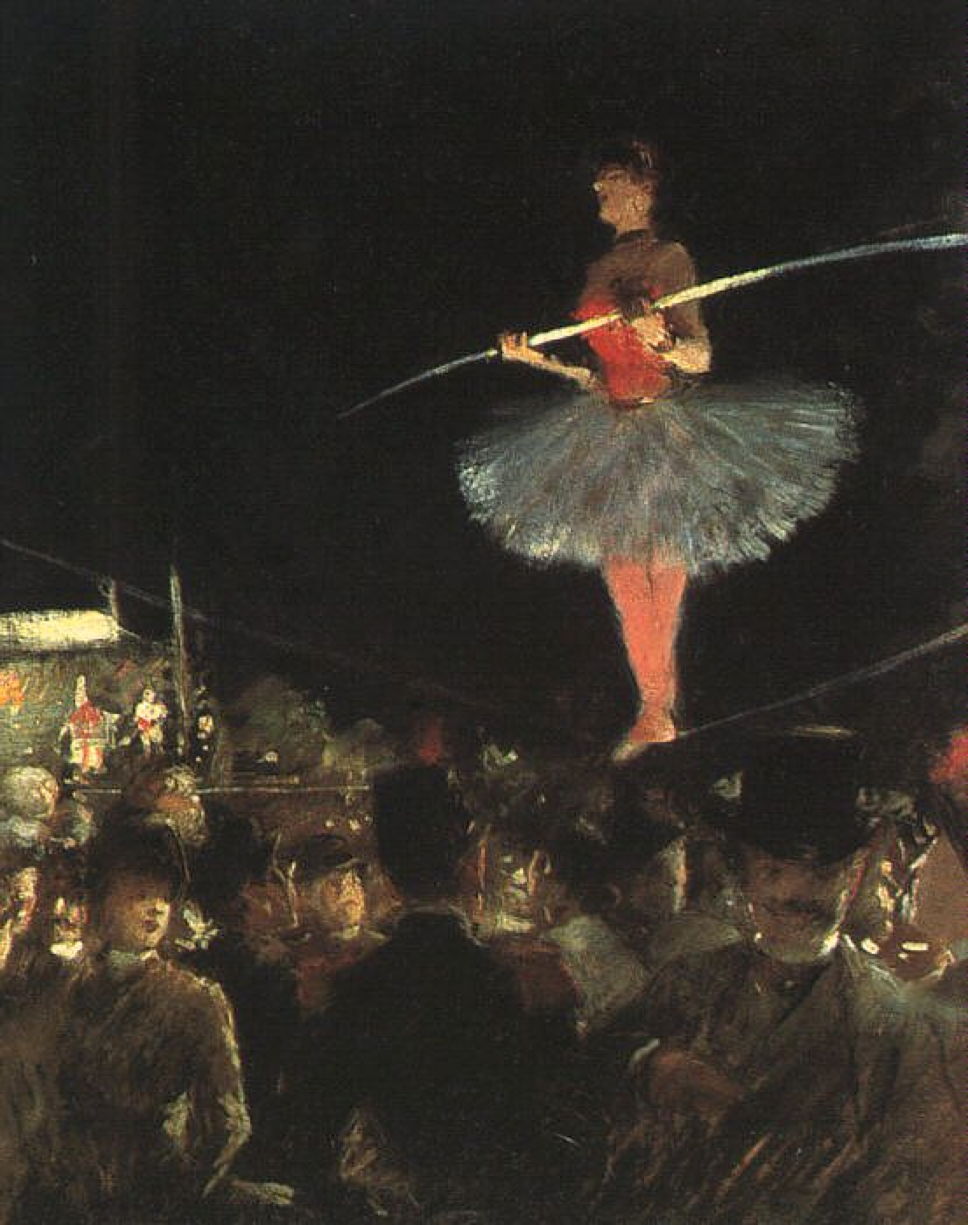
Each Spring, travelling circuses around the world break out of their winter quarters and migrate to cities to bring entertainment to their masses. Much-changed now from their form in their heyday in the nineteenth and early twentieth centuries, they were among the earliest forms of mass entertainment, long before movies.

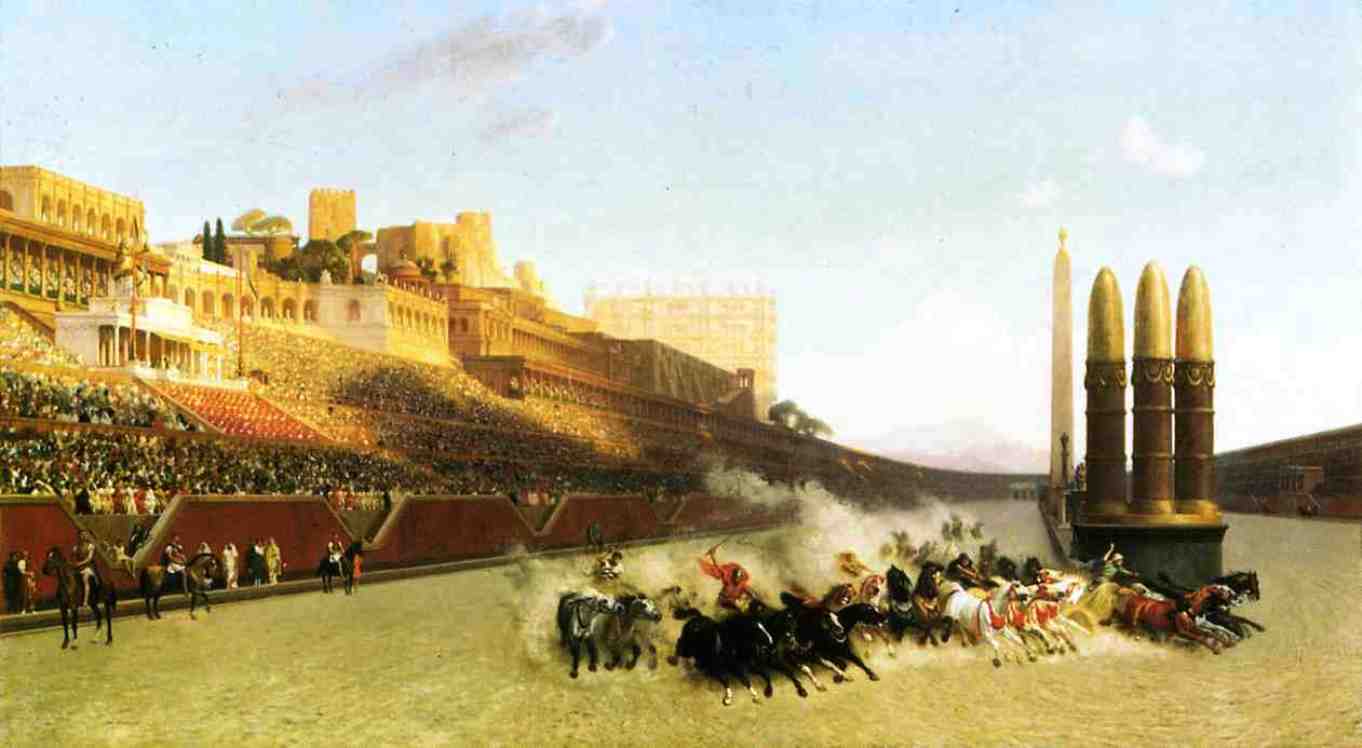
geromecircusmaximus Jean-Léon Gérôme (1824–1904), Circus Maximus (1876), oil on panel, 86.5 x 155 cm, Art Institute of Chicago, Chicago, IL. The Athenaeum.

It was the Romans who not only coined the name, but transformed older and purer athletic events into spectacle soaked with sweat and blood, as recreated by Jean-Léon Gérôme in his Circus Maximus of 1876. This shows four-horse chariot racing taking place in the largest of all the stadiums in Rome, capable of holding a crowd of over 150,000.

These lived on in fairs throughout the Middle Ages and later, but it wasn’t until the late eighteenth century that…

View original post 980 more words

Categories
Uncategorized

Max Aub: a Spanish intellectual in Mexico

europeancollections's avatarLanguages across Borders

Researchers of the life and work of Max Aub (Paris, 1903- Mexico City, 1972) will be pleased to hear about a recent donation from the family of Aub’s daughter María Luísa, affectionately called Mimin by family and friends.

View original post 539 more words

Categories
Uncategorized

Czech Republic photo gallery

Categories
Uncategorized

The Radetzky March Readalong: Part One

Roth is great reading as is his journalism and guidebook to Berlin. He is a main character as is his supporter, Stefan Zweig in Volker Weidermann’s “Ostend- The Summer before the Dark”.

Jonathan's avatarIntermittencies of the Mind


When Caroline, at Beauty is a Sleeping Cat, and Lizzy, at Lizzy’s Literary Life, announced that they were hosting a ‘Radetzy March Readalong’ I knew I’d have to join in. The Radetzky March is comprised of three parts and Caroline and Lizzy have asked those of us taking part to consider questions related to each part. Here are my answers to the questions on Part One.

What enticed you to readalong with us?
I have read a few books by Joseph Roth and have enjoyed them all but I hadn’t read his most famous novel, The Radetzky March, which is the only book by Roth to be included in Boxall’s list 1001 Books You Must Read Before You Die. The books by Roth that I have read are Hotel Savoy, The String of Pearls, The Hundred Days and, one of my favourite books, The…

View original post 1,394 more words

Categories
Uncategorized

Paintings of Félix Vallotton 1 The Foreign Nabi

Fascinating….

hoakley's avatarThe Eclectic Light Company

Continuing my series looking at Les Nabis, I turn next to Félix Vallotton (1865–1925), a painter and print-maker whose work I thought I knew until I started to research what was going to be just one or two articles.

I then realised that to do him any justice at all would require a series of four or more – and that’s without considering his prints. I hope that you’ll agree by the end of this series that Vallotton was a key figure in the development of modern figurative painting in the twentieth century. And that his paintings are wonderful.

Félix Édouard Vallotton was born in Lausanne, in Switzerland, and moved to Paris in 1882 to study under Jules Joseph Lefebvre and Gustave Boulanger at the Académie Julian. His early influences included the paintings of Ingres, and he started painting portraits which followed the academic tradition.

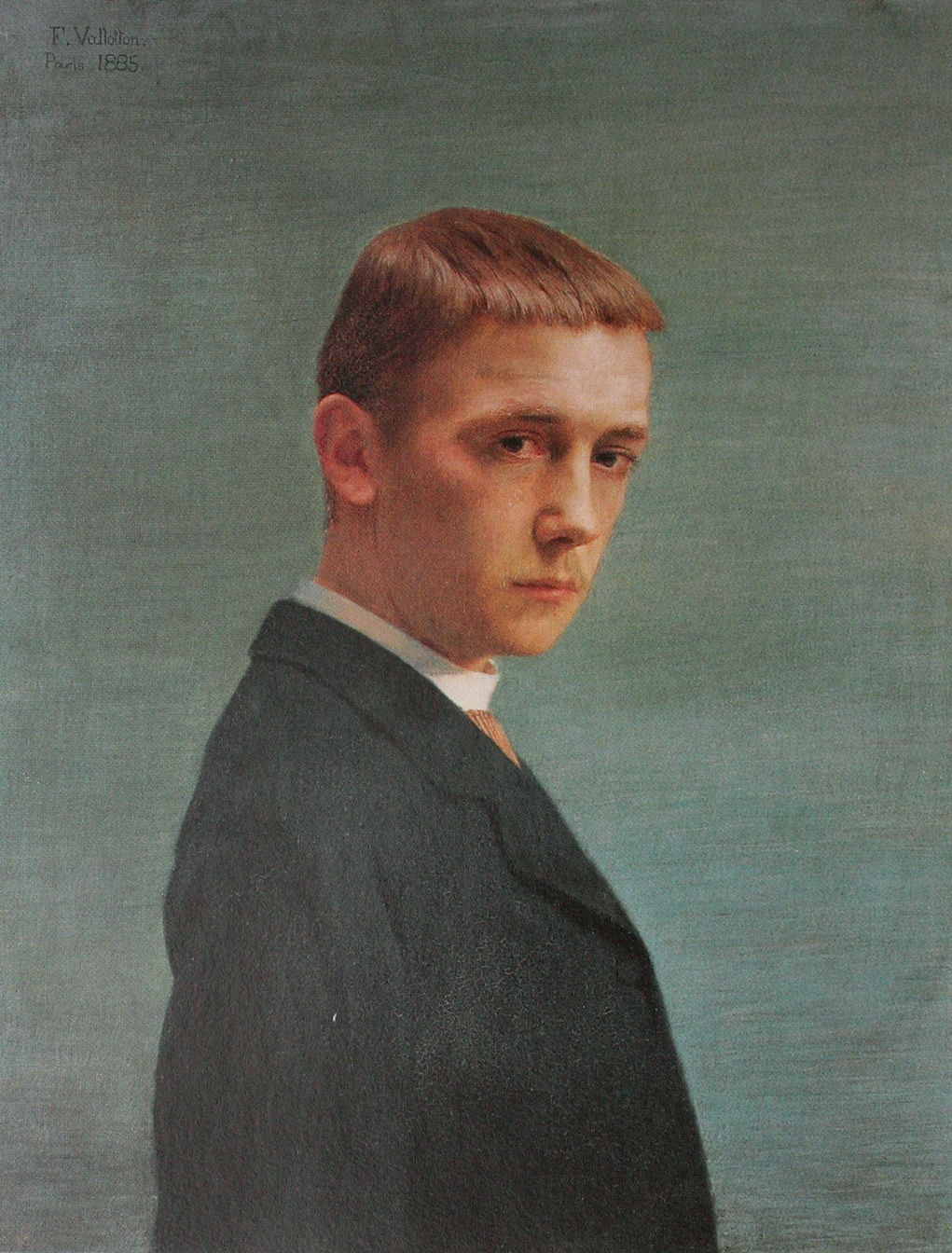
vallottonselfportrait1885 Félix Vallotton (1865–1925), Self-portrait at…

View original post 897 more words

Categories
Uncategorized

Charles Rennie Mackintosh Making the Glasgow style

ms6282's avatarDown by the Dougie

Charles Rennie Mackintosh

On Saturday we travelled over to Liverpool to visit the exhibition about Charles Rennie Mackintosh and the “Glasgow style” that had recently opened at the Walker Gallery. I’m a fan of the work of this rather brilliant architect / artist / interior designer and have visited a number of buildings that he designed over the years, so was keen to see the exhibition, even though, unusually for the Walker, there was a charge for entry. Despite this we had to queue for a short while before we were allowed in as the galleries were at capacity, so the entry fee certainly hasn’t put everybody off.

There was a lot to see; architects’ drawings, paintings, furniture, other objects produced by Mackintosh and other members of the Glasgow School, plus contextual information (including a number of short videos), and we spent a good hour and a half looking round. Unfortunately photography wasn’t…

View original post 387 more words

Categories
Uncategorized

Skizzenbuch: Landtiere – Zeichnung von Susanne Haun

Love these bright colour combinations and spontaneous experiments!

Susanne Haun's avatarSusanne Haun

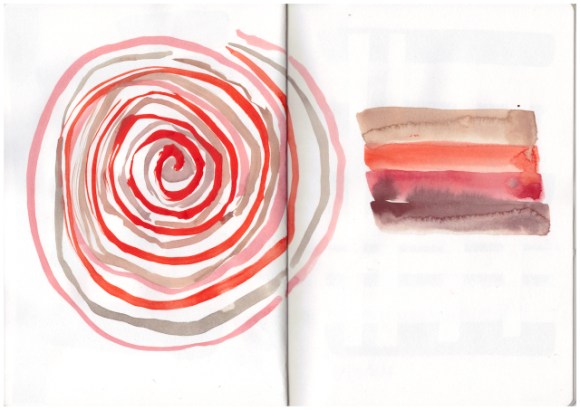
Skizzenbuch, Landtiere und Farben, Zeichnung von Susanne Haun (c) VG Bild-Kunst, Bonn 2019Skizzenbuch, Landtiere und Farben, Zeichnung von Susanne Haun (c) VG Bild-Kunst, Bonn 2019
In der hier in der Galerie gezeigten ersten beiden Seiten, zeige ich, dass blaue Foto- und gemalte Farbstreifen durchaus einen ähnlichen Eindruck vermitteln.

Wer sich mit Farben beschäftigen möchte, wir den ist es eine gute Übung, ein Foto in Streifen zu schneiden und dann die Farben des Fotos zu mischen. Das ist schwerer als es sich anhört!

View original post

Categories
Uncategorized

The beautiful icons of Maurice Denis 2

Another great contribution…..

hoakley's avatarThe Eclectic Light Company

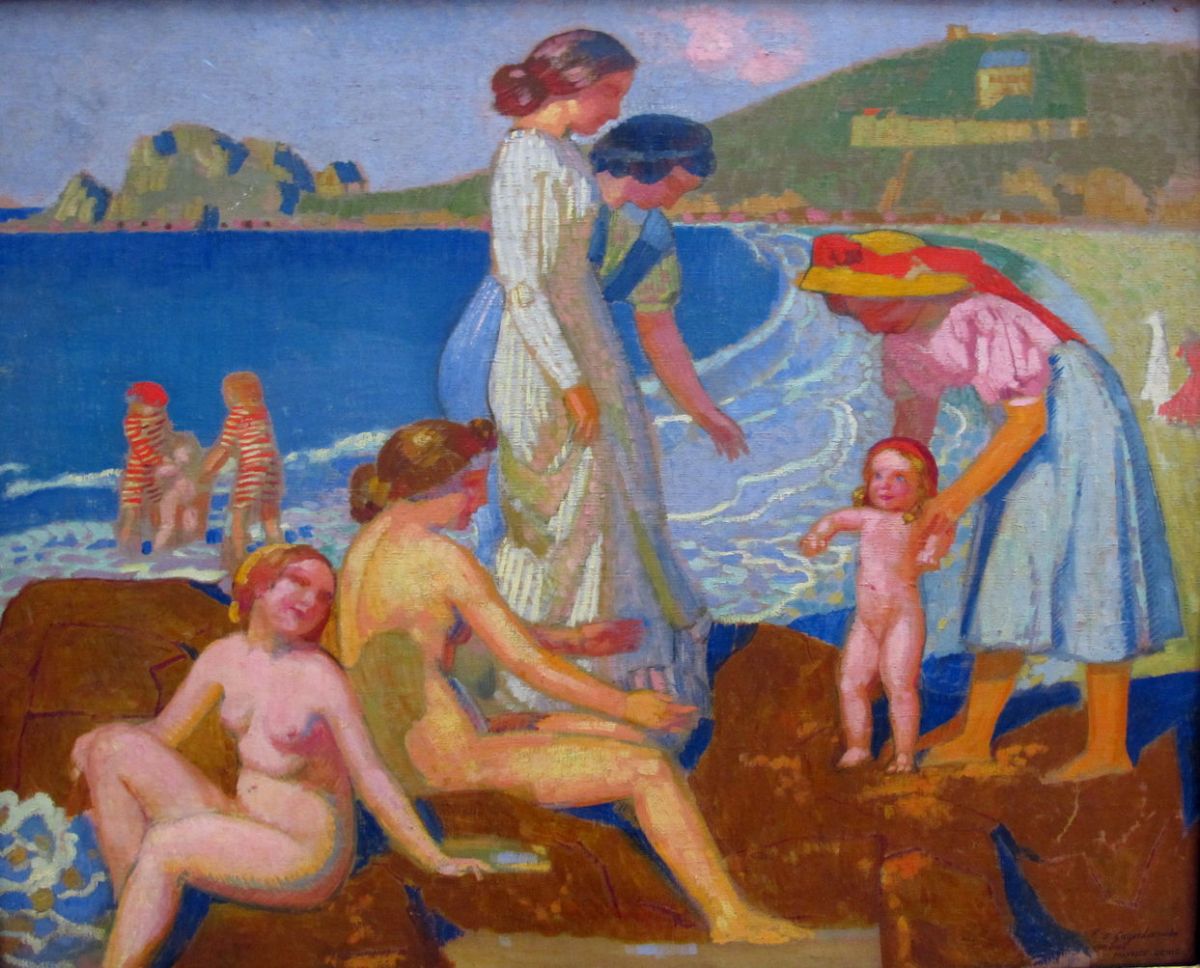
By the start of the twentieth century, the former Nabi artist Maurice Denis (1870–1943) was firmly in the avant garde, his paintings evolving away from his earlier Nabi style, and making series of prints. He had started serious print-making around 1890, and had made woodblocks for music by Debussy. His prints became even more important in the early twentieth century, when he illustrated writings by an eclectic range of authors including Dante, Verlaine and Saint Francis of Assisi.

denisboattostbreton Maurice Denis (1870–1943), Boat to Saint Breton, or Portrait of Albert Clouard as a Saint (1903-06), oil on canvas, dimensions not known, Musée des beaux-arts de Morlaix, Morlaix, France. Wikimedia Commons.

Many of Denis’ themes remained religious, such as his Boat to Saint Breton, or Portrait of Albert Clouard as a Saint painted between 1903-06. This may refer to a legend of the life of the first Breton saint, canonised in…

View original post 877 more words

Categories
Uncategorized

Skizzenbuch: Landtiere – Zeichnung von Susanne Haun

Vivid and lovely drawings!!

Susanne Haun's avatarSusanne Haun

Skizzenbuch, Landtiere und Farben, Zeichnung von Susanne Haun (c) VG Bild-Kunst, Bonn 2019Skizzenbuch, Landtiere und Farben, Zeichnung von Susanne Haun (c) VG Bild-Kunst, Bonn 2019
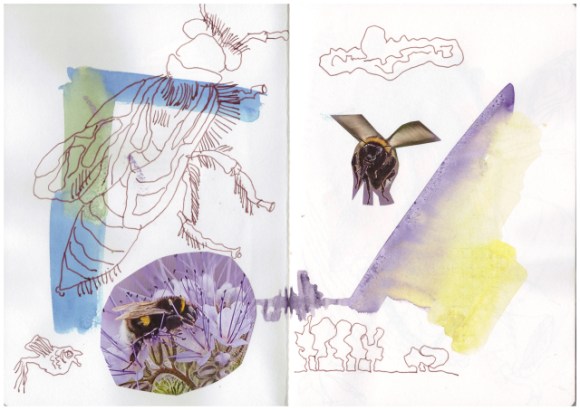
In Vorbereitung auf die Leipziger Buchmesse habe ich in mein Skizzenbuch Collagen zum Thema Landtiere erstellt. Dazu habe ich Fotos, Tusche, Aquarell und meinen Füller benutzt. Nach dem farbenfrohen Karajan war es mir ein Bedürfnis, weiter mit Farben zu arbeiten. Dabei waren mir die fast abstrakten Fotostreifen eine große Hilfe.

View original post