Categories

My dear old friend’s latest work:-

Categories
Sovereignty of the Self
…and was not very nice to King Ludwig II of Bavaria


Jonathan Steinberg, Bismarck: A Life
In “Bismarck: A Life,” Jonathan Steinberg has produced a masterful biography of a mercurial figure, Otto Eduard Leopold von Bismarck, almost certainly the most important diplomatic figure of the second half of the 19th century. Steinberg shows how Bismarck went from a “shallow country squire” (p.2) to the man who, between 1862 and 1890, unified the disparate German kingdoms, duchies and fiefdoms into the most powerful country on the European continent. In stitching together modern Germany, Bismarck put the pieces in place for the new powerhouse to lead Europe into two murderous 20th century wars, then transform itself late in the century into what Timothy Garton Ash recently termed “about as solid a liberal bourgeois democracy as you can find on earth. . . civilized, free, prosperous, law abiding, moderate and cautious” (“The New German Question,” New York Review of Books…
View original post 2,223 more words
Spot the sentence which contains some intriguing descriptions of a badly printed booklet!

 I am reading Thomas Mann’s The Magic Mountain, and I came across this:
Quite a bit of reading went on at the International Sanatorium Berghof, both in the common lounging areas and on private balconies – this was particularly true of newcomers and short-termers, since residents of many months or even years had long since learned how to ravage time without diverting or employing their minds, had become virtuosi at putting time behind them, and declared openly that only clumsy bunglers in the art needed a book to hang on to. At most they might leave a book lying on their lap or within reach on a table – that sufficed for them to find their reading needs taken care of. The sanatorium library was a polyglot affair with many illustrated works – an expanded version of the sort of thing that serves to entertain patients in a dentist’s…
View original post 203 more words
Liking Singer Sargent more and more…


Have just been looking at this interesting poem

Imagine a sumptuous Italian feast in the sunlit bathed ancient countryside near Milan. Next to you a gentleman talks and eats with furious energy. He tells of Dante, Cicero, and St Augustine and quotes a multitude of obscure troubadours from the Middle Ages. He repeats himself, gestures flamboyantly, nudges you sharply in the ribs, belches and even breaks wind. His conversation contains nuggets of information but in the flow of his discourse there is a fondness for iteration and reiteration. He throws bones over his shoulder and when he reaches the cheese course. Definitely, too much information on the mouldy bacteria! When you finally get up things the elderly gentleman has said prompts your imagination. You are better informed, intrigued and prodded to examine his discourse again and again, even if only to challenge what you have heard. Such are the effects of reading Eco’s essays in “Inventing the Enemy”.

The first essay, discloses what your choice of opponent or indeed those you victimise says about yourself. Eco splendidly quotes from Cicero’s Orations against Catiline lecturing the Senate on his opponent’s seditious moral perversity. Within a few pages we read of Pliny, the Younger on his persecution of Christians, Odo of Cluny’s disgust with women and, time and again more poisonous invective against the Jews. The reader will recall Peter Porter or perhaps, Cavafy:-
Because the barbarians are to arrive today.
What laws can the Senators pass any more?
When the barbarians come they will make the laws.
Since theology is never distant from Umberto Eco’s thought there is an echo of the unkindness mentioned in Matthew Chap45 v25” And the King shall answer and say unto them, Verily I say unto you, Inasmuch as ye have done it unto one of the least of these my brethren, ye have done it unto me.”
This eclectic collection covers matters as varied as St Thomas Aquinas on whether Embryos have souls to this famous cultural critic’s latest thoughts on Wikileaks. The philosophical chapter comparing Absolute and Relativism is particularly interesting. Touching on questions about the nature of contingency, the verification principle, positivism and post-modernism Eco provides the reader, given an interest in such matters, plenty to stimulate the little grey cells. Significantly, he mentions how Pope John Paul II thought modern philosophy had become dominated by questions about the theory of knowledge rather than issues about the nature of being (ontology). The orphic resonances of Mallarmé’s symbolic communication, Kafka’s opinions on interacting with the Absolute, quoted by Elie Wiesel, and Nietzsche’s advocacy of the subtlety of art all get a mention. This is not an easy read; it is indeed something of an intellectual tour de force.
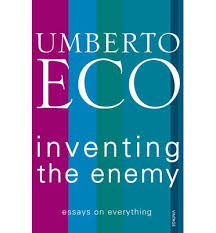
The lengthy chapter concerning Victor Hugo, The Poetics of Excess begins by outlining Gide and Cocteau’s concern that the writer’s insufferable style is thoroughly bombastic. However, Eco is entranced by Hugo’s lengthy descriptions, his penchant for making lists and constructing unstable rough-hewn characters. Frequently Eco seems attracted by the ugliness and brutality that conveys the cruel forces of destiny which characterise Hugo’s highly romantic writing. Memorably, the guillotine on its rough wooden scaffold with its glinting sharp blade becomes a devouring beast. Umberto Eco concentrates on Hugo’s novel about revolution and reaction, [[Ninety Three]] where the lengthy lists of villages, crossings and homesteads provide the reader with a convincing panorama of the scale of the social upheaval. Redemption it seems to Hugo, quoting de Maistre, necessitates human sacrifice. Eco is explaining how in becoming more radical by 1870 and supporting the Communards he feels too he must justify The Terror. This engaging chapter with the portrayal of the Royalist Vendée, led by the clergy and by peasants who were chosen in each locale, cost more than 240,000 lives. The trendy professor convinces us of the necessity of reading Hugo’s inimitable contribution to the historical novel. Even attempting a few selected paragraphs in French would prove a rewarding challenge!
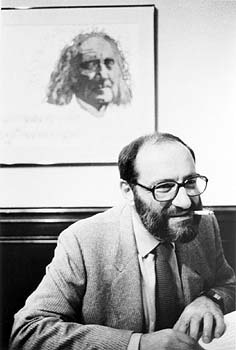
Plunging deeper into this very varied collection, “Inventing the Enemy”, the reader becomes beguiled by Eco’s verbal fire display. The chapter on [[Imaginary Astronomies ]]delves into the curiosities of approaches, ancient and modern to explain the structure and shape of the firmament. First as a glorious tabernacle progressively he illustrates cosmologies linked with how man’s inventions alter too his conception of himself and society. Humour and irony are freely sprinkled through the text which leaps into convolutions that mirror the Ptolemaic system of epicycles of the planets that are described. The story is enlivened too by an engaging display of strange maps. By the end of these essays, the reader will have a sense of the strange, entertaining pleasure of Umberto Eco’s company and an introduction to the diversity of ingenuity and fun to be found among otherwise neglected archives.
Two other interesting links are this Guardian Review by Nicholas Lezard is at http://www.theguardian.com/books/2013/aug/27/nicholas-lezard-inventing-enemy-umberto-eco
and an interview with Jeremy Paxman is at http://www.youtube.com/watch?v=pLblYsHc7uI
Categories
Norway and Berlin in Color
Great photographs!
“In 1960 Ida Kar (1908-74) became the first photographer to have a retrospective exhibition at a major London art gallery. Her portraits offer a fascinating insight into post-war cultural life and her subjects included some of the most celebrated figures from the art world of 1950s and 1960s Europe and Russia. A number of the artists Kar photographed also included artists from the St Ives School.” as it says at http://www.royalcornwallmuseum.org.uk/exhibitions/.
I saw this exhibition on Saturday and was truly moved at this small but fascinating exhibition and the sculptures that came with it which included Hepworth and Epstein. Lovely picture of Ida with Victor Musgrave with whom she lived in the 1940s in Cairo. Delightfully bohemian, her work is taken from the studios and ateliers of Paris and London. Even more exciting I found her photographs of St Ives in the 1950s. Her Braque portrait captures the essence of the artist-his eye sockets look as though they were a Picasso portrait brought to life. The portraits of Leach, Denis Mitchell whose reputation is still growing and Hepworth forming an armature from wire for a sculpture are all lively and moving. The original exhibition at the National Portrait Gallery is reviewed at http://www.theguardian.com/artanddesign/2011/mar/13/ida-kar-bohemian-photographer-review. There is a great review of her photographs at http://www.bbc.co.uk/news/entertainment-arts-11998337. Should you get to Truro Museum at the moment there is an intriguing collection, A Century of St Ives Art 1840-1940.


Das Mädchen aus der Fremde
In einem Tal bei armen Hirten
Erschien mit jedem jungen Jahr,
Sobald die ersten Lerchen schwirrten,
Ein Mädchen, schön und wunderbar.
Sie war nicht in dem Tal geboren,
Man wußte nicht, woher sie kam,
Und schnell war ihre Spur verloren,
Sobald das Mädchen Abschied nahm.
Beseligend war ihre Nähe,
Und alle Herzen wurden weit,
Doch eine Würde, eine Höhe
Entfernte die Vertraulichkeit.
Sie brachte Blumen mit und Früchte,
Gereift auf einer andern Flur,
In einem andern Sonnenlichte,
In einer glücklichern Natur.
Und teilte jedem eine Gabe,
dem Früchte, jenem Blumen aus,
Der Jüngling und der Greis am Stabe,
Ein jeder ging beschenkt nach Haus.
Willkommen waren alle Gäste,
Doch nahte sich ein liebend Paar,
Dem reichte sie der Gaben beste,
Der Blumen allerschönste dar.
Friedrich von Schiller (1759-1805)
 penwithlit