Categories
Uncategorized

Antoine Renard: Le Temps des Cerises

Lovely painting!

At Sunnyside - Where Truth and Beauty Meet's avatarAt Sunnyside - Where Truth and Beauty Meet

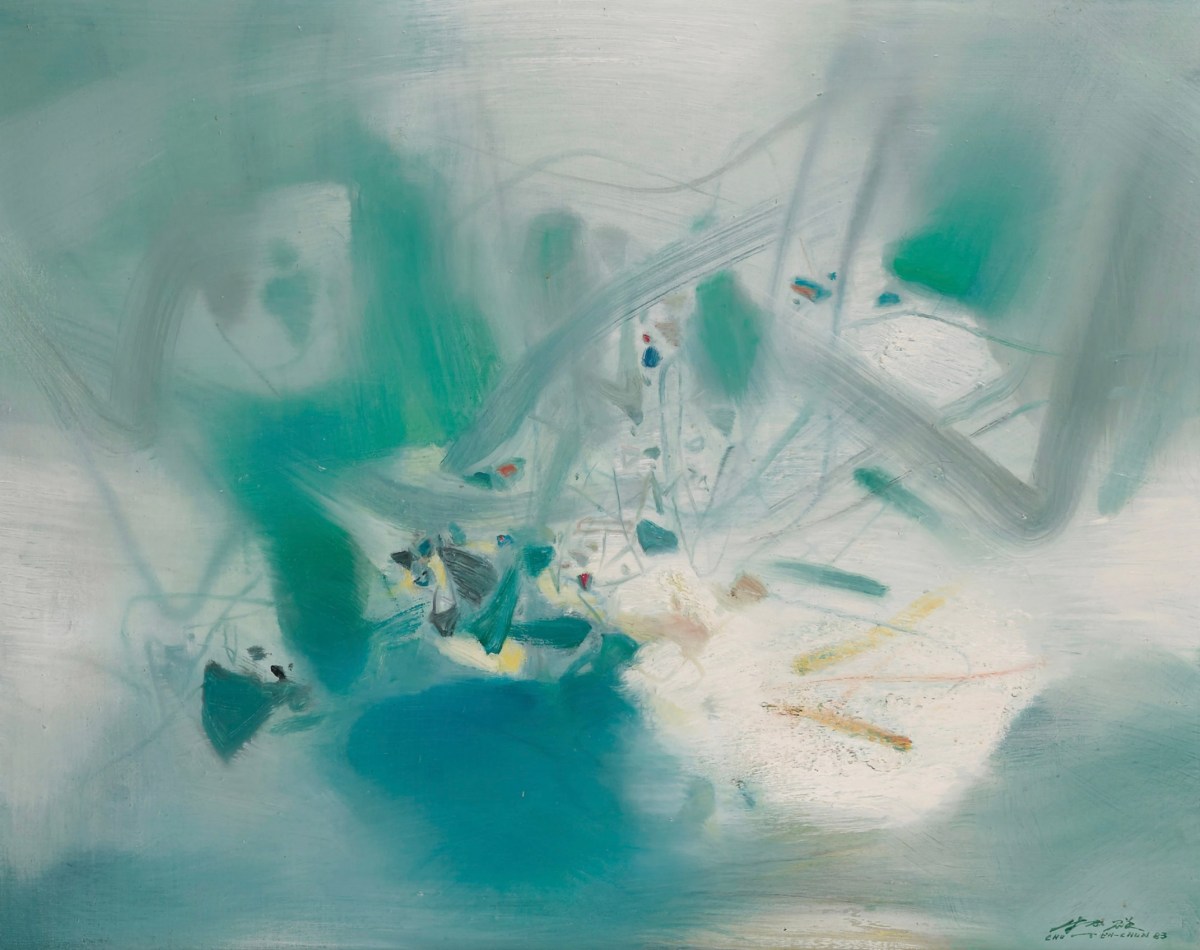
Zhu Dequn (Chu Teh-Chun), Clartés Diaphanes, signé et daté; signé, daté le 3 fév. 1982-83 et titré au dos, huile sur toile, 65 x 81,5 cm; 25 5/8 x 32 1/8 in., Exécuté en 1983, Image Source: Sotheby’s

“From the heights of Montmartre in Paris, trumpeter Lucienne Renaudin Vary and accordionist Félicien Brut play “Le Temps des Cerises” (“The Time of Cherries”), a legendary love song composed in 1866 by Antoine Renard with lyrics by Jean-Baptiste Clément and reimagined in this duet version by Domi Emorine.”

Warner Classics

See More

CHU TEH-CHUN at Christie’s

CHU TEH-CHUN at Sotheby’s

CHU TEH-CHUN at Bonham’s

Read More

CHU TEH-CHUN at wikiwand

10 things to know about poet painter Chu Teh-Chun

Chu Teh chun: The Man Behind the Legendary Painter

Chu Teh-Chun in Three Works: Symphonic, Calligraphic, Lyrical

Thanks for Visiting 🙂

~Sunnyside

View original post

Categories
Uncategorized

The Power of Delusions

What happens when political leaders show such grandiose characteristics? We are still learning, I think.
Herbert Rosenfeld is generally very interesting on this topic. Details about him are on the Melanie Klein Trust website. Thanks for this posting.

Leon Garber, LMHC's avatarLeon's Existential Cafe

Self-importance is akin to cocaine.

Social Psychologist David Myers discovered what he labeled “The Lake Wobegon Effect.” Based on a fictitious town where everyone considers themselves to be above average, Myers noted the human propensity to have a somewhat aggrandized view of oneself. Other psychologists describe self-enhancing beliefs. But while many of us fancy ourselves, a select few have managed to convince themselves of their god-like specialness. These individuals are the apparent revolutionaries sent to fundamentally change the world.

And all of them hate the establishment.

In If It Sounds Like a Quack…, journalist Matthew Hongoltz-Hetling wrote about various practitioners of alternative medicine, who rose to prominence, or infamy, by means of their varied medical inventions. One created a laser, another harnessed the power of leeches, and there was also a bleach injection. Each individual story was a type of heroic journey, wherein the revolutionary thinker resolved to take…

View original post 611 more words

Categories
Uncategorized

Ukrainian Painters: Ilia Repin

hoakley's avatarThe Eclectic Light Company

No, I’m not about to try to tell you that Ilia Repin is just a Ukrainian painter. What I’d like to do is show how he was more than the Russian painter that he’s normally labelled as.

Ilia Repin, or Ilya Yefimovich Repin, (1844-1930) was born in the town of Chuhuiv, to the south-east of the city of Kharkiv in eastern Ukraine. His father was an itinerant horse-seller who was a veteran of three major wars. Repin was schooled locally, and started his working life as an apprentice to an icon painter. In the autumn of 1863, when he was nineteen, he moved to Saint Petersburg to try to gain entry to the Imperial Academy of Arts there. He was successful at his second attempt early the following year.

Ilya Yefimovich Repin, Barge Haulers on the Volga (1870-3), oil on canvas, 131.5 x 281 cm, State Russian Museum, Saint Petersburg. WikiArt. Ilya Yefimovich Repin (1844-1930), Barge Haulers on the Volga (1870-3), oil on canvas, 131.5 x 281 cm, State Russian Museum…

View original post 977 more words

Categories
Uncategorized

Observing Without Evaluating in Life and in Therapy. By Dr Linda Berman

Very interesting and this makes me ponder how even in the act of perception there might be unconscious bias , It makes me wonder to what extent by advocating a non-judgemental approach it is attainable in everyday situations. Maybe only approximately.

waysofthinking.co.uk's avatarwaysofthinking.co.uk

image

Girl On A Balcony Watching A Couple By A Lake – Philip Richard Morris.(1836-1902) Wikioo.

“The ability to observe without evaluating is the highest form of intelligence.”

Jiddu Krishnamurti

Do you have the skills, the wisdom and the self-awareness to observe without evaluating? This is not easy, as many of us tend to jump to quick, unconsidered conclusions and to make speedy, unthinking evaluations of other people, of situations, even of ourselves.

image

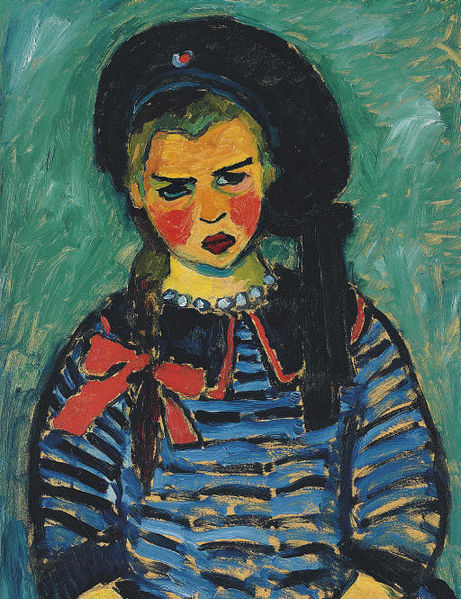
Alexander Jawlensky. Girl With A Red Bow. 1911. Wikimedia Commons.

“One of the signs of intelligence is to be able to accept the facts without being offended.”

Richard P. Feynman

This quotation complements the one above; it brings in the concept of being offended by ‘the facts’ rather than observing them with an open mind and looking at what may be our own biases, prejudices and rigidities.

I am not implying here that we ‘should’ never be offended…

View original post 1,904 more words

Categories
Uncategorized

POWERFUL VOICES DESERVE TO BE HEARD

Categories
Uncategorized

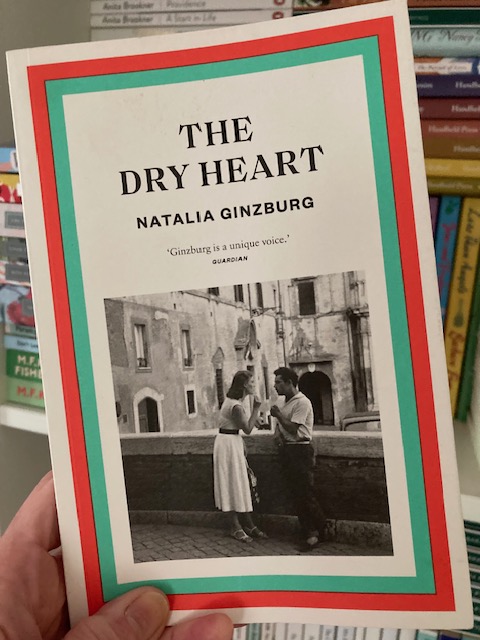
The Dry Heart by Natalia Ginzburg (tr. Frances Frenaye)

Sounds very sad- reminds me of Italo Svevo whom I read so long ago!

JacquiWine's avatarJacquiWine's Journal

Dating originally from 1947, The Dry Heart is one of Natalia Ginzburg’s earliest and most striking novellas. Slim, precise and utterly haunting, it tells the story of an unhappy marriage; in fact, in many respects, the marriage appears to be a mismatch from the very start…

The story opens with a death when our unnamed narrator, a married woman in her mid-twenties, shoots her husband, Alberto, between the eyes, leaving him for dead.

‘Tell me the truth,’ I said.

‘What truth?’ he echoed. He was making a rapid sketch in his notebook and now he showed me what it was: a long, long train with a big cloud of black smoke swirling over it and himself leaning out of a window to wave a handkerchief.

I shot him between the eyes. (p. 1)

Having failed to elicit the truth from her husband, the woman goes out to a café where…

View original post 980 more words

Categories
Uncategorized

All the Beauty in the World: A Museum Guard’s Adventures in Life, Loss and Art by Patrick Bringley (USA)

Sounds very much like ” they also serve who simply stand and watch”. Intriguing and thought provoking.

imogen's avatarImogen is Reading and Watching the World: On Books, Film, Art & More

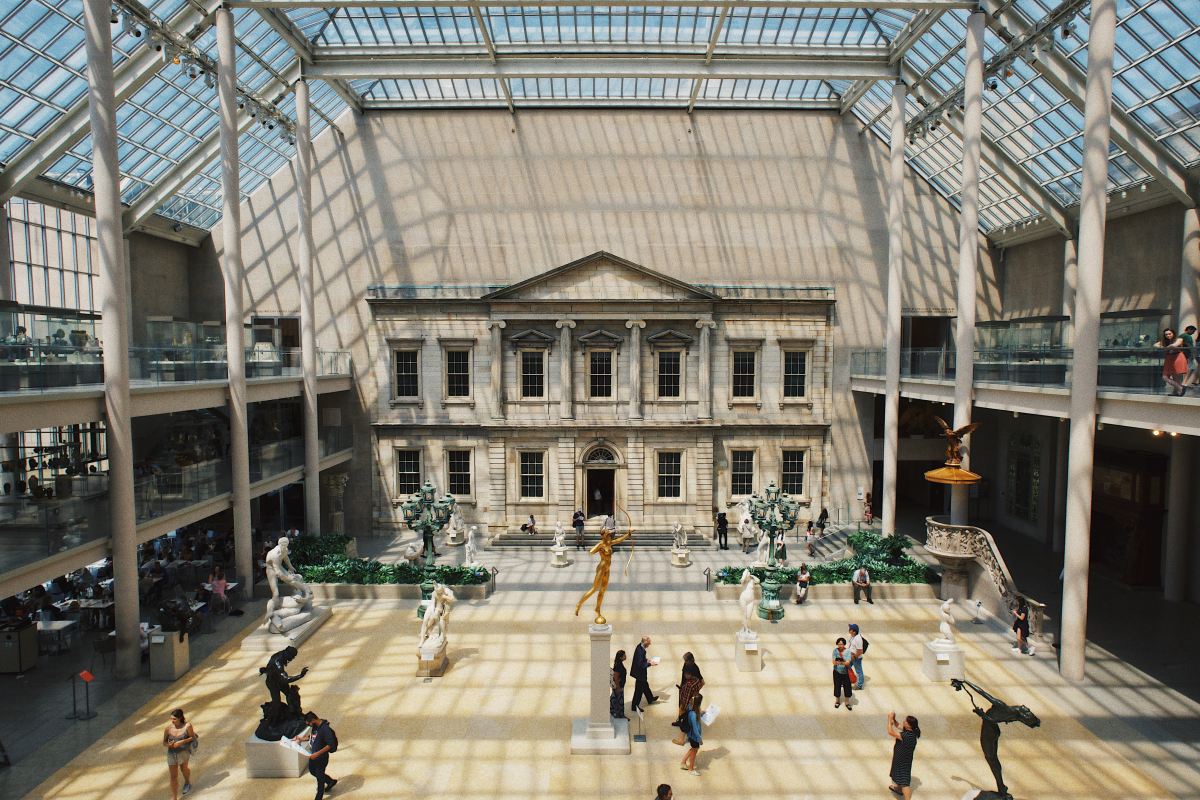
This is book number 6 of my 20 books of summer, and it is a really wonderful book, published this year. It is part memoir and part guide to art appreciation, written by Patrick Bringley, who spent a decade working as a guard at the Metropolitan Museum of Art in New York.

Bringley had been a successful student, and was on his way to launching the glittering New York journalistic career that seemed his for the taking when his brother became seriously ill with cancer, dying tragically young. Broken after his brother’s early death, Bringley sought a refuge, and space to reflect or just to switch off his thoughts, and he found just that inside the timeless rooms of the Met.

But the book is not primarily a grief memoir. It is interesting in so many ways: Bringley is a warm and erudite guide to the art works themselves, and…

View original post 285 more words

Categories
Uncategorized

Painting on two wheels

A nice atmosphere conveyed here- a seemingly gentler time!

hoakley's avatarThe Eclectic Light Company

This weekend, the Tour de France is in the midst of its mountain stages in the Alps. To mark that, this article looks all too briefly at paintings of cycling.

Bicycles and cycling started to catch on in the middle of the nineteenth century, and by 1868 cyclists were racing against one another in parks in Paris.

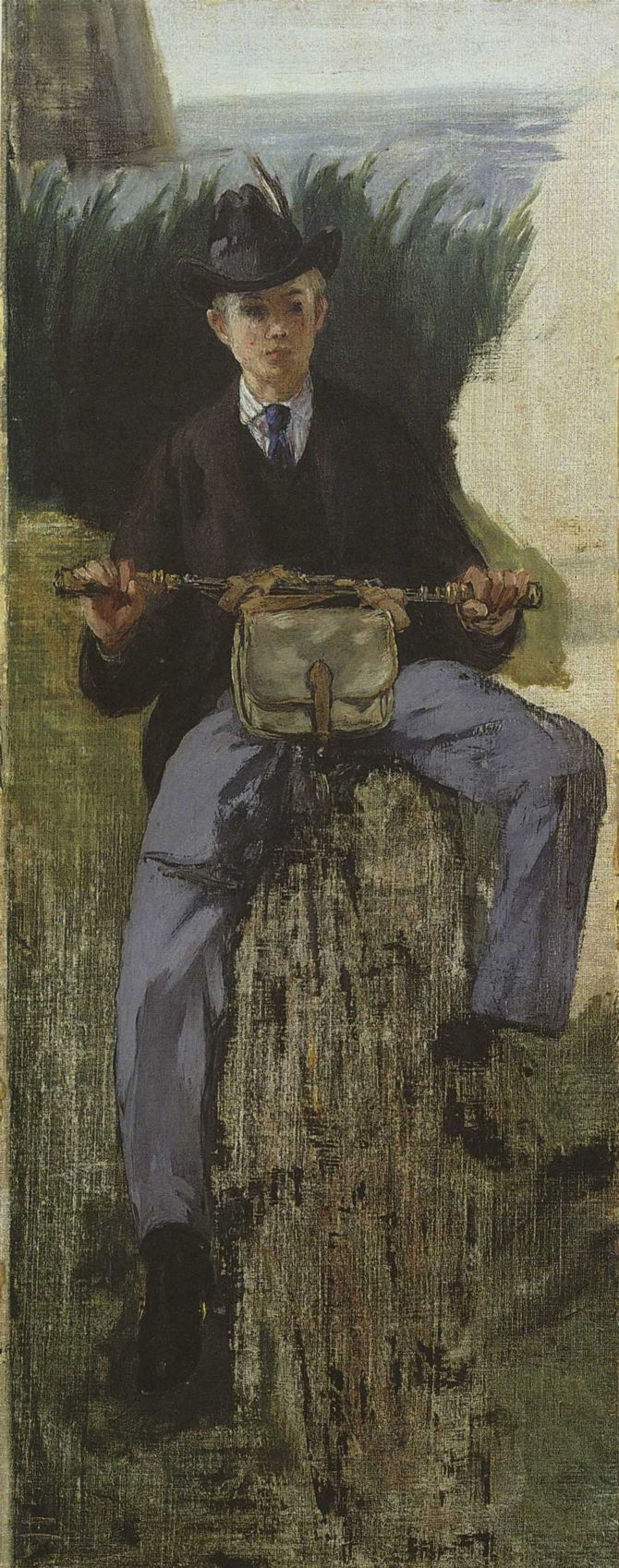
manetvelocipediste Édouard Manet (1832–1883), Le Vélocipédiste (The Cyclist) (1871), oil on canvas, 53 × 20 cm, Private collection. Wikimedia Commons. Wikimedia Commons.

Manet’s remarkably early oil sketch Le Vélocipédiste (The Cyclist) from 1871 is probably the first depiction of a cycle by a major painter. Others like Robert Alott followed, still on their ‘penny farthings’ On the Beach at Ostende (1888), below.

alottostendbeach Robert Alott (1859–1910), On the Beach at Ostende (1888), oil on panel, 26 x 53 cm, Private collection. Wikimedia Commons.

korzukhinpetrushkagoes Alexey Korzukhin (1835-1894) Petrushka Goes! (1888), oil on canvas, dimensions not known…

View original post 516 more words

Categories
Uncategorized

Porch Swing, Sanford, North Carolina

Categories
Uncategorized

The Scottish Colourists

Very lovely!

At Sunnyside - Where Truth and Beauty Meet's avatarAt Sunnyside - Where Truth and Beauty Meet

Samuel John Peploe (1871 – 1935), Iona Landscape: Rocks, oil on canvas, National Gallery Scotland

Each Scottish Colourist had his own set of specific goals and aims, but between them the four also shared much common ground. They were all born in Scotland in the 1870s to middle class families, and at various different times each visited France to experience the burgeoning avant-garde first hand, returning to Scotland brimming with new ideas. Influences came from Manet, the Impressionists, Cezanne, Matisse and the Fauves, with the Colourists exploring modulations of light, shade and atmospheric effects, often through painting en plein air.

READ FULL ESSAY: National Gallery Scotland

See More

Tag: Samuel Peploe At Sunnyside

Tag: Scottish Colourists At Sunnyside

Samuel John Peploe at National Gallery Scotland

Samuel John Peploe at ArtUK

Read More

Samuel John Peploe at wikiwand

Thanks for Visiting 🙂

~Sunnyside

View original post