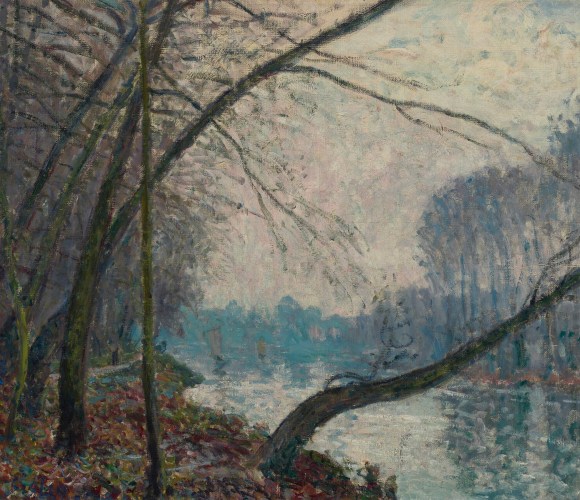
ALFRED SISLEY (1839-1899), Matinée d’octobre près de Port-Marly, signed ‘Sisley.’ (lower left), oil on canvas, 18 3/8 x 21 3/8 in. (46.5 x 54.3 cm.) Painted circa 1876, Image Source: Christie’s
“Painted following the First Impressionist Exhibition in April 1874—which had opened the eyes of the public to the revolutionary Impressionist aesthetic—and around the time of its second iteration which helped cement the validity of its new, modern terminology,Matinée d’octobre près de Port-Marlypays fitting homage to the movement’s pursuit of paintingen plein air. Determined to capture the fleeting, atmospheric beauty of the cool, early morning light, one can almost imagine Sisley waking early in order to secure the perfect location from which to paint—dismissing the icy autumn chill which must have no doubt plagued his fingers as he began to work the canvas.”
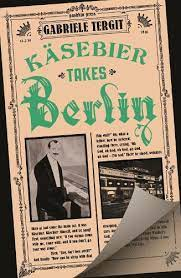
I am currently reading a book about a doomed society on the brink of Fascism. Where publicity takes the trivial and ephemeral and promotes it as serious journalism. Set in a city where it is important to be seen in the right places. A society where there is a strong underlying current of racism. A place where a spectacle is required every evening to entertain manual workers, secretaries and shopkeepers. A city where greed and cheap, unreliable information dominates the public space. This could be London; this could be today.
In fact this is Berlin in 1930 where a man whose name roughly translates as Cheeseburger sings sickly romantic songs and becomes the equivalent of a Tik Tok celebrity – reports about him soon dominat the front pages of the city’s many newspapers and journals. Such is Käsebier Takes Berlin, a demanding book ably translated from the German by Sophie Duvernoy. (You can improve your knowledge of Berlin Argot at https://www.fluentu.com/blog/german/berlin-slang/)
Not the least interesting aspect of this novel (early metrication??) are the cultural references to be found in the notes- from Schiller to Fontane including scenes of the famous, louche “Romanisches” cafe. If you enjoyed the recent series on KaDeWe on BBC you will enjoy this spectacle of the frantic Weimar period.
Then there is the evocative smell of newspapers hot off the press. Journalists who become frustrated by sub-editors who cut their best phrases and compositors who have a scarcely veiled contempt for content as long as it fits elegantly on the front page.
Finally Berlin itself as it was in the pre-war period is touched upon; the Biergartens beside the Spree, the absurd architecture of prosperous flats and yet the strange variations in property prices. This latter caused by insecurities in the currency together with the speculations of dodgy developers. This too gives Tergit’s Weimar novel contemporary relevance.
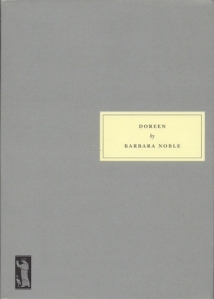
I discovered this absorbing short novel via the Backlisted Podcast. At the start of each session they share what they are currently reading, and Barbara Noble’s Doreen (1946) caught my attention immediately because it was about the evacuation of children out of London during the war. It’s an historical event that has always interested me because my father and his little brother were evacuees, exploited as household help by servants in a big house. But though he spoke very little about his experience, he did recount an act of kindness when someone used their petrol ration to give him a lift home when he’d sprained his ankle. So his experience was not entirely negative.
I can’t watch videos like this one without getting emotional. My father also talked about being lined up in a hall, and the humiliation of people choosing which children to take, using the same words…
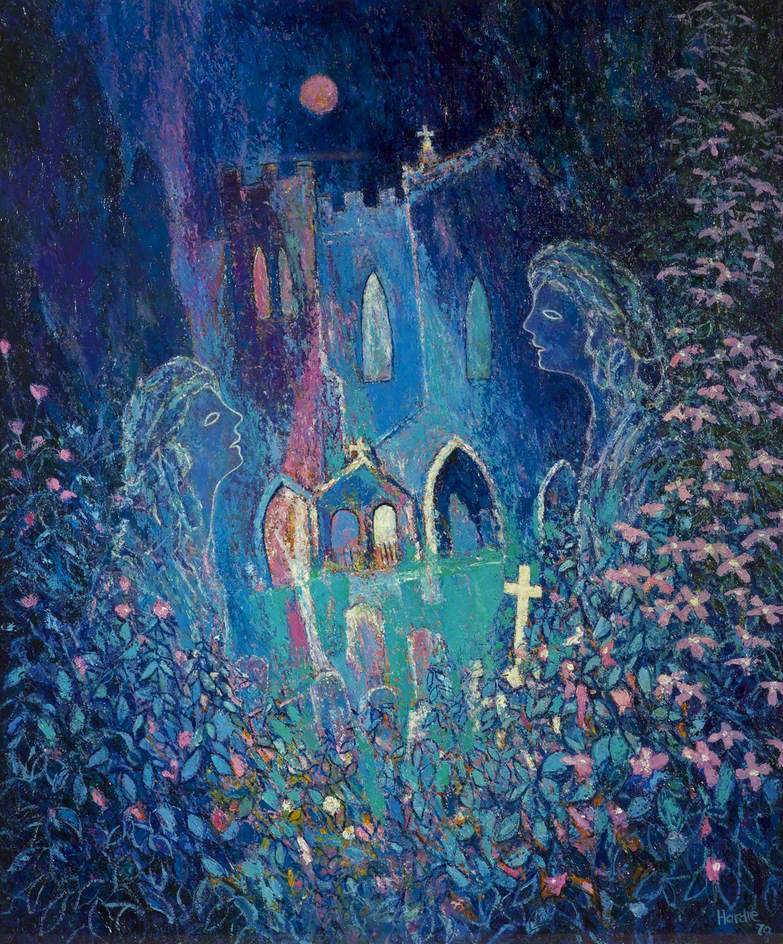
Alexander Merrie Hardie (1910–1989), Clair de Lune, 1970, oil on canvas, Royal West of England Academy (RWA), Image Source: ArtUK
Clair de Lune
Your soul is a chosen landscape
On which masks and Bergamasques cast enchantment as they go,
Playing the lute, and dancing, and all but
Sad beneath their fantasy-disguises.

Singing all the while, in the minor mode,
Of all-conquering love and life so kind to them
They do not seem to believe in their good fortune,
And their song mingles with the moonlight,

 With the calm moonlight, sad and lovely,
 Which makes the birds dream in the trees,
 And the plumes of the fountains weep in ecstasy,
 The tall, slender plumes of the fountains among the marble sculptures.
Note
“Clair de lune” (French for “Moonlight”) is a poem written by French poet Paul Verlaine in 1869. It is the inspiration for the third and most famous movement…
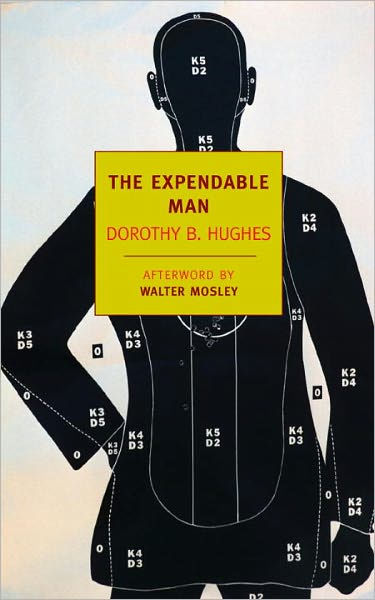
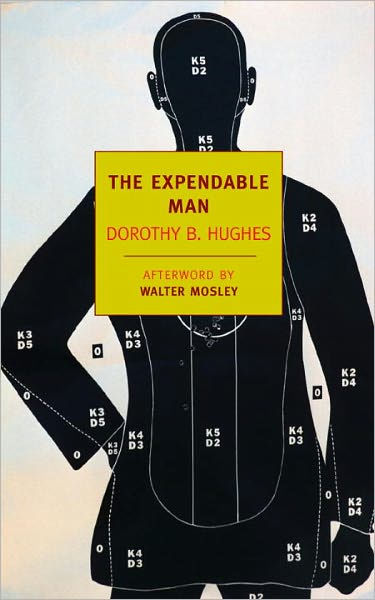
The greatest American crime novelist you’ve never heard of is Dorothy Hughes. Unless, of course, you’ve already heard of her.
Ms. Hughes wrote some 14 crime novels in the 1950’s and 60’s, then retired from the scene to become a leading critic of the genre. She’s something of a writer’s writer, long admired by those working in crime fiction but not widely known. You may have seen the Humphrey Bogart film based on her novel In a Lonely Place, which is terrific by the way. Both book and film.
A few years ago, she enjoyed something of a mini renaissance, with quite a few titles released as reprints which is how I found her and her wonderful novel The Expendable Man.
The Expendable Man concerns a young medical intern, almost a full doctor, travelling in his family’s white Cadillac across the California desert to Phoenix to attend a family…
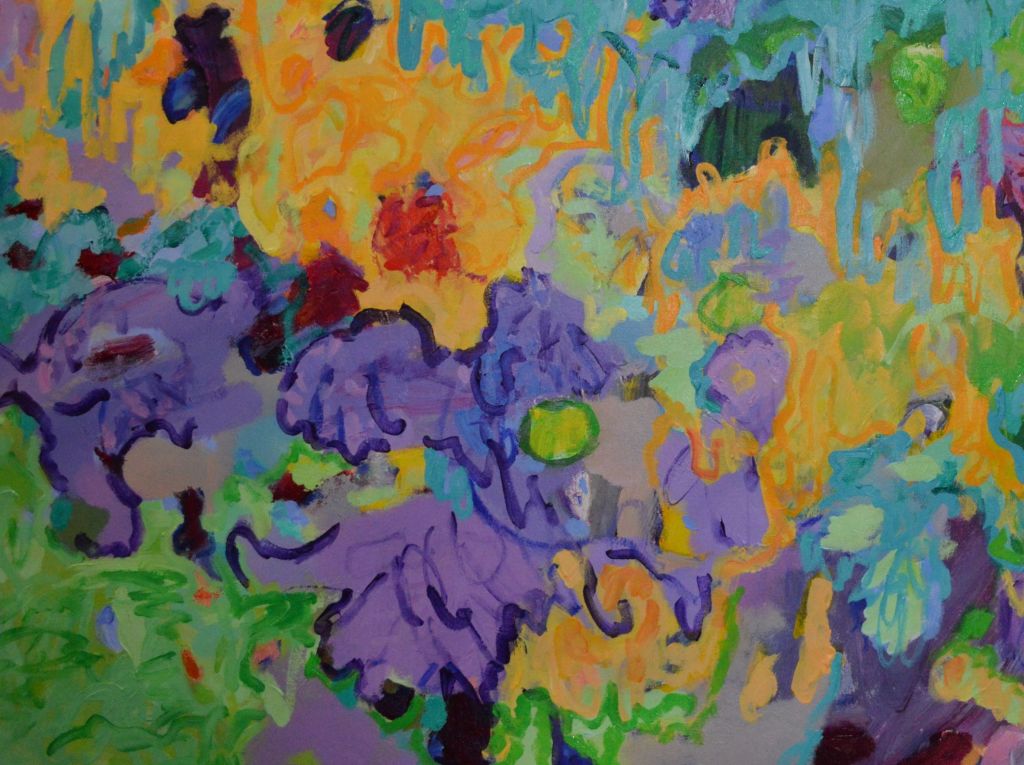
Almost irrespective of the source of inspiration, I find that a lyrical and peaceful painting. I’ve been looking at mauve and various purples too recently.
Van Gogh was the inspiration for a wonderful recent session that I spent developing my large abstract painting. I am not accustomed to abstract art, so I have been searching for strategies. For this painting, I began the latest session by strengthening passages of color that were already part of the picture by surrounding them with bold outlines. The idea of outlining passages came to me after looking at Van Gogh paintings. He, of course, was using line to describe the scenes he painted. I was using line without reference to actual things, but otherwise the procedure was similar. Having decided on that strategy, I found the session to be surprisingly enjoyable. I drew contours around various passages of color, doing so as if they were things.
I variegated some of the color passages too, not changing the basic color, but just adding…
Lucien Lévy-Dhurmer (French, 1865-1953) La fantaisie orientale, signed and dated ‘L. Lévy Dhurmer 1921’ (lower left), oil on canvas, 74 x 78½ in. (187.9 x 199.3 cm.), Image Source: Christie’s
“Méditation” is a symphonic intermezzo from the opera Thaïs by French composer Jules Massenet. The piece is written for solo violin and orchestra. The opera premiered at the Opéra Garnier in Paris on March 16, 1894.
The Méditation is an instrumental entr’acte performed between the scenes of Act II in the opera Thaïs. In the first scene of Act II, Athanaël, a Cenobite monk, confronts Thaïs, a beautiful and hedonistic courtesan and devotée of Venus, and attempts to persuade her to leave her life of luxury and pleasure and find salvation through God. It is during a time of reflection following the encounter that the Méditation is played by the orchestra.”





 I discovered this absorbing short novel via the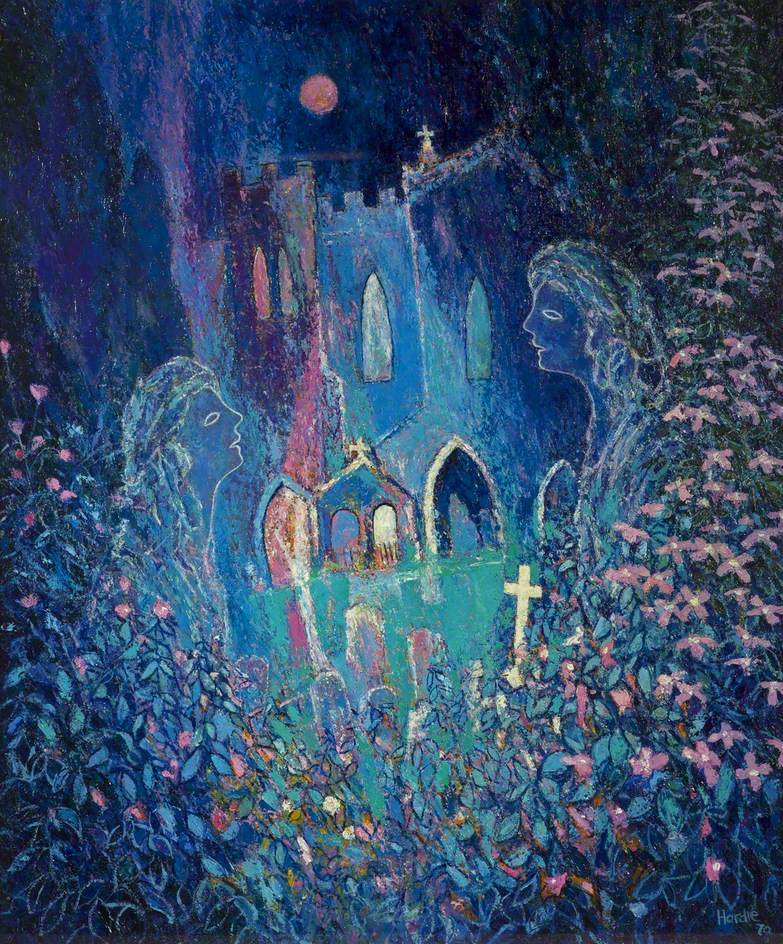




 penwithlit