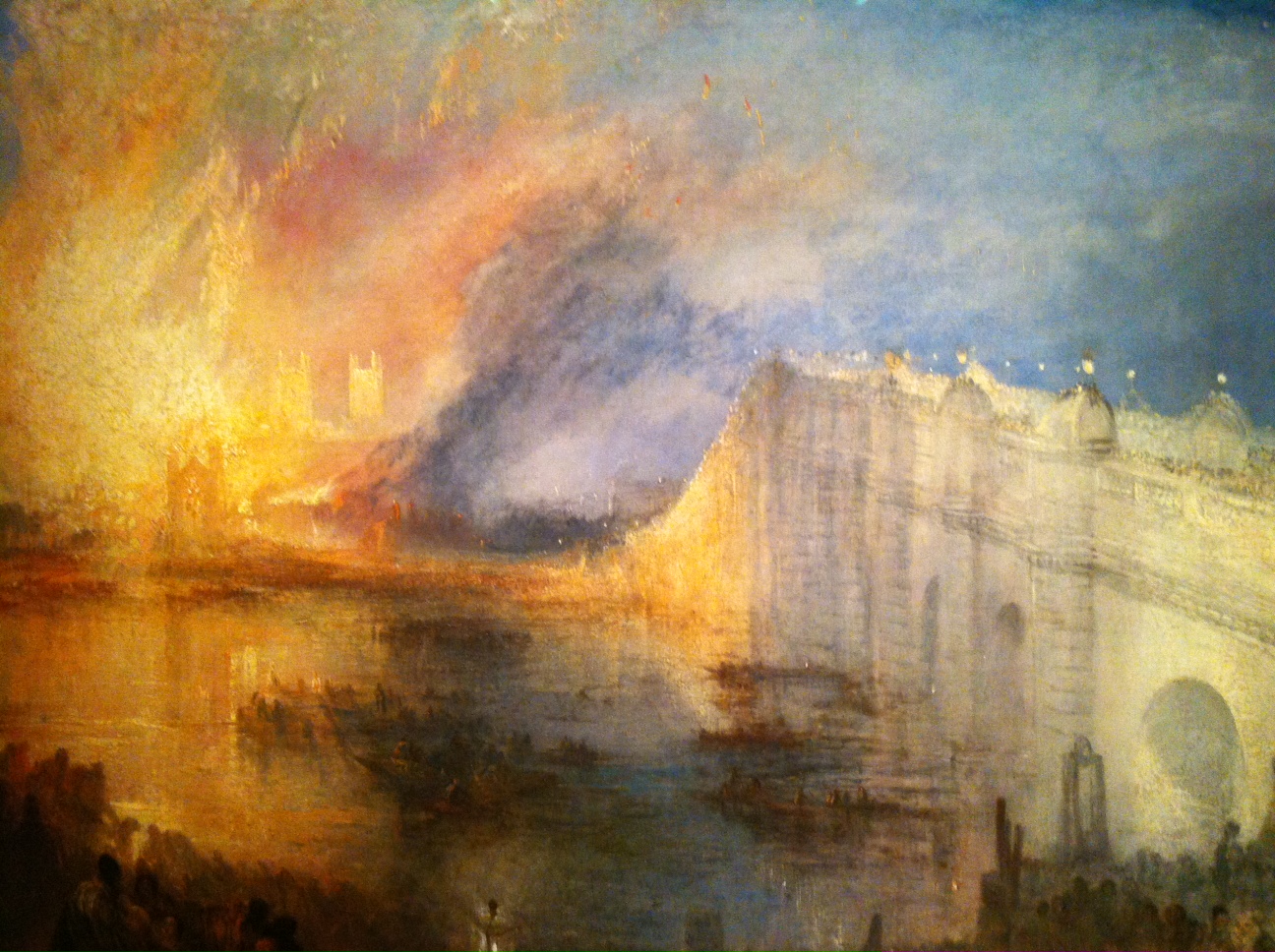
In my personal view, some of the most interesting aspects of “Mr Turner” was his constant interest in all types of scientific investigation. The development of new colours in laboratory conditions and his interest in photography were parts of the recent film that I found deeply engaging and in particular the cameo scene with Mrs Sommerville. This Eighteenth Century background has been splendidly covered by Richard Holmes in his “The Age of Wonder: How the Romantic Generation Discovered the Beauty and Terror of Science” 2009.(Shortlisted for the Samuel Johnson Prize and winner of the Royal Society Prize for Science Books). I am reliably informed that Turner read Goethe’s tremendous work on colour theory. How JMW Turner may have eavesdropped on the Royal Academy next door is interestingly discussed at http://www.bbc.co.uk/news/entertainment-arts-15719338 and his probable interest in the work of William Herschel is considered here.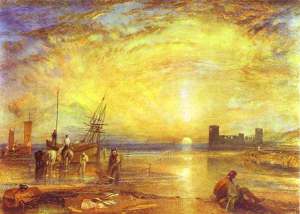
Two typical reviews of Mike Leigh’s production can be read at The Guardian -http://www.theguardian.com/film/2014/oct/30/mr-turner-review-mike-leigh-timothy-spall
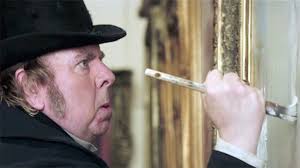
and The Telegraph -http://www.telegraph.co.uk/culture/film/filmreviews/10833174/Mr-Turner-review-supremely-enjoyable.html where Robbie Collin makes reference to Spall as “like a mouthing, phlegmy Gruffalo”.
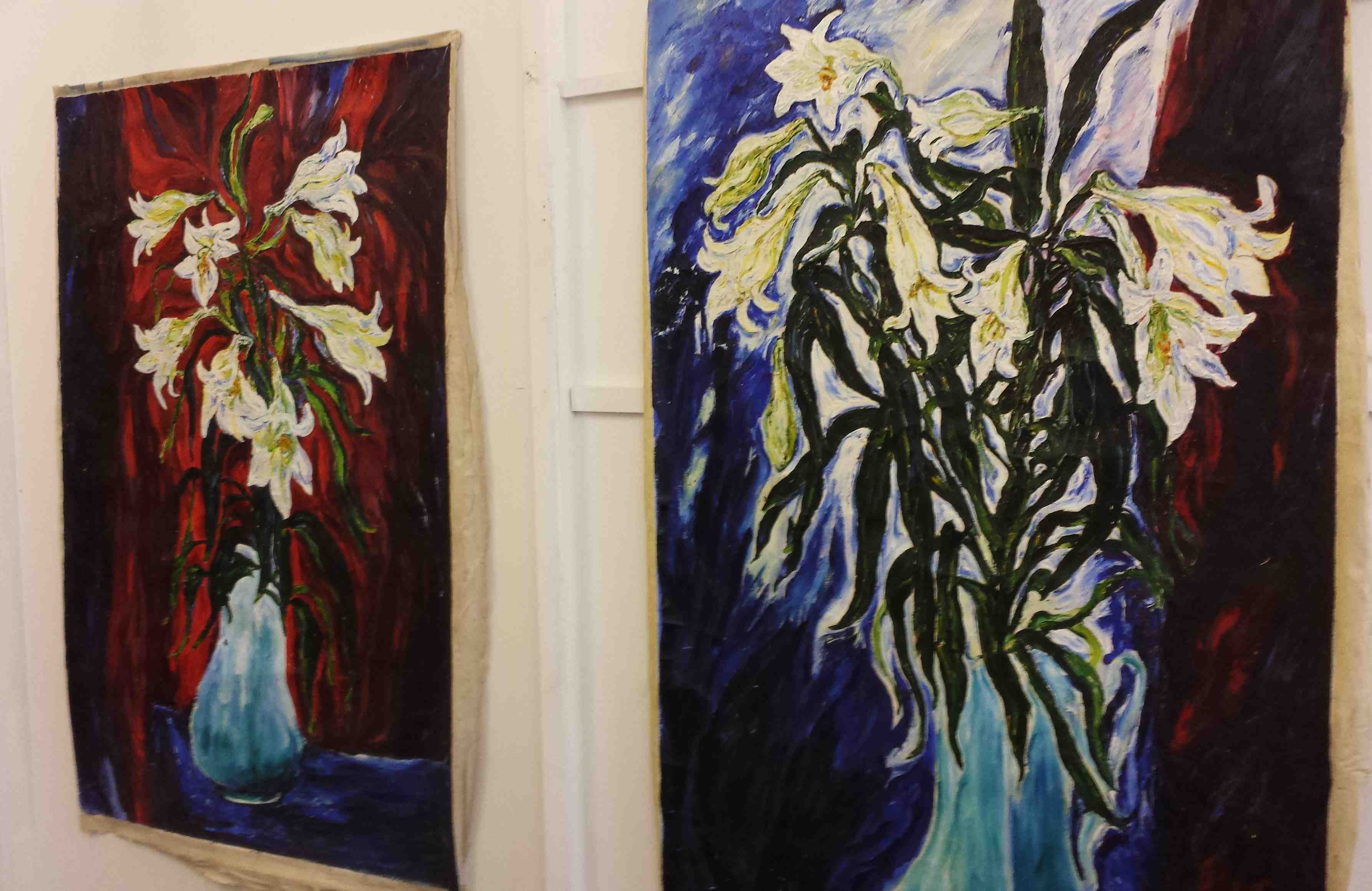
Here is a review (unedited) from my friend Vaughan Warren whose prolific work, inspired by Turner, appears at Penzance Public Library:-
‘Mr. Turner’, a film by Mike Leigh; a review by ‘Mr. Warren’.
Rated: 10+/10; perhaps?
Painting is a ‘rum’ business… of ‘nothingness’ and the like!
If one was unfamiliar with the mythology surrounding JMW Turner, or indeed oblivious to whom he was, then the film might appear meaningless and self- indulgent, even despite the fascinating but unlovable depiction by Timothy Spall; yet as a testament to ‘Englishness’ this film is sublime in all its mastery of misery and beauty but some have complained it is too long; it was not long enough! As it turns out I will argue that this film hides a lot more than it reveals at first glance, and its episodic nature has resulted in a rather fragmented view of the man, the painter, the myth?
Like JMW Turner, I was a student of the Royal Academy Schools, which moved from Somerset House to Burlington House, being there myself from 1978-1984, in Piccadilly, London; so I was bound to be rather hyper-critical yet responsive to such a homage to one of our greatest painters. The interactions at the Royal Academy Exhibition, as it was then, were bang on! Poor John Constable was born after Turner and died before Turner’s demise in 1851 and his whole life was overshadowed by this ‘monster’! Turner’s generosity in sharing ‘observations for improvements’ in others work was his gift to teaching; far removed from his disastrous lectures on Perspective at the Academy which were not for want of knowledge but the problem of communicating something so innate!
Travel in Turner’s time appeared idealistic; ferries along the Thames stopping at the new railway stations or venturing even further to the mouth of the Thames and Margate where of course he met Mrs. Booth whom he subsequently ‘bedded’ and lived as a harmonious family life as Turner possibly could have; but the restlessness continued… Turner never married but had two daughters by another woman, one Sarah Danby!
In reality JMW Turner was a short stocky rather shabby man who appeared to lack any social graces especially when it came to women and any concept of family, excepting his father William Turner, Turner’s ‘Daddy’, whose resulting and inevitable death, was subtly hinted at by the scene of mixing Chrome Yellow oil pigment without protection as was the way in many painters studios, and upon reflection the skin condition of ‘the maid’ was probably a result of ‘Painters disease’, a result of exposure to lead and arsenic ever present in paints even to this day; not within the EU of course but still available in cheap but authentic pigments available from China.
The sumptuous filming caught well the tensions of the period with civilised facades hiding squalor and debauchery behind closed doors. In this respect and most others Timothy Spall was a perfect cast for the role, and Mike Leigh’s directing may have been drawing more upon his own families ‘trauma’. Indeed it is the way the sexual promiscuity of Turner was handled, sometimes with innuendo but at other times with a truly threatening behaviour and scenes of blatant groping. Is it for this reason that many women who have seen the film find Spall and by proxy Turner disgusting and ‘pig like,’ and would not recommend it!
To address this Turner’s encounter with ‘Jessica’ at Petworth should have been extended to reveal a more tender and cultured side to his personality. It would have also drawn focus away from Turner as a typically landscape based artist, as his figures at Petworth are abstractions in a mannerist style far in advance of his landscapes which flourished later, and are some of the greatest depictions of figures in interiors we have in English Painting.
It was poor research that suggested that Turner made way for the Pre Raphaelites and photography, however the depiction of John Ruskin, the critic and champion of Turner, was a triumph and the film should have ended with Ruskin burning almost a third of Turner’s erotic figurative output, which we will now never know about. Instead the film ended with the realisation that, “The Sun is God”, and the wry smile of ‘Mrs’ Turner compared with the desolation of Turner’s lifelong companion in the form of his cousin as maid / relative / sexually abused female! Indeed it was suggested that it was for Turner’s attentions that she appeared to live and endure knowing nothing else presumably, and this made her the victim of the man as ‘monster’?
One last technical point; although Turner was at the cutting edge of pigment use, his use, (even if available commercially before 1851), of Cobalt Blue over his preferred pigment known as Smalt is still a question of conjecture. Although Cobalt Blue was a known pigment used in ceramics it is a question of stability and lightfastness in oils that leads many conservationists and dealers to question the authenticity of alleged works by JMW Turner if elements of this material are found after chemical analysis.
Painting, art, film; is a ‘rum’ business indeed; or was it Sherry?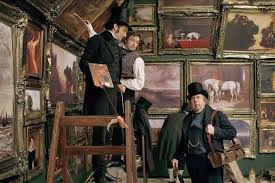
—————————————————————————————————————————————————–
Another friend comments:-
Thank you for sharing the Cannes film festival review of ‘ Mr Turner’. I’m going to see it on Tuesday so will be able to judge whether all the publicity has been accurate or otherwise. Around the time of his bi-centenary Leo McKern made a valiant attempt to portray the artist in the drama-documentary ‘ The Sun is God’ (supposedly his dying words
as bright sunlight burst through an overcast sky moments before his last breath at precisely 10 am on December 19 1851.) Though typically low budget that production admirably succeeded in conveying both the social conditions and prevailing atmosphere alongside the convincing character study itself. Were Mike Leigh to go one better he will have done well.

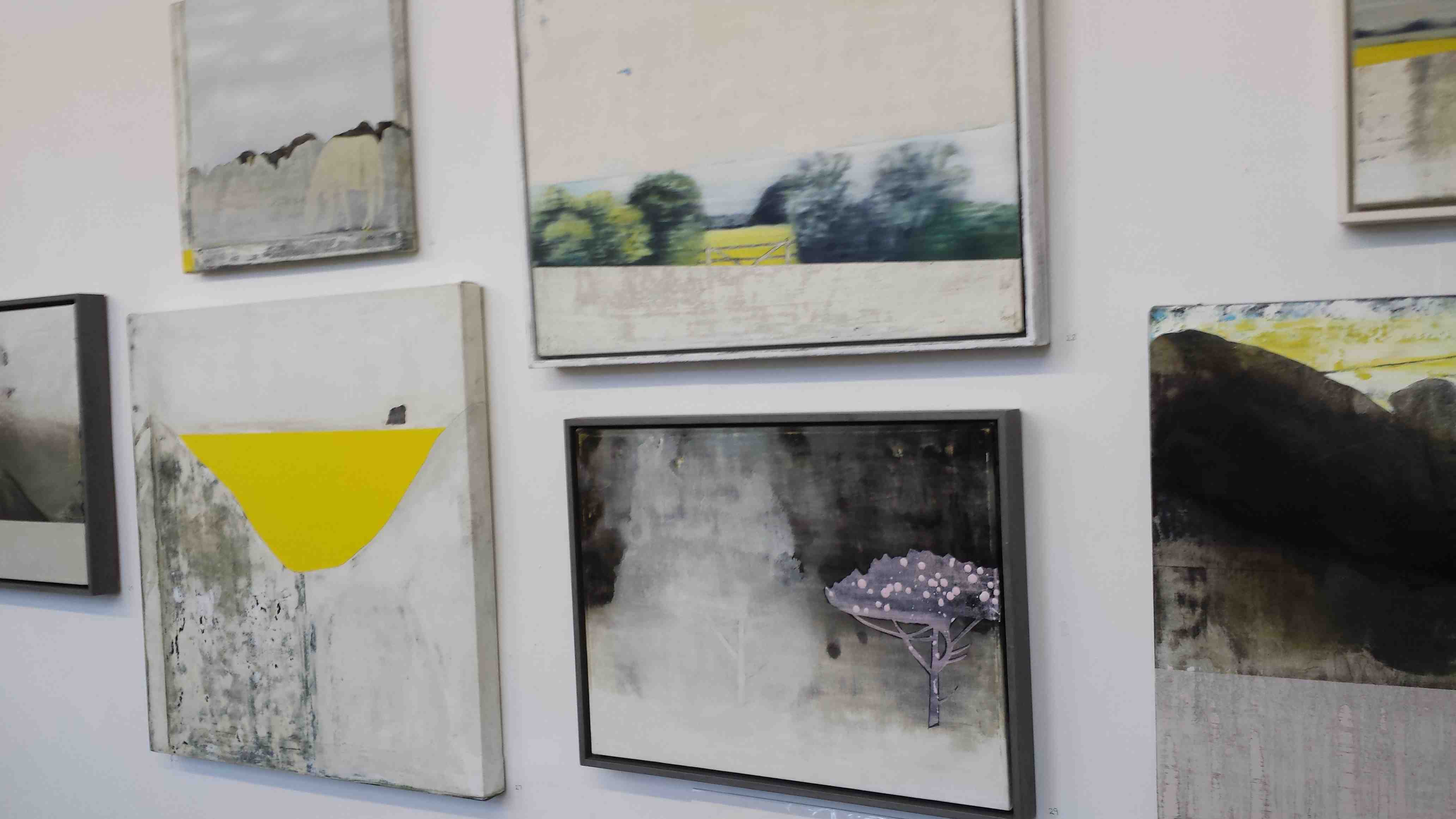 range of paintings that I found so interesting that I
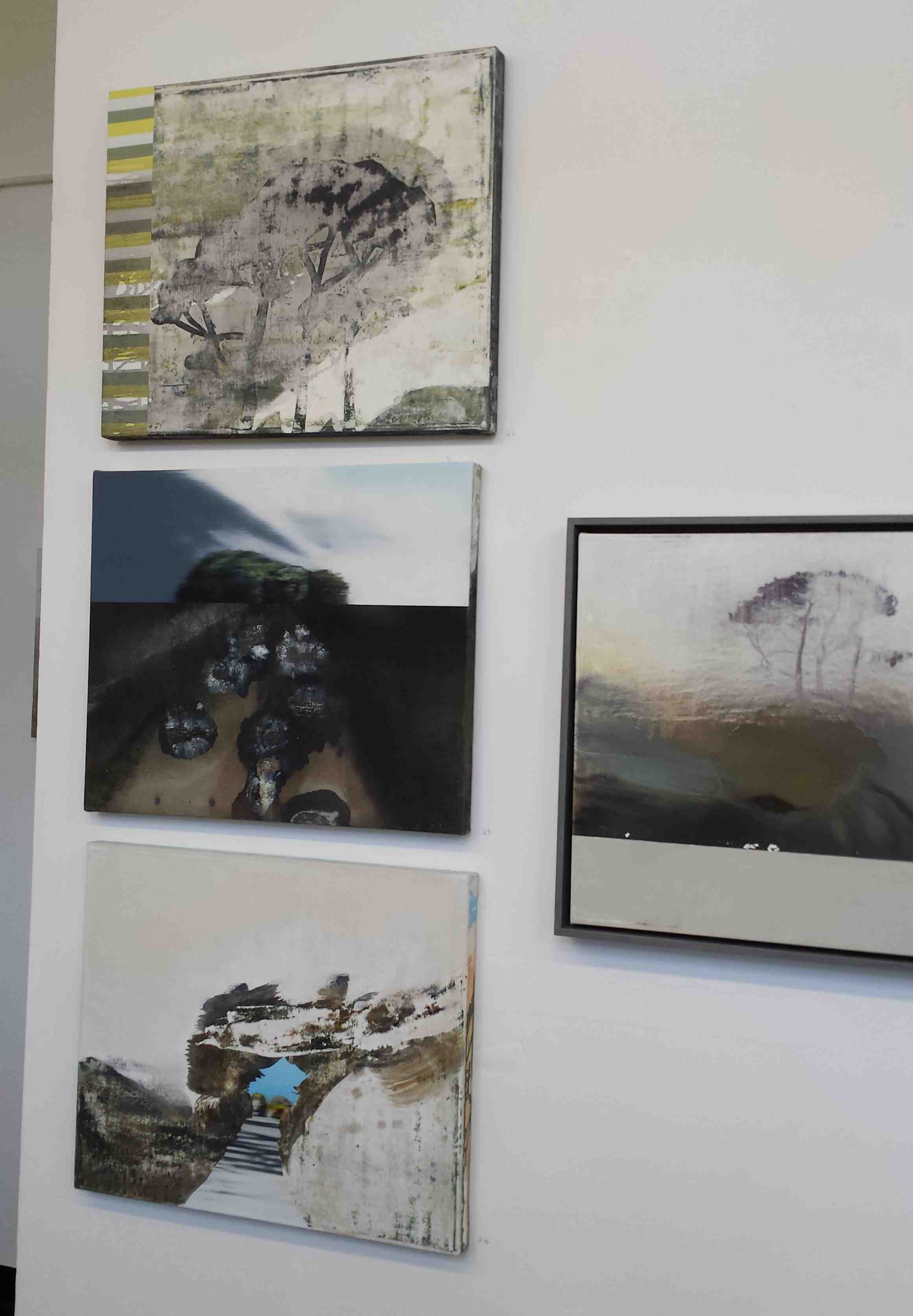 came back to browse them for a second time. It was also informative to hear how some canvases were composed of many underpaintings-up to ten or more layers.
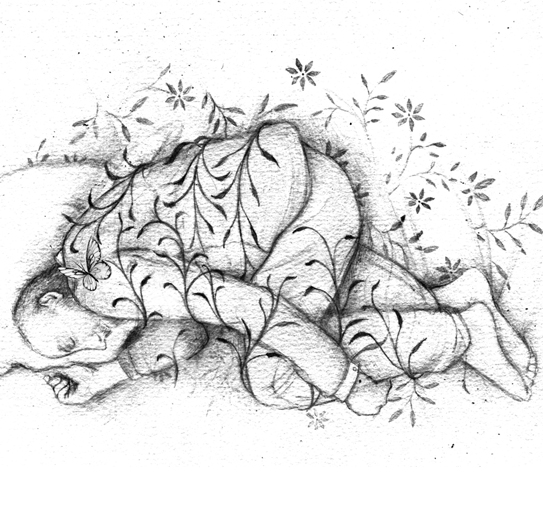
 O’Keeffe (or perhaps Otto Gottlieb) but here we have an abstract expressionism with an upbeat and optimistic feel. She told me how she works freely, sometimes with music and chatted with the same exuberance that her work conveys. I was particularly taken by a study in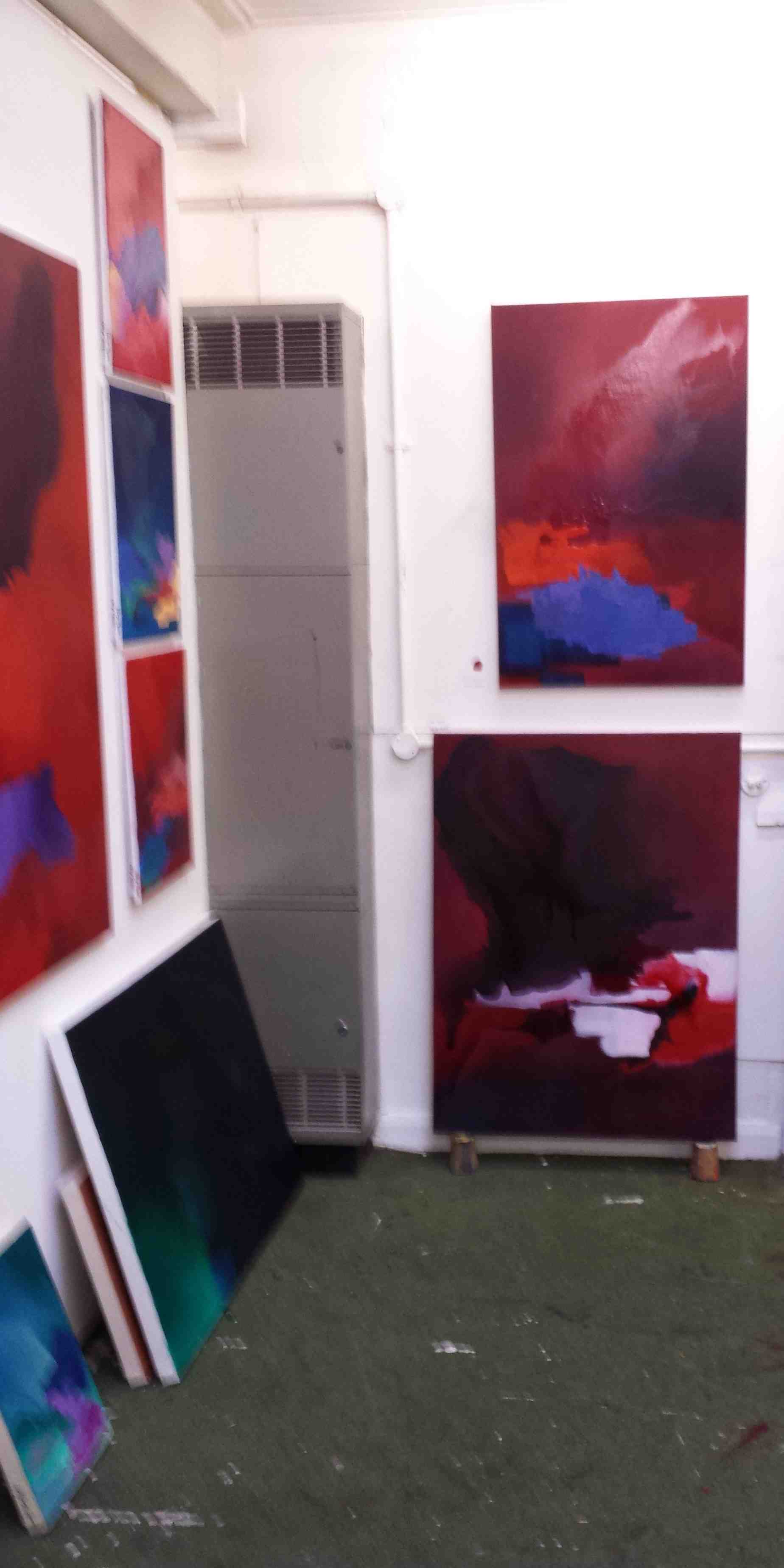






















 penwithlit