Categories
Art Exhibition Reviews Uncategorized

Marie Laurencin 1885-1956

I have just discovered from a friend the lovely paintings of Marie Laurencin and think they deserve wider acclaim. Ceramicist, painter and printmaker, she also became  the mistress of Apollinaire. They have a soft and appealing, lyrical and delicate quality that can be seen in the pastel above which is called “Le Chant”. Many of her drawings are in the keeping of The Art Institute of Chicago like this one below right, executed in graphite and coloured pencils.

According to one easily accessible website on her,”Marie Laurencin was a French painter and printmaker. Laurencin was born in Paris, where she was raised by her mother and lived much of her life. At 18, she studied porcelain painting in Sevres. She then returned to Paris and continued her art education at the Academie Humbert, where she changed her focus to oil painting. During the early years of the 20th century, Laurencin was an important figure in the Parisian avant-garde and a member of the circle of Pablo Picasso. She became romantically involved with Picasso’s friend, the poet Guillaume Apollinaire, and has often been identified as his muse. In addition, Laurencin had important connections to the salon of the American expatriate and famed lesbian writer Natalie Clifford Barney. During the First World War, Laurencin left France for exile in Spain with her German-born husband, Baron Otto von Waetjen, since through her marriage she had automatically lost her French citizenship. The couple subsequently lived together briefly in Dusseldorf. After they divorced in 1920, she returned to Paris, where she lived for the rest of her life and where she achieved great success as an artist.”

Her portraits have a hieratic quality; an adjective which derives from the Greek ἱερατεία (hierateia meaning “priesthood”). By hieratic in relation to art one means very stylised, formal or restrained. The term is used particularly of figurative art with” piquantly tipped heads and mask-like faces”-as Peter Schjeldahl referred to the work of Amedeo Mondigliani.

This is a wonderful clip at http://www.youtube.com/watch?v=1CDT5whWuGM

Here is a poem from Appolonaire to Marie

Vous y dansiez petite fille
Y danserez-vous mère-grand
C’est la maclotte qui sautille
Toute les cloches sonneront
Quand donc reviendrez-vous Marie

Les masques sont silencieux
Et la musique est si lointaine
Qu’elle semble venir des cieux
Oui je veux vous aimer mais vous aimer à peine
Et mon mal est délicieux

Les brebis s’en vont dans la neige
Flocons de laine et ceux d’argent
Des soldats passent et que n’ai-je
Un cœur à moi ce coeur changeant
Changeant et puis encor que sais-je

Sais-je où s’en iront tes cheveux
Crépus comme mer qui moutonne
Sais-je où s’en iront tes cheveux
Et tes mains feuilles de l’automne
Que jonchent aussi nos aveux

Je passais au bord de la Seine
Un livre ancien sous le bras
Le fleuve est pareil à ma peine
Il s’écoule et ne tarit pas
Quand donc finira la semaine

(La maclotte est une danse ardennaise )

Marie Laurencin, c.1924 (b/w photo) by Man Ray

Categories
Art Exhibition Reviews

Sven and other men

SVEN BERLIN – Newly Discovered Paintings and Drawings from the Artist’s Studio

The current exhibition at the Belgrave Gallery at 22 Fore Street in St Ives is one of the most interesting, vibrant and cheerful displays on the scene in this early part of the year. It chimes in well with the recent display of Patrick Heron which was recently shown at the Tate(St Ives) and the current selection of Roger Hilton’s work by Rose Hilton at the Newlyn Gallery.

As soon as you enter the gallery, you are confronted by the large, dynamic  and assertive Acrylic on board; 91.5 x 61 cms Self Portrait (Red Jacket And Blue Shirt) 1979. Sven has portrayed himself, white- haired and bearded and sun-tanned, nonchalantly and flamboyantly holding a paintbrush loaded with scarlet paint with the poise of an aristocrat with a cigarette holder. Indeed, Berlin comes across as some kind of feral aristocrat who holds to a belief in himself  and expressionist panache. At first this can seem self-indulgent, even self-obsessed but by the time you have viewed all these drawings, canvases and sculptures the sheer zest and enthusiasm of the work is both charming and cheering.

The fact of the matter is that Berlin worked assiduously over a long period and maintained integrity to his own conception of artistic inspiration. From the stories that the local community tell it is clear that he fitted into the general idea of what an artist ought to be. He cut a figure and his general demeanour corresponded to the stereotype of a lonely and romantic artist. He appears in the popular imagination as a figure somewhere between Caspar David Fredrich, a wanderer above the sea at Porthgwidden and Anthony Powell’s X Trapnel (Julian Maclaren-Ross).

Two further points are worth remarking. Berlin was a considerable writer as well as an artist possibly comparable with Wyndham Lewis in this respect. Secondly, he was also a war artist and made drawings of the D-Day landings and this and his earlier work have been collected in Hampshire and are of considerable interest. In any event this is an excellent exhibition and will repay the effort of making a visit.

http://www.belgravegallery.com/pages/exhibitionthumbnails/164.html and

http://www.artcornwall.org/profiles/Sven_Berlin.htm

Categories
Art Exhibition Reviews

Winter Light Exhibition at Morvah Schoolhouse

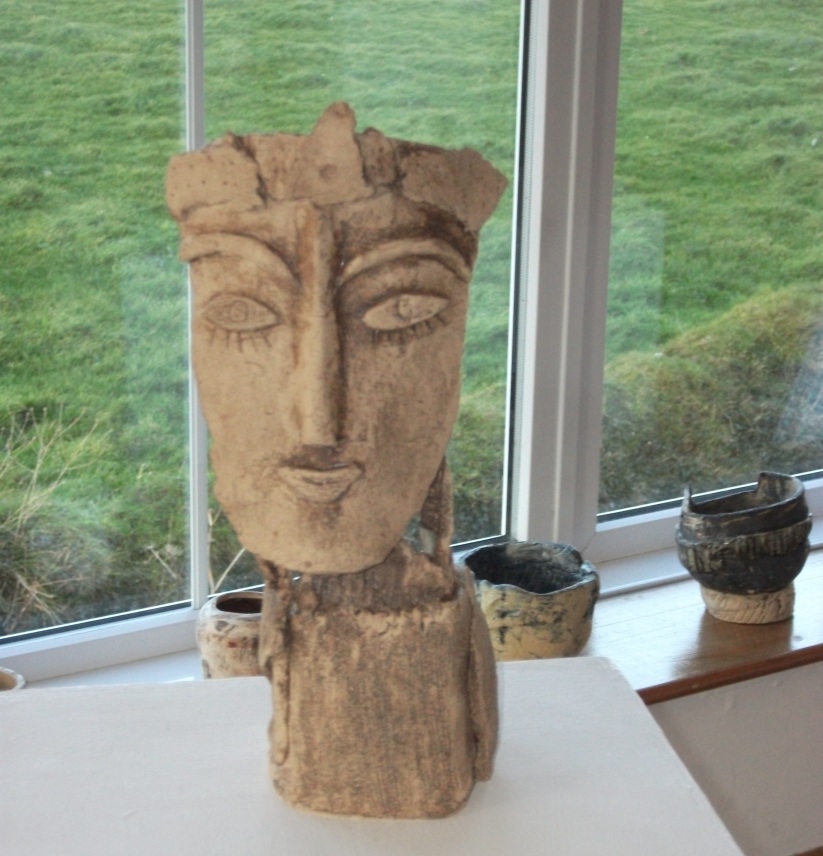
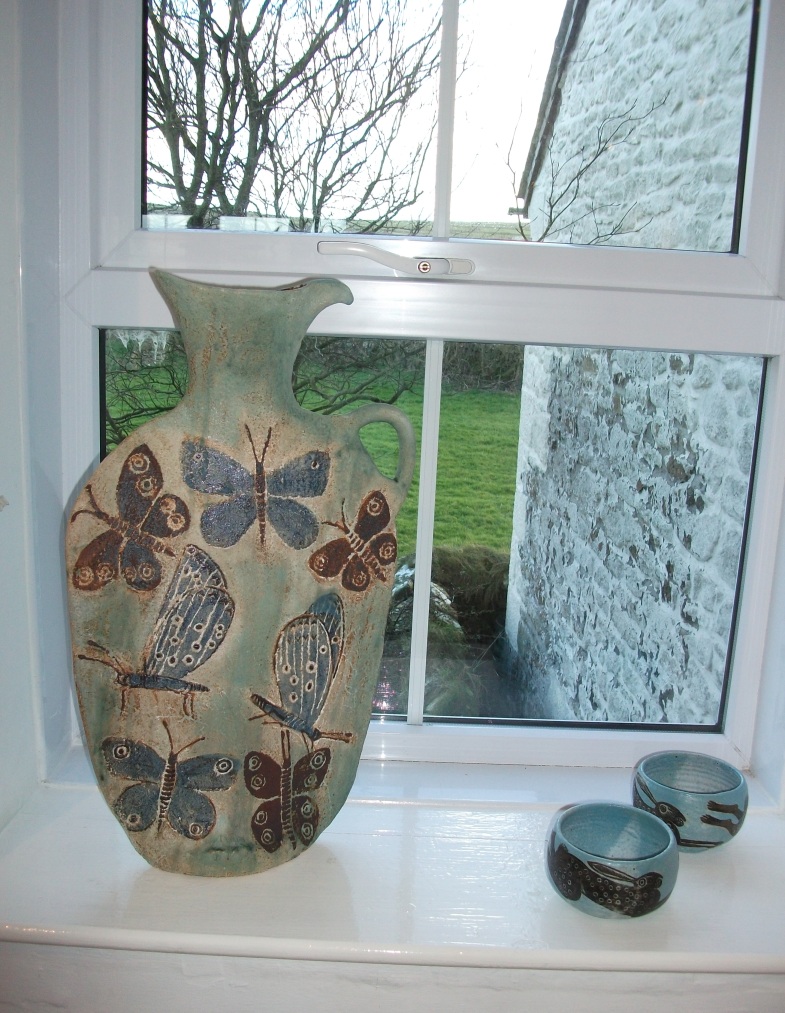
In the wind and the rain on Sunday we made our way across to the Morvah Schoolhouse Gallery.The current exhibition finishes last week to be followed by a new display from this Thursday,13th Jan. It is a  Mixed Exhibition of Printmaking, Paintings & Drawings by John Krcma, Sally Krcma, Jane Townsend, Roger Wilson.

The atmosphere is always very impressive;there is a large picture window giving a view of the expanse of fields and on a clear day you can see vessels in the distance making their way up the Channel. As the exhibition was about to close there were fewer items on display but looked great in the afternoon light.

There was a smell of tomato and basil soup from downstairs where the cosy little café and friendly, helpful staff are located. A great place to unwind and take a pleasant break!