Categories
Category: politics

Erich Fromm transformed psychological and philosophical writing by giving it a more human voice. Writing in clear, accessible English, he explored love, freedom, and identity as lived experiences. His work bridged disciplines and brought complex ideas into everyday language, shaping how modern society understands the self, relationships, and emotional life.
Birth of Erich Fromm (1900–1980) — The Thinker Who Humanized the Language of Psychology
Written by Sumit Kumar
Understanding China’s Iran strategy — and why China has stayed away from war in West Asia
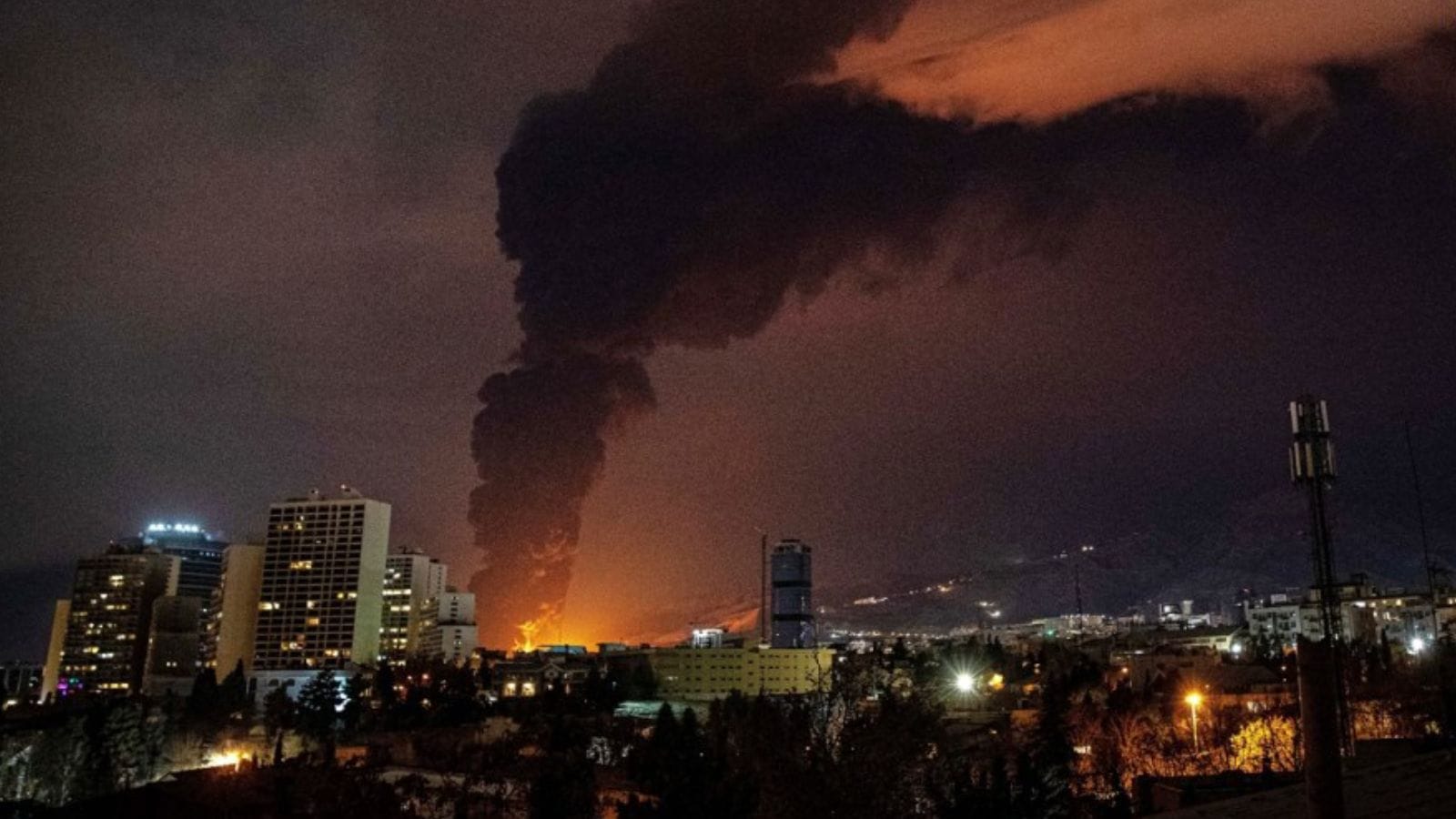
The US-Israel military strikes against Iran have triggered one of the worst phases of insecurity, disorder, and human suffering in West Asia in the 21st century. With the latest killing — Iran’s security chief Ali Larijani — it is apparent that there is no immediate end to the war in sight. Coupled with a looming global oil crisis, countries across continents are cautiously responding to the evolving situation in the region. Surprisingly, China, too, has pursued the policy of maintaining a strategic distance from the Iran war.
In this context, it is worth recalling that, over the years, China-Iran ties have undergone a profound change, with the two sides expanding their areas of cooperation in defence, energy, telecommunications, surveillance, and other fields. The signing of a 25-year strategic cooperation agreement worth $400 billion in 2021 further solidified the relationship.
The underlying factors shaping China’s strategy towards Iran have been threefold: First, China views Iran as a strategic asset in its effort to end US dominance in the West Asia; second, it wants to ensure a continuous, highly discounted Iranian oil supply; third, given its strategic location, Iran serves as a gateway for connecting China to Turkey and the European Union via Central Asia.
Yet, these interests have not proved to be compelling grounds for China to provide Iran with military assistance in the war against the US-Israel alliance. Consequently, China’s diplomatically forceful statements have been viewed by some international relations scholars as Beijing’s balancing act between the two sides, while other experts, especially Americans, hastily concluded that China lacks the will and prowess to challenge the US militarily.
Unfortunately, both assessments lack an objective analysis as China’s policy towards the Iran war needs to be examined within the broader framework of its core foreign policy priorities. One such priority for the Xi Jinping government is the unification of Taiwan with China. With Taiwan’s efforts to assert its independence at an all-time high, strengthening China’s dominance in East Asia remains of greater importance than wasting its resources and time by getting involved in the Iran war. At the same time, the capture of Venezuelan President Nicolás Maduro by American forces and the US-Israel attack on Iran are being viewed as a classic case study for the Chinese strategic community to understand the US military’s prowess that could frustrate China’s attempt at a successful military operation against Taiwan.
Beijing also does not wish to invite the mobilisation of American forces in its backyard, with its unswerving military support to Iran. Interestingly, encouraged by the US administration’s reported delay in multibillion-dollar arms sales to Taiwan, China reduced its military aircraft flights and drone operations around Taiwan in February ahead of a potential meeting between Donald Trump and Xi Jinping in late March.
While China has been Iran’s largest trading partner, accounting for about 30 per cent of its total trade, the current conflict with the US would further deepen Iran’s dependence on China for economic and security support. China’s support is also crucial for Iran at regional and global forums, including the SCO, BRICS, the Security Council, and others. It would therefore be reasonable to conclude that Beijing will retain influence in any post-war political environment in Iran.
Economic and energy security interests with the Gulf countries are another factor shaping China’s response to the Iran war. China overtook the West as the Gulf countries’ largest trading partner, with a record trade volume of $257 billion in 2024. It is also expected that two-sided trade will touch $375 billion by 2028. China also imports one-third of its LNG from this region. Compared with the $24 billion in trade between China and Israel, Sino-Iranian bilateral trade totaled just $13 billion in 2024. Beijing has also felt frustrated by the lack of substantive progress on several infrastructure and energy projects, due to Tehran’s concerns that China’s deepening footprint in strategically critical sectors of Iran will undermine its sovereignty.
China recognises the strategic advantage of the US becoming deeply engaged in the Middle East. A prolonged conflict can impose high financial and military costs on Washington while diverting its attention away from the Indo-Pacific. It will also enable the Xi Jinping government to enhance its military capabilities and expand its influence in the region.
Mindful of the adverse impact of a complete blockage of the Strait of Hormuz — the main transit route for oil and gas tankers in West Asia — on its energy security, China has around 120 days of strategic oil and gas reserves and diversified its energy sources to meet any unforeseen energy crisis. Since China is the major importer of Iranian oil, it is also necessary for Tehran to ensure safe passage for Chinese energy ships through the Strait of Hormuz to sustain its economy and counter the US. At the same time, disruption to oil and gas shipments will also trigger a global energy crisis, forcing immediate, strong global intervention to end the war. Chinese experts believe this situation will give Beijing a mediating role in bringing the two sides to the negotiating table.
It thus becomes clear that China’s decision to stay out of the war is a calibrated move to protect its core national interests. It will be interesting to see how long China can afford to be on the sidelines in a highly contested global order.
The writer is Ministry of Foreign Affairs Visiting Fellow, National Chengchi University, Taipei and assistant professor, Department of Political Science, University of Delhi

Born in 1948, William Gibson reshaped digital language through Neuromancer. By introducing “cyberspace” and vivid technological imagery, he gave English a way to describe networks, artificial intelligence, and virtual worlds, proving that fiction can anticipate reality—and even create the vocabulary needed to fully understand it.
Birth of William Gibson (1948– ) — The Novelist Who Gave the Digital Future Its Language

I had good intentions of reading at least one nonfiction book each month this year, but here we are in mid-March and I’ve only just finished John Zubrzycki’s The Shortest History of India (2022) which I started on January 6th. Black Inc’s series website claims that books in this series can be read in an […]
The Shortest History of India (2022) by John Zubrzycki

Published on March 9, 1776, An Inquiry into the Nature and Causes of the Wealth of Nations by Adam Smith transformed how English discusses economics. By introducing concepts like the “invisible hand” and “division of labor,” the work established a lasting vocabulary for analyzing markets, trade, and national prosperity.
Publication of The Wealth of Nations (1776) – The Book That Gave English the Language of Modern Economics

At the conclusion of the recent three‑part Channel 4 documentary ‘The Tony Blair Story’, its subject stares into the camera for several awkward seconds before delivering a peculiar afterthought: “Also… very important to understand about me: I’m not into psychoanalysis. Right? I think there’s far too much of it, I think people spend far too […]
Tony Blair and the Subject of Psychoanalysis

Today is the 106th anniversary of the Redruth butter riot of 1920. Let’s disinter it from the graveyard of history. During the first World War, the price of various foodstuffs was controlled by the Government. By 1920, it had been decided to end this control, with milk and butter prices being left to the open […]
Cornwall’s last food riot: the Redruth butter riot of 1920

Born February 16, 1838, Henry Adams transformed historical writing into reflective art. In The Education of Henry Adams, he fused philosophy, autobiography, and analysis, proving that English nonfiction could think deeply while sounding elegant. His prose reshaped how history narrates consciousness, modernity, and the intellectual evolution of the self.
Birth of Henry Adams (1838–1918) – The Historian Who Turned Thought into Style

On February 10, 1840, Queen Victoria married Prince Albert, and English entered a distinctly Victorian register. Their union helped stabilize a language of respectability, domestic virtue, and institutional authority. Journalism, biography, and private correspondence adopted disciplined sincerity, shaping a standardized, morally weighted English for generations.
Marriage of Queen Victoria and Prince Albert (1840) – The Union That Anchored Victorian English
 penwithlit