Category: St Ives
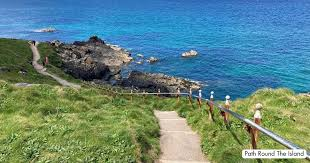
FOR M.F.H.
I can’t remember being in class with you.
Not socially I mean, but at Grammar School.
If it was Latin you would have been at the top,
As I was usually bottom, lost and
deposed by deponents.
Perhaps on the Rugby field –
we could both have been props.
I couldn’t see without specs and
coming from London, soccer
was really your game.
We might hae rolled down the grass
Together on the Island-
years passed before I knew it
to be an ancient coastal fort or castle.
With H.C. we might have climbed
the rock we called “Old Smokey”.
Or did we look and fish together
for mulllies together in rock pools?
We followed the older boys building dens
-of cardboard and canvas and pitched camps
In tents on the grass like Brutus
Before the battle of Phillipi.
Your father was a printer and to
my parents a cockney with fair hai rand
ran the youth club with judo in the schoolhouse
next to the textile factory, close
to the beach and the sea.
We traveled to Penzance daily on the buses
forgetting those cowboy films we watched on your TV,
we spoke little except,
I do recall staying off school your
coming around and telling me I had a detention.
What for I wonder?
Towards summer term in the third year,
I borrowed your exercise book
before the Physics exam, my own a mess,
and swotted up calorimetry. I could never
understand how a copper can could have a temperature.
Was it sick?
To my own surprise, I came top with
an absurd 98 per cent.So went on to
Measuring “g” with a swinging lath, like
a cricket bat with the Wing Commander
You went forward to Caesar’s Wars in
tripartite Gaul then Greek and Homer.
Where are you now I wonder>
With Russell Crowe in the Elysian Fields?
What am I doing on Fore Sand?
On this beach, why are there arrogant beatniks strumming loudly and out of tune?
I don’t think I like the look of that one.
Then in the concrete behind flows electricity or is it Internet.
In reality there are waterpipes and storage tanks and sewers most likely
behind the rusted iron mooring post.
Maybe underneath there is the dreadful drama of Gaza.
Then at the bottom of Bethesda Hill there seems to be a leaning Uncle.
Is he drunk or just a figure out of the Third Man?
Is my Mother back at home? Is she with my Daughter?
In both of these collections the sea and its various moods features. It is not just this that endears me in each case but it is that element that prompts me to write about them today. It is raining once again here in Cornwall and it is as the mists mizzle gather over the bay that I find myself in somewhat melancholy mood to respond to these collections.
Derek Mahon
Essentially this is a collection of essays by different writers together with Mahon’s poems. Here is one example- the poem-“The Sea in Winter” which was written for Desmond O’Grady. There are so many lovely passages in this poem which is fast becoming a favourite.-
Portstewart, Portrush, Portballintrae-
Un beau pays mal habité,
policed by rednecks in dark cloth
and roving gangs of tartan youth.
No place for a gentleman like you.
The good, the beautiful and the true
have a tough time of it; and yet
there is that Hebridean sunset,
The coast in winter, something familiar here in West Cornwall evokes feelings as in these engaging couplets:-
The sea in winter, where she walks,
vents its displeasure on the rocks.
The human factor appears too beside these images or pathetic fallacies-
………………………….; the spite
mankind has brought to this infernal
backwater destroys the soul;
it sneaks into the daily life,
sunders the husband from the wife.
Sunder seems a significant word here, perhaps evoking “thunder” and reminiscent of the biblical separation of “asunder”. ( The chariot and horses of fire “parted asunder” Elijah and Elisha (2 Kings 2:11). So we are situated on the bleak edge of the sea. Though not quite in the same mood state as T.S.Eliot-On Margate Sands./I can connect/Nothing with nothing./The broken fingernails of dirty hands./My people humble people who expect/Nothing.
There is an interesting piece on Mahon as the poet of place at https://www.tandfonline.com/doi/abs/10.1080/0895769X.2012.640266?journalCode=vanq20
In his comments on this poem, John Fitzgerald https://gallerypress.com/authors/a-to-f/john-fitzgerald/ says;
“I grew to love the poem’s complicit sense of ennui,bordering on but never quite reaching desolation, ‘living on the edge of space’; the memorable turns of phrase and allusive colour, both classical and contemporary; the sense of redemption just out of reach; the agonizing, trapped uncertainty of the writing life; all balanced against the consolation of confident, impeccable poetry.”

Evelyn Holloway
Evelyn’s book is published in English and German by Edition Sonnberg which is based in Vienna, where Evelyn was born in 1955. Perhaps the most interesting poem, it is for me, is Meeting which tells of Evelyn encountering Samuel Beckett in Oxford where she was a student in October 1973. I find that even with my poor German having the text in both languages somehow broadens the comprehension of the text.
Suddenly I see his face
stepped down from book covers,
a furrowed face, a landscape of thought
I waited for Godot,
saw people stuck in bins,
so many figures of his universe,
Now to return to the sea, a sea of memories- some perhaps repressed…….
ERRINERUNG IST EIN OZEAN OHNE SALZ
Ich kam hier um das Wrack zu sehen,
musste tiefer tauchen, tiefer.
Farben sind dort begraben,
Stimmen von der Zeit verschluckt.
Irgendwo in diesem Chaos,
ich bin irgendwo
verlassen,gefunden, und wieder verlassen
Atmen fällt schwer hier unten
Kunstweke hinter Mauern versteckt
Errinerung ist ein Ozean ohne Salz.
So that the memory can appear like a sea too, but one without salt. Memory and dreams have perhaps links to Vienna but the salty sea is close by in St Ives.
Here are just a few lines from WE ARE DANCING ROCKS (WIR SIND TANZENDE FELSEN)
We will outlast you.
Our salty eternity does not count the years.
We do not mourn the sand swallowed by the sea.
We are dancing rocks.
Her collection Words through Walls is published by Wieser Verlag ISBN 978-3-9504320-8-4
Michael Bird is an engaging and perceptive writer and broadcaster and his work deserves attention. Here are some impressive sound programmes-
Broadcasting
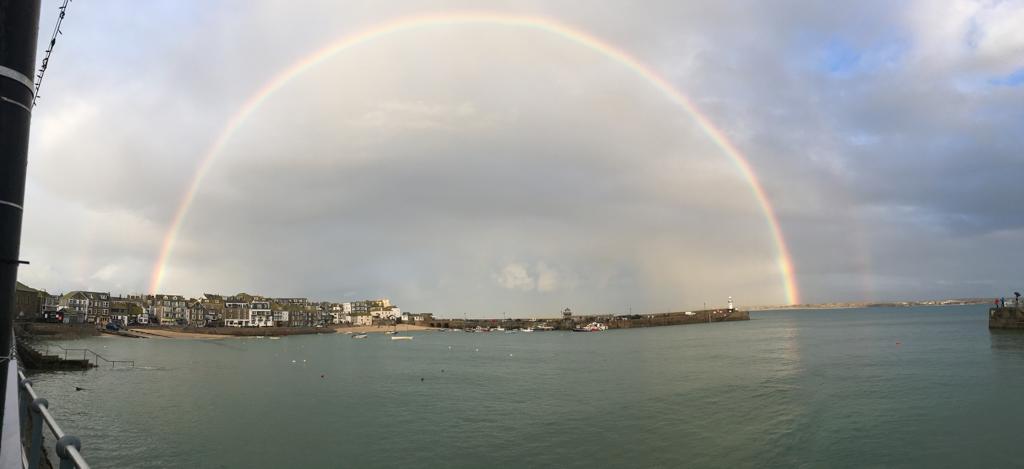
This programme on the Solomon Browne Lifeboat Tragedy is at https://www.bbc.co.uk/sounds/play/m0012plp

It was a bright and sunny morning as we pulled back the curtains in our hotel room and after tucking into some tasty bacon sandwiches we were back in the car for another day of sightseeing. Our starting point was to be Land’s End, the headland that sits at the most westerly point of England […]
Day 3. Land’s End, Porthcurno & St. Ives, Cornwall — Love Travelling Blog
Women to the Rescue by Jenny Dearlove
Memories of the recent past may not always be resurrected with pride. Indeed, they may be suppressed in an attempt to avoid guilt and pain. When it comes to the rough treatment of young women, unmarried and with child, in the years before the establishment of the Welfare State, recalling matters grows still more uncomfortable. The recognition of the catalogue of penury, ignorance and pain which led to unwanted babies, abortion and infanticide in the not so very distant past is not easy to absorb. However, there are advantages in looking over such painful issues. Firstly to discover that other brave women, in the form of a local society whose members responded to give succour at a time while others simply condemned “moral weakness”. Secondly, some such misfortunes; broken relationships, fear of infection and addictions plaguing our Grandparent’s generation remain today. What then can be usefully learnt from the records of the “Refuge for Girls in Trouble” set up in 1907 in Penzance?
In assembling an overview of the work of the Penwith Rescue and Preventative Society, Jenny Dearlove clearly demonstrates the often makeshift approach to the social care of young women in dire distress through unwanted pregnancy. It outlines one solution by the good folk of one Cornish town. This story contains an interesting medley of personal statements from care workers, committee members and others attempting to relieve distress. In giving a panorama of these dark times, it is necessary to deal with the uncomfortable details of dire distress; abortion, drunkeness, severe poverty, prejudice, dirt and disease. However, without such charitable interventions how much worse would the situation of these girls and babies have been?
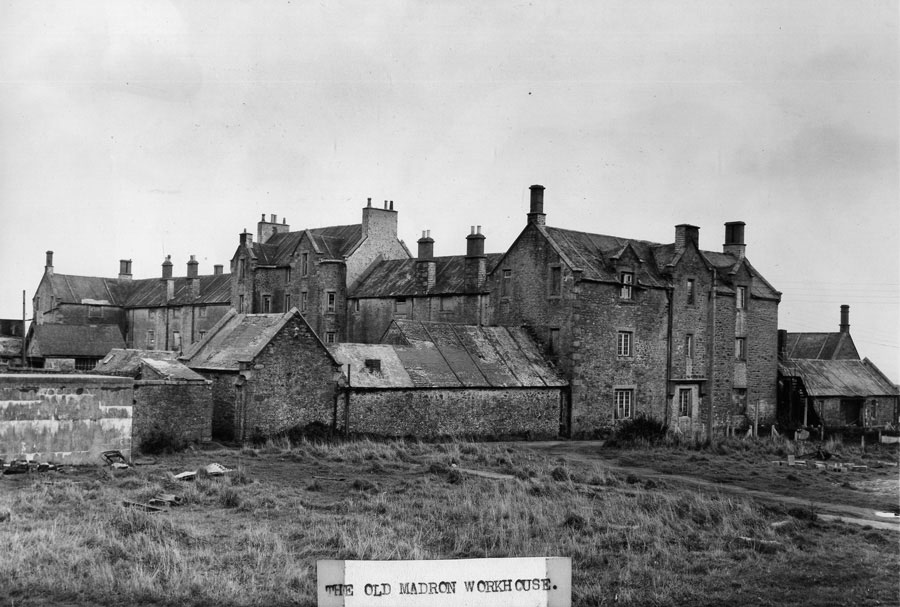
It seems that often the young women were moved out of the area, quite often separated from their babies. Many alternative institutions beside the Penzance Rescue Society appear somewhat dire. The photograph of Madron Workhouse ( the text is liberally illustrated) in particular looks like the forlorn last hope that it undoubtedly was. In addition to illustrations there are several appendices with a very useful timeline that conveys the benefits of the development of the Welfare State and changing regulations toward contraception. Material inventions such as effective plumbing, electric cookers and later still, the washing machine were an obvious boon even when relationships between the occupants of the care homes and hostels were not always as they might be.
Doubtless, one beneficial aspect of this book are the questions which it raises. For certain men do not come out of the account with any credit.Not only those who left their girlfriends with unsought pregnancies but those who had forced their attentions on vulnerable women. Women’s suffrage and following campaigns, although limited at first, helped create a climate for change which went on to benefit children. Additionally, the book encourages thought about the difference between un helpful moralistic stances and more neighborly generosity expressed by giving practical assistance.
Some of the most interesting issues concern the differences between the organisers and what would nowadays be called, front line staff. There is early evidence of multi[ple pressures on the latter. Professional Social Work really only took off in the 1960s and its resourcing remains subject to political control and financial cuts. Currently, bearing in mind profound lapses in child care and paucity of welfare provision we might do well to acknowledge rather forgotten women who got down to the task of sustaining others who, in the parlance of the time, were considered to have “fallen”……..
All are one now, roses and lovers,
Not known of the cliffs and the fields and the sea

Women to the Rescue
A Penzance Refuge for Girls in Trouble
Available from The Hypatia Trust https://hypatia-trust.org.uk/contact
ISBN 978-1-872229-76-8
Perhaps it exists only in the imagination. I remember visiting the Cafe Central in Vienna with its wide variety of journals and literary magazines, gorgeous variety of coffees and its habitués. Mostly tourists when I visited but there were the ghosts of writers and revolutionists from Krauss to Trotsky. Then naturally the confectionary of all types and colours. Not quite Penzance but in its many transformations at lest one or two establishments have provided an atmosphere conducive to reading, talking and day-dreaming. The creative aspect of the latter sometimes under-rated.
In my youth it was a pasty on the beach with a towel before large bath towels were in vogue. Before we began to worry about the depletion of the ozone layer and the St Ives Times and Echo would boast about the town’s high monthly U.V Index statistics.
Sweet pastries filled the mouths
of those who sat beside us
and stayed for a while.
How the hours went by,
people just passing through
The descending sun ending
a forever with you.
(See Lily at https://hellopoetry.com/words/cafe/
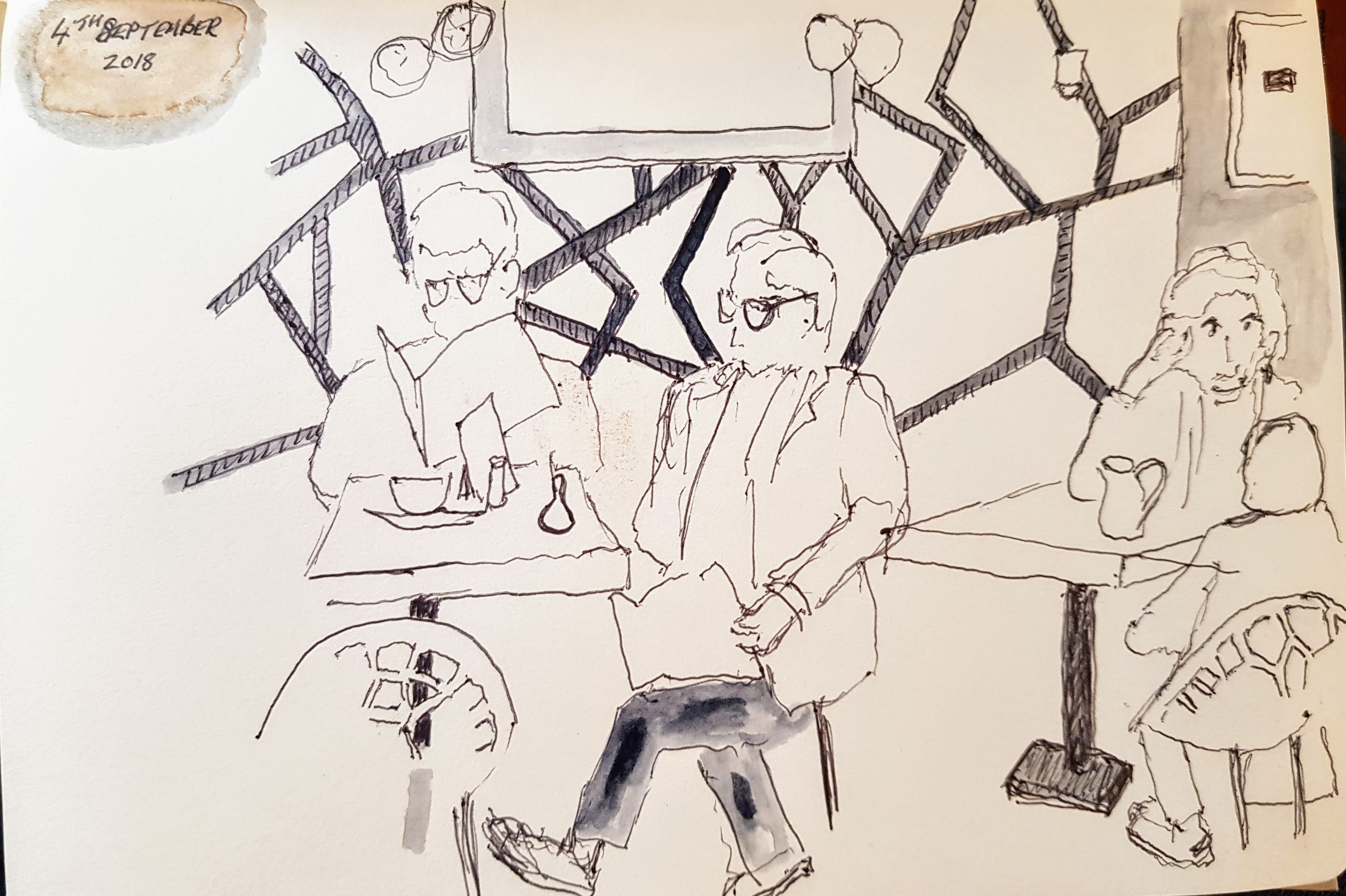
The décor seems to change frequently. Decorators and interior designers must make considerable profit with properties so frquently changing hands. Different styles come into vogue, multiple mixes of gin followed by martinis with names as hot and suggestive to suit. The patrons change as does the topics loudly conversed. The rate of change changes until suddenly they become silent, empty and inaccessible. No more ladies who lunch with sleeping babies in stylish prams.
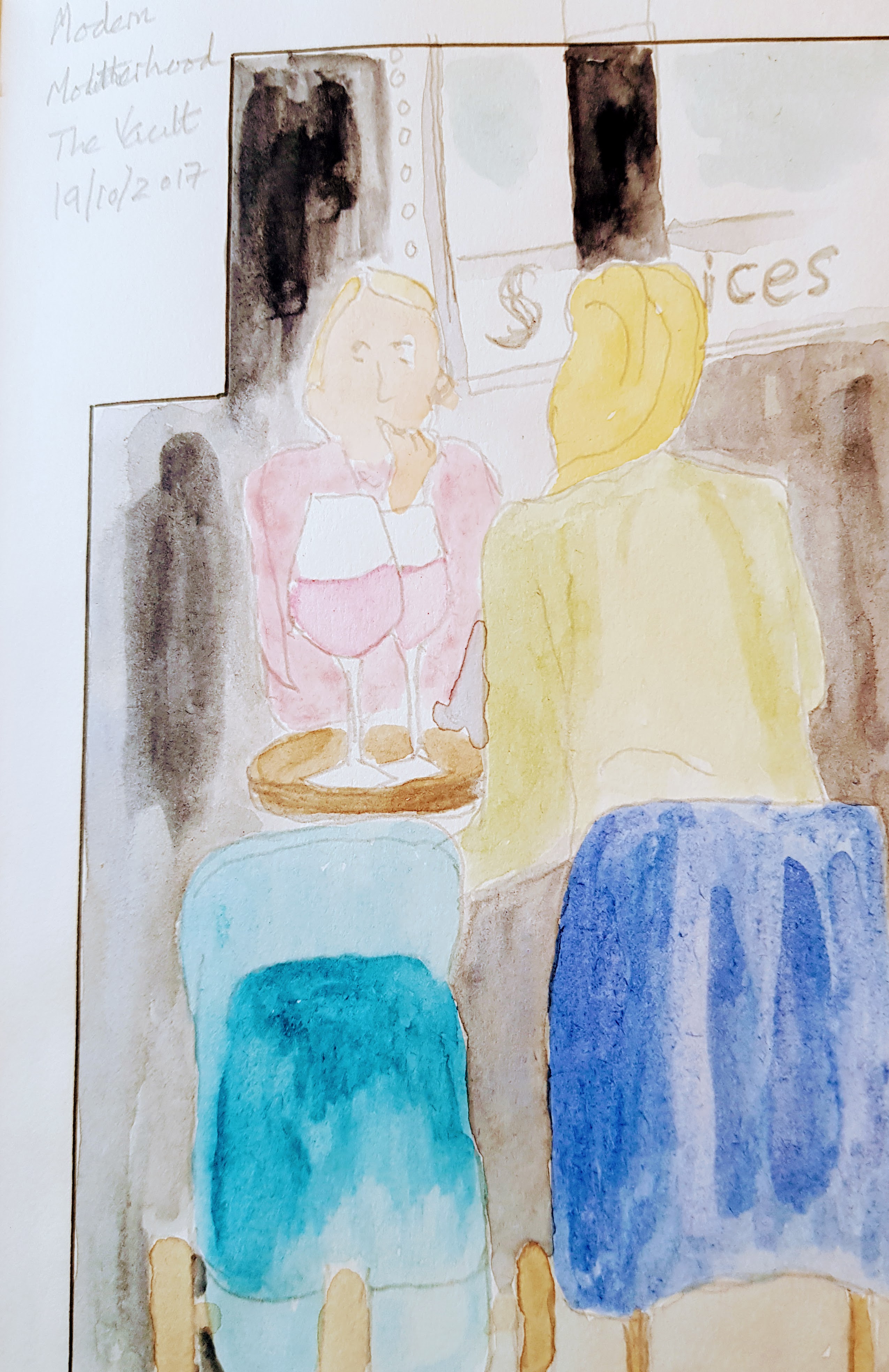
Their salads come and their forks they deploy
you can tell this is a luncheon they will enjoy.
They catch up on all the news
Sharing with one another their views.
No gossip here – they are not that type
But occasionally you will hear a gripe.
About a husband , son or some other man
Someone who should be hit over the head with a pan.
http://jsimser.blogspot.com/2007/10/ladies-who-lunch.html

Elections come and go and it seems the wrong people get elected over and over. Those who don’t enjoy cafes or approve of culture and provide illusions about taking back control, whose egos are inflated by a sterile nationalism that was out of date at least a hundred years ago.
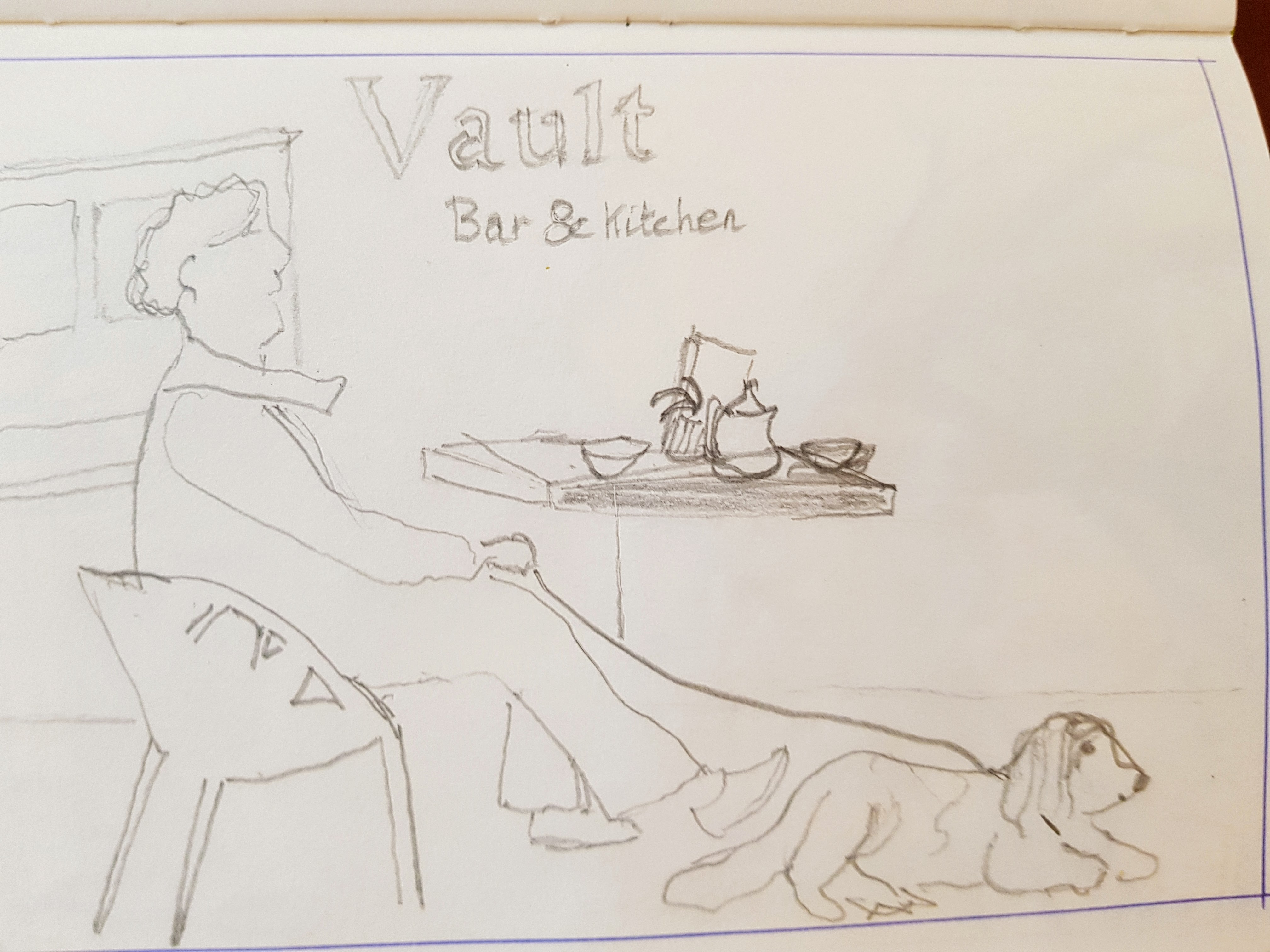
There are some animals whose presence seems to fit in with the soporific state of the nation. They represent perhaps the affectionate tranquillity which is more English than the butcher’s dogs and greased pigs of the contemporary age.
The St Ives September Festival had a range of controversial poets come to visit. I remember there being a huge stir when D.M.Thomas came to read and the proctor’s of moral rectitude in the unlikely form of delegates from the Town Council were said to have occupied the back row to ensure that an unseemly did not take place. Then Gavin Ewart arrived one evening to give a reading in the decorative surroundings of the Penwith Gallery. I am most vague as to when I heard him -around the mid eighties I think. I remember how he was said to have been influenced by Auden and spending a very entertaining evening listening to the poet reading in an amusing and cultured voice that sounded very English some edgy and clever poems. I have been reading Martial at the moment and I have an inkling that Ewart might well have been entranced by that Latin satirist.

Consider the poem which is entitled “The Death of W.S.Gilbert at Harrow Weald” which may be found on the net. It tells of the demise of the famous lyricist of the Gilbert and Sullivan operettas:-
Imagine that flat glassy lake in 1911,
a very Victorian part of the prosperous house,
(architect: Norman Shaw),
a beautiful hot summer’s day in 1911.
It proceeds to describe how two Victorian ladies in “decorous bathing garments” enter the lake where the younger gets into difficulties and Gilbert plunges to the rescue:-
He swims to her, shouts advice: ‘Put your hands on my shoulders!’
She feels him sink under her. He doesn’t come up.
She struggles to the bank, he is dead of heart failure.
and finishes with a typical Ewart touch in the next stanza with sweet advice to older men not to fool about with ladies –
But all the same it is good to die brave
on a beautiful hot summer’s day in 1911.
Returning to the theme of my previous posting I think this a great poem-

This sanitisation of what war means and how it can falsely be portrayed parallels my previous posting of the poem by Tom Paulin.
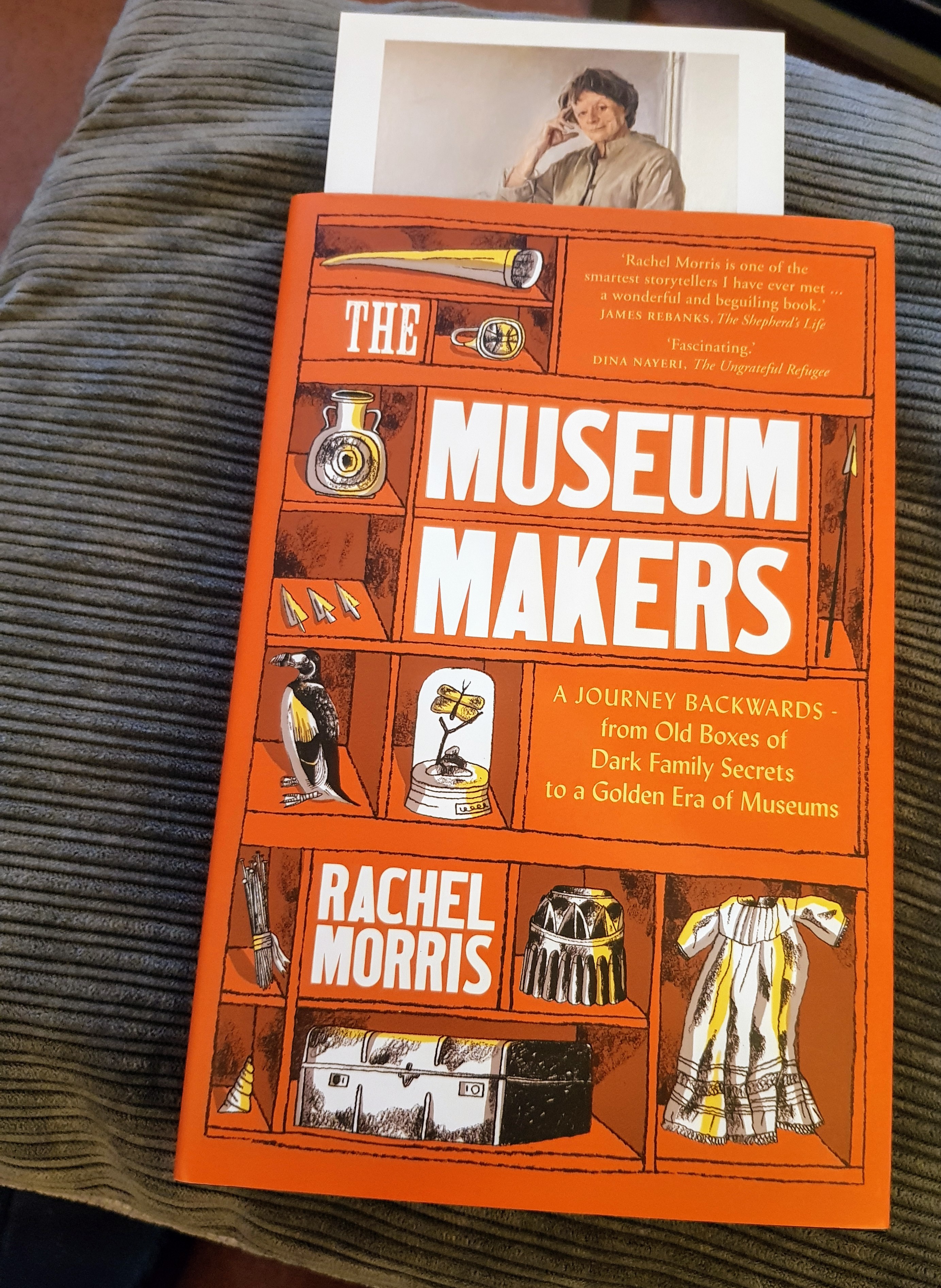
In reading about museums I discovered that Derrida had written about archives. He develops a post modern approach to how the perspectives on the past are subject to change. Witness the recent debates about racism and colonialism in relation to this.
From My Archives: Derrida’s Archive Fever
There are two moving poems by Louis MacNeice that moved me when I read them this morning. The first was an early poem called just “Museums” with a pronounced rhyme scheme. The second is more interesting and called “In the Reading Room at the British Museum”. The final line is perhaps more poignant than ever.
Museums by MacNeice
Museums offer us, running from among the buses,
A centrally heated refuge, parquet floors and sarcophaguses,
Into whose tall fake porches we hurry without a sound
Like a beetle under a brick that lies, useless, on the ground.
Warmed and cajoled by the silence the cowed cypher revives,
Mirrors himself in the cases of pots, paces himself by marble lives,
Makes believe it was he that was the glory that was Rome,
Soft on his cheek the nimbus of other people’s martyrdom,
And then returns to the street, his mind an arena where sprawls
Any number of consumptive Keatses and dying Gauls.
On Derrida this link may be of interest
 penwithlit