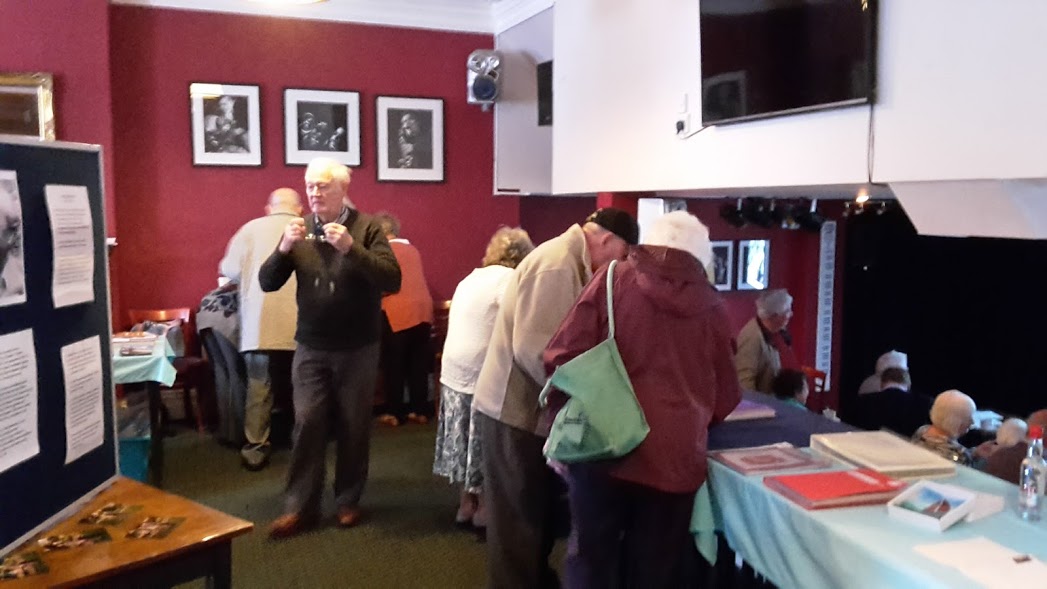
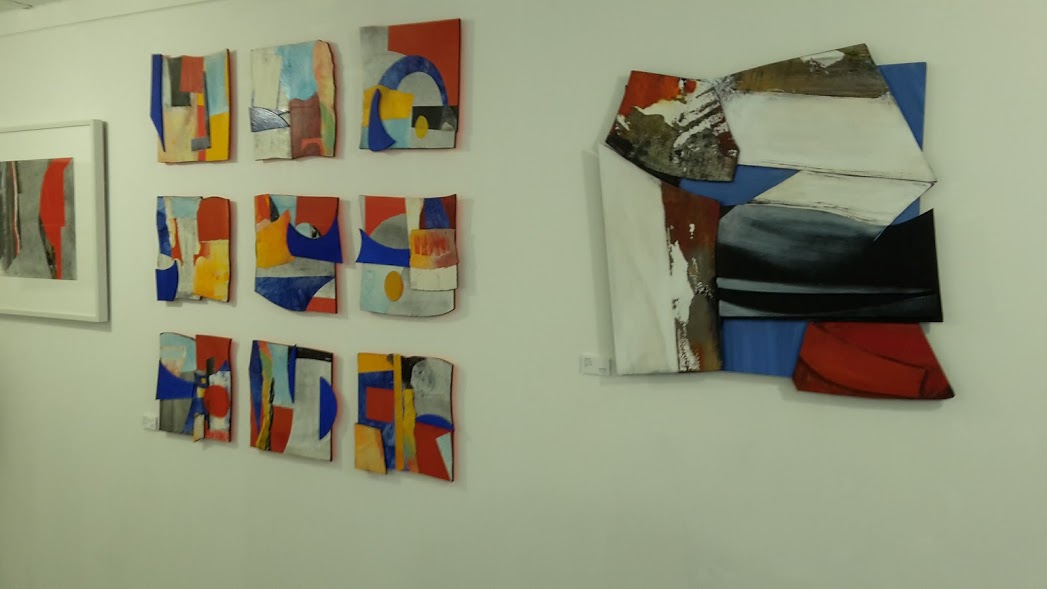
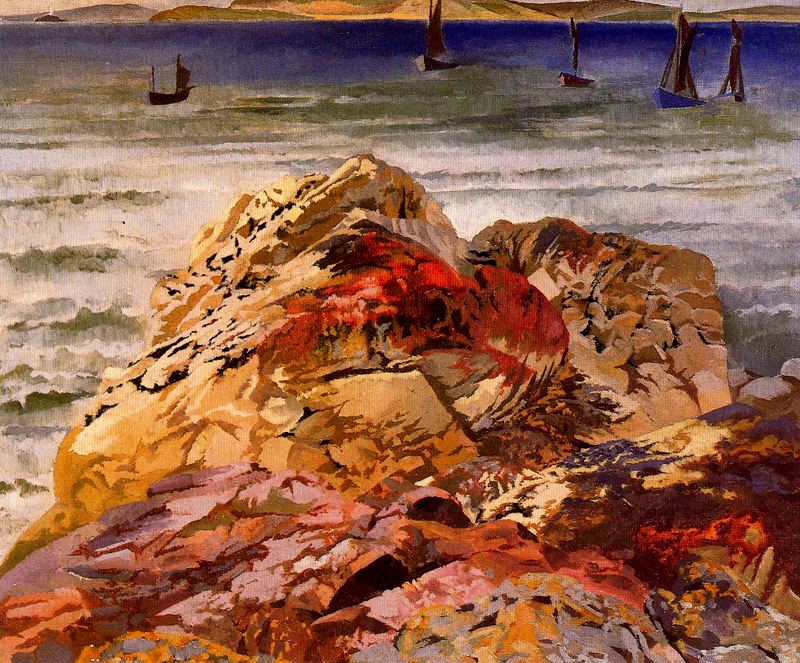
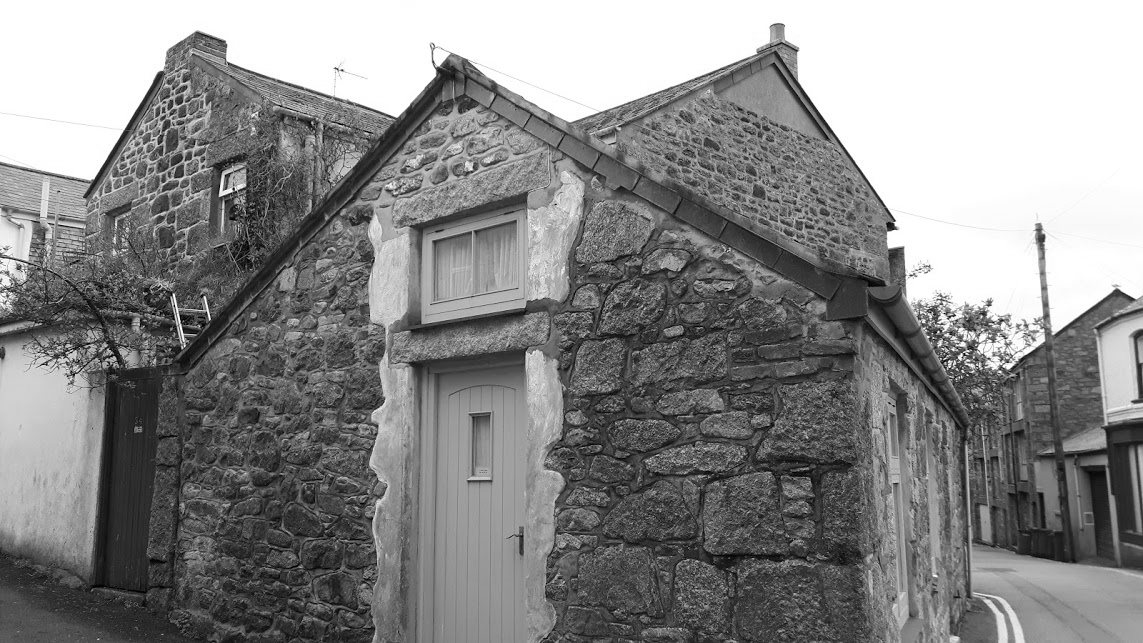
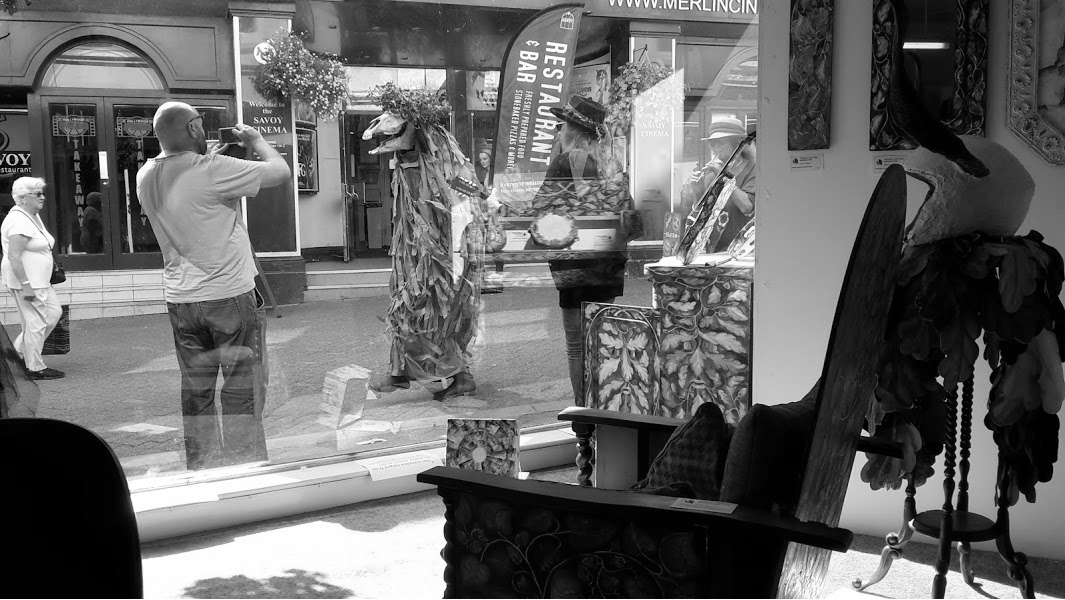
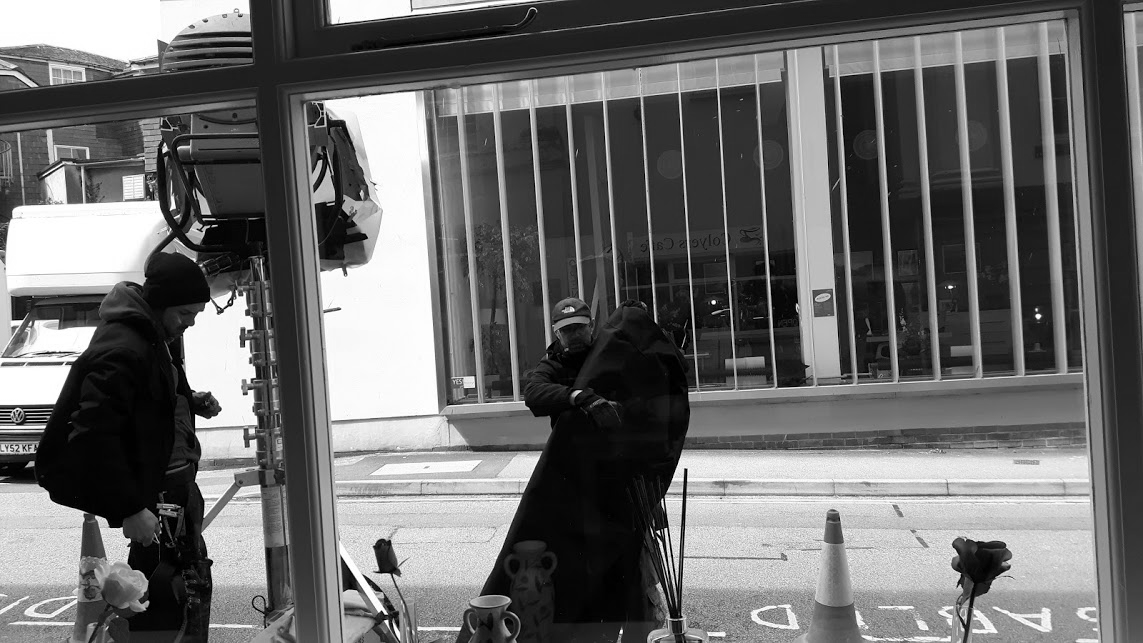
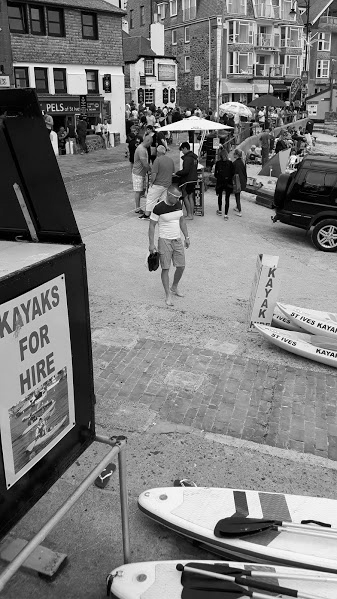
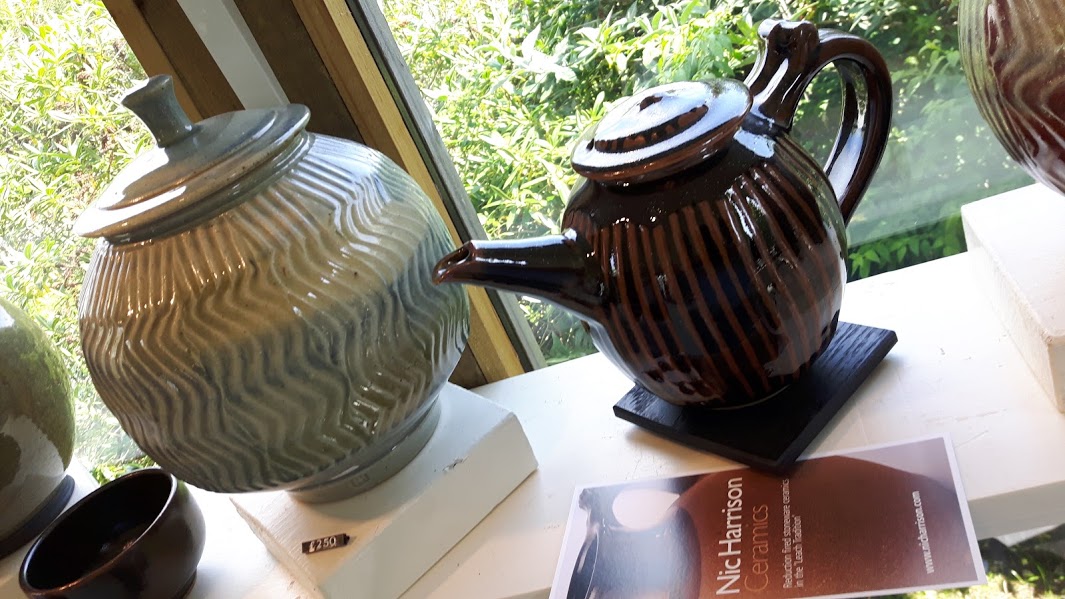
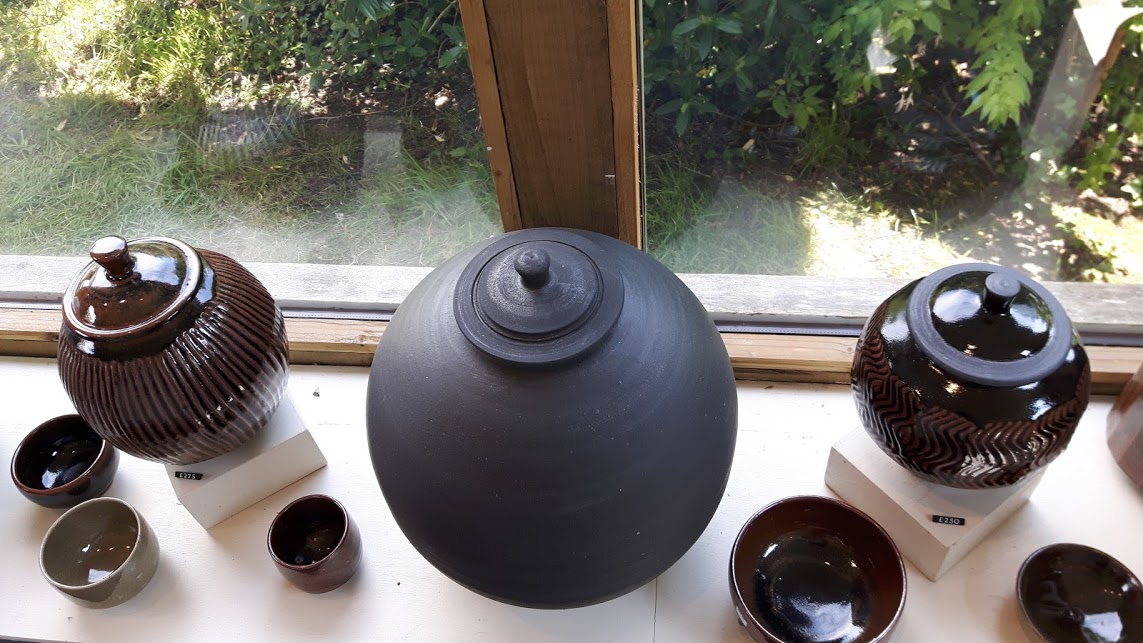
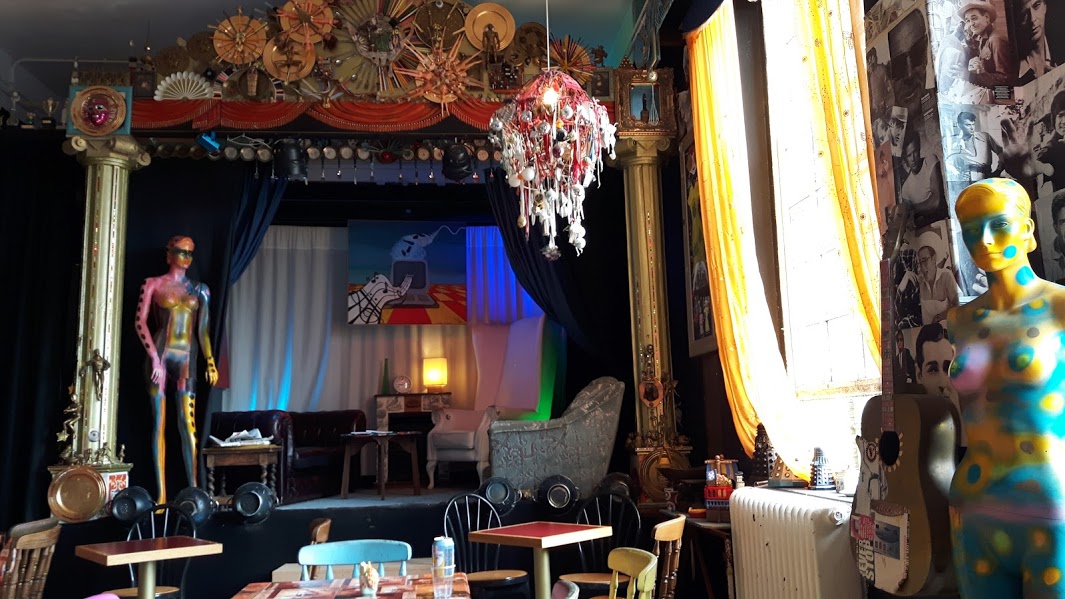
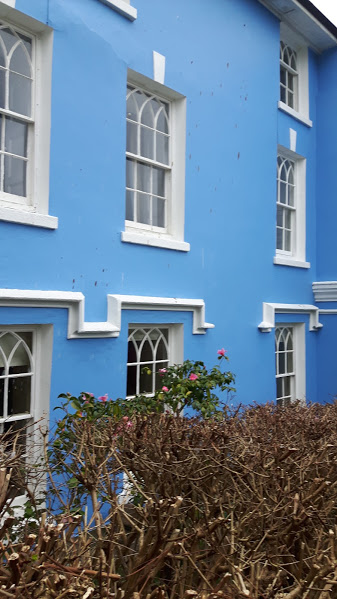
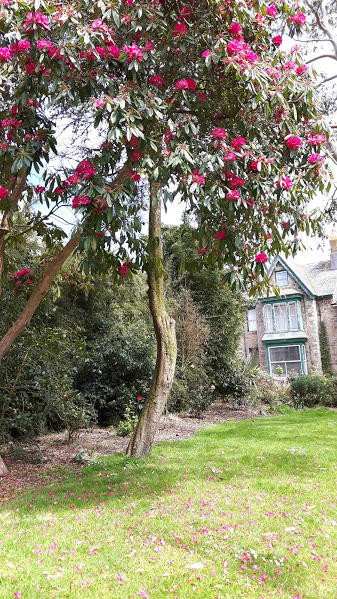
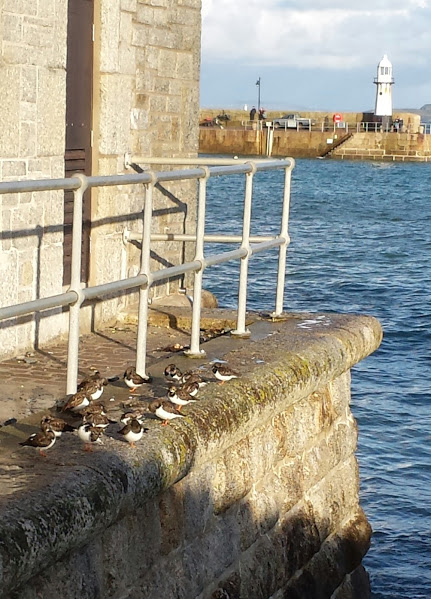
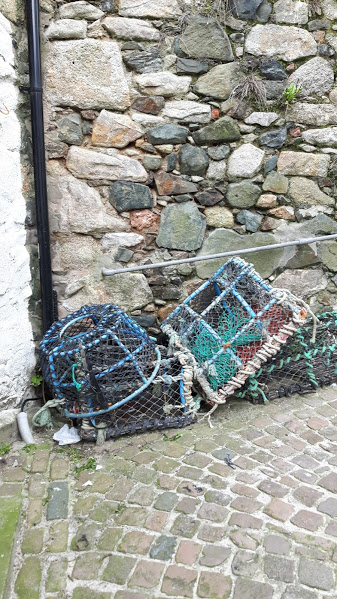
Just a few recent photographs from February to April- the onset of Spring.


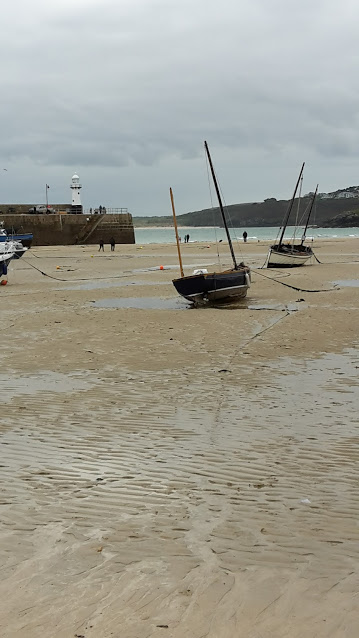
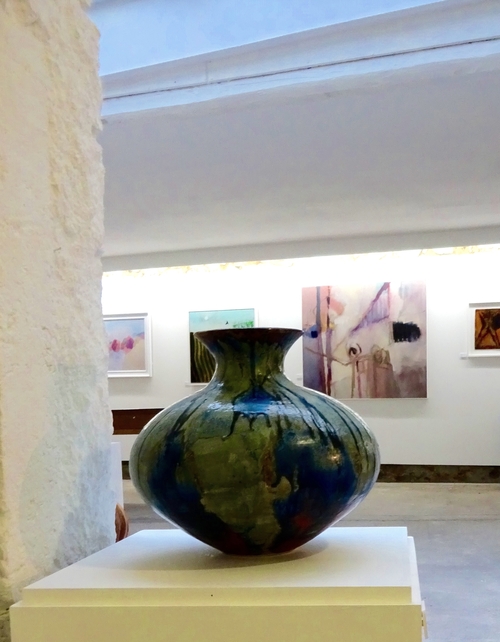
Even on an overcast day, walking along Lambeth Walk is a pleasure. Just along from the slumbering elegance of the St Ives Arts Club are the reinforced portholes of the Porthminster Gallery. Currently among the many interesting and varied pieces on display here are the intriguing ceramic tiles of the Austrian artist Regina Heinz. http://www.porthminstergallery.co.uk/ The sea has always drenched over Lambeth Walk in Spring Tides, but dull or in the early Spring sunshine, the turnstones are a welcome sight. They seem to have appeared during the time that the seagulls have become more aggressive when swooping indiscriminately down to snatch the lunches or suppers of unwitting and hapless tourists. The turnstones are currently abundant and closely related to sandpipers.
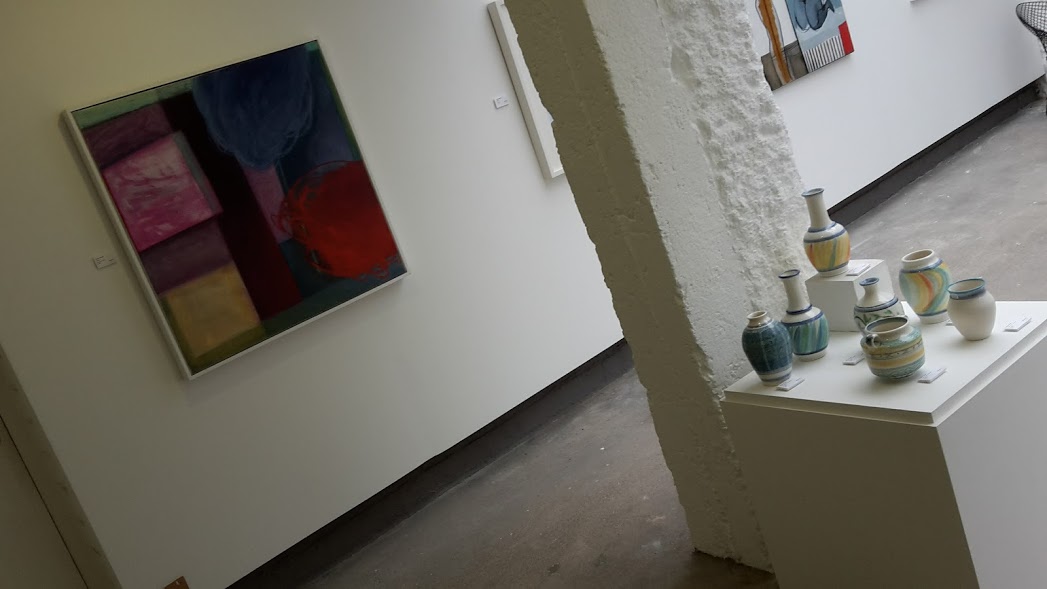
Currently the Tate Gallery in St Ives is closed although, of course, the Barbara Hepworth Museum and Sculpture Garden is open. Details are available at http://www.tate.org.uk/visit/tate-st-ives/admission-opening-times. A worthy alternative to the Tate Gallery is the Penwith Gallery where at http://www.penwithgallery.com/about/ it is stated that,”In 1960, the present site, then a pilchard-packing factory, was acquired and converted into a gallery, with artists’ studios above. In 1970 adjacent property became available, and the artist members, assisted by Barbara Hepworth, sought funds to create the present group of galleries, studios and workshops. To take on the task of maintaining its buildings and workshops, to arrange the programme of exhibitions and execute the gallery business the Penwith Galleries Ltd. was created.” Just opposite the Ropewalk where, of course, rope was manufactured, it was here that Troika pottery had it’s workshop and showroom.

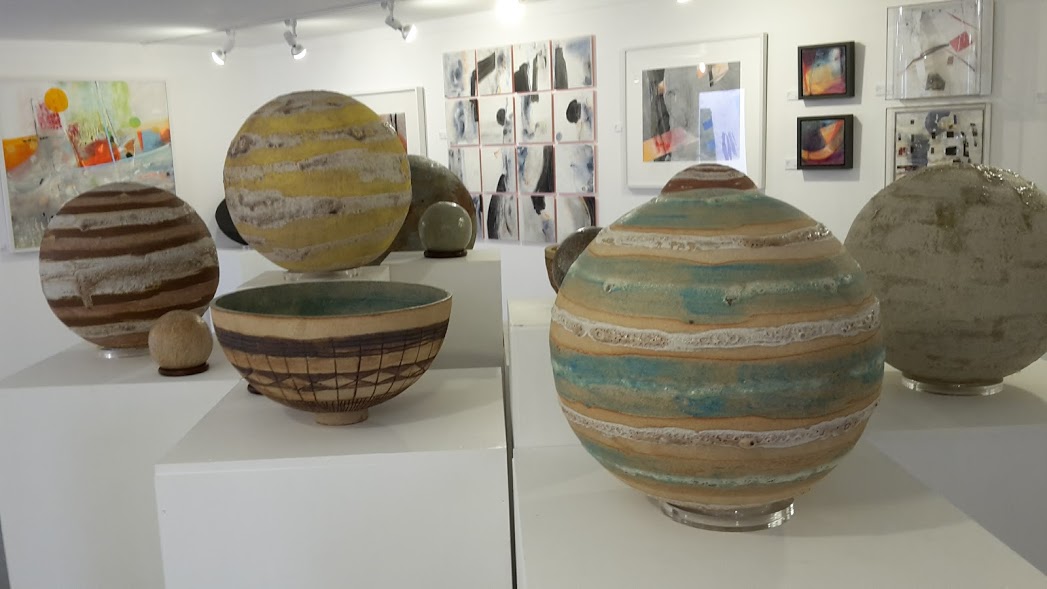
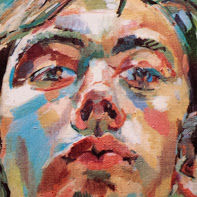
The current exhibition runs until April 19th and visitors are likely to find it various with many works to catch the eye. There are the well-known and established favourites like Antony Frost, John Piper and Noel Betowski (whose work from a previous exhibition is shown on the clip above) as well as painters who have recently joined such as Jessica Cooper;mentioned previously on this blog. In addition to the paintings both pottery and sculpture are on display in this well-lit environment.

Two works caught my attention and set off trains of thought. The first was a small work by John Emanuel, who moved to St Ives in 1964 (his work is often to be seen at the charming Belgrave Gallery just off Fore Street-http://www.belgravestives.co.uk/) and is a delightful classical head. Hearing the sound of the sea in the distance might prompt us to these lines of Homer from “The King of Asine” in the Illiad:-
And the poet lingers, looking at the stones, and asks himself
does there really exist
among these ruined lines, edges, points, hollows, and curves
does there really exist
here where one meets the path of rain, wind, and ruin
does there exist the movement of the face, shape of the
tenderness
of those who’ve shrunk so strangely in our lives,
those who remained the shadow of waves and thoughts with
the sea’s boundlessness
(http://www.poetryfoundation.org/poem/181850)

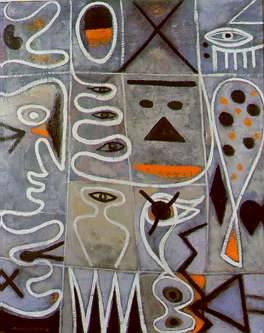
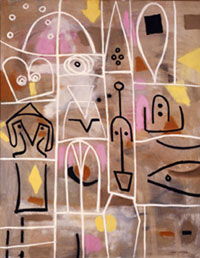
The second work attracted my attention because it reminded me of the abstract expressionism of Adolph Gottleib. I have often noticed the attractive prints of Jason Lilley – http://jasonlilley.co.uk/gallery_cornwall_artist_jason_lilley.html However, the similarity with Gottlieb may be judged from the accompanying images below. 
This poem by Heinrich Heine is simple and clever. It is maybe the kind of poem to which Karl Krauss might have taken exception. It has also been set to music by Robert Schumann in Dichterliebe, op. 48 Nr. 11.
Ein Jüngling liebt ein Mädchen,
Die hat einen Andern erwählt;
Der Andre liebt eine Andre ,
Und hat sich mit dieser vermählt.
Das Mädchen heiratet aus Ärger
Den ersten besten Mann,
Der ihr in den Weg gelaufen;
Der Jüngling ist übel dran.
Es ist eine alte Geschichte,
Doch bleibt sie immer neu;
Und wem sie just passieret,
Dem bricht das Herz entzwei.
It is analysed in German at https://de.wikipedia.org/wiki/Ein_J%C3%BCngling_liebt_ein_M%C3%A4dchen where they comment DasMetrum ist nicht regelmäßig, es wechselt ständig zwischen Jamben und Anapästen. Männliche und weiblicheKadenzen wechseln sich hingegen ab, wobei es sich beim ersten Vers der jeweiligen Strophe immer um eine weibliche Endung handelt. This might be translated:-
The meter is not regular and alternates between iambs and anapests. Masculine and feminine cadences are interwoven and the first verse of each stanza always has a feminine ending.
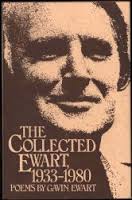
For some reason this reminded me of one of the amusing poems by Gavin Ewart whom I heard one delightful evening during the St Ives Festival at the Penwith Gallery in the early nineties. The poem is called “Office Politics”.
Eve is madly in love with Hugh
And Hugh is keen on Jim.
Charles is in love with very few
And few are in love with him.
Myra sits typing notes of love
With romantic pianist’s fingers.
Dick turns his eyes to the heavens above
Where Fran’s divine perfume lingers.
Nicky is rolling eyes and tits
And flaunting her wiggly walk.
Everybody is thrilled to bits
By Clive’s suggestive talk.
Sex suppressed will go berserk,
But it keeps us all alive.
It’s a wonderful change from wives and work
And it ends at half past five.
An obituary for Gavin Ewart appears here-http://www.independent.co.uk/news/people/obituary-gavin-ewart-1579164.html Also this video by Ewart is wryly amusing too:-
Jessica’s own website is at http://www.jessicacooper.co.uk/
Further information on Jessica and her work may be seen at http://www.edgarmodern.com/Artist-Info.cfm?ArtistsID=188&Collection=&info=CV&ppage=6
As the winter storms hit Penzance, so does that great painter of storms, steam and whirling chaos, Joseph Mallord William Turner. Not the great English Romantic himself of course, whose late works are currently at the Tate Britain in London until January 25th next year, but as a film, Mr Turner, by Mike Leigh and in the form of an exhibition currently on view in Penzance Public Library, Turner and Me painted by Vaughan Warren R.A.S. Ancillary works by Vaughan are also on view on the first floor of The Arcade in Chapel Street.

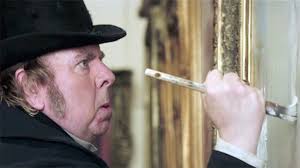
In a year of sombre reflection upon the futility of war, the appearance of original films like Loach’s Jimmy’s Hall and Mr Turner, are inspiring visually. The technique of Loach and Leigh, both of whom use improvisation as a means to authenticity, is inspiring and instructive. Mr Turner has renewed interest in a rumbustious, querulous figure and promises to be exciting viewing. Turner was a protean traveller and visited Cornwall and painted the local landscape including Mounts Bay and the Tamar Valley. Sketches at St Ives established him, according to some authorities, as the founder of the painting tradition there. http://www.tate.org.uk/art/artworks/turner-st-ives-from-porthminster-beach-d41327 Timothy Spall, an exceptional actor and a keen sailor brings his talent and determination to portraying Turner in both his vitality and in his melancholy moods.
Vaughan Warren http://vaughanwarren.weebly.com/ has a tremendous enthusiasm for Turner and has won the Turner Award himself, as well as the Reynolds Medal and Landseer Award. He also has a track record of interest in the history of art which informs his work at a deep level. He also has an interest in local history. He and his partner Melanie Camp share an enthusiasm for Daphne Du Maurier’s novels and in particular Rebecca and its associated film which was, of course a Hitchcock classic. This has provided the inspiration for an Acrylic, a medium which Vaughan assures us Turner would have loved, The Wreck of the Rebecca, which appears in the current show. Vaughan Warren has found much inspiration too in the work of Julius Olsson, whose contribution in St Ives is the subject of much intriguing study by David Tovey, as well as Whistler, Mondrian and Kandinsky. The latter was an acquaintance of Naum Gabo, who also worked locally, is famous for his writings on the spiritual in art. Warren declares too his intention to strive,” towards an abstract beauty through paint and the image”.
The Victorian restrained grandeur of the public library in Penzance makes for a suitable context for Vaughan’s Turner inspirations. However, because they have to be mounted so high up above the installed illumination, they are not as visible as they might be. It is a reminder that despite the town having many galleries there is limited space in which even experienced artists can display. Turner’s palette is of great interest to Vaughan Warren and more details can be found at http://www.winsornewton.com/uk/discover/articles-and-inspiration/palettes-of-the-masters-jmw-turner


In the current display three works particularly appealed to me. The acrylic on canvas of St Michael’s Mount predominates because of its free use of colour. I also greatly liked small watercolour called Turneresque. It almost goes without saying that this painter shows great facility in all three mediums. The two pictures which are mounted in oval frames make a refreshing change here too. The small painting in the corner which appeals to me most however is Red Interior; Music Room whose contrasting colours remind me a little of Sickert and a little of Gwen John. Anyone who has the opportunity should see the film and Vaughan Warren’s work in Penzance.
In addition to the works displayed in the library there is an opportunity to view Vaughan’s drawing of Nelson’s death mask at the Redwing Gallery, Wood Street in Penzance. The display in Penzance Library may be viewed until mid-December.

There was, of course, Robert Morton Nance…..
The Art of Literary Nomenclature
ORIGIN:
Medieval diminutive of “Annis”, or of “Ann” / “Anne” (via “Nan”).
VARIATIONS and NICKNAMES:
Ann, Anne, Annie, Anny, Nainsi, Nan, Nancie, Nana, Nance, Nandag, Nanette, Nanice, Nanine, Nannie, Nanny, Nanse, Nansi, Nansie, Nansy, Nenci, Nensi, Neske, Nest, Nesta, Nina, Ninette, Ninon, Nona, Nonna, etc.
REFERENCES IN LITERATURE:
– Aunt Nancy, who might be a fallback matron for Hope should something happen to Mrs. Bell, in “What Hope Bell Found in Her Stocking”, from The Youngest Miss Lorton, and Other Stories by Nora Perry (1889).
– Nancy (Annie) Ridd (sometimes called “Nanny“), John’s favorite sister, a sweet little homemaker, in Lorna Doone, by R.D. Blackmore (written in 1869, set in the final decades of the 17th century).
– Nancy (Anne) Steele, Lucy’s well-intentioned but empty-headed ninny of an older sister, a woman of “vulgar freedom and folly”, in Jane Austen’s Sense and Sensibility (set between 1792-1797, published in…
View original post 167 more words

This is a favourite stopping off place where in the midst of all the travel you might enjoy either quiet or a brief encounter; perhaps both. Perhaps, one of the few actual benefits of privatisation, it is filled with transport posters from the 1930s. You can so easily imagine the billowing steam from the last trains which ran on the St Ives Branch line up until the 1970s.https://www.youtube.com/watch?v=a3O7uSD2qlk
Then the music begins, a gentle voice from the past:-
Sometimes I love you, sometimes I hate you

Ah, but when I hate you
Don’t you know it’s ’cause I love you
That’s how I am, so what can I do?
I’m happy when I’m with you
I never mind the rain from the skies,
As long as I see the sun shinging in your eyes
Don’t you know that
Sometimes I love you, sometimes I hate you
Ah, but when I hate you
That’s because I love you
That’s how I am, so what can I do?
I’m happy when I’m with
So happy when I’m with
I’m happy when I’m with you
(Read more: http://muzikum.eu/en/123-14654-197076/kathy-kirby/sometimes-im-happy-lyrics.html#ixzz3DUJ6zRWl)

1) http://www.cornishman.co.uk/entertainment
2) http://www.whatsoncornwall.co.uk/
3) http://www.artcornwall.org/
5) http://feastcornwall.org/projects/new-projects/
6) http://www.royalcornwallmuseum.org.uk/
7) http://west-penwith.org.uk/
8) http://www.godolphinhill.com/
9) http://morrablibrary.org.uk/
10) http://www.penleehouse.org.uk/
13) http://www.stivesarchive.co.uk/
14) http://www.museumsincornwall.org.uk/St-Ives-Museum/Cornwall-Museums/
15) http://www.leachpottery.com/

16) http://www.museumsincornwall.org.uk/Helston-Folk-Museum/Cornwall-Museums/
17) http://www.cornwall.gov.uk/environment-and-planning/conservation/world-heritage-site/
19) http://www.historic-cornwall.org.uk/a2m/maps.htm
20) https://www.facebook.com/steineracademytruro
21) http://www.cornwallmusic.co.uk/
22) http://www.penwithfilmsociety.co.uk/
23) http://www.cornwallcommunitynews.co.uk/
24) http://www.cornwallwildlifetrust.org.uk/
25) http://www.cornwall24.co.uk/discussion/
Ich habe gerade eine neue App entdeckt, was sehr nützlich ist – www.appforcornwall.com
Ausserdem auf Deutsch http://www.intocornwall.com/ und auch http://www.visitcornwall.com/
Zu lesen Julia Kaufhold: St Ives und Trips in die Umgebung. goldfinch verlag, Hamburg 2007, ISBN 978-3-940258-00-7


West Cornwall has many literary connections and famous writers have been attracted to its scenery and its people. In an idle moment I was thinking about how useful it might be to give an account of some of the significant figures that are associated with the Penwith peninsula. In her magical notes, “Moments of Being” Virginia Woolf writes of the evocative inspiration which waking in Talland House gave to her. Not only was it a source of inspiration for her great modernist novel,“To the Lighthouse” but to remember that once Henry James took tea on the lawn recalls once again the long Edwardian summer and the echoes of the conversations between him and Virginia’s father, the formidable Leslie Stephen. Links include http://www.woolfonline.com/timepasses/?q=node/271
and
http://fernham.blogspot.co.uk/2009/07/virginia-woolf-on-henry-james.html
Books about Virginia and her sister in St Ives include “Virginia Woolf, Vanessa Bell and Remembering St Ives” by Marion Whybrow (currently unavailable on Amazon) and the novel “Virginia and Vanessa” said to be;”…a chronicle of love and revenge, madness, genius, and the compulsion to create beauty in the face of relentless difficulty and deep grief”. In addition there is Dell, Marion. Peering Through the Escallonia: Virginia Woolf, Talland House and St. Ives. No. 23. 1999. ISBN 1-897967-47-0. Price £7.00
There are more websites to peruse and pursue, should you have the time. Namely, http://www.glennhorowitz.com/featured/virginia_woolf_goes_to_the_beach
And
https://bloggingwoolf.wordpress.com/books/
It is interesting, though unsurprising, how Woolf keeps turning up as a factional character in novels. My personal favourite as I have mentioned on here before is “House of Exile” by Evelyn Juers –mostly about Thomas Mann-which contains an interesting and memorable incident where Virginia and Leonard visit a restaurant in the Funkturm in Berlin and loses her elegant scarf which is recovered by another leading character.” Some moments of exhilarating coincidence in these pages are reminiscent of Stoppard’s Travesties.” According to the reviewer, Robert McCrum at http://www.theguardian.com/books/2011/may/22/house-of-exile-juers-review. Although not associated with St Ives, Virginia Woolf turns fictional in the film “The Hours” based on the novel by Michael Cunningham, which came out in 2002 directed by Stephen Daldry (who also filmed The Reader). Her bent-nosed appearance, which some critics found rather hilarious, won Nicole Kidman the best actress award that year. Recently I came across Alison Macleod at this year’s Jewish Book Week, where she was talking about her haunting and remarkable novel, “Unexploded”. She is Professor of Contemporary Fiction at the University of Chichester and a lively and engaging speaker who talked about her research into the background of the novel which is set in Brighton, where she herself lives, during the hazardous summer of 1940. The novel was long-listed for the Man Booker Prize in 2013 and deals with, among other sensitive issues, anti-Semitism in wartime Britain. Virginia Woolf lectured in Brighton during this period and she and her novels turn up as one leitmotiv in this persuasively constructed story. Many of the issues are based on a thoroughgoing examination of the archives. http:/www.telegraph.co.uk/culture/books/bookreviews/10244729/Unexploded-by-Alison-MacLeod-review.html
Returning along the coast in a westerly direction to West Penwith, a glance at A Literary Atlas and Gazeteer reveals that many fascinating littérateurs lived or visited from Truro and to the west. Here are a list of just ten whose connections may not be very well known. At Zennor at Higher Tregarthen from 1916-1917, D.H.Lawrence, J.Middleton Murray and Katherine Mansfield. In Truro, Samuel Foote (1720-1777 became celebrated as much for his acting as his didactic diatribes)-his story has just been magnificently told by Ian Kelly see- http://www.theguardian.com/books/2012/oct/05/mr-footes-other-leg-review. Sir William Golding lived nearby at Perranaworthal from 1985 until his death in 1993-where he became a great friend of the controversial novelist and translator of Russian Poetry, D.M.Thomas. He has recently published a poetry collection, Light and Smoke.http://www.dmthomasonline.net/

In St Ives, Mrs Havelock Ellis wrote Cornish Idyll in 1898. Much later, after the War in 1945 Norman Levine found the town conducive to his stories, poetry and travel writing. At Madron, the inspirational poet’s poet, penned his charmed verses:-http://www.scottishpoetrylibrary.org.uk/poetry/poems/listen-put-morning
Listen. Put on morning. Waken into falling light. A man's imagining Suddenly may inherit The handclapping centuries Of his one minute on earth. And hear the virgin juries Talk with his own breath To the corner boys of his street. And hear the Black Maria Searching the town at night.
]Daphne Du Maurier arrived here in Penwith before her time at Menabilly -for more details see http://www.intocornwall.com/features/literature.asp

Up until August 1914, The Cornishman and the St Ives Weekly Report contain many detailed reports from abroad. These include the Cornish in America, Canada, South Africa. Many Cornish people travelling to the States will have responded to the large adverts in the Cornishman for the famous hotel in New York https://ephemeralnewyork.wordpress.com/tag/hotel-cornish-arms/
Without doubt, however, the greatest concern appears to be about Nationalist Rebellions in Ireland.http://www.bbc.co.uk/history/british/britain_wwone/ireland_wwone_01.shtml The only reference to the possibility of an outbreak of war- reading between the lines- concerns the speeches in support of building more dreadnoughts. Money appeared to be of no real concern to the advocates of building more battleships.

When war broke out many fishermen in St Ives were immediately affected and the effect on many of them, their families and the price of fish was very soon to follow. Many were called up within hours and summoned as members of the Royal Naval Reserve to Davenport and had to leave by train for that destination. A newspaper report states that when addressed by Mr Stephen Reynolds, Inspector for the Board of Agriculture and Fisheries, he was told that some 160 fisherman were on active service with about the same numbers of families affected. Two-thirds of the summer Herring Fleet were laid up and the price of fish and particularly Crayfish that would otherwise have fetched a fine price in Paris were catastrophically affected.
The details of this call=up are very moving since we only have to turn to the next couple of weeks to learn how many will have been aboard ships which sank or been caught in the first defeat later at Mons. The accounts of farewells said above the peaceful beaches and the brass bands playing can still be imagined by anyone walking out of the town. There is a strange mixture of fear and jingoism apparent in the newspapers. There were worries about the supply of wheat which caused fears about starvation; there were food riots in Camborne. Other articles show a concern about possibilities of aerial attack from Zeppelins and tables showing their limited range were the subject of articles in the press.