Categories
Category: Uncategorized


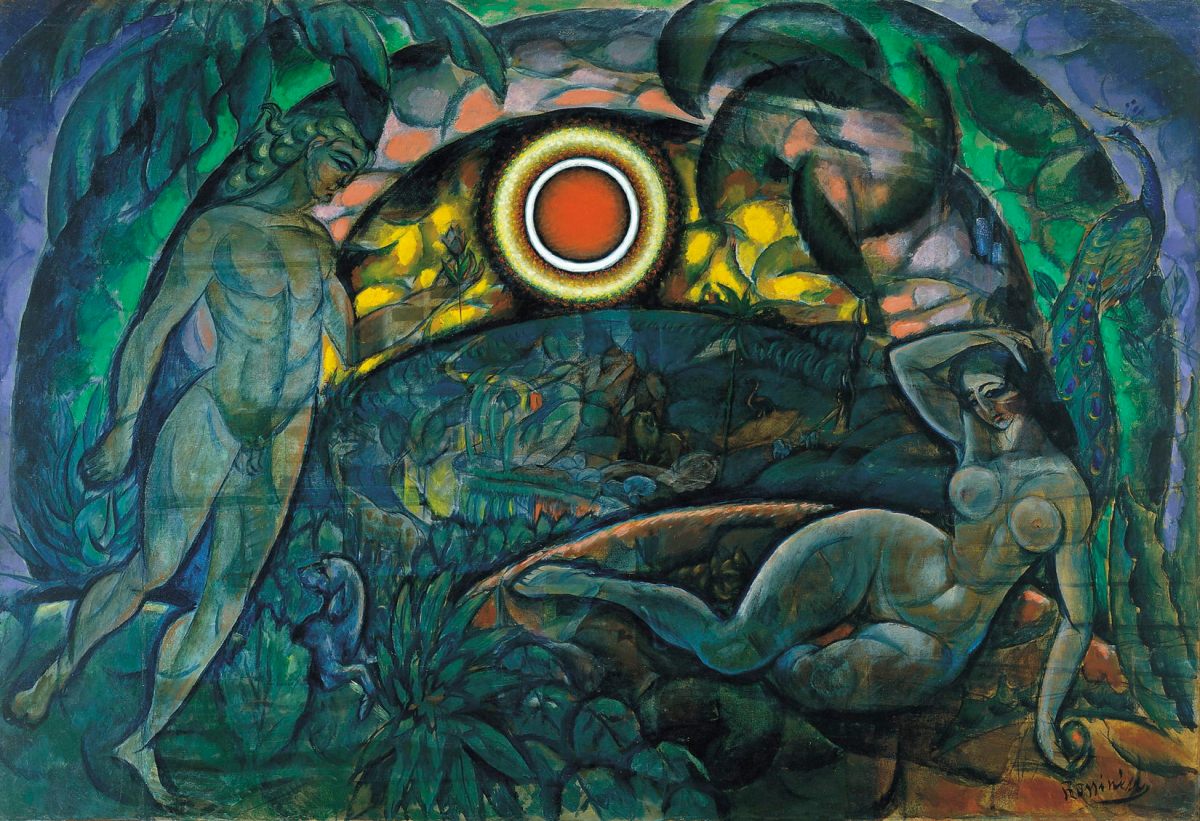
Engaging mixture of styles and approaches.

This week’s Ukrainian painter is one of several who emigrated from the country after his initial training, and later established himself an international reputation. He’s Wladimir Baranoff-Rossiné (1888-1944), who was born in southern Ukraine, most probably in Kherson, and was initially known as Shulim Wolf Leib Baranov. He first studied art at the art school in Odesa, from where he graduated in 1908.
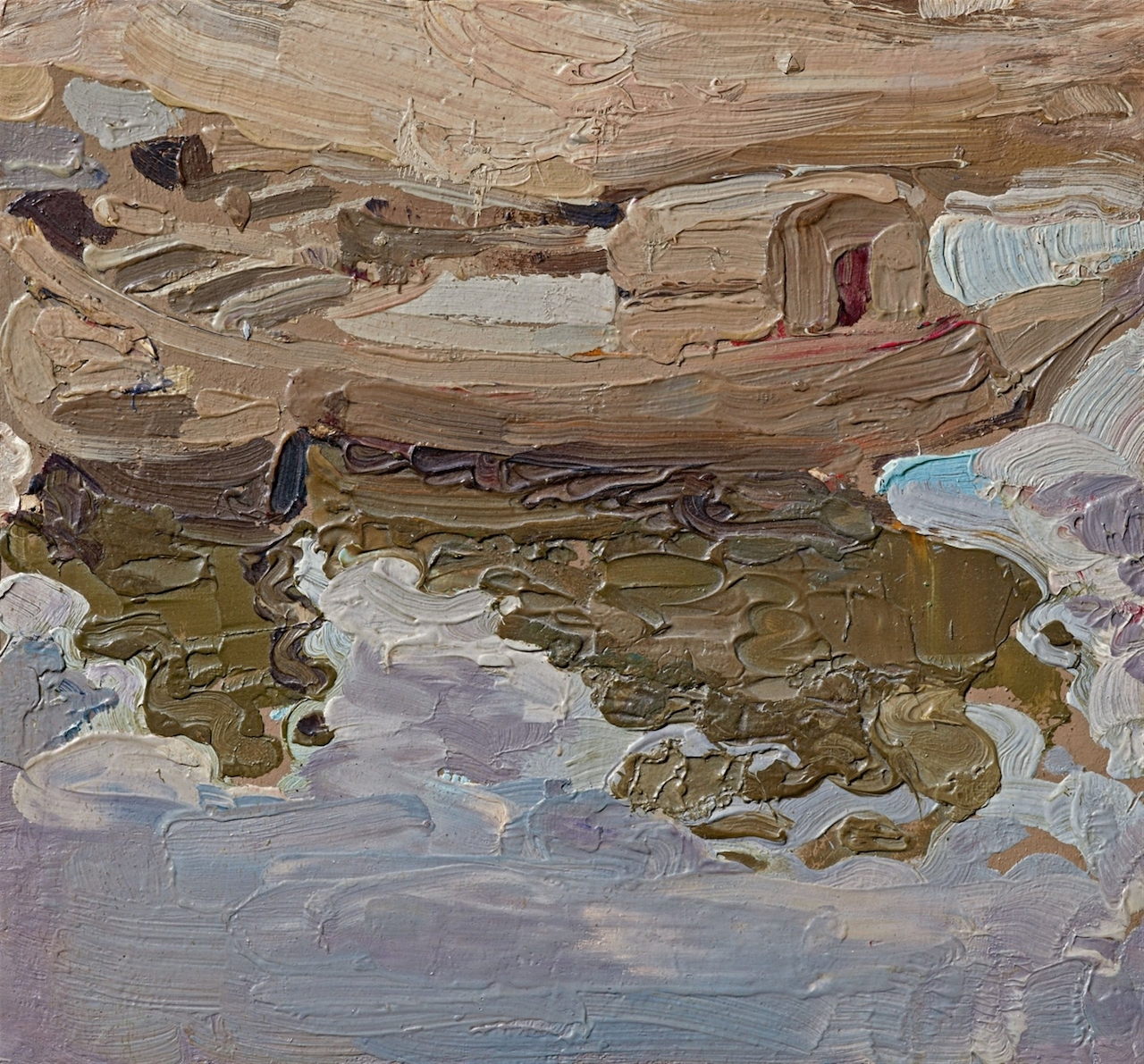 Wladimir Baranoff-Rossiné (1888-1944), The Boats (1905), oil on cardboard, dimensions not known, Private collection. Wikimedia Commons.
Several of his earliest surviving paintings appear to show views of the River Dnipro, including The Boats from 1905, painted when he was a student in Odesa.
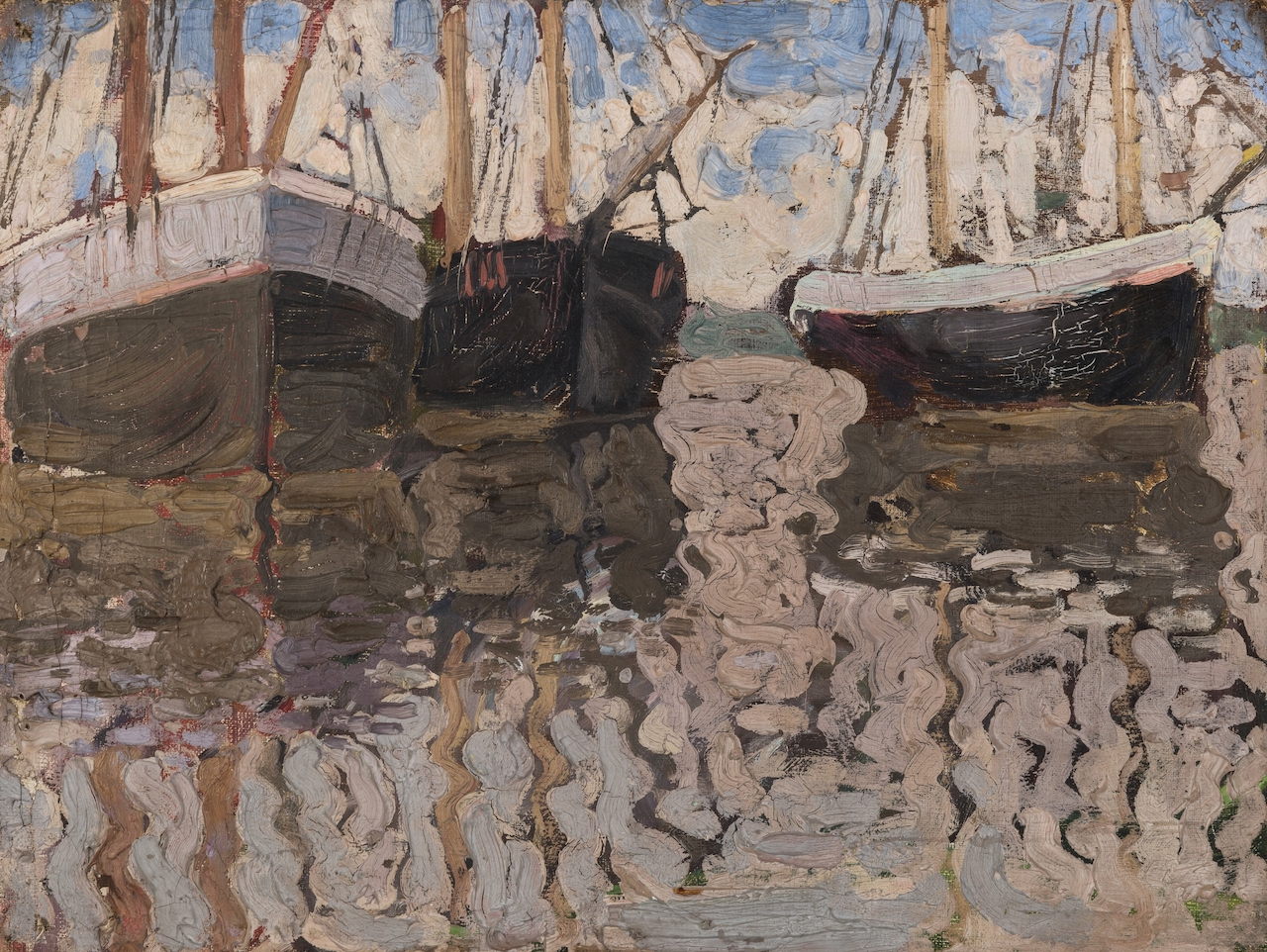 Wladimir Baranoff-Rossiné (1888-1944), A View of Sailboats (1905-08), oil on canvas, dimensions not known, Private collection. Wikimedia Commons.
A View of Sailboats also dates from this period of 1905-08.
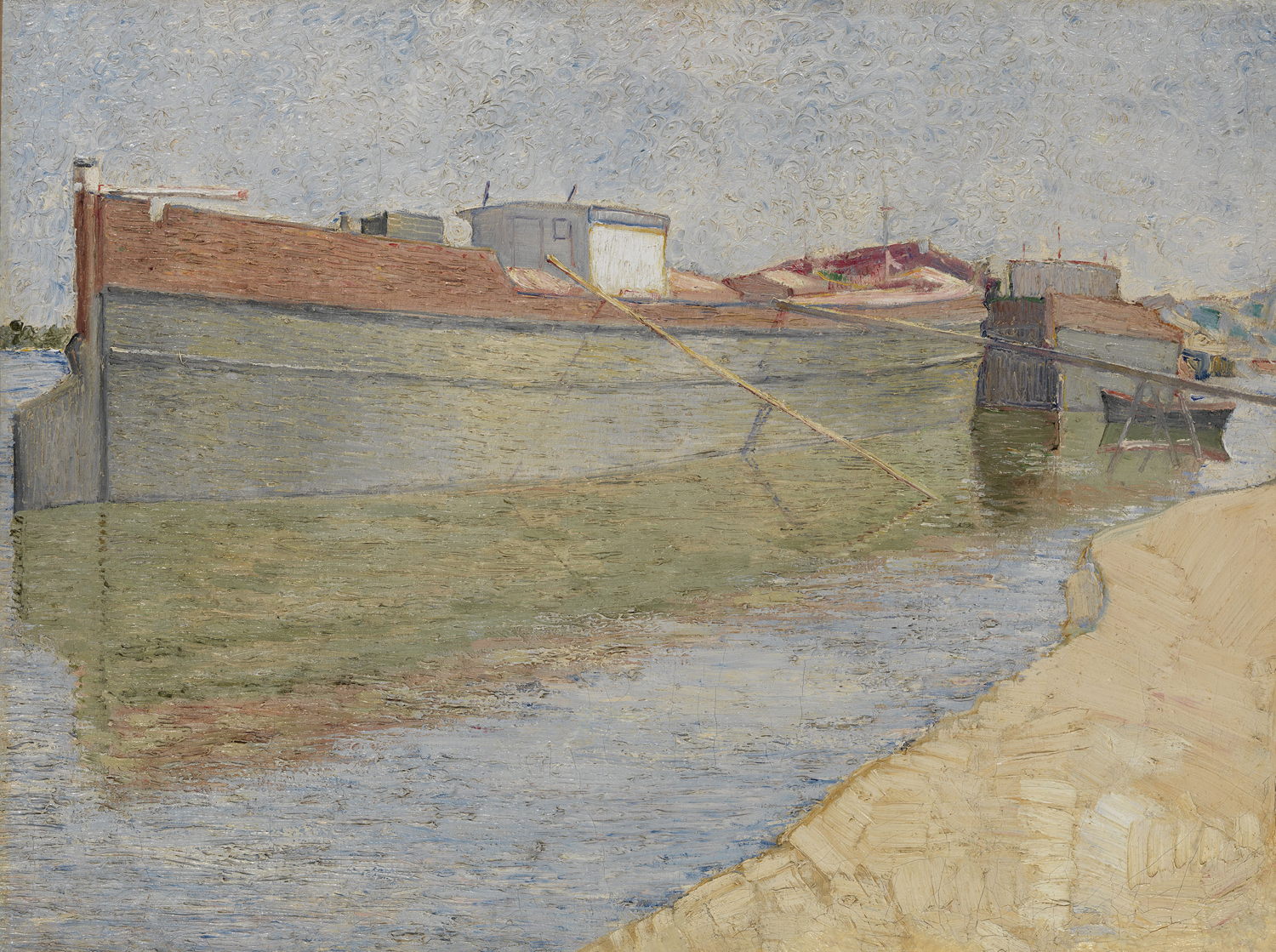 Wladimir Baranoff-Rossiné (1888-1944), Barge on the Dnipro (1907), oil on canvas, dimensions not known, Private…
View original post 690 more words
Like Proust’s Madelaine it brings back memories!!

I’ve had this book by my favourite English food writer (SH) on the shelves for years and opened it for the first time at breakfast the other day. A homage to the food they were brought up on, it got me thinking about a dinner we hosted on Saturday night. We decided to go for a seventies vibe. Chicken vol-au-vents for a starter. Then boeuf au daube – I used the Reader’s Digest cookbook for this, published early seventies, so it’s exactly the right vintage – and we had potato gratin (Stephanie Alexander’s) on the side. Caprice brought apple crumble for dessert and Sheila brought a seventies cheese platter. Jatz crackers, of course, none of this lavosh crackers with olive oil and rosemary, no siree. And a nice touch was an orange into which she’d poked a lot of toothpicks, each of which was headed by a teensy pickled onion…
View original post 428 more words
Categories
2 July, 2023 09:05
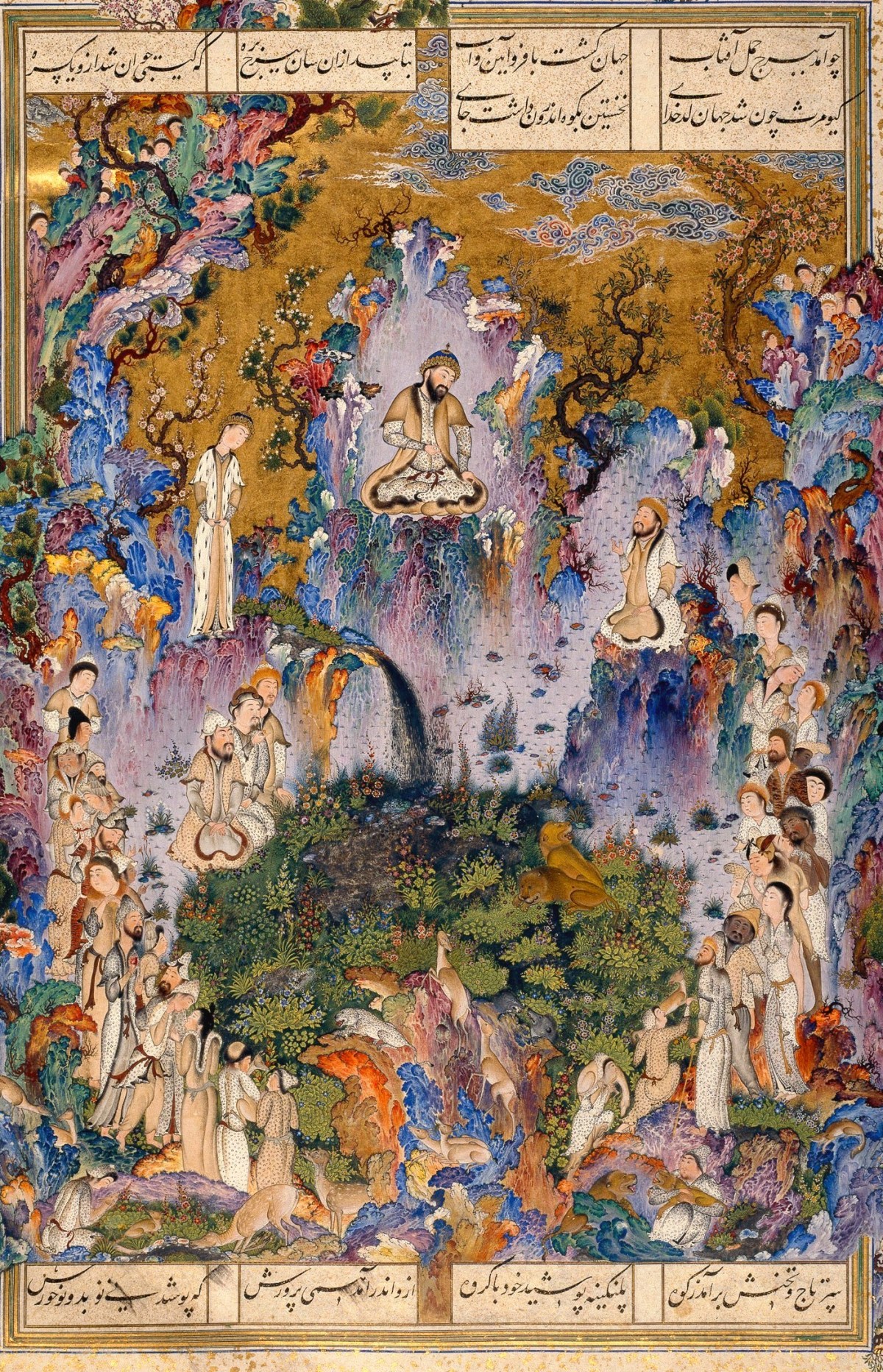
Amazingly colourful!!

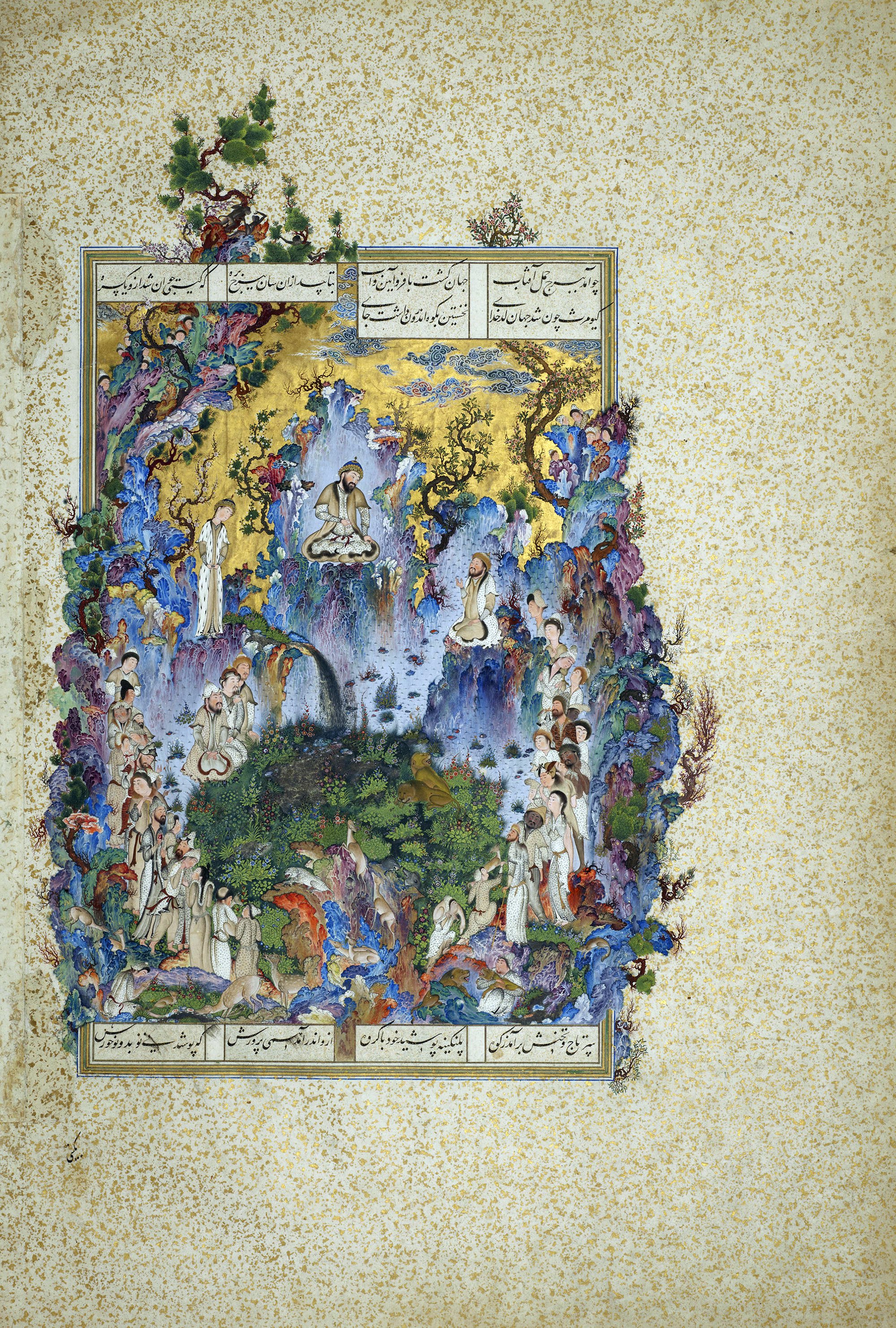
“This sumptuous page, The Court of Gayumars (also spelled Kayumars— see top of page, details below and large image here), comes from an illuminated manuscriptof theShahnama(Book of Kings)—anepic poem describing the history of kingship in Persia (what is now Iran). Because of its blendingof painting styles from both Tabriz and Herat (see map below),its luminous pigments, fine detail, and complex imagery, this copy of the Shahnamastands outin the history of the artistic production in Central Asia.
The Shahnamawas written by Abu al-Qāsim Ferdowsi around the year1000andis a masterful exampleof Persian poetry. The epic chronicles kings and heroes who pre-date the introduction of Islam to Persiaas well as the human experiences of…
View original post 105 more words
I loved reading “The World My Wilderness”- about the Maquis and Rosebay Willowherb!

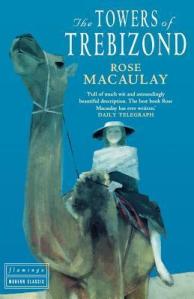 I don’t want to put anyone off, but I think that readers will miss some of the humour in The Towers of Trebizond if they don’t have enough background knowledge. Let me try to explain, with the help of Wikipedia (lightly edited as usual to remove unnecessary links).
Dame Emilie Rose Macaulay, DBE (1 August 1881 – 30 October 1958) was an English writer, most noted for her award-winning novel The Towers of Trebizond, about a small Anglo-Catholic group crossing Turkey by camel. The story is seen as a spiritual autobiography, reflecting her own changing and conflicting beliefs.
Well, yes it is, but that description (apart from the camel) makes it sound earnest and boring. The truth is that most of the time Macaulay is poking fun at religion in general and at hers in particular. It is often laugh-out-loud funny, but as I can see from reviews at Goodreads not…
View original post 1,674 more words

Read More
See More
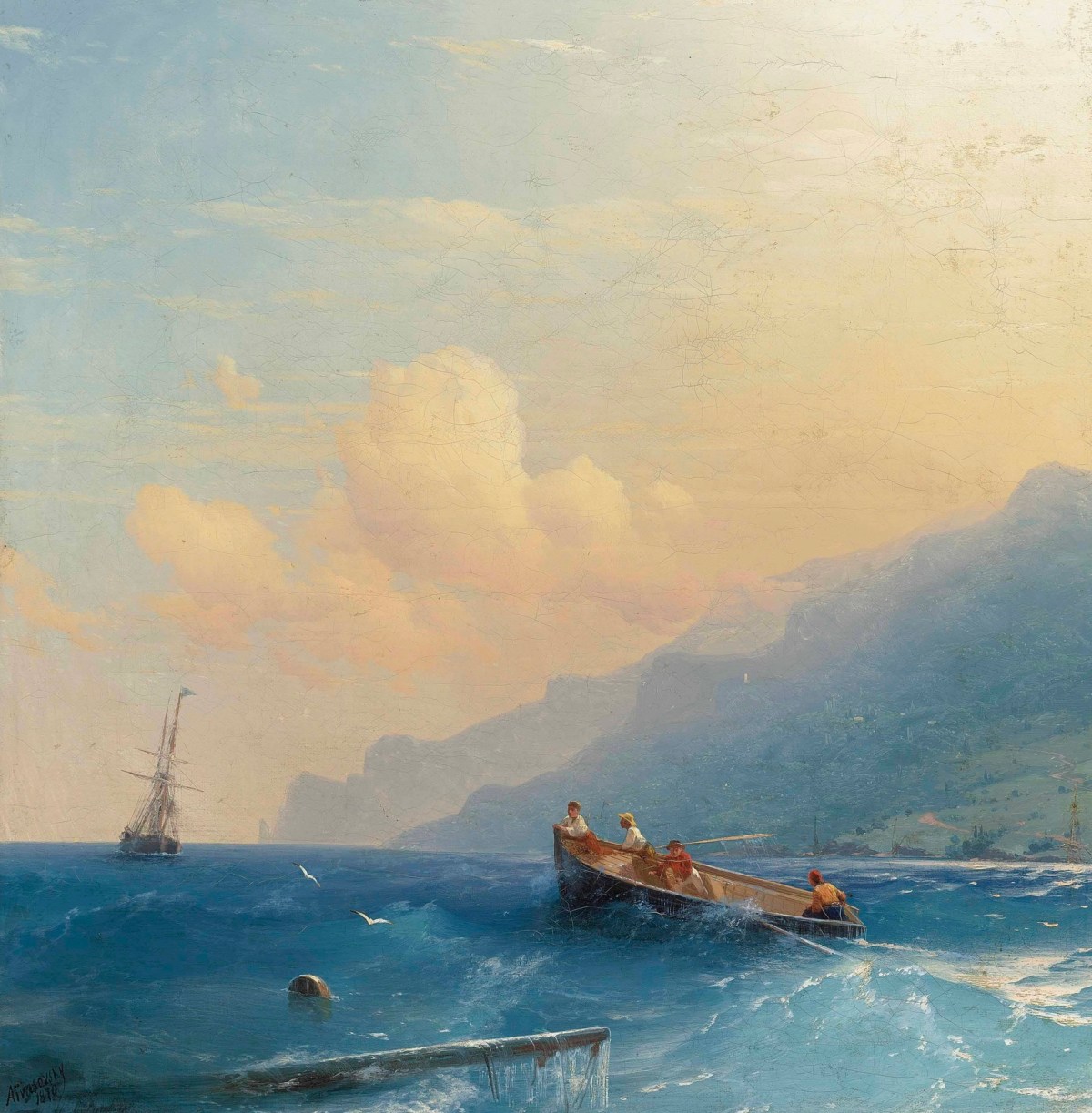
Tag: Ivan Aivazovsky At Sunnyside
Thanks for Visiting 🙂
~Sunnyside
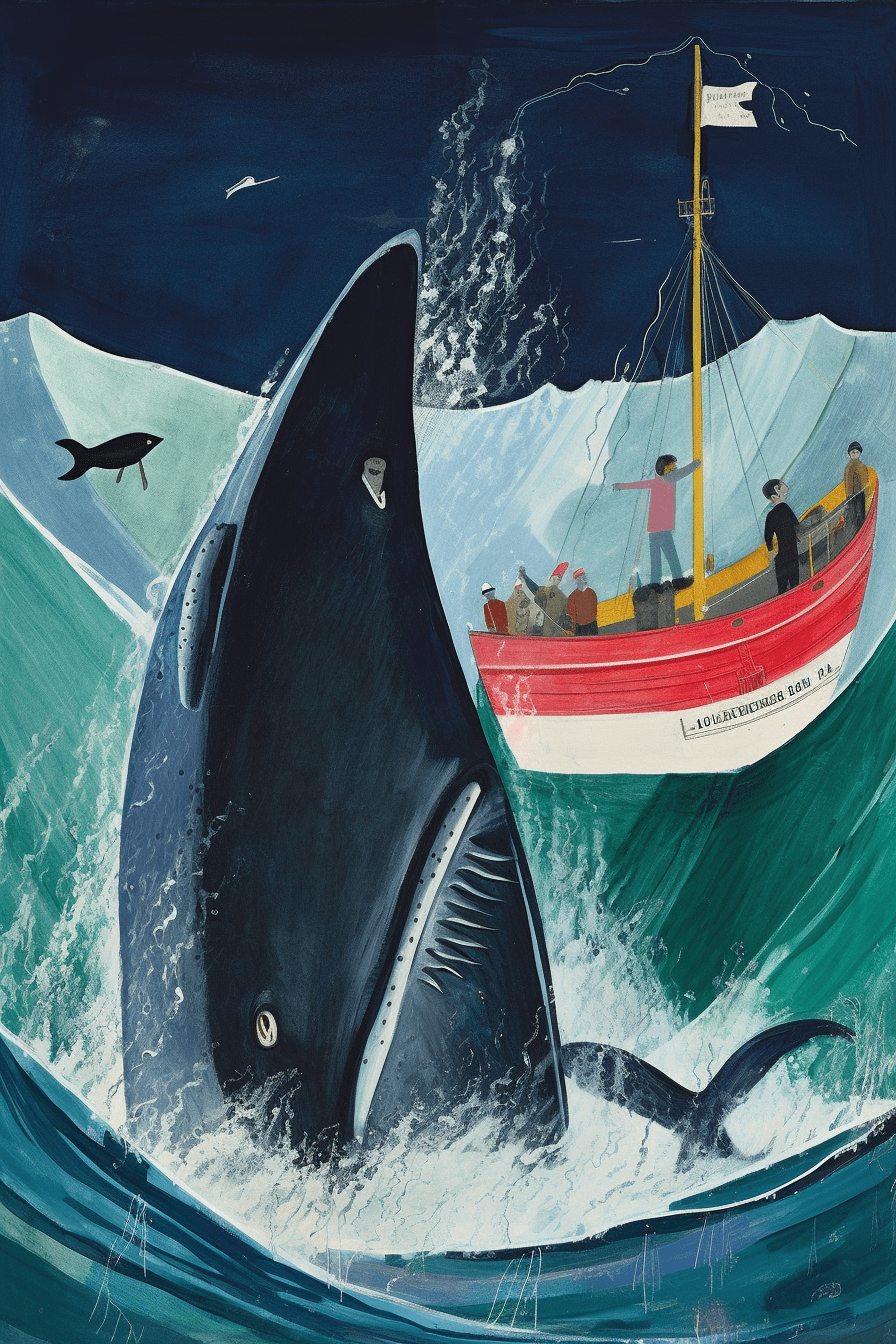
Fascinating material here. It has made me wonder if Melville’s work influenced the Gothic themes of Edgar Allen Poe.

Darren Aronofsky‘s 2022 film, “The Whale“, is a cinematic interpretation of Samuel D. Hunter‘s stage play of the same name. It delves into the last days in the life of Charlie (played by Brendan Fraser), a morbidly obese English teacher living in self-inflicted isolation. After acknowledging his impending demise due to compulsive eating and self-neglect, the film follows Charlie’s final attempts to mend the broken ties with his estranged daughter, Ellie (played by Sadie Sink).
The film presents a psychological examination of human destitute, exploring themes of self-isolation, paralysis, and the pursuit of redemption. It provides a glimpse into the psyches of characters caught in a cycle of self-isolation, entrapped in their lives due to their inability to move past traumatic experiences. Rather than confronting their painful histories and working towards resolution, they retreat into their shells, resigning themselves to an existential stasis. Charlie…
View original post 1,658 more words
Categories
Hauser: Now We Are Free
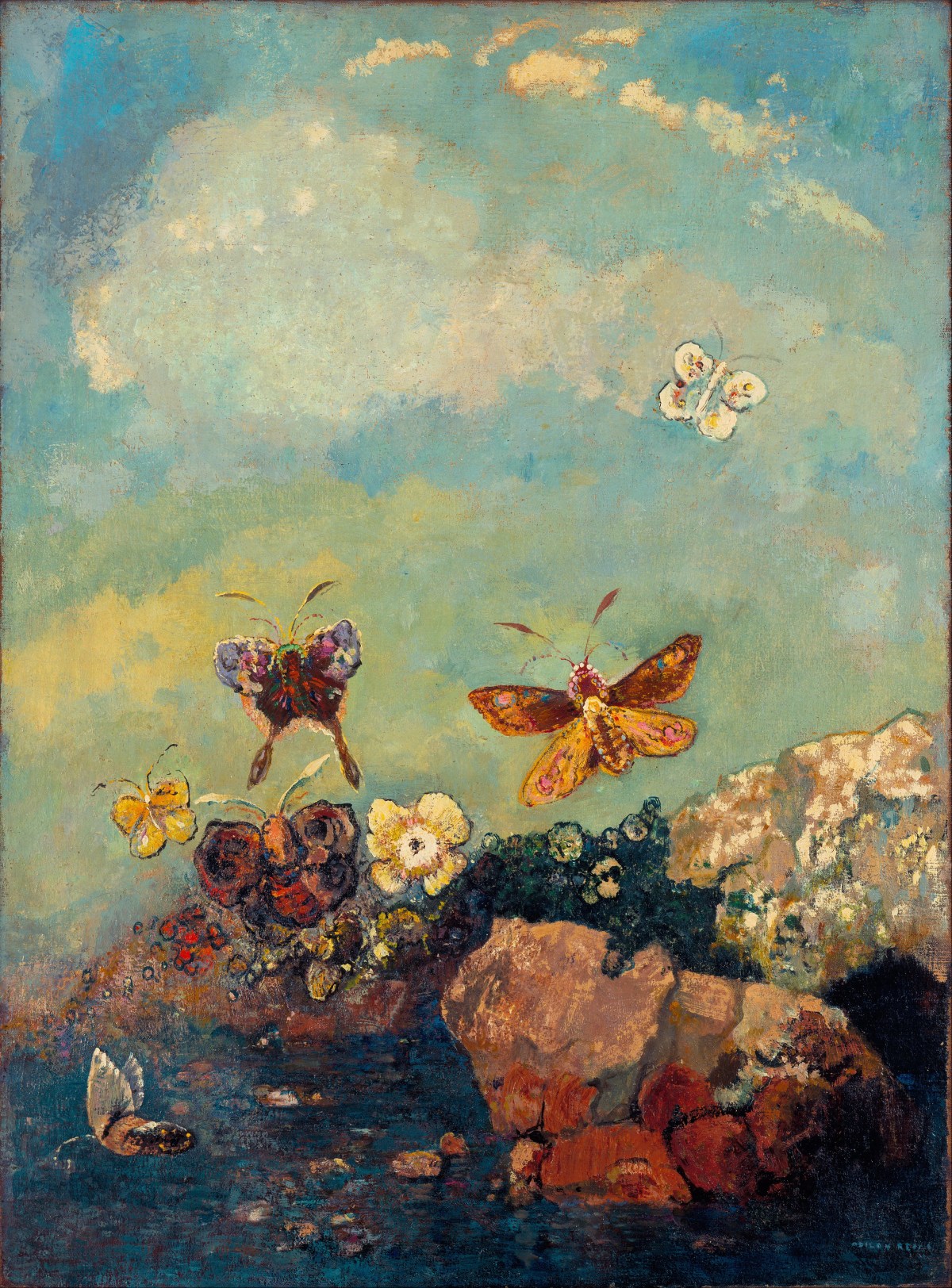
Richly romantic!

Read More
Fleur Roos Rosa de Carvalho, ‘Decorative panels’, in Odilon Redon
and Andries Bonger: 36 works from the Van Gogh Museum collection,
Amsterdam 2022, FREE PDF HERE
See More
Tag: Odilon Redon At Sunnyside
Odilon Redon at Van Gogh Museum
Thanks for Visiting 🙂
~Sunnyside
I think the last quatrain particularly brilliant!


The plight of refugees stalks the headlines: devastating wrecks off the coast of Greece, Ukrainian children orphaned and uprooted, often welcomed but sometimes mocked and bespattered by their peers. For those of us who have experienced displacement in the past, such stories bring back painful memories and old fears. I recall my family’s early days in Los Angeles — recall my mother’s struggles to clear the bureaucratic hurdles all immigrants face, as well as the playground bullying to which my friends and I were subjected. One of the chapters in the second part of Alexander Voloshin’s On the Tracks and at Crossroads recounts some of those perennial émigré troubles, applying to them a therapeutic layer of absurdist humor. Laughter was how my friends and I coped with our challenges, too; eventually, those challenges fell away, while we, I’m happy to say, are still laughing.
At this point in his…
View original post 770 more words
 penwithlit