Categories
Art and Photographic History Uncategorized

Andrés Nagel Tejada-Basque painter, sculptor and engraver

Andrés Nagel Tejada (San Sebastián, 1947) is a Spanish painter, sculptor and engraver, one of the current Basque artists with the greatest international projection.

Image result for Andrés Nagel Tejada

An artist with eclectic tastes, a great traveller and with a history of many exhibitions, his work in painting, sculpture and engraving can be labelled as a postmodern figuration.  In working against the mainstream, in the years 60 and 70, he followed  an  abstract and informalist path.  Nagel addresses mostly social issues with some sarcasm and irreverence, in a style that at times echoes the New Madrid figuration and also adopted influences of pop art (in colourful and urban themes), surrealism (with shocking and humorous approaches) and Povera art ( using humble materials and wastes).

Further information in Spanish is at https://es.wikipedia.org/wiki/Andr%C3%A9s_Nagel
Categories
Uncategorized

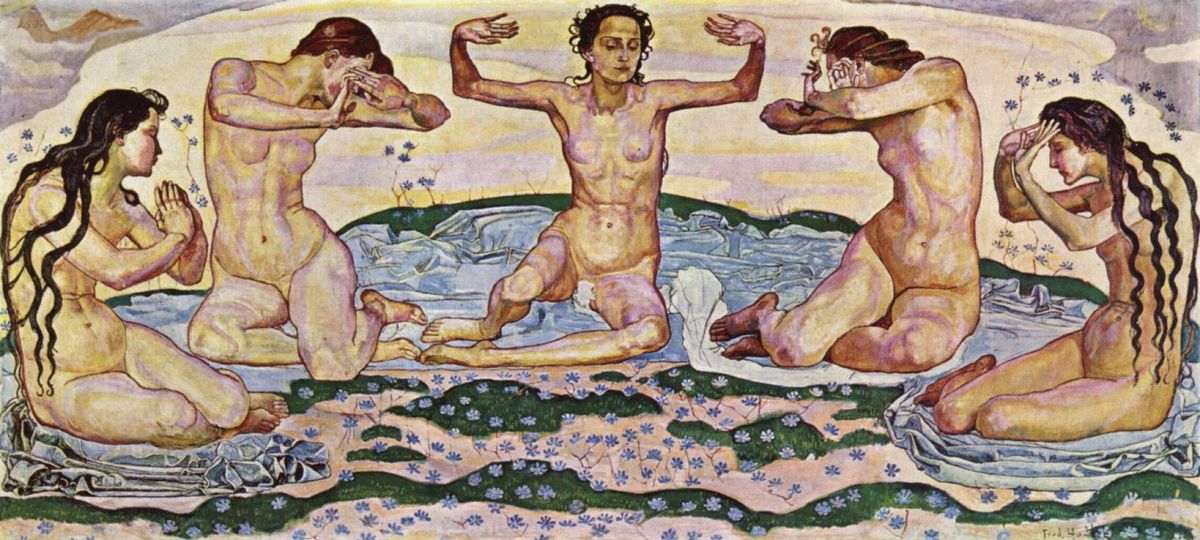
Ferdinand Hodler, Distant mountains, 1895-1902

Holder was a great influence on the Viennese painter Richard Gerstl. He also reminds me a little of the Cornish Symbolist Thomas Cooper Hitch.

hoakley's avatarThe Eclectic Light Company

By 1895, Ferdinand Hodler (1853–1918) was turning to more Symbolist paintings and developing his mature ‘Parallelism’ from there.

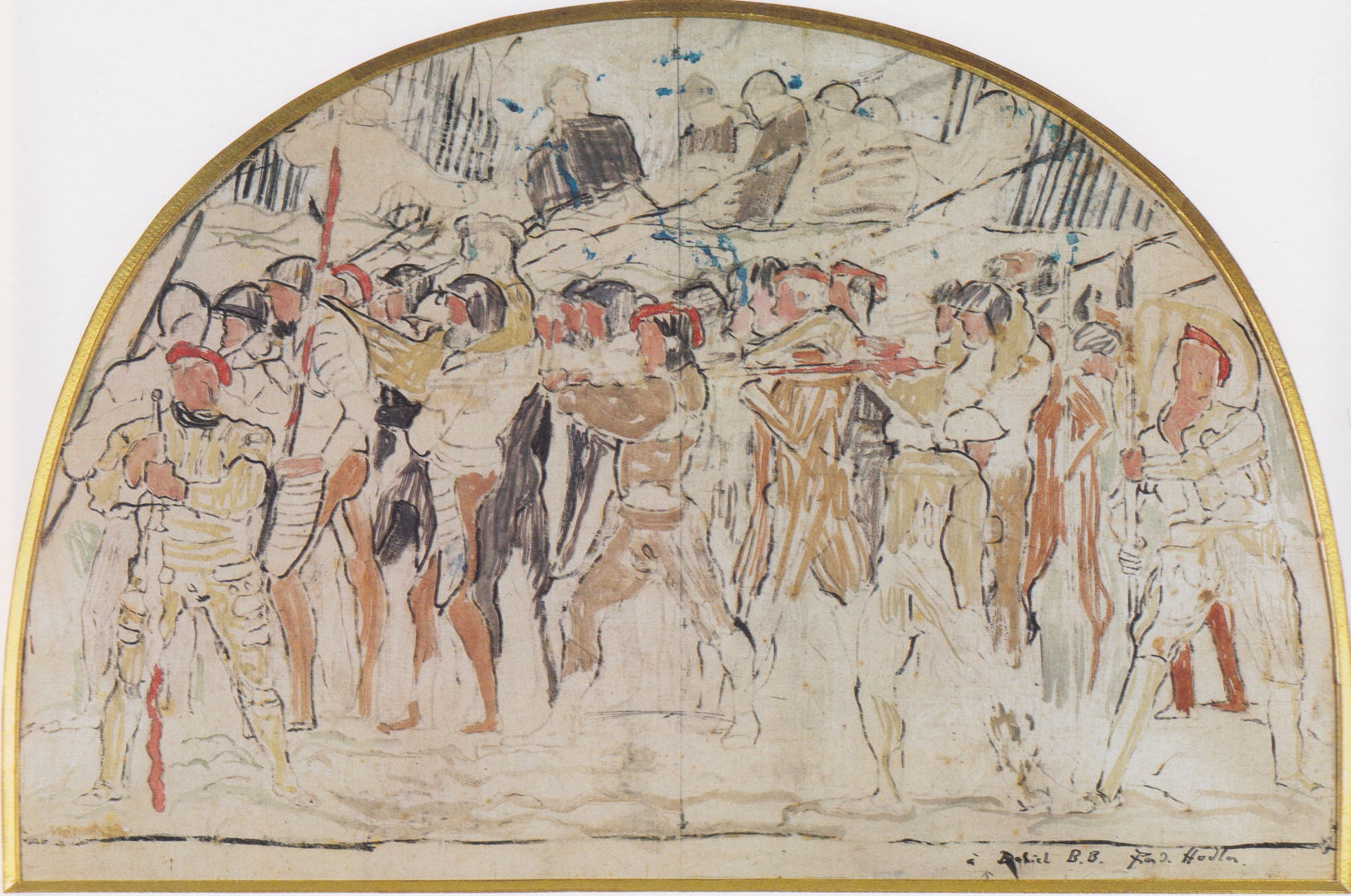
hodlerretreatmarignanocompostudy Ferdinand Hodler (1853–1918), Retreat from Marignano (composition study) (c 1897), pencil and gouache on fabric, 43 × 65 cm, Private collection. Wikimedia Commons.

In 1897, Hodler won the commission to paint a large fresco in the Weapons Room of the Swiss National Museum (Schweizerisches Landesmuseum) in the centre of Zurich. Oddly, Hodler proposed depicting the Battle of Marignano, fought between France and the Old Swiss Confederacy near Milan in 1515. The French had been the victors there, leaving the defeated Swiss with around 50% casualties.

This compositional study for Retreat from Marignano was made in about 1897, using pencil and gouache on fabric. From its inception, the painting is composed as a frieze in two planes, with most of its figures in the nearer plane.

hodlerretreatmarignanostudy Ferdinand Hodler (1853–1918), Retreat from Marignano (study)…

View original post 962 more words

Categories
Uncategorized

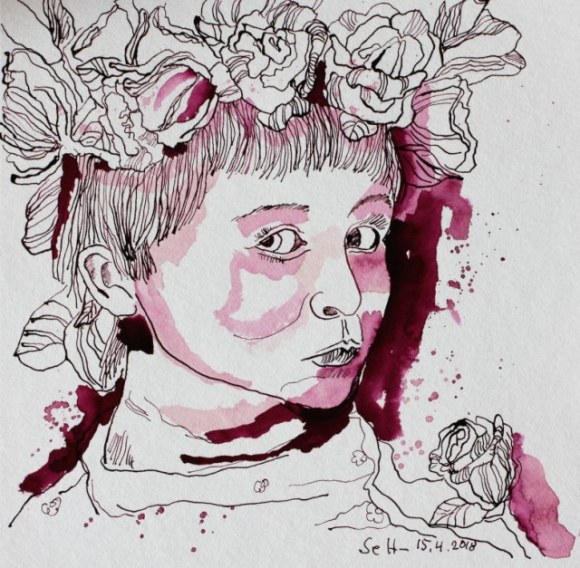
Mädchen mit Blumenkranz im Haar – Zeichnung von Susanne Haun

Susanne Haun's avatarSusanne Haun

Heute war ich einfach den ganzen Tag müde,aber wie ein kleines Mädchen wollte ich lieber Zeichnen als ins Bett gehen.

So sind die beiden heutigen Portraits von einem Mädchen mit Blumenkranz im Haar entstanden. Ich sehe in der Zeichnung das Modell vor mir und ich sehe auch mich und meine Trotzhaltung darin. So ist die Ähnlichkeit zu meinem ursprünglichen Modell verlorengegangen aber der Augenblick festgehalten wo ich als Frau über 50 mich wieder in ein trotziges kleines Mädchen verwandele.

Deshalb mag ich diese beiden Portraitzeichnungen besonders.

Mädchem mit Blumen im Haar - 25 x 25 cm - Tusche auf Hahnemuehle Burgund - Version 1 (c) Zeichnung von Susanne HaunMädchem mit Blumen im Haar – 25 x 25 cm – Tusche auf Hahnemuehle Burgund – Version 1 (c) Zeichnung von Susanne Haun
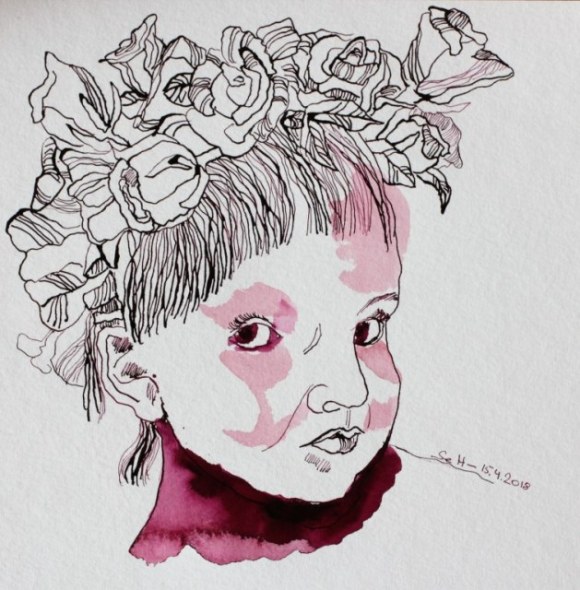
Mädchem mit Blumen im Haar - 25 x 25 cm - Tusche auf Hahnemuehle Burgund - Version 2 (c) Zeichnung von Susanne HaunMädchem mit Blumen im Haar – 25 x 25 cm – Tusche auf Hahnemuehle Burgund – Version 2 (c) Zeichnung von Susanne Haun
View original post

Categories
Uncategorized

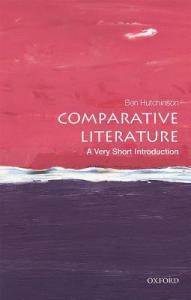
Comparative Literature, a Very Short Introduction, by Ben Hutchinson #BookReview

This sounds really thoughtful and interesting!

Lisa Hill's avatarANZ LitLovers LitBlog

I can’t think of a better way to explain the complexities of the term ‘comparative literature’ than to quote the blurb for this book:

Comparative Literature is both the past and the future of literary studies. Its history is intimately linked to the political upheavals of modernity: from colonial empire-building in the nineteenth century to the postcolonial culture wars of the twenty-first century, attempts at “comparison” have defined the international agenda of literature. But what is comparative literature? Ambitious readers looking to stretch themselves are usually intrigued by the concept, but uncertain of its implications. And rightly so, in many ways: even the professionals cannot agree on a single term, calling it comparative in English, compared in French, and comparing in German. The very term itself, when approached comparatively, opens up a Pandora’s box of cultural differences.

Yet this, in a nutshell, is the whole point of comparative literature. To…

View original post 1,088 more words

Categories
Uncategorized

Lady Bird (Film Review) – The Film That Should Have Won Best Picture

A really enjoyable film and an interesting review.

Categories
Uncategorized

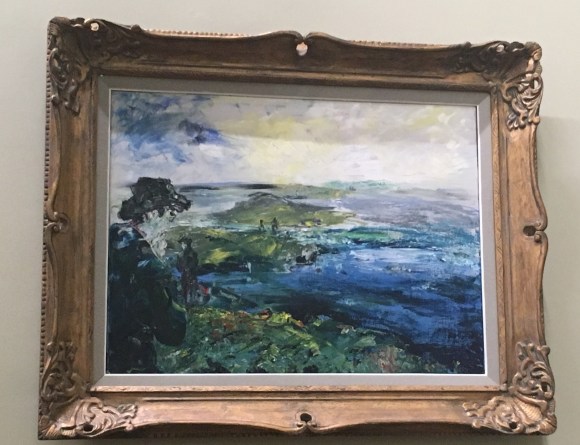
Jack B Yeats

ms6282's avatarDown by the Dougie

Having spent a good hour looking at the Expressionist paintings in the Emil Nolde exhibition at the National Gallery, I decided to go and have a look at some favourite paintings by the Irish artist Jack Butler Yeats in the Gallery’s permanent collection, who, over his career, developed an Expressionist style.

IMG_6144.jpgMany Ferries (1948)

Jack Butler Yeats was the brother of the famous poet, William Butler Yeats. He was born in London and spent his childhood between London, Dublin, and Sligo, eventually returning to live permanently in Ireland in 1910.

Jack began his artistic career, in the 1890s, as a black and white journalistic illustrator for various publications before eventually becoming a professional artist. He initially painted in watercolour, but about 1906 he began painting regularly in oil. His early paintings were rather conservative in style and, in my view, most of his paintings, although displaying a clear talent as…

View original post 227 more words

Categories
Uncategorized

Emil Nolde: Colour is Life at the NGI

Nolde’s racist views are totally unacceptable. He was a magnificent colourist and flower painter.

ms6282's avatarDown by the Dougie

IMG_6156.jpg

A little while ago I developed an interest in German Expressionist art and am quite keen to see and find out more about it. So when I was in Dublin last Sunday afternoon, I decided to call into the National Gallery of Ireland to take a look at their latest temporary exhibition, which is devoted to the work of Emil Nolde.

He was born as Emil Hansen near the village of Nolde  in the PrussianDuchy of Schleswig, close to Denmark (and which had been the area disputed by Denmark and Germany in the mid 19th Century resulting in a war between the two countries). He changed his name to that of his home town, for reasons which probably reflect his political views (more of which later).

In 1906, he joined Die Brücke (The Bridge), the group of Expressionist artists based Dresden, but left after a year. He was…

View original post 559 more words

Categories
Uncategorized

Ferdinand Hodler, Transition, 1886-94

More about the fascinating and influential Hodler.

hoakley's avatarThe Eclectic Light Company

The first article in my series to commemorate the centenary of the death of the Swiss artist Ferdinand Hodler (1853–1918) showed some of his realist paintings from the early years of his career. During the late 1880s, he started to develop his mature style, a form of Symbolism which he referred to as Parallelism.

It was also a period of great change in his personal life. In 1887, Hodler and his partner Augustine Dupin (1852-1909) had a son. Two years later, Hodler married Bertha Stucki, but they divorced in 1891. He met his future second wife, Berthe Jacques (1868-1957), in 1894. All three of his partners modelled for his paintings, although not, as far as I can tell, simultaneously.

hodlerheleneweigle Ferdinand Hodler (1853–1918), Portrait of Hélène Weiglé (1888), oil on canvas, 88.5 × 69.5 cm, Städelsches Kunstinstitut und Städtische Galerie, Frankfurt, Germany. Wikimedia Commons.

Hodler’s Portrait of Hélène Weiglé (1888) remains…

View original post 971 more words

Categories
Uncategorized

Byron

Interesting that Byron had Cornish antecedents and his daughter was a significant mathematician!

apolla13's avatarNames Throughout the Ages

Byron is an English surname derived from a place name meaning “place of the cow sheds”, either a locational name or an occupational name for someone who herded cows. It derives from Old English byrum via PIE root word.

Origin: Proto-Indo-European

e5978d711ac53bc50622d5f65d893d98Pinterest

Variants:

  • Byrom (English)

View original post

Categories
Uncategorized

Ferdinand Hodler, Early Realism, to 1885

A fascinating and hugely influential painter. Many thanks for this informative summary:-

hoakley's avatarThe Eclectic Light Company

Next month, I will be commemorating here the centenary of the death of the great Swiss artist Ferdinand Hodler (1853–1918). He is not a painter that I have known well, and I can’t recall seeing any of his paintings in the flesh. Researching his life and work has been revelatory, though, and in the coming weeks I’d like to share with you what I have found out. I hope that you too will come to appreciate the work of one of the period’s most versatile and innovative painters.

Hodler was born the first child of a poor, working family in Bern, Switzerland. His father, a carpenter, died when Hodler was seven, but the following year his mother married a second time, to a decorative painter who painted stage scenery, etc. Tuberculosis was rife in the poor quarter of the city where they lived, and Hodler saw his brothers and sisters…

View original post 926 more words