Another poem illustrated by Hopper

 Edward Hopper: Nighthawks (1942)
Das Leuchten der großen Stadt
Ich stehe am Balkon
Dort, wo ich wohn,
Ich bin allein
Und will’s nicht sein.
Das Licht der großen Stadt,
Es macht nicht satt,
Es leuchtet nur
In Unnatur.
Es leuchtet jede Nacht.
Ein U-Bahn-Schacht
Verbindet die
Peripherie.
Die Vorstadt über ihm
Bleibt anonym,
Hat kein Gesicht,
Nur dieses Licht.
Ich starre nachts darauf,
Es löst mich auf,
Ich seh‘s unbrav
Auch noch im Schlaf.
Zu ihm kehr ich zurück
Mit müdem Blick,
Der Raum ist leer,
Mich gibt’s nicht mehr.
©Wolfregen


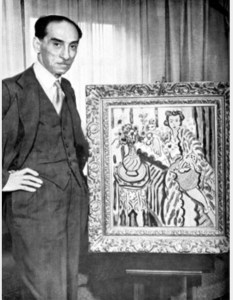 Paul Rosenberg The exhibition entitled ’21 rue La Boétie’ is based on the book of the same name by Anne Sinclair, journalist and granddaughter of Rosenberg and it brings together over 60 masterpieces associated with Rosenberg many of which were shown in his gallery at 21 rue la Boétie. Rosenberg had a remarkable eye and passion for art and as a result he represented many of the avant garde artists of his day such as Picasso, Matisse, Léger, Braque with many of whom he developed close friendships . This was particularly true of Picasso who actually moved into 23 rue la Boétie in 1918 which allowed Rosenberg to be the first to see many…


 penwithlit