Categories
Uncategorized

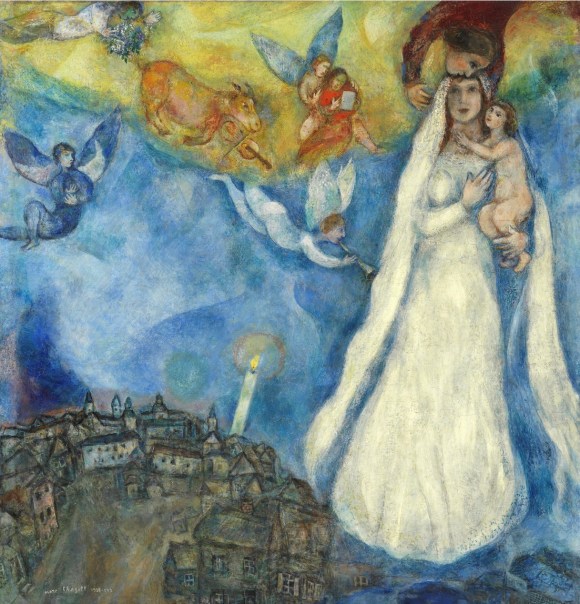
Marc Chagall: The Madonna of the Village (1938-42)

Chagall with his lovely astounding blue!

At Sunnyside - Where Truth and Beauty Meet's avatarAt Sunnyside - Where Truth and Beauty Meet

Marc Chagall, The Madonna of the Village, 1938 – 1942, Oil on canvas, 102.5 x 98 cm ,Museo Nacional Thyssen-Bornemisza, Madrid

“During the years of the Jewish holocaust, Chagall painted numerous religious scenes taken from the Christian tradition…In 1940, while living temporarily in the Provencal town of Gordes, to which he had fled to escape the menacing Nazi advance through Holland and Belgium towards France, he continued working on this ambitious canvas and repainted some of the areas that were already sketched. The painting was not entirely completed until 1942, while the painter was staying in New York.

The painting in its final state shows a Madonna holding the Child in her arms, surrounded by angels singing and playing music accompanied by a flying cow with a violin. The scene is set near a small village. The Madonna, rendered on a monumental scale and wearing a bridal gown…

View original post 23 more words
Categories
Uncategorized

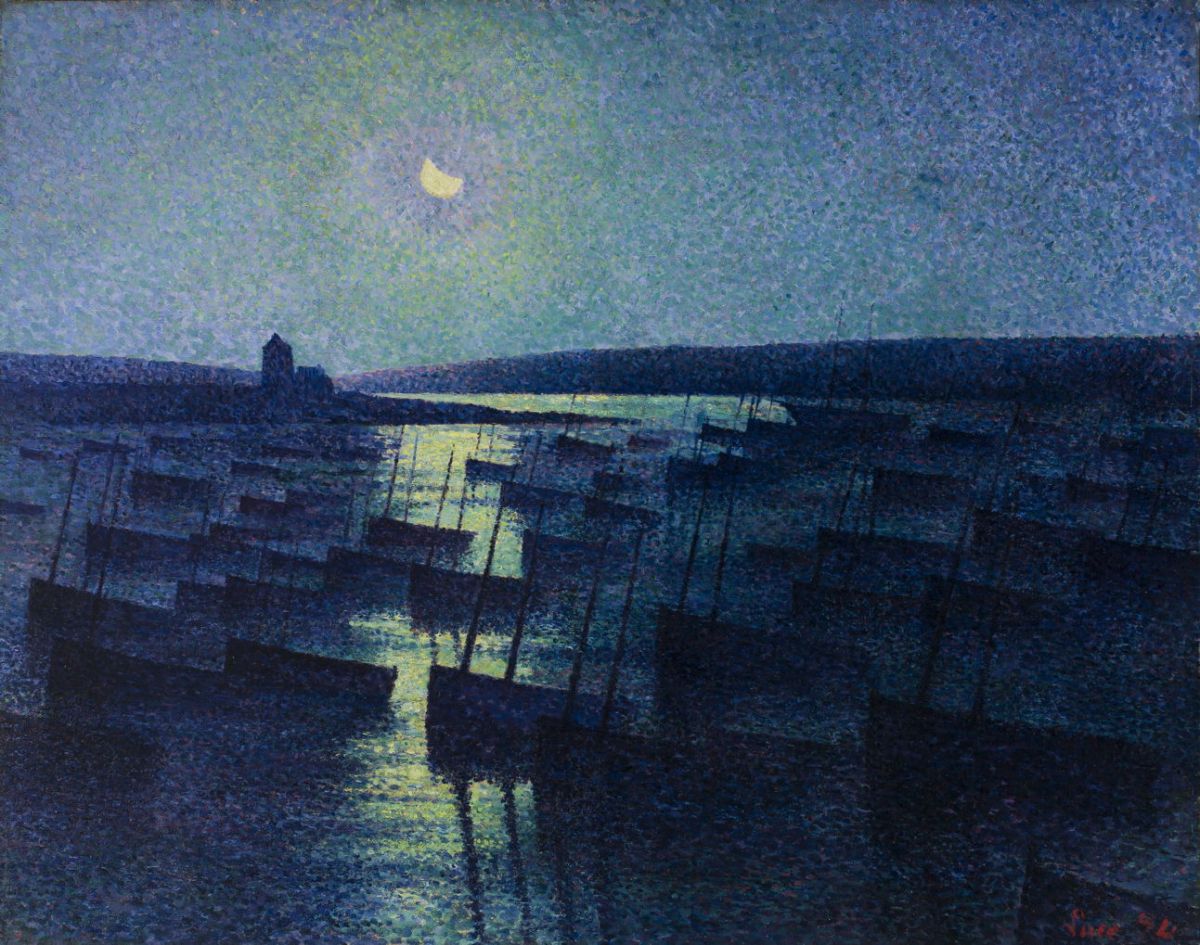
A Weekend with Maximilien Luce’s ‘muscular’ paintings 1

Luce is probably much less well known than Signac but theree is a sort of classical elegance which is affecting.

hoakley's avatarThe Eclectic Light Company

This weekend I’m celebrating the life and art of one France’s least-known and most prolific Neo-Impressionists, Maximilien-Jules-Constant Luce (1858-1941). His paintings are in galleries and museums around the world: the Musée d’Orsay holds quite a few of his very best, but seldom do they appear in special exhibitions, or in prominent places. In his long lifetime, he painted more than 2,000 works in oils, rather more than Cézanne, and was an accomplished Impressionist, Neo-Impressionist, and Post-Impressionist. But memory of him has faded badly.

He was born to a working class family in Paris, and started his apprenticeship to a wood engraver in 1872, just after the Franco-Prussian War (1870-1). This fired his enthusiasm for art, and he attended evening school, first in drawing, then starting to paint in oils. In 1876 he moved to work for Eugène Froment, who made woodcut prints for a wider range of clients. He pursued…

View original post 1,099 more words

Categories
Uncategorized

28 by Jeniya Mard

This reads so heartfelt that I feel it’s a great poem.

Tiffany Renee Harmon's avatarEphemeral Elegies

an elegy for my sister


You were seven when I was born, 

and they say you lived 

the lives of many people

and in under thirty years. 

you experienced millions

of smiles, laughs, and tears

woven into ten thousand, 

three hundred and twenty-one days

of love.

and for the rest of my days 

I promise to live by your love 

knowing that you are at peace

even if my heart will never know

the feeling of being one piece again

as for every sunrise and set I see,

I know that in seven years, 

I will be ten years older 

than you will ever be. 


Photo by Brett Jordan on Pexels.com

About the Poet:

Jeniya Mard is a writer from Metro Detroit, Michigan, and has a passion for writing fiction and poetry. She has been writing for years and believes in the good in everyone. She has had her writing…

View original post 12 more words

Categories
Uncategorized

Edgar Degas: Dancers (1896)

At Sunnyside - Where Truth and Beauty Meet's avatarAt Sunnyside - Where Truth and Beauty Meet

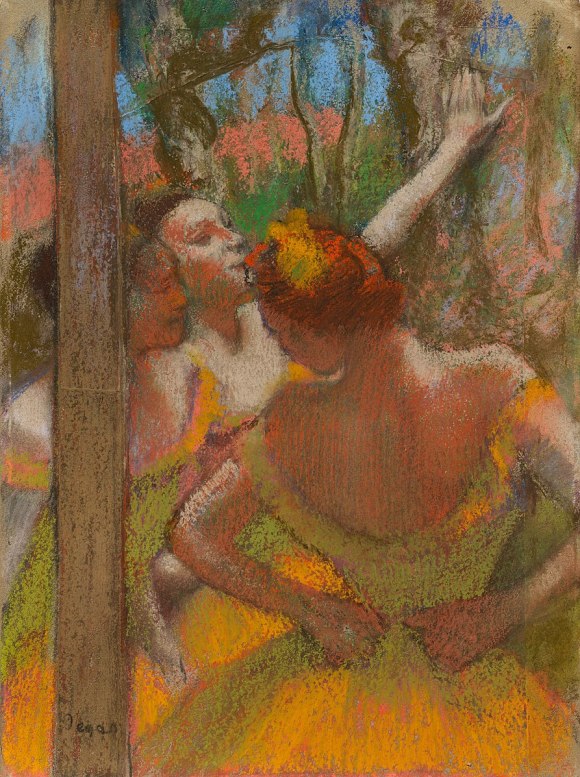
Edgar Degas, (French, 1834–1917), Dancers, 1896, Pastel with charcoal on tracing paper mounted on paper and backed with gray board, Sheet: 55.7 x 41.4 cm (21 15/16 x 16 5/16 in.), Gift of Mr. and Mrs. J. H. Wade 1916.1043, Cleveland Museum of Art, Image Source: wikimedia

“Degas depicted the ballet in more than 1,000 paintings, prints, pastels, and sculptures. He preferred private, offstage moments to glamorous curtain calls or artfully constructed compositions. Here, three dancers stretch together in the wings, unaware of the viewer’s presence. Powdery layers of yellow, orange, and pink pastel create a rough surface characteristic of Degas’s late work in the medium. He invented special techniques that allowed him to build layer upon layer of color with varying degrees of opacity and transparency. This pastel’s rich surface and intense, vibrating palette is the result of such innovative methods.”

Cleveland Museum of Art

Thanks for Visiting…

View original post 2 more words

Categories
Uncategorized

Book review: The Endless Steppe by Esther Hautzig (Lithuania, 1930-2009)

It makes me pause and think how to approach historical topics like these to adolescents who themselves are going through stressful times. “When Hitler stole my pink rabbit” is another book that comes to mind.

imogen's avatarImogen is Reading and Watching the World: On Books, Film, Art & More

I hadn’t come across this classic of children’s literature until my son was assigned it as a year 8 (age 12-13) text. Published in 1968, The Endless Steppe is a memoir of Esther Hautzig’s childhood experiences during WWII, when she and her family were exiled to Siberia.

Hautzig was born in what is now Vilnius, Lithuania (then part of Poland). She had a comfortable early childhood in a large, upper middle-class, happy Jewish family on a tree-lined avenue and, as she recalls later, her wardrobe was bursting with pretty dresses.

In 1941 Vilnius was annexed by Soviet troops, and Hautzig was transported to exile in Siberia, along with her parents and paternal grandparents, leaving behind her extended family of aunts, uncles and cousins – a fact that would haunt the family thereafter.

After a gruelling train journey in cattle trucks, and months imprisoned in a labour camp as ‘capitalists’, amnesty…

View original post 263 more words

Categories
Uncategorized

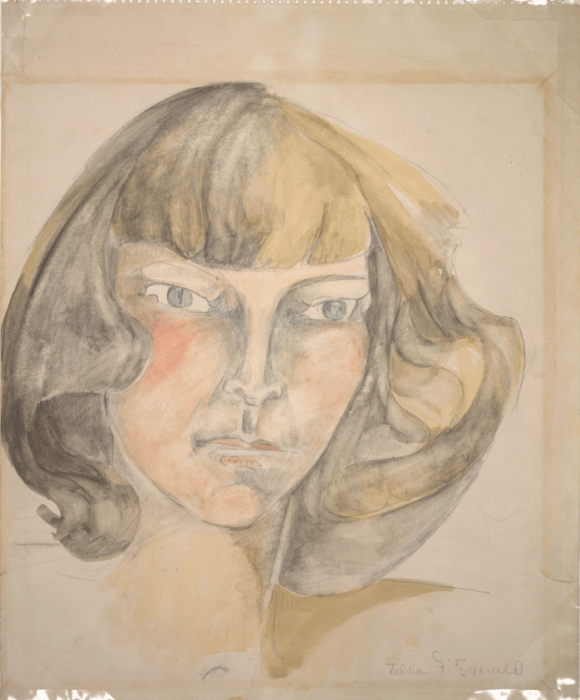
Autoportrait Day 320~ Zelda Fitzgerald

Categories
Uncategorized

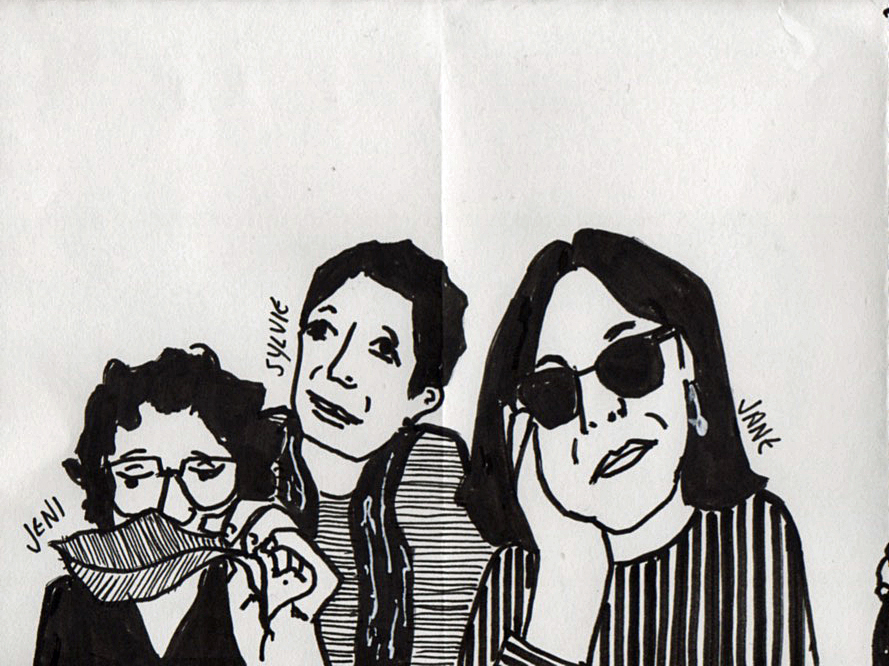
Pencils4Tea #3

Getting to know the characters!

patgaig's avatarreclinerart

The hour of sketching just flew by. Somehow it is simultaneously intense and relaxing. Addictive.

Back and front covers:

Pages 1,2:

Pages 3,4:

Pages 5,6:

Book structure:

Blick sulphite paper, Zebra, Fudenosuke and Pitt Brush Pens, white Gelly Roll pen

View original post

Categories
Uncategorized

Der Gewinn des Gewissens

This sounds interesting and significant too. Much to ponder.

wolframette2013's avatarTexte von Wolfram Ette

Schlechtes Gewissen ist schick geworden. Fast fangen wir an, es zu mögen. Warum das so ist? Weil es einem nützt. Man salviert sich dadurch von all den Dingen, die man verkehrt macht. Fliegen zum Beispiel. Ich muss ja, um meine beruflichen Verpflichtungen zu erfüllen und meine Karriere voranzutreiben. Oder, nachdem ich all das erledigt habe, auch mal in den Urlaub zu fahren. Wenn ich das alles mit ein paar Selbstvorwürfen mache, ist der Halbpart meiner Schuld schon bezahlt. Seufzend sage ich mit Heiner Müller: „Wir sind alle Komplizen“, oder mit Theodor W. Adorno: „Es gibt kein richtiges Leben im falschen“, und gewähre mir Ablass von praktischer Veränderung und der Ausnutzung der Spielräume, über die ich vielleicht doch verfüge. Das Wort „Ablass“ sagt: es ist ein religiöses Schema. Reue statt Buße, sich fleißig als Weintrinker bezichtigen, damit man einer sein kann, Ehrlichkeit als Lüge, der neue Twist der Doppelmoral…

View original post 58 more words

Categories
Uncategorized

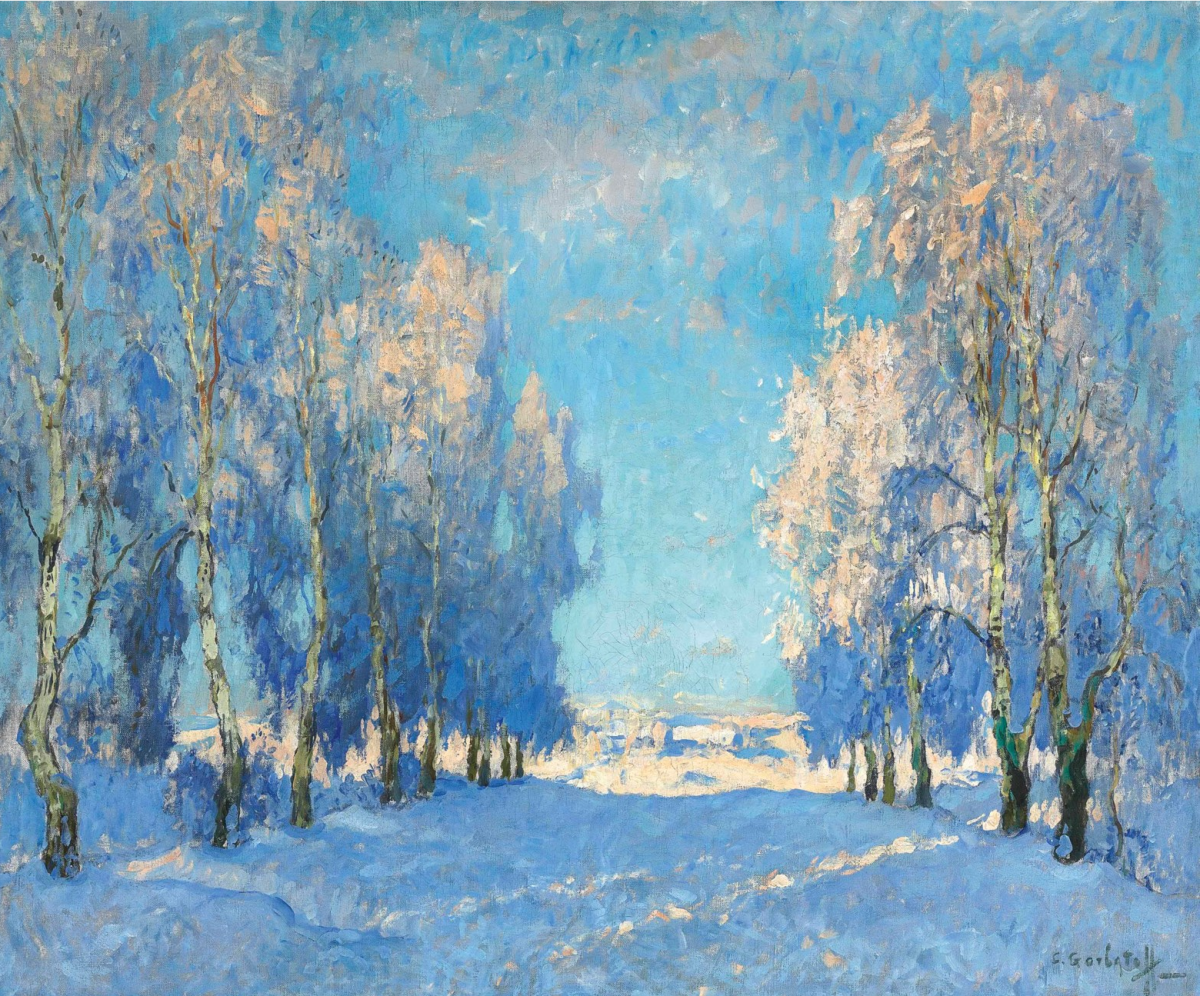
Konstantin Gorbatov: A Winter’s Day (1934)

Lovely….tempted to add cool!!!

At Sunnyside - Where Truth and Beauty Meet's avatarAt Sunnyside - Where Truth and Beauty Meet

Konstantin Gorbatov (1876-1945), A Winter’s Day, signed ‘C. Gorbatoff’ (lower right); further signed, inscribed and dated C. Gorbatoff/Wintertag/1934′ (on the reverse), oil on canvas, 29¾ x 35½ in. (75.5 x 90.2 cm.), Image Source: Christie’s

Read More

Konstantin Gorbatov at wikiwand

Konstantin Ivanovich Gorbatov | Artnet

See More

Tag: Konstantin Gorbatov At Sunnyside

Konstantin Gorbatov at wikimedia

Happy Friday! 🙂

~Sunnyside

View original post

Categories
Uncategorized

Sunset Lantern, Malaga, Spain