Poetic and romantic!
Categories
Poetic and romantic!
Fascinating- I see there has just emerged the film “Benediction” as well as a book on the history of the Sassoon family, “The Global Family”.
Does it matter? – losing your legs?
For people will always be kind,
And you need not show that you mind
When others come in after hunting
To gobble their muffins and eggs.
Does it matter? – losing your sight?
There’s such splendid work for the blind;
And people will always be kind,
As you sit on the terrace remembering
And turning your face to the light.
Do they matter-those dreams in the pit?
You can drink and forget and be glad,
And people won’t say that you’re mad;
For they know that you’ve fought for your country,
And no one will worry a bit.
Another poem from Sassoon designed to shock readers back home, more than anything else, I feel. Let’s start with the jaunty rhythm, the metre forcing you to sound jolly and cheerful as you read the poem aloud, even as the words themselves hint at…
View original post 362 more words
Brilliant and detailed review-excellent!
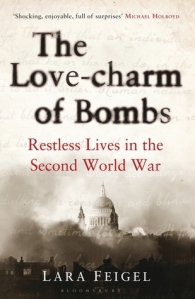 This book has a bizarre, somewhat tasteless title, but The Love-charm of Bombs, Restless Lives in the Second World War is an excellent chronicle of World War Two, seen through the eyes of five writers and their circles of friends and family. Elizabeth Bowen, Graham Greene, Rose Macaulay, Henry Yorke (a.k.a. Henry Green) and the Austrian Hilde Spiel were all prominent writers in London at the time, and their work is testimony to the mood of the time.
These writers, firefighting, ambulance-driving, patrolling the streets, were the successors of the soldier poets of the First World War […]. Like the poets in the trenches, Bowen, Greene, Macaulay and Yorke were participants rather than witnesses, risking death, night after night in defence of their city. The Second World War was a total war. No one escaped the danger and every Londoner was vulnerable. While the fighting in the First World War…
View original post 1,713 more words
……sadly makes me think of the gathering turbulence in Ukraine!
‘Good-morning; good-morning!’ the General said
When we met him last week on our way to the line.
Now the soldiers he smiled at are most of ’em dead,
And we’re cursing his staff for incompetent swine.
‘He’s a cheery old card,’ grunted Harry to Jack
As they slogged up to Arras with rifle and pack.
……
But he did for them both by his plan of attack.
If Wilfred Owen is ‘in your face’ through his use of graphic detail in many of his war poems, Siegfried Sassoon is often brutally out to shock by saying a different kind of unspeakable thing. We see it here in a very short but vicious poem which goes straight to the heart of an issue that historians still argue about today: the competence or incompetence of the high command, those who ran the war and took the decisions that led to…
View original post 357 more words
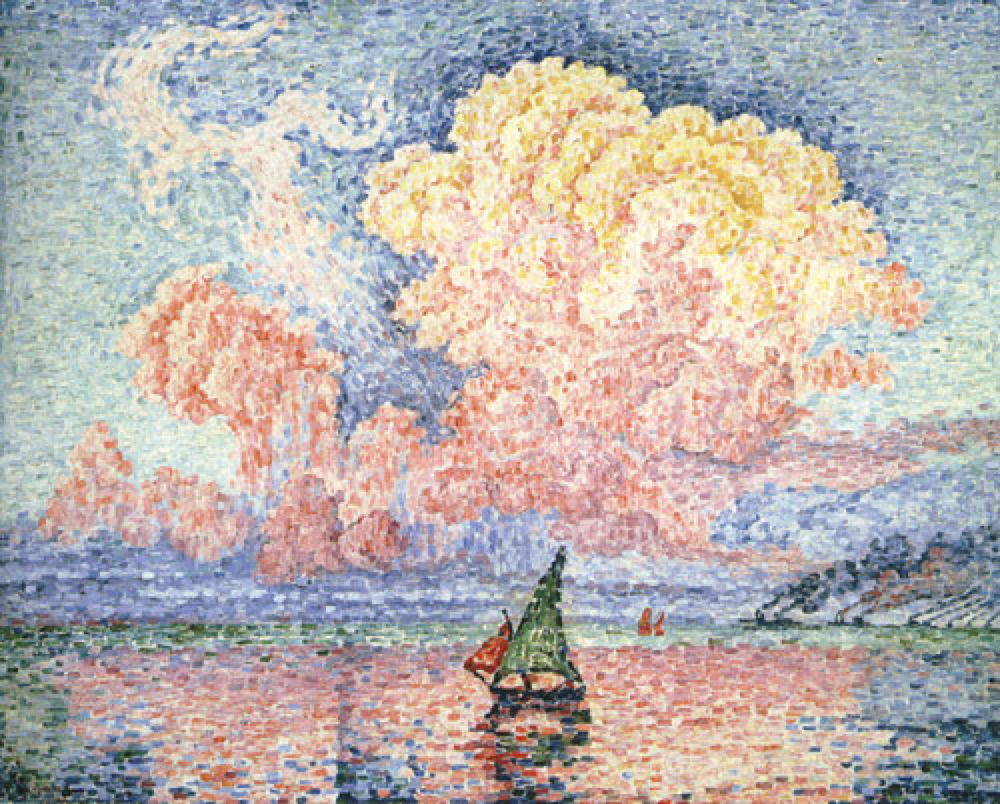
Such peaceful paintings….such terrible times.
After Paul Signac’s visit to Constantinople in 1907, the following February he travelled to Italy, where he toured Florence, Rome and other cities before returning to Venice in late March. He remained there for two months before going back to Saint-Tropez via Verona. In November, he cruised the coast from Antibes to Nice.
 Paul Signac (1863-1935), Venice. Customs House (Cachin 470) (1908), oil on canvas, 65 x 81 cm, Private collection. Wikimedia Commons.
He painted Venice. Customs House in 1908, following his return to the city. This reverses his previous compositions by placing the Customs House in the mid-ground, with masts and sails behind. This loses the depth and grandeur of those earlier works.
In April 1909, Signac visited London briefly, where he sketched some Turners in the National Gallery, and met Lucien Pissarro and Walter Sickert.
 Paul Signac (1863-1935), Avignon, Evening (The Papal Palace) (Cachin 481) (1909), oil on…
View original post 1,017 more words
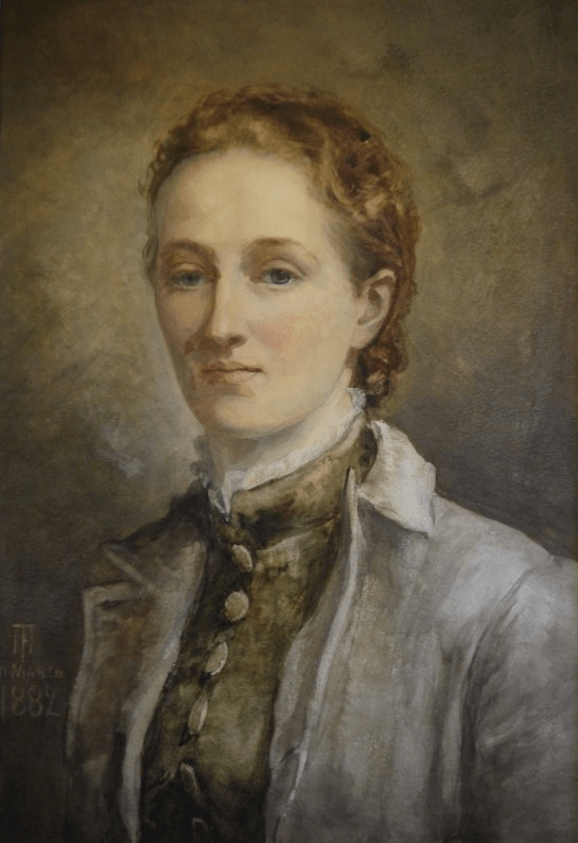
Self-Portrait, 1882 / Watercolor on paper / Watts Gallery, Compton, Surrey, UK
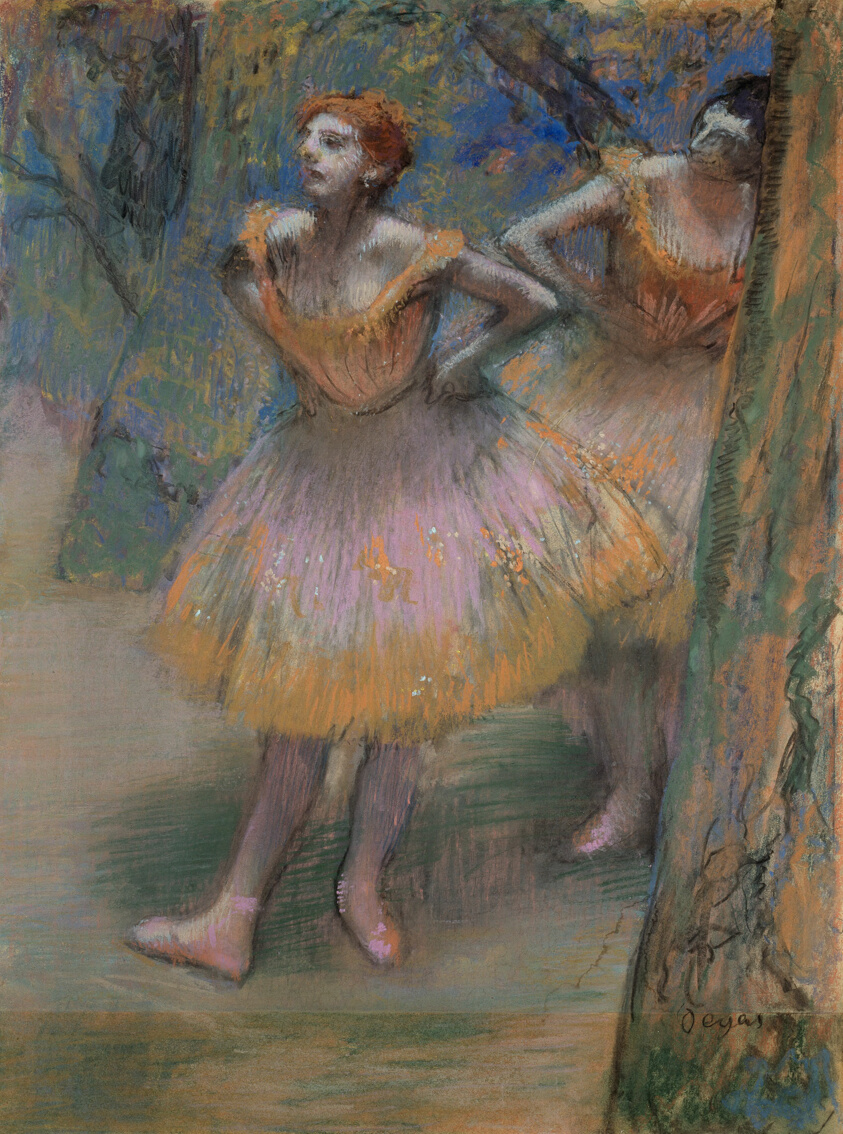

~Sunnyside


 penwithlit