Categories
Category: Uncategorized

I very much agree with your provisional diagnosis of some degree of autism. I found her world seemed both narrow and claustrophobic. Nevertheless there seems some celebration of her determination to live according to her own precepts. Interesting!!

Translated from the Japanese by Ginny Tapley
FAR EAST, SOUTH ASIA AND AUSTRALASIA
Convenience Store Woman (first published in 2016) is a quick and deceptively unchallenging read that reminded me of a Japanese Eleanor Oliphant. It has a straightforward, flowing style, which is very easy to engage with. I first read and reviewed this book in mid-2020, and I’m reposting as part of ‘Japanuary’ – my month of engagement with different aspects of Japanese culture.
Keiko, the narrator, is an outsider who has learnt to mask her true self (or lack of feeling of self) in order to fit in with society’s expectations. For almost two decades, since finishing her studies, she has worked part-time in a convenience store, mimicking the cadences and behaviour of other workers, fulfilling every stricture of the employees’ handbook and living according to a strict routine, heating food from the store for her evening…
View original post 211 more words
Categories
Strange Palm Trees

I finished the Ramat Hanadiv spread today, drawing the second page from photos, as I had a few moments when I could sort of feel my hands.
I wish I knew what these palm trees were called. They looked amazing.


Categories
Magical Tree, Lithuania
Categories
Medieval, Sarlat, France
Fascinating and quite similar to paintings of here in Cornwall.


Who Is Mela Muter?
Mela Muter is the pseudonym used by Maria Melania Mutermilch (1876 – 1967), the first professional Jewish painter in Poland. Although she lived most of her life in France, she was born Maria Melania Kingsland in Warsaw, Poland,daughter of a wealthy Jewish merchant.
After her marriage, Muter moved from Poland to Paris in 1901, and she continued her studies at the Académie Colarossi and the Académie de la Grande Chaumière. In 1902, she began exhibiting her work at the Paris Salon and took part in other exhibitions, both in Paris and Poland. Muter was a popular portrait painter and occasional magazine illustrator.
Muter was one of the first members of the group of artists known as the School of…
View original post 456 more words
Categories
St Andrew-by-the-Wardrobe EC4
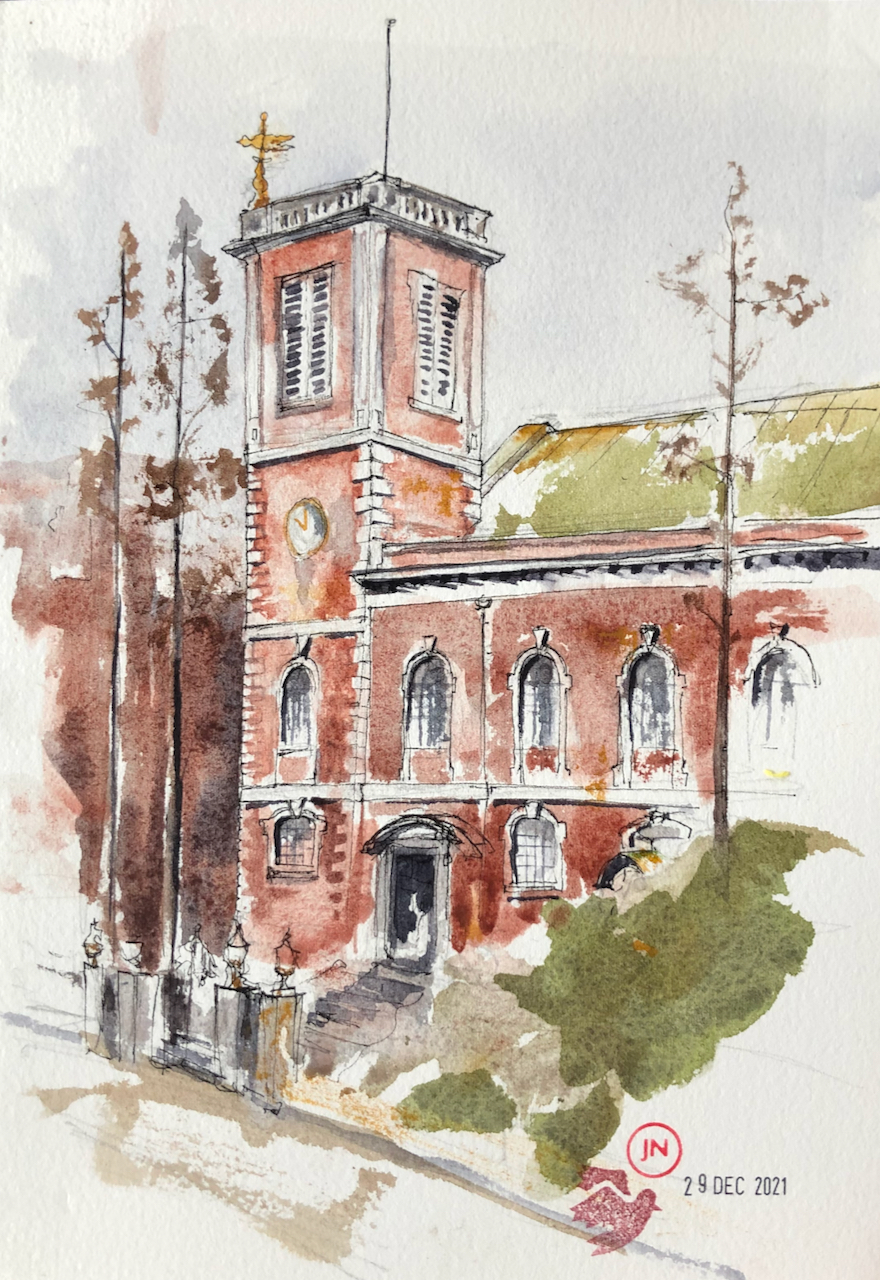
Looks brilliant-your sketch. I wonder if this Church is visible from the Tate. Have you read “Mudlarking” which is very entertaining on the history of the Thames and objects contained therein?

This lovely church is on Queen Victoria Street, a busy thoroughfare in the City of London.
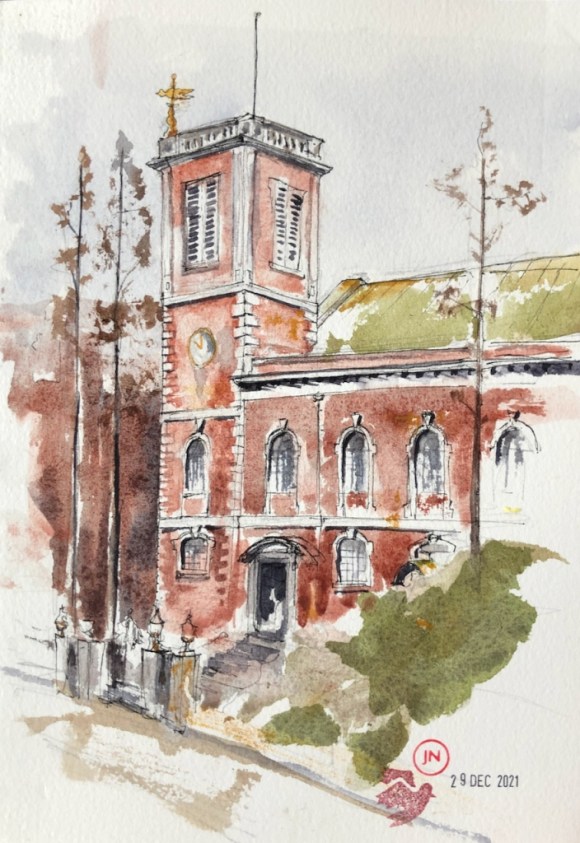
This church was first recorded in 1244, destroyed in the fire of London 1666, rebuilt by Christopher Wren in 1685-93, then destroyed again in the 1939-45 conflict, rebuilt again, and re-hallowed in 1961. It is now closed for refurbishment, and due to reopen in May 2022. When it re-opens it will become the London Headquarters of the Egyptian Coptic Orthodox Church, this use being shared with the Anglican parish activities. I read this news on the church website.
Note the magnificent trees! These trees should feature on any London Tree Tour. I think they are larches but I am not an expert.
Yesterday, London was quiet. I sketched the church from podium level on Baynard House on…
View original post 162 more words
A fascinating period in Russian art- lovely collage.

Nadezhda Andreevna Udaltsova (December 29, 1885-January 25, 1961) was a Russian avant-garde painter and educator. Udaltsova was affiliated with Cubism and later with Suprematism.
Biography on Wikipedia: https://en.wikipedia.org/wiki/Nadezhda_Udaltsova

At the Piano by Nadeshda Udaltsova
1915 / Oil on canvas / 42″x35-1/16″ / Yale University Art Gallery, New Haven, CT
Nadeshda Udaltsova on Artnet: http://www.artnet.com/artists/nadezhda-andreevna-udaltsova/
Further reading:
https://www.museothyssen.org/en/collection/artists/udaltsova-nadeshda
https://monoskop.org/Nadezhda_Udaltsova
https://awarewomenartists.com/en/artiste/nadejda-andreevna-oudaltsova/

Have been reading Christina Rosetti’s verse recently. I was struck by how her perceptions and attitudes were influenced by having been immigrants from Italy. Must give this more thought- lovely portrait.
Click for Enlarged Detail
Slideshow best viewed At Sunnyside
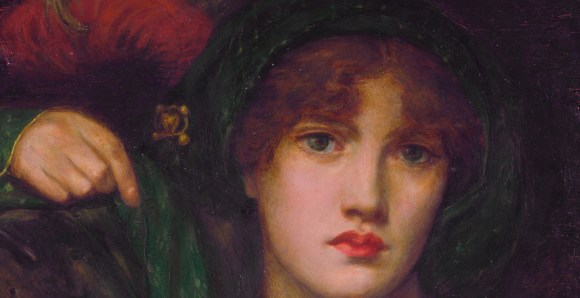


Image Source:
My Lady Greensleeves by Dante Gabriel Rossetti, [Public domain], Source: Wikimedia
Thanks for Visiting 🙂
~Sunnyside


Ralph Fiennes in Four Quartets
‘In my beginning is my end. […] In my end is my beginning.’
From ‘Burnt Norton’, Four Quartets, by T.S. Eliot
So begins (and ends) ‘East Coker’, the second of the four poems which make up T.S. Eliot’s Four Quartets, which now receives a major solo rendition in the West End, self-directed by Ralph Fiennes. Widely considered Eliot’s last great poetic work, it is a text deeply concerned with time, beyond the limitations of human perception – influenced by traditions and texts ranging from the Pre-Socratics in Ancient Greece to Hinduism, Julian of Norwich and his own ‘anglo-catholic’ beliefs (as he self-described, without the customary capitalisation, in 1929).
Eliot writes with an after-dinner wit and a focused philosophical seriousness all at once, which is dryly conveyed by Fiennes’ manner, fluctuating between offhand and earnestly supplicatory at a moment’s notice. Lines such as ‘You…
View original post 1,286 more words
 penwithlit
