In the fifties, there were no flowers in hanging baskets or even in window boxes and the main smell downlong was of fish and tarred nets, On the other hand there were houses built upon greenstone masses where you might well find a profusion of sea pinks in clumps. Heading along Back Road West towards the Digey, there were many village shops, including general grocers like Georgie Wedge’s at the top of Bethesda Hill, where everything from sweets to biscuits were sold out of glass topped tin boxes and placed in small neat paper bags. There was another grocers, Roucefield’s which did a smart trade in St Eia street, where many folk in downlong had celebrated the Coronation, beneath festoons of flags in red , white and blue. The fare on this occasion consisted of saffron buns and bottles of corona served on long trestle tables. There was also a wool shop, at the end of Island Road where women discussed knitting patterns for winter jerseys or Fair Isle jumpers.
At the top of Fish Street the gentle and well spoken, Mrs Laposta ran a busy and popular fruit and vegetable stores just opposite Couch’s works which at this time employed more than 50 workers making parts like buoyancy trimmers for amphibious vehicles for the British Army on the Rhine. Two further venues in Back Road West were particularly intriguing. Further along before the Mariner’s Church, the house where pilchards were marinated in fish spice, vinegar and bay leaves which was accessed at the top of a steep staircase. It cost just a few shillings and a suitably large dish for a dozen had to be left, a few days before. Even more interesting for youngsters on a Saturday morning visit was the Laity Museum. This was crammed with models of tea clippers and Chinese junks, scrimshaw, and intricate furniture and dark sea chests inlaid with mother of pearl. Redolent in atmosphere of the clipper trade with the Far East, from jute to silk, spices and calico, there were contemplative jade Buddhas and several examples of fierce black Japanese armour. Further information, histories of the sea and tales of the Orient were liberally supplied by the ancient mariner who was the proud curator at this period of time.
The days leading up to Christmas are associated in my memory with a series of various festivals and events from Guise Dancing to Fair Mo and then Christmas itself. This too was soon followed by the scarlet coated and spectacular grandeur of the Western Hunt during St Ives Feast. The Guise Dancing was ominous and noisy; it seemed to myself-perhaps a timid child, with masked figures, lanterns and loudly beating drums. It was still commonly performed until the mid fifties but seemed then to have died out with the corresponding popularity of television. However, by Fair Mo, a Church based fair situated in the Guildhall and taking place at the end of November it was by then always clear that the Christmas season would soon be upon us. It is described now on the History of St Ives website, as,”… a less rowdy tradition, celebrated just before Christmas. This ancient ‘pig fair’ reflects the long-standing custom of keeping pigs in virtually every Downlong yard. Today local ladies dress in traditional costumes and hold their fair, or market, in the Guildhall.”
Around Christmas Eve, or a day or two before, everyone in downlong had been serenaded by the agreeable euphony of perambulating choirs from the Primitive and the other MethodistChurches. These were accompanied by a clarinet or two and everyone emerged to the truly blissful sounds of Thomas Merritt’s Carols, before each the verses were briefly intoned and led by the choirmaster. “Hark the glad sound” resonated and reverberated against the cottages and along the cobbled streets with such utterly superb harmony that Christmas, together with its peaceful promise, seemed as imminent as the arrival of “the Saviour promised long.” The effect was utterly magical and glorious; recalling it again makes the hairs on my neck stand up on end. So that neighbours emerging from their doorways were thoroughly receptive to the “Tidings of great joy” that Gabriel brought “to you and all mankind.” After the melodic repetitions of Cornish and other carols people returned to their houses prepared by such benedictions to enjoy Christmas Day itself.
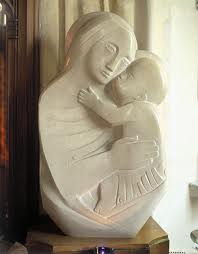
Hepworth
Most pubs and inns similarly resounded with affirmative renditions of the “Old Time Religion.” The Cock Robin choirs provided youngsters with the opportunity for mild horseplay- as evidenced the next day by seeing a punt or skiff hoisted on to the roof of the fisherman’s lodge. Few would have ventured as far afield as Mousehole, for either Tom Bowcock’s Eve or even Starry Gazey Pie. There was absolutely no rowdy celebration on New Year’s Eve but grand and elegant Scottish or Hogmanay dances, attended largely by the professional classes at such grand venues as the Portminster Hotel or Kenegie Manor in Gulval.
Preparations for Christmas in the home were concerned with food, presents and decorations. There was an early ecological arrangement whereby potato skins were placed in a special bin and collected each week by the ‘pig man’. The result at Christmas was that every house received a good sized pork joint. The turkey-some in the family might have had goose -was paid for on a card signed for, again on a weekly basis, at the butchers over the autumn months leading up to Christmas. Pickled onions were prepared over a longer period and stored with peppercorns and tiny red chillies on a shelf above the stairway on the ground floor. Military pickle and piccalilli were purchased to go with the tongue, pulled together with skilvin (quality string from the Fisherman’s Co-op) and pressed in a saucepan, with a weighted lid-usually a smoothing iron. Salt beef was also prepared with other cold meats for suppers over the Christmas period.
Patrick Heron
The house was extra warm from the heat generated from the kitchen and if it was windy in the wrong direction, especially before a cowl was fitted, smoke from the coal fire would fill the sitting room. The resulting “smeech” would deposit smoke particles of varying sizes spoiling some of the coloured paper decorations in the sitting room. After saffron stamens had been floated in a small bowl to extract the lovely liquid yellow concoction, bowls both of dough and cake mixture were placed by the fireside, covered by tea towels and left to rise. Cakes purchased especially at Christmas included batten burg, chocolate log and walnut. Macaroons, coconut pyramids were prepared on rice paper as well as congress tarts. The one cookery book –the one which probably came with the oven- were referred to on an annual basis. Reference was made to on one or other well thumbed pages.
The Christmas tree was always a holly tree and the large fairy light bulbs were checked and replacements inserted into and the holders, some of which were in small copper lanterns my father had made and into which rice paper was inserted to diffuse the light. Embroidery thread was cut into lengths and tied on to the baubles or shiny things. The extra demand meant that the electricity meter ‘went’ more frequently and had to be fed and wound with two shilling pieces that were of course known as florins. This process was often accompanied by the question, “Where was Moses when the lights went out?” There seemed to be much to do in those days leading up to Christmas Day and my father might describe how in the 1920s he and my uncle would mostly just have oranges, some wrapped in silver paper and walnuts and brazil nuts as the main fillers in their Christmas stockings.
After Christmas dinner, the turkey which was taken upstairs afterwards into the preservative cool of the so-called small bedroom, borne on the large appointed Victorian ornate and crazed platter. It was carved for suppers and other dinners over the next few days. Nobody could quite get through all the cakes or biscuits, so my father took it, as a snack, with his thermos flask of tea to the factory where he worked until about the middle of March. Apart from Sherry and usually Port – there might be a bottle of each- there was little in the way of drink until white wine, in the form of Blue Nun became a favourite with my mother in the seventies. On reflection much of the fun in the celebration of Christmas was probably also a recovery from the tough period during the war when my parents had travelled around air stations. From Filton in Bristol, where they both worked and had been bombed, they journeyed to Hull and Girvan in Scotland and other places. Housing shortages, especially in Cornwall had to be endured and the severe economic pressures of the Cripps austerity period had also just ended.
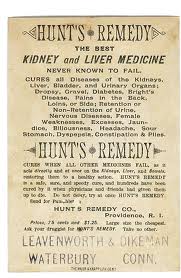
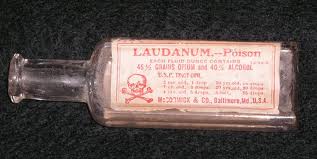
Ben Batten and Mary Quick have both referred to various home remedies used when calling the doctor might have been expensive. For many purposes a kaolin poultice was a frequent resort, as was various sorts of herbal tea or for sore throats honey and lemon was a simple palliative. Looking through copies of The Cornishman from the late 1920s an impressive number of remedies were advertised as being on offer:-
1) Women who are tired out
-How to regain lost vitality for women who feel tired out, nervy and overwrought, and suffers from headaches and backaches.
Try Dr Williams’ pink pills –of all chemists 3/- a box
2) Clarke’s Blood Mixture
“Just as good for abscesses, ulcers, bad legs, inflamed wounds, swollen glands, haemorrhoids, also rheumatism and gout- all of which are signs of blood impurities.
3) Swan’s Oxygen Therapy, Alperton, Penzance
Inhalation therapy for asthma, tuberculosis and pneumonia
Each copy of the newspaper would carry around five of such adverts, some large but few efficacious.
Had medical science a great deal to offer? As the CountyMOH report of 1933 shows the Women’s Hospital in Redruth was busy-some due to unsanitary home conditions- and some areas of the county, like Sennen, had no midwife coverage of any kind. Puerperal fever as it was termed had not been eradicated although the work of Oliver Wendell Holmes, the Boston Physician with literary leanings, as far back as 1843 had shown the risk of physicians carrying infections from one infected patient to others. Whilst this was recognised, effective treatment for the condition depended upon the development of antibiotics. It was only in 1936 that Colebrook’s research was reported in the Lancet about the effectiveness of sulfa drug on a condition that was more lethal than pneumonia. They also worked on meningococcal meningitis so that the death rates for such conditions started to fall after 1940.
Eric Kemp mentions in ‘We want to speak of Schooldays’, that because his mother lost a sister, who died soon after she was born in St Ives, he comments, “…they decided that when I came along, they’d go up to London, and be born in a proper hospital.”
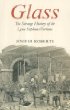
In this panoramic view of two Cornish families spanning two centuries all sorts of characters make an appearance. Not only are we educated in the ambience of English Merchants in Portugal but people as diverse as Southey, William M.Thackery, John Lemon and Canning, to mention but a few, all make an appearance. It begins by relating the making of a fortune by William Stephens, grandson of the Vicar of Menheniott and an enterprising genius. Her is the story of a merchant who becomes a manufacturer of glass.
William was educated at Exeter Free Grammar School, having left the area near Saltash, where he grew up. He went on to serve on the Lisbon packets upon arrival in Portugal became involved with the intrigues of Carvahlo, the Marquis of Pombal. He was next to witness the destruction of Lisbon by the great earthquake in 1755. As Jenifer Roberts interestingly points out, high waves from the latter were still above 8 foot when they made boats in St Ives rise more than eight feet. Then William opened a glass factory in Marinha Grande and securing exemption from taxes, charmed princes and queens so as to build a fabulous fortune.
The profits from the Stephens fortune passed also into the hands of their Lyne relations also living in both Portugal and Cornwall. The author outlines the family history, which involves wars and rebellions and diverting interludes. Eventually some of the fortune ends up in the hands of a feisty French ballerina and into the hands of various lawyers settling claims upon it. This is a splendid tale, well written and for those who find truth stranger than fiction, a great historical and biographical account.
Glass- The Strange History of the Lyne Stephens Fortune
Lute players were highly prized musicians in this period. Their significance is perhaps illustrated by the fact that ”Il Divino”, a Lute player at the French Court, was the second highest paid member of the French Court. The French court itself often employed instrumentalists who were familiar with innovations currently being made in Italy. Players of the lute, harpsichord and violin were all highly prized for their services at weddings, festivals and feasts. Besides this type of popular music, which was often the subject of adaptation and improvisation, a more aesthetic variety of what might be termed art music was performed in the richer, grander houses of Lanhydrock, Trerice and Cothele.
Lutenists who developed their skills in Cornwall, like Charles Farneby, were drawn to London as is evidenced by the fact that they were, at the end of their days, buried there. It appears that children acquired knowledge of the lute, an expensive instrument which included its strings made from the small intestine of sheep, shipped from Venice, either at school or from private tutors. Their instruction was frequently passed on to children who in turn instructed servants so that they might entertain on a regular basis.
In 1978 a book of lute music was discovered at Lanhydrock which Brian had photocopied at a local solicitor’s office and has now been published as the Robartes Lute Book, 1654-1668 and contains pieces for the French lute in D minor tuning / with an introductory study by Robert Spencer. In general early C17 pieces were extravert in style. Later in the century the French influence of Queen Henrietta Maria showed itself in a livelier, more elegant manner as was illustrated by the performance of “La Maribelle”, a piece which gave some insight into the ambience of courtly refinement. A French painting of James Robartes, shows him fashionably depicted with his Lute at Lanhydrock. As the century moved forwards, the taste for the more complex and plangent tones of Dowland and pieces like “Merry Melancholy”, which Brian performed became more prevalent.
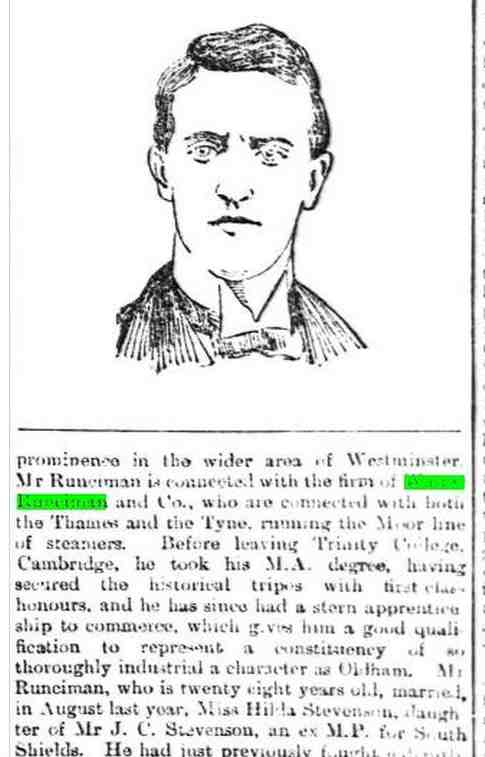
After the years of slump and depression following the General Strike, life in St Ives continued to be hard for many men and women. Morale was maintained, despite unemployment, by the help of charismatic doctors. These included the splendid Dr Matthew, who had worked to develop the St John Ambulance Brigade. Others were no doubt sustained by their beliefs supported by priests and preachers-many of course non-conformist. Runciman himself was a confessed Methodists, indeed his coastguard grandfather was a stalwart impressed Metodist having originally been Presbyterian (http://www.guernsey.net/~sgibbs/runciman/wr-1810.html) . Incidentally, there was interest in the local paper about the controversial Red Curate of Delabole who delivered speeches smoking a clay pipe and stood beside a red flag and a crucifix. He is said to have referred to the Union Jack as an “Unchristian flag.”
When Hilda first spoke in St Ives she made reference to the fact that abundant and cheap supplies of all the necessities of life were not possible without Free Trade. Walter Runciman was a strong, indeed staunch advocate of free trade and opposed tarrifs. Eventually, however, because of the splits within the Liberals over the indisposed Lloyd George and their differences over cooperation in a National Government, this was all to change. At the same time constituency business became less important to him and Runciman notified the town as early as 1931 that he would not seek re-election. He became deeply concerned and preoccupied by the recession in the shipping industry. He joined with the Simonite Liberal Nationals and thus opted for power, having then been appointed once again to the Board of Trade. It was thought that in relation to trade he might counterbalance the protectionist Excheqer, now Neville Chamberlin. Prime Minister MacDonald having been expelled from his own party, his influence in the House was somewhat curtailed. Thus by 1932 Runciman introduced protectionist legislation although he reversed his position on this again upon leaving office.From this point onwards his politically stated position did not differ from the Conservatives. Samuel, the leader of the dwindling Liberals had ominously predicted “if goods cannot cross international frontiers, armies will.”
Temperance was another instance upon which Walter changed his opinion. Runciman had often gave his views upon demon drink, along with closing theatres, music halls and cinemas on Sundays. In 1931 local newspapers record that there was almost no drunkeness in the town and that magistrates were pleased that licensing laws were not being infringed. On this issue where Runciman had given his most vigorous non-conformist support was the cause of bitter disappointment to Isaac Foot in 1935, Runciman actually went as far as to lend support to Foot’s opponent at Bodmin where Isaac only just missed taking the seat. Foot was astonished by this and commented, ”I don’t suppose the brewers will send a formal vote of thanks to Mr Runciman but he will certainly have earned their gratitude.” By 1939 Runciman had by now joined his father in the House of Lords, and become heavily involved as a special envoy for Chamberlain on the Sudeten question in the lead up to Munich. There had also been a fevered debate in the House of Commons over his time as President of Trade from 1931-1937 when Runciman held many shares in the Moor Line and also held many directorships during this period in shipping and the railways. As a minister he effectively administered a £2 million subsidy to Merchant Marine service.Such actions must have left his previous constituents deeply disappointed as his previous constituents in St Ives, now represented by Alec Beechman who won the June 1937 by-election for the National Liberal and Conservatives, once again awaited the outbreak of war.
Runciman managed to slightly increase the share of the liberal vote and majority in St Ives in 1929. The total turn out had risen by some 4,700, due to the fact that this was the first election where women under the age of 30 voted; it was termed the “Flapper election” The Liberals had promised to tackle the growing levels of unemployment, with a program of public works in these bitter years after the General Strike. Now fewer in number, the Liberals had only 59 MPs as against Labour with 287. As the Conservatives had 287, the Liberals held the balance of power if they could stay together.
Runciman acted in close concert with the other Cornish Liberal MPs. In general, they were opposed to Lloyd George-especially his Land Policy- and in favour of policies of self-reliance and were keen to alleviate unemployment, especially inCornwall. They were opposed to constraints upon business and against any development of socialism. In this second objective, they received the full support of the West Briton. As Hilda Runciman was to comment of the Labour administration it was, “curious how Liberal they seem to become when they are in office. Their Socialism seems to fall away from them. This, indeed, is inevitable” Their common ground with Labour, especially with influential figures like Philip Snowden, as Garry Tregidga has pointed out, was over temperance, free trade and foreign policy.
Runciman’s father, a wealthy shipping magnate, loved the sea, and had written a number of popular books about sailing and shipping. These included titles like “Drake, Nelson and Napoleon”, “The Shellback’s Progress”, and “Windjammers and Sea Tramps”. These are reminiscent of the Edwardian period, the era of Georgian poetry of Walter de la Mare and Masefield. The life described in one book, “Collier Brigs and their Sailors” was very tough on the merchant sailors whose conditions were quite unregulated. His grandfather in turn had fought with Nelson at Trafalgar. He was also a founder member of the Royal National Yacht Club and rumoured to have made a hefty profit from his Union and Castle line during World War 1. Runciman Senior was well aquained with Hain (Lord of the Manor in St Ives.). As far back as 1910, Sir Edward Hain became Chairman of the UK Chamber of shipping in the same year as Sir Walter became Vice-Chairman.
The Hain family had been grieving the loss of his son in the 1914-18 conflict, and kept his memory alive by the building of the Edward Hain Hospital. Walter, the son, also came to own several shipping lines. The Runcimans owned a most superb yacht called “Sunbeam 11” purchased from Lord Brassey, she was some 535 tons and 155 feet in length and, “with her well-proportioned spars and sail plan and powerful yet graceful lines, she was one of the ablest and most comfortable –looking craft of any type”. When it arrived in St Ives Bay in 1931 it might have somewhat impressed local fishermen concerning the nautical talents of the man at the helm. The townspeople would have respected their MP as a fellow traveller on the sea; equally it would have illustrated the social distance between Runciman and his constituents. The “Sunbeam” was to be a spy-ship employed by Special Forces in World War 11.
Hilda had carefully nursed the constituency, but Runciman now 58 had to fight hard to increase the majority, throwing himself into the task. In St Ives he told packed audiences at the Fisherman’s Institute and at the Palais de Danse of his views against protectionism, for temperance and in support of Women’s Rights. In Asquith’s cabinet before World War 1 he kept to the collective cabinet line against suffrage. There is an account of a bottle being thrown at his car by a woman demonstrator in Newcastle, with which he had many business connections and near which was the country home of Doxford.
Walter Runciman must have been used to hectoring and heckling at lively meetings. St Ives constituency kept itself well informed on political issues, a tradition that went back at least as far as the Chartists, who had held meetings on the Promenade- nearby Oswald Moseley was to receive a memorable and vigorous rejection later in the same decade. Runciman was a keen supporter of women’s rights and his views in general were in line with the enlightened even Gladstonian opinions of the Asquith/Grey faction of the Liberal Party against Lloyd George.There was no appeal by Runciman, along the lines that Lloyd George made to his fellow Celts at the famous meeting in Falmouth. Runciman had recently written a pamphlet on the issue of female rights. However,in the local press, the advertisments in relation to scullery maids and domestic servents show that to aspire to the status of governess was about independent as a woman might become in the town. The influx of independent wealthy women, including art students had not yet made a significant impact upon religious belief or cultural norms. Later, Baldwin, with whom Runciman eventually reached good terms, confided his own views on difficult women like Wallace Simpson during the divorce crisis. A point which Hilda recorded in her fascinating and busy diaries, which are in the archives of Newcastle University Library.
1928 was a fascinating year in politics. Lord Oxford, better known as Asquith had just died and had just a few years been interviewed by the Editor of the St Ives Times and Echo. He gave his earnest opinion that theBayofSt Ivescould not be beaten. Given the slump in the late 20s and later in the depression, the inhabitants sadly suffering enforced idleness, were to have plenty of time to contemplate the magnificent sea views and to read about the economic situation in the newspapers. The more enterprising perhaps listened to their home built wireless sets.
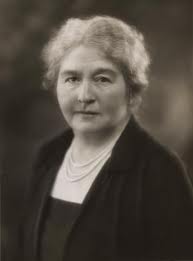
In Hilda Runciman, the people of St Ives, it might be supposed were to get a fine advocate, a good speaker and an idealist. Unfortunately, although good on public platforms she did not actually speak in the male dominated House of Commons. An elegant as well as eloquent woman, she had a ready wit and formidable determination. She demanded much of herself and posessed a strong sense of public duty. She had become founder member of the River Tyne Commission by the age of just twenty four. However to St Ives, the political solutions she offered of free trade and self-reliance and belief in theLeague of Nationswere insufficient to bring relief from the harsh realities of the depression, let alone avert the dangers of nationalisms inEurope.
She gained the seat of St Ives for her husband, already a wealthy, clever and able man. At this stage the Liberal influence was reduced to 43 MPs and she joked that with her husband, MP for Swansea West the electorate would have “the spectacle of a party of two”. When she was elected, the Times and Echo recorded, “Several young fishermen had prepared a chair decked in the Liberal colours, in which Mrs Runciman was carried through the streets of the town to the Wharf where a halt was made.” Runciman, himself however was to change his approach or policy over many issues and ended his career having failed to become chancellor, a role for which he had once seemed suited, and finished by disappointing many of his friends, supporters and constituents. They were, however, the first married couple to enter the House of Commons.
Rumour has it that it was Isaac Foot who suggested that St Ives would be a suitable seat for the Runcimans. Hilda was elected in a by-election in 1928, regaining the seat again for the Liberals. There had been previously five elections at St Ives in the previous 10 years. She came from a family with links toGlasgowand the North-East. Her father, James Cochran Stevenson had himself been an MP forSouth Shields(1868-1895) and was the owner of a newspaper and also had a chemical factory in Jarrow. She was his fifth daughter. Hilda’s sister, Flora Clift Stevenson, achieved magnificent progress in the education of the poor, and in particular, the girls ofEdinburgh. She famously became Vice-president of the anti-protectionist Women’s Free Trade Union. This was the milieu into which Walter Runciman married in 1898. One in which there was a belief in individual enterprise and a respect for self-improvement. By the time that Hilda was elected for St Ives, Walter Runciman had once defeated Winston Churchill atOldhamin 1899, and been MP for another two constituencies and had been President of the Board of Education, President of the Board of Agriculture and finally in the fateful year of 1914 become President of the Board of Trade. This was under the Prime Ministership of Asquith, whom he had supported against Lloyd George, in the devastating quarrels that plagued and split the Liberal Party in the middle of the First World War.
This attractive and captivating book of some 112 pages chronicles the appearance of the beautiful Camel Estuary and its inhabitants over the course of a year. As is mentioned in her introduction, for some 4000 years, this has been a major trading coast, from the Bronze Ages times, with ships arriving from areas as distant as Ireland to the eastern Mediterranean. Yet, Padstow retains its Elizabethan charm whilst Polzeath is better known for its contemporary appeal to surfers. The appealing images capture vividly the variety of life in the area including foodie Padstow, with pictures of brown crab and silver mackerel ready for Rick Stein’s kitchen and the National Lobster Hatchery.
As one might expect, the most stunning images are those of the peaceful horizontal curves of the coastline, the sand banks and the rocks sloping down to the coastline and the sea. There are stunning images of field catching the sunlight at dawn, the diversity of the flora and the activity and pageantry of the Royal Cornwall show. There are depictions of ‘obby ‘oss day, sailing and surfing, vigorous watersports and the energetic exertions of the lifeboatmen of Padstow and the RNLI beach lifeguards.
There are short introductory sections of text to put the splendour of the photographs into context. That on the Age of the Saints, for instance, mentions St Petroc, his monastery and his travels to Brittany, Rome and Jerusalem. This introduces the double page spreads of the battering waves at Treyamon contrasting in the following images of the contemplative security of the quayside of the inner harbour at Padstow. These photographs of North Cornwall which inspired the poetry of Betjeman and Binyon are a collection to have on your shelf for browsing or as an incentive to tranquil recollection.
In a recent documentary concerning St Ives artists after the war, Lelant was inaccurately referred to, by a Cambridge academic as,” a dingy suburb of St Ives. In fact Lelant has usually been regarded as a prosperous and well appointed village. However, in 1823, some six years after the death of Jane Austen, the English countryside could become the venue for rebellious behaviour though perhaps without the political focus that have characterised recent demonstrations. The Bullingdon Club at this time was well established as a hunting and cricket club. William Webb Ellis was to “invent” rugby, a channel for excessive testosterone after the events described below, a few months later in that same year.
Disgraceful Outrage
“A most disgraceful outrage was committed at Lelant Fair, or rather revel, on the night of Friday last, by a gang of ruffians from the well known Borough of St Ives, Cornwall, who entered the place shortly after nightfall, armed with bludgeons; and whilst some commenced an attack upon the standings which were covered with tempting viands for the refreshment of rural beaux and belles, and the youthful miners and ball maidens; others behaved with great brutality to such of the females as came within their reach, and attacked such of the young men as attempted to rescue their female friends from the rude hands of these savages. The uproar that ensued may be more easily conceived than described; the crash of the standings, the screams of the affrighted damsels, the calls of their protectors and of the owners of the standings for assistance, produced a compound of discordant sounds not often equalled in this now peaceable county. The ruffians were, however, speedily masters of the field, and the discomfited and terrified multitude fled to the adjacent houses for shelter. The greater part rushed into the public houses which were filled with company:- here they were persued by the brutal miscreants , who commenced breaking the windows , demolishing the windows etc. They were at length opposed by a number of young men, who rallied in defence of the females and the houses; when, as cowardly as they were brutal and ferocious, the St Ives ruffians fled under cover of the darkness; but as soon as they saw an opportunity, they rallied and commenced an attack upon the windows. They were at length driven from the field ; but not before upwards of twenty of them were identified, who will have to answer for their conduct in a Court of Justice. When it is considered that few, comparatively, are benefited and that numbers are seriously annoyed by the annual nuisance denominated Lelant Fair, its discontinuance would be regarded as a public benefit”.-(West Briton)
Reported in The Morning Post Wednesday, August 27, 1823






 1928 was a fascinating year in politics. Lord Oxford, better known as Asquith had just died and had just a few years been interviewed by the Editor of the St Ives Times and Echo. He gave his earnest opinion that theBayofSt Ivescould not be beaten. Given the slump in the late 20s and later in the depression, the inhabitants sadly suffering enforced idleness, were to have plenty of time to contemplate the magnificent sea views and to read about the economic situation in the newspapers. The more enterprising perhaps listened to their home built wireless sets.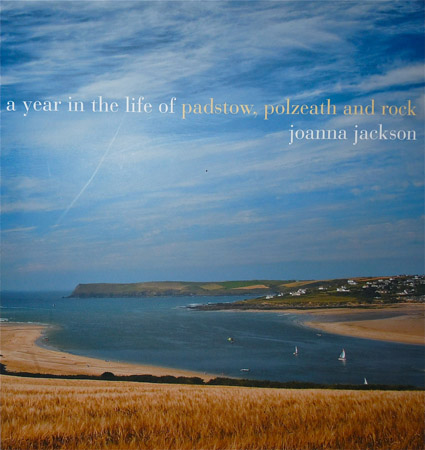

 penwithlit