Categories
Penwith St Ives West Cornwall (and local history)

Coming soon- “Growing up in West Cornwall”

Coming soon

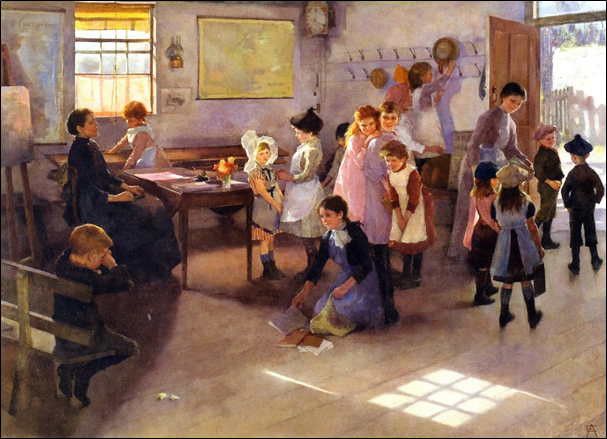
Complementing our previous title, Women of West Cornwall (ed. Pam Lomax, 2016), Growing up in West Cornwall describes the experience of childhood in West Cornwall, from the seventeenth century onwards. It documents childhood memories, mostly from the early years of the Twentieth Century, set in the context of institutions that structured the children’s lives – the village schools and the workhouse. The recollections captured here deal with schooldays, holidays, home life (sometimes when the father has gone mining overseas, or when the parents are busy Newlyn artists);  and starting work, as an undertaker’s apprentice in a spooky situation or a cabin boy preparing meals for the crew. How many of us regret that we did not ask our grandparents more about their childhood? This book helps us to understand how it felt to be a child in West Cornwall in the very different world in earlier centuries. Family historians will welcome the surname index.


The main chapters:

Chapter 1 Clifford Harry’s Recollections of Carnyorth Schooldays 1908 -1916 (Carlene Harry)

Chapter 2 The Decline and Fall of the Village School in Lamorna (Sally Corbet)

Chapter 3 St Erth Wesleyan Day School 1900-1922 (Cedric Appleby)

Chapter 4 Memories of a Mousehole Childhood (Susan Soyinka)

Chapter 5 Young People of Zennor 1600-1750 (Jean Nankervis)

Chapter 6 Children of the State (Sue Nebesnuick)

Chapter 7 The Artists’ Child (Pam Lomax)

Chapter 8 Word of Mouth (Jenny Dearlove)


Shorter articles:

Children’s Books (Dawn Walker)

Pamela Smart remembers (Caroline Baker)

Children’s Toys (Dawn Walker)

Jean Mitchell remembers (Dawn Walker)

May Day Celebrations (Carlene Harry)

George Care remembers (George Care)

Bad Boys up the Rec (Linda Camidge)

The eleventh publication of the Penwith Local History Group

100 pages, A4, illustrated throughout in colour and black and white

Published July 2019

Editor Sally Corbet

ISBN 978-0-9954940-1-5

RRP £10 from local bookshops, Morrab Library, Penzance, or from the Penwith Local History Group

Here is one old tradition that used to take place at Man’s Head the other side of Porthmere from the Island in St Ives


Categories
Poetry West Cornwall (and local history)

Summer Blues over coffee-Penzance

Sitting in Mr Billy’s, cappuccino drunk

I  watch the Golowan flag unfurl and roll

over the discount furniture store.

An elegant lizard design ruffled

as Hurricane Hector creeps to shore.


Caffine restores and clears the brain’s funk;

mind having been clogged with too many poets

read too superficially, such a rapid tour:-

Akhmatova, Garcia Lorca, Neruda

-several more.

all read in translation with growing piles

of biographies-Akhmatova’s by Elaine Feinstein

and just recovered, after much searching,

Pablo Neruda’s by Adam Feinstein.

The latter faintly and quaintly inscribed to ” Jessie G-

My passion in my life” signed Den

with five kisses -a bargain at three pounds forty nine.

Although I don’t know these signatories.

I remember the  Sixties, when a certain Jessie G occupied

my thoughts and feelings.


As the shoppers come and go- not thinking, I think

of Michelangelo,

I long for the enigmatic winds that energised us all-

when Co-Operative with its cheap and vivid green awning

was not just a shop.

As the street fills with delivery vans,

I long for the fervour again to discover,

Sous les paves, la plage!

Categories
Literature West Cornwall (and local history)

The Plaque- A Short Story by Kate Whitehead

                   The Plaque.


Aileen stands in the wide upstairs window of the holiday home detecting the subtle traces of him: a sharp scent of Old Spice a whiff of musky pipe tobacco. Dazzled by the surprize of yet another days sunshine she peers at the historical tableau below kids jumping from the high stone harbour walls catapulting magically through salty space.

She reaches into the musty wardrobe for a pinned stripe dress belted at the waist, pats her lacquered curls and sprays on the cologne which just like the summer reeks of 1976.

Strapped into her beige high heeled sandals she steps lightly into the midday sun passing familiar faces with a half nod. This unexpected burst of bright blue brilliance only accentuates the loss. Everything is magnified under the harsh distorting glare.

Aileen misses the bracing salt laden spring breezes. The still mid-summer air smells of consumption; over fried fish and suntan lotion. Her brown foundation trickles down her right cheek melting onto the starched white collar of her dress. She considers skulking back into the cool cavern but doggedly continues her weekly constitutional climbing the worn jagged slabs up to the other side. At the top of the steps she rests for a moment breathless, scowls at the discarded detritus tangled in the early brambles. Her frown relaxes into a small self -congratulatory smile as she observes the sleek elegant grey contours of the holiday home sandwiched amidst the granite.

Huddled at the end of the peeling brown bench with the missing slat a blonde woman sits clutching a small black notebook. Her clothes are vaguely scruffy at odds with the thick citrus scent of the Aqua Parma.

“Shall I move?” she asks half smiling half grimacing Aileen can’t be sure.

“No a there’s more than enough room for the two of us.” Aileen replies authoritatively.

The blonde woman’s called Alice . She lives in the village all year round up on the hill.

Aileen half listens to her staccato monologue .She’s diving into a memory, wallowing in its texture. It’s the Aqua Parma that’s set her off .She knows it’s really a special occasion evening perfume, remembers him first giving it to her for Christmas not long after their first meeting wrapped in shiny gold paper. The half empty bottle sits in her bathroom cabinet back home in Ireland. Now and the then she takes it out clutches it longingly to her chest, and strokes the cold glass.

“Oh my goodness where’s the time gone I’m late for my lunch.” Aileen exclaims rising stiffly from the bench.

That’s when she notices it larger, Golder and bolder very recently screwed on above her husband’s modest brown square.

Shocked and enraged at the blatant unbelievable audacity of this thing that’s appeared over night she spits the words at Alice:

“They can’t do this not without my permission .It’s our bench we paid 500 for the plaque …..Because he loved the village so much”

“Oh dear” Alice interjects troubled by the news that there is a dark drama clouding the benign gentleness of her favourite refuge.

“I need to speak to someone who knows about THIS. “  Aileen shouts jabbing a finger at the plaque.

“So you own the bench do you.”  Alice mutters indignantly.

Alice observes Aileen’s cautious descent down the steps and back over to the other side. She rises reluctantly from the bench her daily dose of calm contaminated by the morbid machinations.

Crouched on plastic stool in her porch Aileen unstraps the beige sandals, shuts her eyes and imbibes the cloying scent dusty tomatoes plants mingle with the spicy cinnamon of the purple orchids his daughter gave her.

She can’t decide lunch first, then the stern phone call to the woman at the chapel who knows everything or the other way round.

Suffused with a drowsy contentment after her single glass of Merlot she totters into the bedroom reaches for the tweed arm of the jacket which still has a whiskyish tang , strokes it longingly  wistfully recalling his exuberant warmth and good nature charm.

His words bounce mockingly in her head

“Well what’s  the problem two plaques on the bench? I’m happy to be with the other fella anyway glad of the company.”

Her anger evaporates seeing the matter with his eyes: “ What’s the point of making a fuss  right at the end.” She mutters to herself flipping the fried egg onto the tiny plate.


It’s the end of her final solo summer sojourn in the holiday home drifting through the wide rooms, relieved when the massive sun sinks into the sea leaving her shrouded in a comforting twilight blanket. She watches the evening news tut tutting at the relentless stupidity of it all, crochets for her three grandchildren then slides gratefully under the soporific lavender scented sheets.

Alice seeks a new unadorned bench for her morning calm over on the other side .Its slightly concealed by overhanging lilac bushes. Takeaway cartons peep out of the opening of the overflowing litter bin. If she turns her head slightly to the right for a gasp of today’s fresher saltier air she can see the gold yellow outline of her own home on top of the hill. Exultant all of a sudden that there’s a bit more time left she reaches into her bag for the summer sweet strawberries.

Aileen double locks the door of the holiday home for the final time with a brief glance back through the empty windows feeling a mixture of gratitude and sadness. The bulky taxi fills the lane outside waiting to take her to the airport its driver hovers nonchalantly by the open front door.  She sees the girl from yesterday squeezing her way by, acknowledges her with a small wave of farewell , happily reflecting on the hectic autumn distractions that await her back home.

Image result for Plaque on a bench by the sea


Categories
Art and Photographic History German Matters Literature Penwith West Cornwall (and local history)

Der September-Kästner

“Der September

Das ist ein Abschied mit Standarten
aus Pflaumenblau und Apfelgrün.
Goldlack und Astern flaggt der Garten,
und tausend Königskerzen glühn.

Winsculpture-Tremenheere- September 2018

Das ist ein Abschied mit Posaunen,
mit Erntedank und Bauernball.
Kuhglockenläutend ziehn die braunen
und bunten Herden in den Stall.

Das ist ein Abschied mit Gerüchen
aus einer fast vergessenen Welt.
Mus und Gelee kocht in den Küchen.
Kartoffelfeuer qualmt im Feld.

Das ist ein Abschied mit Getümmel,
mit Huhn am Spieß und Bier im Krug.
Luftschaukeln möchten in den Himmel.
Doch sind sie wohl nicht fromm genug.

Die Stare gehen auf die Reise.
Altweibersommer weht im Wind.
Das ist ein Abschied laut und leise.
Die Karussells drehn sich im Kreise.
Und was vorüber schien, beginnt.”

(Aus: Kästner, DIE DREIZEHN MONATE)

Well here is a rough translation by a good friend.
It´s September

This is a farewell with flags
coloured plum-blue and apple-green.
The garden is flagging wallflowers and asters,
and thousand mulleins glow.

This is a farewell with trombones,
with guldize and farmers´ ball.
Tolling their cowbells the brown
and colourful herds are stable bound.

This is a farewell with scents
of a long forlorn world.
Jams and Jellies simmer in the kitchens.
Potato fire smoulders in the field.

This is a farewell with turmoil,
with chicken on skewer and beer in jug.
Swingboats want to go to heaven
But they might not be piously enough.

The starlings start their journey.
Gossamer waves in the wind.
This is farewell noisy and gentle.
The merry-go-rounds are spinning in circles.
And what seemed past, starts.

Categories
Penwith Poetry St Ives West Cornwall (and local history)

Four Old Photographs from St Ives

Here is my Mother’s Aunt Vera

as though for a test on the screen

like a Hollywood Star, pure smile;

happy, serene, genteel like a heroine-

war survivor, positively engaged

with the future a dream.


Turning the page where a collection

of ladies, mostly hatted with one man

wait on the wharf for Crimson Tours to bring the charabanc.

One lady, in control, in the centre

banters with the photographer, another

has her back turned as the shutter clicks.


The next, a street party, circa 1960

or before, all festive with my mother

looking happy serving a group of pensioners

who look like they are reliving a Sunday School band-tea.

Everyone wears hats and there is a lovely bunch of flowers,

one lady glowers, a man has his customary

goofy smile and there are delivered milk in bottles

unlikely to be stolen on the step behind.


By 1970 the future seems to be arriving more suddenly,

when standing with camera on the end of the quay,

and almost unbelievably four or five

ducks carry a squadron of marines

into the harbour. What have we done

to be thus invaded? History approaches

us on a stormy day and I bury my chin

into my duffel coat.


Categories
Art and Photographic History German Matters West Cornwall (and local history)

Early Aviation in West Cornwall

Image result for grahame white aviation+fleet in mounts bay

The first flight over Penzance was a short affair lasting just 3 minutes at a height of 200 feet. This was achieved in a rather fragile biplane called a Farman with a propeller in the rear. This was around 6.00 p.m. on Saturday July 23rd, 1910. The pilot was the renowned Claude Grahame-White whose purpose was to fly over the three fleets assembled in the bay where they were expected to be informally reviewed by the recently crowned King George V. Poor weather had delayed the flight and high winds curtailed this first effort.

Grahame-White’s second flight from Marazion at 9.00p.m. that same evening was more impressive. It lasted some 15 minutes over the now illuminated fleet. Among the 200 ships present he was able to identify the flagship of the Home fleet, The Dreadnought, and the Admiralty yacht, The Enchantress. It had been his intention to show the vulnerability of the Navy to aerial attack. He had been supported in this endeavour by the photographer of The Daily Mirror, Vaughan T Paul. Grahame-White had learnt to fly at Reims under Bleriot who was the first to cross the Channel, the previous year in 1909. The next month Grahame-White flew his Farnham biplane over Washington landing close to the White House.

Despite the attention which it attracted this was not the first heavier than air flight to take place in the Duchy. Jack Humphries, a Dental Surgeon from Fowey had observed bird flight and made at least two flights with gliders from nearby cliffs. In 1912, the French aviator Henri Salmet, with the financial support of Lord Northcliffe arrived with his Bleriot machine on the 14th of June in Falmouth. He had intended to fly over Lands End, however the headwinds proved too strong for the monoplane.

On 24th September 1913, the Hamburg born Gustav Hamel, just 24 years old, arrived at Trengwainton from whence he flew his Bleriot monoplane over Penzance where he could be seen clearly from the Market Place, Market Jew Street and then to Newlyn Coombe and on to St Ives and was greeted by a large crowd upon his return. After meeting Lord and Lady St Leven and the local M.P., Mr T. Bedford Bolitho who examined his aircraft. The energetic Hamel flew off once more at 5.30 and returned having fulfilled his ambition of being the first aviator to have flown over Lands End.

Hamel and Grahame-White collaborated in the development of Hendon airfield which became a flying school, a site for aircraft manufacture and later taken over by the R.A.F. and is now its museum. Ballooning at Hendon had taken place as early as 1862. Airship bases were built in Cornwall during 1915 and 1916. For example, the Royal Naval Air Station Mullion was developed on a 320-acre site near the village of Cury and the first airship transported here by train. This Lizard Airship Station was later to contain a hydrogen producing plant and a small Marconi transmitter. Its situation was ideal for attacking U-boats in accordance with the intentions of the First Sea Lord, Lord Fisher.

Image result for Lizard Airship Station


Categories
Poetry Uncategorized West Cornwall (and local history)

Visiting Town Blues

Walking for my morning coffee

through the falling rain,

I feel again the cold and my toothache pain,

leaving the bus, negotiating the speeding traffic

through what to me feels a rush,

reaching the corner, a hush as

slipping along the side street,

avoiding sudden traffic, above the narrow pavement,

I notice the broken awning.

Here next to the closed, derelict barber’s shop,

three gobbling pigeons have found

a box-shaped shelter; a tabloid sized hole

from where a torn out section of thin wood

and have made a home, an aviary,

a sort of “rus in urbe” among the tangled wires.

The birds bob and cheerfully chirp exchanges.

In this section life flourishes.

I stop to snap these jovial creatures that

triumph amidst the clutter,

defeating austerity, likewise

I recover my affection for broken places

….and the game is still on.


Categories
Art and Photographic History Penwith Uncategorized West Cornwall (and local history)

French Folk Music from America

Listening to tracks on You Tube I came across two groups who were entirely new to me but both of which I found appealing:-

First – Reina del Cid

Secondly – The Avalon Jazz Band

From a Jazz Day at Trerife (Near Penzance)

Jazzman August 2006


Categories
Penwith Uncategorized West Cornwall (and local history)

No Sunshine when She’s gone-Bill Withers

Ain’t no sunshine when she’s gone
It’s not warm when she’s away
Ain’t no sunshine when she’s gone
And she’s always gone too long…Wonder this time where she’s gone
Wonder if she’s gone to stay
Ain’t no sunshine when she’s gone
And this house just ain’t no home
Anytime she goes away

Wonder this time where she’s gone
Wonder if she’s gone to stay
Ain’t no sunshine when she’s gone
And this house just ain’t no home
Anytime she goes away

This song has been in the background of the Kaffeehaeuser -and I like that term-as I sometimes, in my Walter Mitty manner, like to imagine Penzance as a sort of Vienna. Sometimes the conversation feels as good as that in the heyday of the Cafe Central! As the darkness of twilight looms with the storm clouds and the sense of life’s losses becomes more a melancholy nostalgia. Outside the colours of the sky are glorious and then the song begins with its evocative repetition of the third verse:-

And I know, I know, I know, I know,
I know, I know, I know, I know, I know
I know, I know,
Hey, I oughtta leave young thing alone
But ain’t no sunshine when she’s gone

The only other song that seems to have a similar effect is, of course, Stormy Weather, which once brought tears to my eyes in -banal  and bathetic note– Pizza Express in Truro! 

Ain’t no sunshine when she’s gone
Only darkness every day
Ain’t no sunshine when she’s gone
And this house just ain’t no home
Anytime she goes away

The song is so popular that there is naturally a detailed note about its origins back in 1971 on https://en.wikipedia.org/wiki/Ain%27t_No_Sunshine

Image result for storms in St Ives


Categories
Art and Photographic History German Matters West Cornwall (and local history)

A Trainee Nurse’s pay at the outset of World War Two

A historian friend has written me about a Jewish woman who left Berlin, and saved her life, coming to England and starting her training in 1939. She had free board and bed and earned just 36/- per month. That is £3 and 6s. By November 1943 she was fully qualified and working in a General Hospital and her new salary became £5 and 5s-nurses were considered professionals before the NHS was formed and  were paid in Guineas (I Guinea= £1 and 1s). In order to fathom what this might have bought I looked up some figures in a couple of hours in a local newspaper archive. The following is what I discovered there.

Image result for Nurses Uniform in 1940

West Briton and Cornwall Advertiser  Feb 8th 1940    Price 2d
(12d= i/- (shilling) and 20/- equals £1 (a pound) )
Cockerels £1 per 100
Rental for a 2 bedroom house, sitting room, kitchen and scullery in Richmond Terrace in Truro £20 per annum
500 stamps 2/6 i.e. 2 shillings and 6d= 1/8 of a Pound
Cure for corns on feet 9d per bottle or 10 and 1/2d by post
Newly soiled Army boots 6/6 approx 1/3 of a Pound
soled and heeled 7/-
Unbleached bed sheets -double bed sized 7/11 and 1/2d (So it doesn’t seem 8 shillings!)
Turkish towels 1/11 and 1/2d
Unused 30 horsepower Electric Motor secondhand cost 50/- (Two and a half pounds) for sale at 30/-
Graham Piano in a walnut case £14 and 14/-
Other modern pianos in part exchange £7 and 10/-
Ginger wine 3/- for a bottle
Port styled wine (i.e. not real Port) a quarter bottle 9d
Full bottle of Sherry 2/6= 30d
Large oval bottle of port styled wine 3/6
West Briton and Cornwall Advertiser  Feb 12th 1940    Price 2d
 
Truro City Band – Grand Dance -admission 1/3 (obviously haf of half a crown!)
Kidney Pills on offer 1/3 and at 3/- and at 5/-
The Cornishman Dec 28th 1939 
 
Weekend Return Fare to Isles of Scilly 12/6 from Penzance!
New Agricutural Wages Act 1924 Update-comes into force on 1st Jan 1940
Minimum Wage for Male over 21 at 37/- (up from 34/-)
                                                14 year old  11/6
                           for Female over 20 6d per hour
                                                14-15 3d per hour
An advert 14 inches by 16 inches (half page) cost £18
80 word advert for 3 weeks cost 7/3
(It announces in this edition that overworked Nazis will be getting 3 weeks extra holiday next year and those cancelled in September will have their holidays restored}
(Also British Contraband seize 7000 tons of goods of contraband of which…
4000 tons are petrol
600 tons of foodstuffs and beverages
200 tons of tin
100 tons of rubber
Image result for Russo-Finnish War in 1940
and in North Finland 5000 Russians captured by Finns
Berlin Wireless announces Hitler to visit Western Front)
Wife’s Maintenance set by Camborne Court after husband’s pretty clear adultery = 15/- per week
Fees for a Girl’s School relocated from Isle of Wight-Westwing- to open in Jan 24th 1940
£30 and 30/- under 8 years boarding and £35 and 35/- boarding
Kindergarten £5 5/- per term.
The other authority on prices at this moment in time was, of course, George Orwell’s account of the reasonable cost of reading compared to smoking and drink. Sadly, it appears that so-called Agency nurses may be reasonably paid but if Jeremy Hunt’s pronouncements are anything to go by, nurses are scarcely likely to have a much better time in the forthcoming period. The long shadow of Brexit has already, as is well known made for a severe shortage of staff. The Conservative Party are great believers in the so=called free market, except of course when it applies to Public Sector Pay!