“now bound in with shame,
With inky blots and rotten parchment bonds”- Seems so apposite to describe the currently benighted state to which we have been brought.

This land of such dear souls, this dear dear land,
Dear for her reputation through the world,
Is now leased out, I die pronouncing it,
Like to a tenement or pelting farm:
England, bound in with the triumphant sea
Whose rocky shore beats back the envious siege
Of watery Neptune, is now bound in with shame,
With inky blots and rotten parchment bonds:
That England, that was wont to conquer others,
Hath made a shameful conquest of itself.
Ah, would the scandal vanish with my life,
How happy then were my ensuing death!
I’ve found John of Gaunt’s famous speech from Shakespeare’s Richard II in my mind quite frequently of late; I enjoyed teaching the play to sixth-formers a number of times. When I looked it up, I found that rather too much of it was a paean to royalty, kings, nobility, conquest and colonialism and other such…
View original post 410 more words





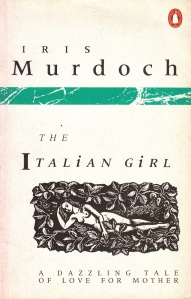 Almost the first thing I learned in English 101 at Melbourne University, was that the English novel has its origins in morality plays. And with apologies to Proper Academics who know what they’re talking about when it comes to Iris Murdoch, I reckon The Italian Girl is not one of IM’s ‘bad novels’ as Kenneth Trodd would have it in the New Left Review from 1964. His review was paywalled, so I could only read a bit of it, sufficient to know that he took A Dim View of this novel, describing it as a genre between Green Penguins and old Gothic. I think that The Italian Girl has its origins in morality plays and a Shakespearean comedy of errors. The novel masquerades as melodrama and it’s not meant to be realism. Rather, it uses a modern day quest for inheritance and identity to mask its framework of temptation, sin…



 penwithlit
