Categories
Literature Poetry

Found Prose Poem from the LRB

The London Review of Books is a wonderful fortnightly pleasure. I am particularly drawn to articles that have maps and also to any item which elucidates the background to a problem in the world which has escaped my previous attempts to understand it. The problem in this case being the distressing war in Nagorno~Karabbakh. However, in reading this article by Abdul~Ahad, I came across a few lines which I found deeply poetic.

Nagorno~Karabakh Nagorny is Russian for ‘mountainous’;Karabakh Turkish for ‘black garden’~is a region in the South Caucasus with a predominantly Armenian population. It was a province of ancient Armenian kingdoms before coming under the successive suzerainty of Sassanids, Muslim Arabs, Turkmen tribes and the Persian Safavids with pockets controlled by Armenian meliks, prices who used outside powers to bolster their claims to authority. In the mid~18th centuary following the decline of the meliks, a khanate was established with Persian support by the Javanshirs, a Turkic Karabakh clan, who built the city of Shusha. The region was absorbed into the Russian Empire in 1813 after the first Prussian war, and Persia ceded the rest of the Transcaucasus to Russia a decade or so later.

Karabakh maintained a strong Armenian religious and cultural identity through the centuries, but like all frontier regions it was a place where cultures and peoples converged. Armenian, Persian, Arabic and Turkic influences produced a unique cultural heritage, manifest in food, music. art and architecture. Armenian churches and monasteries dotted the hills while Azerbaijani composers and writers flourished in Shusha. Armenians, Azerbaijanis, and Kurds both Yazidi and Muslim, lived side by side in towns and villages set among pine and birch forests, orchards, vineyards and highland pastures, Mulberry groves supported thriving silk industries.

Having just typed it in maybe it is not exactly a poem but it reads very elegantly to my ear. This appeared in an article entitled Each rock has two names in the London Review of Books 17th June 2021. You can read more about this prize winning journalist at https://en.wikipedia.org/wiki/Ghaith_Abdul-Ahad

and besides this informative article the tragic situation is outlined at https://www.youtube.com/watch?v=YU2v38hRRbg&t=331s

The poet/photographer/journalist talks movingly below:~

Categories
Uncategorized

Ornate Entrance, Peterhof, Russia

Categories
Uncategorized

What was the Vienna Psychoanalytic Society?

Would have been nice to have heard some of those discussions but my German would not quite have been up to it- especially with the Viennese accent!

Andrew Marshall's avatarMental Health Matters

Introduction

The Vienna Psychoanalytic Society (German: Wiener Psychoanalytische Vereinigung, WPV), formerly known as the Wednesday Psychological Society, is the oldest psychoanalysis society in the world.

In 1908, reflecting its growing institutional status as the international psychoanalytic authority of the time, the Wednesday group was reconstituted under its new name with Sigmund Freud as President, a position he relinquished in 1910 in favour of Alfred Adler.

During its 36-year history, between 1902 and 1938, the Society had a total of 150 members.

First Meetings

In November 1902, Sigmund Freud wrote to Alfred Adler, “A small circle of colleagues and supporters afford me the great pleasure of coming to my house in the evening (8:30 PM after dinner) to discuss interesting topics in psychology and neuropathology… Would you be so kind as to join us?” The group included Wilhelm Stekel, Max Kahane and Rudolf Reitler, soon joined by Adler. Stekel, a Viennese…

View original post 425 more words

Categories
Uncategorized

Blue Forest, United Kingdom

Reminds me a little of the bluebell wos at Godolphin in the Spring.

Categories
Uncategorized

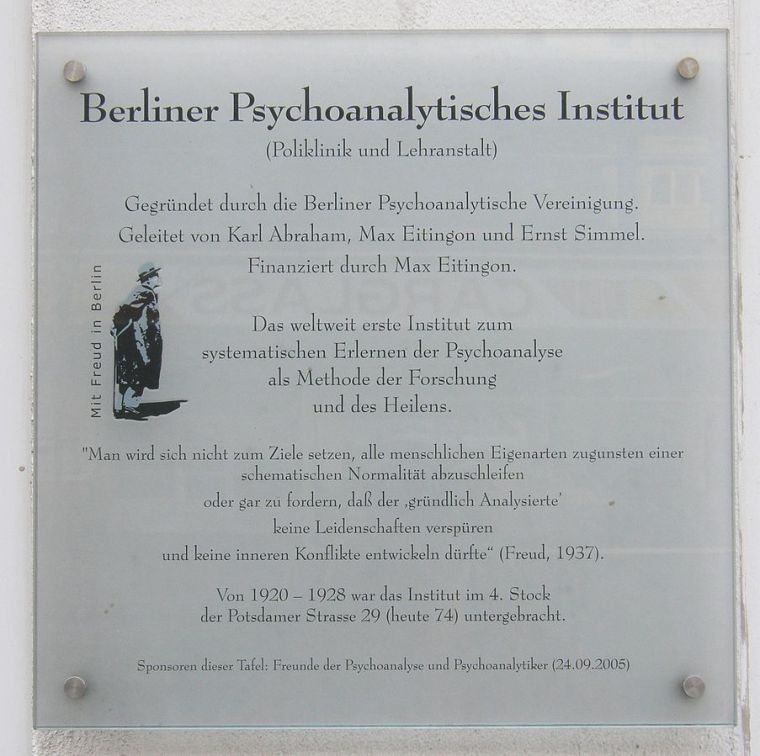
What was the Berlin Psychoanalytic Institute?

Andrew Marshall's avatarMental Health Matters

Introduction

The Berlin Psychoanalytic Institute (later the Göring Institute) was founded in 1920 to further the science of psychoanalysis in Berlin.

Its founding members included Karl Abraham and Max Eitingon. The scientists at the institute furthered Sigmund Freud’s work but also challenged many of his ideas.

Brief History

The Berlin Psychoanalytic Institute grew from the Psychoanalytic Polyclinic (psychoanalytische Poliklinik) founded in February 1920. The Polyclinic allowed access to psychoanalysis by low-income patients. Only some 10% of its income came from patients’ fees; the rest was provided personally by Max Eitingon. It introduced the three-column, or “Eitingon”, model for the training of analysts (theoretical courses, personal analysis, first patients under supervision), which was later adopted by most other training centres. In 1925, Eitingon became chair of the new International Training Committee of the International Psychoanalytic Association. The Eitingon model remains standard today.

The Berlin Psychoanalytic Institute itself was founded in 1923…

View original post 274 more words

Categories
Uncategorized

“There is no sexual relationship”

Interesting, this all makes perfect sense it seems. However it leaves me feeling curiously sceptical and possibly a little disenchanted!

leonbrennerblog's avatarLeon Brenner

Wherever we look around us – especially while in a morose and misanthropic mood – we see “relationships”. Now, strictly philosophically speaking, a “relationship” is a concept designating an element which mediates between two things.  Accordingly, we can propose, for example, that there is a “relation of proximity” between me and my cat right at this moment, or a “relation of friendship” between me and my neighbour, etc. The question at the forefront of our discussion today will revolve an especially interesting relationship – the “sexual relationship” – and more particularly Jacques Lacan’s assertion that “There is no sexual relationship”.

Lets start with a first definition: a sexual relationship mediates between two individuals and involves sexual enjoyment. 

[The polyamorous readers might take into account that a ternary relationship (a threesome) actually consists of three binary relationships]

sexual-fantasy2 Thomas Ruff, Nudes, 2000

But what exactly is sexual enjoyment? Well, we can approach the question of sexual enjoyment (without discriminating any of its forms) on two…

View original post 1,021 more words

Categories
Uncategorized

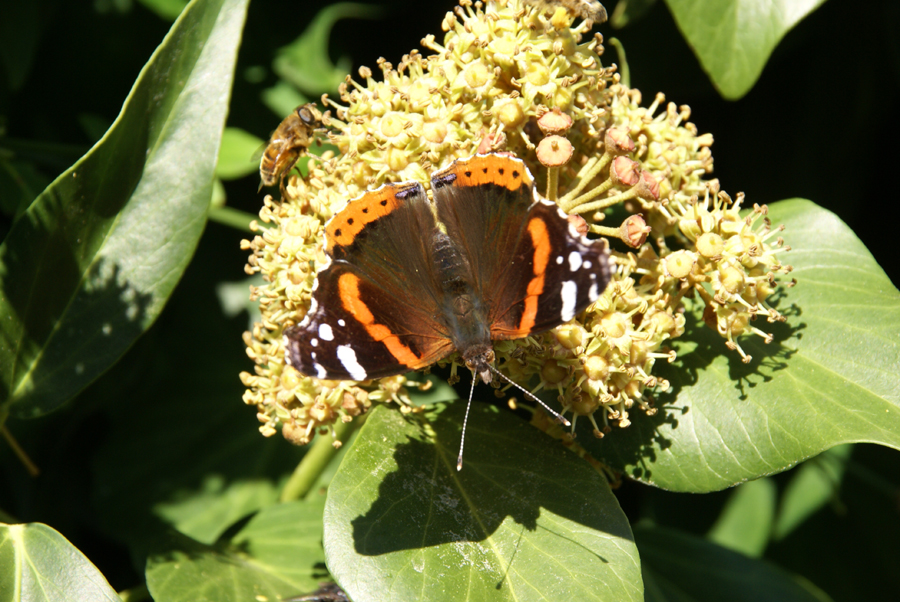
A Red Admiral feasting, Lausanne, Switzerland

Paul Noël's avatarPaul Noël

All around us life on Earth lives and dies in the constant cycle of passing on the genes of one generation to the next. Few of us rarely think about this and some, perhaps many, never. Unfortunately human numbers along with their increasing use of natural resources are causing great damage to these interconnected ecosystems. We are in many cases ignorant of the damage we cause to the very life support systems that we actually need to pass on our genes from one generation to the next. 12th October 2013.

Our links

Our Teemill shop site for our organic cotton T-shirts and bags, https://junagarh-media.teemill.com/.

My author page where you can discover more about my books, https://www.amazon.co.uk/-/e/B07D3ZTQ1L.

This is our website for all our photography and my books, https://www.junagarhmedia.co.uk/.

Our Etsy shop has blank greeting, birthday, invitation cards of some of my books cover artwork, https://www.etsy.com/uk/shop/JunagarhMedia.

We…

View original post 11 more words

Categories
Uncategorized

The Village where I live in sketches

Interesting sketches- looks a very attractive town/area!

Categories
Uncategorized

Living in My Imagination: How Trauma Fosters an Unquenchable Desire for Idealized Love

Interesting and it makes me think also about the political sphere where maybe collective/collaborative action may help bring change. Praxis is the transformation of subjectivity through the process of human action and may involve loss of some personal illusions.

Leon Garber, LMHC's avatarLeon's Existential Cafe

Throughout our quests for the perfect mate, we frequently find ourselves fantasizing about what that mate would be like: we envision an attractive, intelligent, deeply compassionate, ambitious, and empathic individual entering our lives to save us from the mundane and the awful. We create internal stories of us meeting, falling in love, introducing each another to our parents, and having children, in essence, living happily ever-after. These stories become our blueprints, guiding us on our dates as we use them to vet our prospective mates, weeding out the ones who are unacceptable. While our lives progress and our timelines fade, we may begin to accept the fruitlessness of our quest, acknowledging the discrepancy between the people we meet and date and our romanticized images of love. Sometimes, we choose to disavow our prior expectations, with the belief that reality can’t correlate with fantasy; but at others, this recognition engenders a…

View original post 570 more words

Categories
Uncategorized

Cobblestone Street, Alsace, France