Categories
Uncategorized

Now you’ve got your getaway baggage

Love Nelly Sachs, Rosa Aüsslander et al. Very relevant today!

catterel's avatarPoems of Nelly Sachs in English

Now you’ve got your getaway baggage
across –
the border is open
but first
they throw all your “home”
like stars through the window
don’t ever come back
live in the empty desert
and die –

Schon hast du dein Fluchtgepäck
hinüber –
die Grenze ist offen
aber vorher
werfen sie alle deine “zu Hause”
wie Sterne durchs Fenster
komm nicht mehr zurück
im Unbewohnten wohne
und stirb –

View original post

Categories
Poetry Uncategorized

A politician finds in difficult to retire

Sometimes it is the state of the world that preoccupies him,

campaigning for peace and pensioners.

Although public opinion has moved his way,

Meetings, groups and such occasions eat up his time.


He is powered with a zeal for international security.


The state of his roof preoccupies him and in a rash rush of

domestic disasters, he almost gassed himself.

He put his pipe alight into his pocket and burned his coat.

The car breaks down and is broken into.


Now the roof caves in when the builder walks across it,

and accidentally puts his foot right through the ceiling.


His old adversaries would need hard hearts not to sympathise

with his bouts of depression. He becomes deaf and has trouble

with his heart and legs.

Only his friends sustain him and the pride he feels

at his children’s success is uncontainable.


His jokes are demonstrably unribtickling.

He marches out into the world with a thermos flask

and a Mars bar.

He remains unashamedly sentimental.


The case for working people is coming back and

though there are times for despair, there are still days of hope

as he enjoys life’s afternoon sunshine

with his grandchildren.

(Found Poem -With thanks to the Guardian Review  20.10,07 by  David McKie

reviewing More Time for Politics; Diaries 2001-07 by Tony Benn)

Categories
Book Reviews Literature Penwith Poetry West Cornwall (and local history)

“Bronte Territories” by Melissa Hardie-an Appreciation

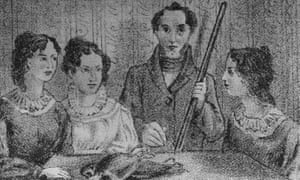
The Brontë sisters with their brother, Branwell, in a painting by him called the Gun Group Portrait.

Wandering down Chapel Street in Penzance, you cannot fail to recognise that you have entered that part of town where history feels close-by. The sea in the distance, the church and the chapel architecture is impressive, the Turk’s Head Tavern and the baroque wonder of the Egyptian House, the Portuguese consulate and almost opposite the house where George Eliot stayed waiting for calm weather for her voyage to the Scillies. Reading Melissa’s book is like taking a similar peregrination through lost corridors of time to recover a sense of the rich liveliness of Penwith’s past. Welcome to the psychogeography of Bronte’s Territories.

The Brontes are still much in the news. The Irish Times, just two weeks ago, were reporting on the O.U.P. computer analysis of Wuthering Heights apparently confirming it to be the work of Emily and not, as had been suggested, that of her brother Branwell. Iconoclasm may be in vogue. However, a square in Brussels – the city where two of the Bronte sisters studied French – is to be named in honour of the literary siblings. Other authors make claim to curious events in Shropshire in the early years of the 19th century drew the parents of genius together. It is to the intellectual and feminine furore of Penzance and its inspiring hinterland that Hardie’s work appropriately returns us.

In a key chapter on the literature and legend of Cornwall from 1760 much mention is made of the intriguing and taciturn figure of Joseph Carne, a geologist of great renown and an energetic banker. His personality was such that he combined a skill with numbers with a strong Methodist belief and mixed in a variety of literary circles. Nearby Falmouth was a key port for the Packet boats recorded in the poetry and memoirs of Byron and Southey. It too was the home of the Quaker family of Foxes who founded the Cornwall Polytechnic Society in 1832. Carne was a friend and shared their Non-Conformist beliefs. Hardie shows how Carne encouraged his daughter in her geological studies and mentions the doctors, engineers, vicars and scientists whose cultural sources were enriched by contacts which included Bretons, Huguenots, Hessians as well as a significant Jewish community. She reminds us that in reading Davy, for example, we encounter not just a socially beneficent scientist, a traveller and a poet. This is the endowment the Branwell sisters took to Haworth.

It is interesting to consider that within this Cornish background at this period there were a number of competing beliefs and attitudes. There were the mythical beliefs fostered from folklore- piskies and stories in the expiring Cornish language. There was the old religion of Rome not far beneath the surface. Yet there were also new discoveries especially in medicine and geology that fostered a scientific empiricism. This can be seen in figures such as Davies Gilbert to whom this book gives due prominence- a polymath, mathematician, engineer and President of the Royal Society and a wonderful diarist to boot. William Temple much later stated, “The Church exists primarily for the sake of those who are still outside it. It is a mistake to suppose that God is only, or even chiefly, concerned with religion.” It was the evangelical zeal of the Wesley brothers and their belief in education, temperance combined with stunningly beautiful hymns. It was also a challenge to superstition. It is often said it averted revolution which France and later Peterloo portended.

Melissa Hardie shows us the other supportive factors that came into this heady mixture and sustained the Branwells and flowered in the Bronte’s work. These are twofold; the societies and the family or kinship links. The Penzance Ladies Reading group who carefully studied together a stunning variety of literature from the classics of the Ancients to the contemporary travel writings. Not forgetting the subversive eloquence of Lord Byron, a gentleman with Cornish links through the Trevanions. The founding of libraries and collection of artefacts had practical even economic benefits. The Royal Cornwall Geological Society studies into metallic intrusions assisted the efficiency of mining. Local banks provided the capital for further developments in the industry as well as the magnificent Wesleyan Chapels that the Carnes, Branwells and Battens founded and fostered.

The author has researched both land and legacy extensively. Her approach is frequently imaginative and sometimes speculative. This is a strength because she is also at pains to inform the reader of the limitations of the evidence. Footnotes and suggested reading in themselves are useful but the illustrations are worthy of pondering- several works of art in themselves. They add significant detail. This patient work by Melissa supported by other members of the resplendent Hypatia Trust must be counted as filling a deep fissure, or as we might say in Cornwall, a zawn in Bronte Studies.

See also from the Guardian –

https://www.theguardian.com/books/2019/jun/29/bronte-grandfather-smuggling-past-financed-books-charlotte-emily-anne


Categories
Uncategorized

“Cymbeline” by William Shakespeare: Fear No More

Categories
Uncategorized

Helen DeWitt, translating Proust, and what is it that you want to do with you one wild and precious life

I only read two pages of Paris Match yesterday. It was about Elia Kazan and a film he failed to make about Greek-Turkish relations. It isn’t always easy to read French but the little makes for an alternative and memorable perspective.

Itsonlychemo's avatarIt's only chemo

If you have read The Last Samurai and are in a state of nostalgia for the days when discovering Helen DeWitt was still ahead of you, go and indulge in her entire blog.

I can’t comment on these translations; happy to believe that both have much to offer. The one thing I’d say is, if you’re thinking of reading Proust and you’ve studied any French at all, do order Du côté de chez Swann from amazon.fr so you can read at least a few of Proust’s sentences in French.

People often say: “Well, I had a couple of years of French in high school but I’ve forgotten it all.” What they mean is not normally, “I had a couple of years of French in high school, but when I looked at the first paragraph of Du côté de chez Swann I couldn’t understand a word,” what they mean is, “If I…

View original post 1,889 more words

Categories
Uncategorized

The Art of Anders Zorn 3: Switching to oils

His paintings give us an insight into how life was lived in a variety of styles to.

hoakley's avatarThe Eclectic Light Company

In the 1880s, the great Swedish watercolourist Anders Zorn (1860–1920) doesn’t seem to have spent a full year in any one place. In 1887, he spent the summer back in Sweden while simultaneously exhibiting at both the Salon in Paris and the Royal Academy in London. That autumn/fall, he and his wife travelled to Britain with the artist Alice Miller. It was there that he started to paint in oils.

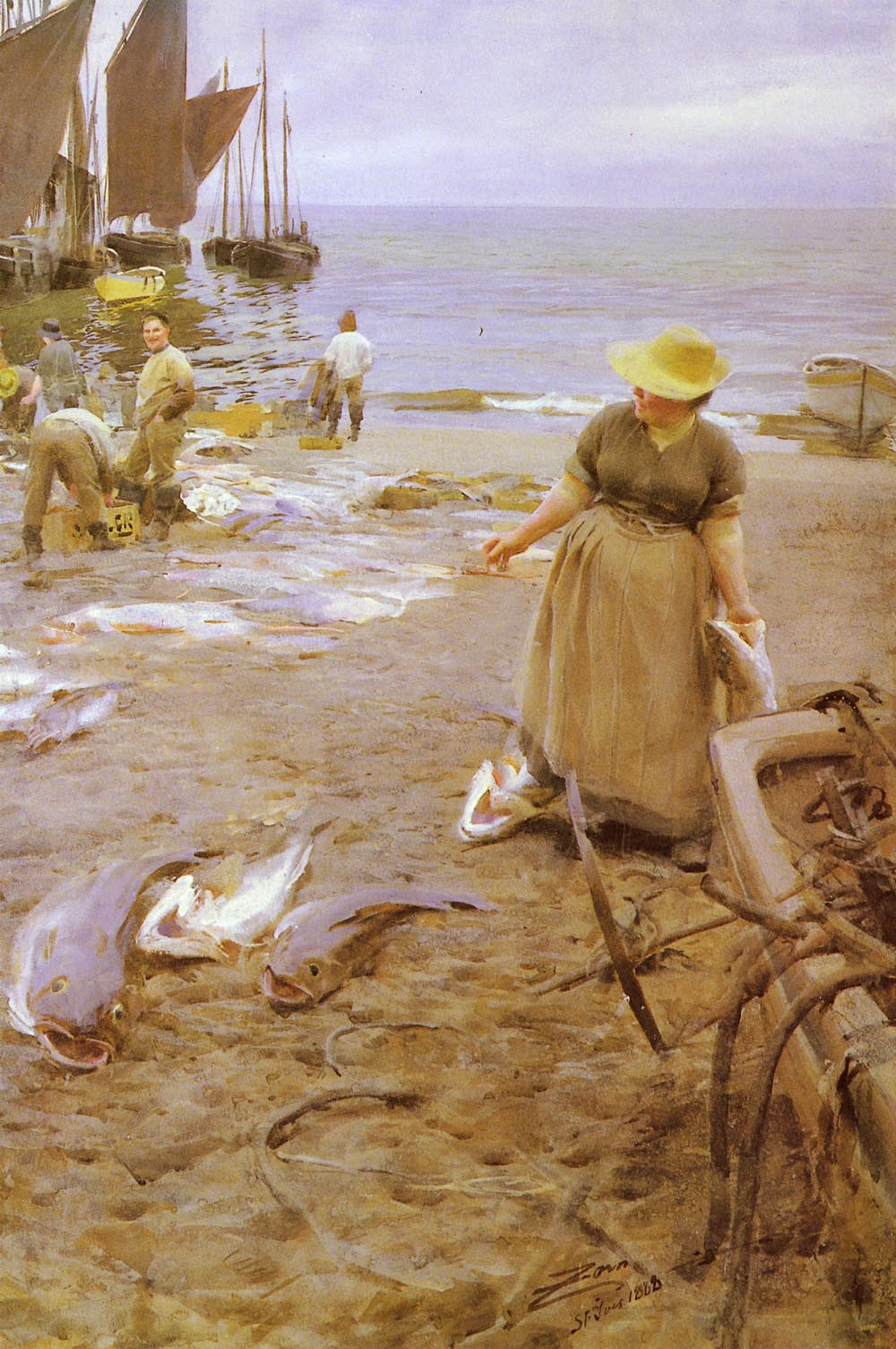
Anders Zorn, Fish Market in Saint Ives (1888), watercolour, 100 x 76.5 cm, Private collection. Wikimedia Commons. Anders Zorn (1860–1920), Fish Market in Saint Ives (1888), watercolour, 100 x 76.5 cm, Private collection. Wikimedia Commons.

Although Zorn’s early oils from his stay through the winter in the art colony and fishing village of Saint Ives, in Cornwall, were impressive, this watercolour is perhaps the most brilliant of his paintings from that visit. He had apparently become fascinated by this “plump fisherman’s wife” shown dragging some of the catch of fish around as it was being sold off…

View original post 692 more words

Categories
Uncategorized

The curious case of Cornwall: why did the Cornish vote for Brexit?

Sometimes E.U. money has not be wisely spent- not their fault, of course.

Ben Eagle's avatar

porthcurno-beach

Cornwall, with a population of 530,000 people, received more than €654m from Brussels during the EU’s 2007 to 2013 budget cycle. This is more than the West Midlands and the East of England combined. Up until Brexit it was set to receive at least another €600m between now and 2020, that’s €1,209 per person. This is a county in which 56.5% of voters chose to back Brexit and leave their biggest benefactor. I was interested to look briefly into why this might have been the case and reflect on some of the consequences this might have for one of the poorest areas of the United Kingdom.

Firstly, it might be worth reflecting on some of the positive and tangible things that Cornwall has received from being a member of the EU. The construction of Exeter University’s Penryn Campus  was partly funded with around £100million of EU money. £50million of EU money has been spent on

View original post 493 more words

Categories
Uncategorized

“Tao Teh Ching: Chapter 59” by Lao Tzu

“Moderation in Everything” is of course, an Epicurean Philosophy. Often misunderstood and misinterpreted as self-indulgence. Thanks for posting.

Categories
Uncategorized

Malcolm McDowell: ‘I have no memory of doing most of my films’ | Film | The Guardian

Great actor! If I could choose, “If” would have a revival- it’s very apposite for today!

First Night Design's avatarRogues & Vagabonds

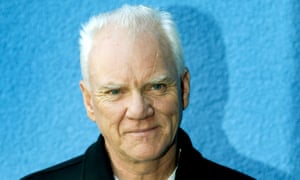
Malcolm McDowell was the insolent prince of early-70s cinema, the Liverpool salesman who stormed the establishment’s barricades. You can see him on screen in Lindsay Anderson’s If…., kickstarting a bloody revolution inside an English public school. You can see him in Stanley Kubrick’s A Clockwork Orange, hanging with his droogs at the Korova milk-bar, making up his rassoodock what to do with the night. The sky was the limit. The world was his oyster. One felt he could achieve pretty much anything…

…McDowell’s imitation of Gielgud is perfect. He catches the man’s mellifluous delivery and querulous top note. “He’d say: ‘Oh, my accountant says I have to make cutbacks but I don’t see where I can.’ And I’d say, “Well, you’ve got a huge house, John.’ He’d say: ‘Oh yes, but I can’t sell that.’ ‘Well OK, but don’t you have a chauffeur-driven Rolls?’ ‘But, but –…

View original post 56 more words

Categories
German Matters Literature Poetry

Mein Herr Marquis- The Laughing Song


Mein Herr Marquis, ein Mann wie Sie
Sollt’ besser das verstehn,
Darum rate ich, ja genauer sich
Die Leute anzusehen!
Die Hand ist doch wohl gar zo fein, hahaha.
Dies Füsschen so zierlich und klein, hahaha.
Die Sprache, die ich führe
Die Taille, die Tournüre,
Dergleichen finden Sie
Bei einer Zofe nie!
Gestehn müssen Sie fürwahr,
Sehr komisch dieser Irrtum war!
Ja, sehr komisch, hahaha,
Ist die Sache, hahaha.
Drum verzeihn Sie, hahaha,
Wenn ich lache, hahaha!
Ja, sehr komisch, hahaha
Ist die Sache, hahaha!

Sehr komisch, Herr Marquis, sind Sie!
Mit dem Profil im griech’schen Stil
Beschenkte mich Natur:
Wenn nicht dies Gesicht schon genügend spricht,
So sehn Sie die Figur!
Schaun durch die Lorgnette Sie dann, ah,
Sich diese Toilette nur an, ah
Mir scheint wohl, die Liebe
Macht Ihre Augen trübe,
Der schönen Zofe Bild
Hat ganz Ihr Herz erfüllt!
Nun sehen Sie sie überall,
Sehr komisch ist fürwahr der Fall!
Ja, sehr komisch, hahaha
Ist die Sache, hahaha
Drum verzeihn Sie, hahaha,
Wenn ich lache, hahaha!
Ja, sehr komisch, hahaha,
Ist die Sache, hahaha  etc.

English Translation


My Lord Marquis, a man like you
should better understand that,
Therefore I advise you to look more
accurately at people!
My hand is surely far too fine, hahaha.
My foot so dainty and small, hahaha.
In a manner of speaking
My waist, my bustle,
The likes of things you’ll never find
on a maid!
You really must admit,
This mistake was very funny!
Yes, very funny, hahaha,
This thing is, hahaha.
You’ll have to forgive me, hahaha,
If I laugh, hahaha!
Yes, very funny, hahaha
This thing is, hahaha!

Very comical, Marquis, you are!
With this profile in Grecian style
being a gift of nature;
If this face doesn’t give it away,
Just look at my figure!
Just look through the eye-glass, then, ah,
At this outfit I am wearing, ah
It seems to me that love
Has clouded your eyes,
The chambermaid image
Has fulfilled all your heart!
Now you see her everywhere,
Very funny indeed, is this situation!
Yes, very funny, hahaha
This thing is, hahaha.
You’ll have to forgive me, hahaha,
If I laugh, hahaha!
Yes, very funny, hahaha
This thing is, hahaha!