Categories
Art and Photographic History Literature Poetry

Brise Marin par Stéphane Mallarmé

La chair est triste, hélas ! et j’ai lu tous les livres.
Fuir ! là-bas fuir! Je sens que des oiseaux sont ivres
D’être parmi l’écume inconnue et les cieux !
Rien, ni les vieux jardins reflétés par les yeux
Ne retiendra ce coeur qui dans la mer se trempe
Ô nuits ! ni la clarté déserte de ma lampe
Sur le vide papier que la blancheur défend
Et ni la jeune femme allaitant son enfant.
Je partirai ! Steamer balançant ta mâture,
Lève l’ancre pour une exotique nature !

Un Ennui, désolé par les cruels espoirs,
Croit encore à l’adieu suprême des mouchoirs !
Et, peut-être, les mâts, invitant les orages,
Sont-ils de ceux qu’un vent penche sur les naufrages
Perdus, sans mâts, sans mâts, ni fertiles îlots …
Mais, ô mon coeur, entends le chant des matelots !

Stéphane Mallarmé, Vers et Prose, 1893

Image result for mallarme

This lovely poem reminds me a little of the Breton crabbers that came into St Ives in the 1950s and 60s.
Categories
Uncategorized

On the fringes of Dada in Berlin

europeancollections's avatarLanguages across Borders

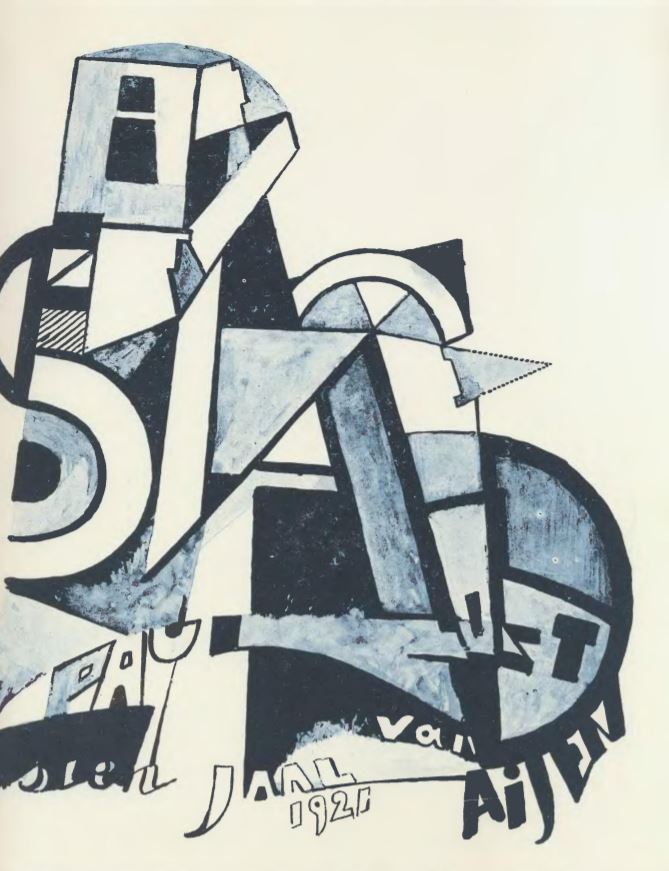
It seems to be almost a running joke that British people find it difficult to name a famous Belgian. This post highlights a major work of an important and influential 20th century Flemish poet who should definitely be more widely known and who was briefly on the periphery of the Dada movement in Berlin after World War I.

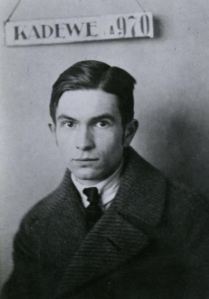
Paul van Ostaijen in Germany, 1920 via Wikimedia Commons

Paul van Ostaijen (1896-1928) was from Antwerp where he gained a reputation as a dandy within bohemian circles. He was a political activist for the Flemish independence movement, and his flight to Berlin at the very end of World War I meant that he escaped a short delayed prison sentence, imposed earlier that year for demonstrating against the pro-French speaking Cardinal Mercier. He was already a published poet and critic, and during the two and a half years that he spent in…

View original post 984 more words

Categories
Uncategorized

Wroclaw – 1

Julian Worker's avatarJulian Worker - Journeys

If you like gnomes, especially statues of gnomes, then Wroclaw is a place you should visit. There are over 300, all in miniature, scattered throughout the city. There’s even a map available at the tourist information for gnome enthusiasts to follow. I wasn’t purposefully following a trail, but I still spotted around a dozen in various places such as the one operating a mechanical digger by the river Oder, an opera gnome singing an aria to a ballerina gnome outside the Opera House , and a rock star gnome holding a guitar skywards in the main square. The most famous are the fireman gnomes near the Hansel and Gretel houses on the main square. Visitors will notice that certain parts of these gnomes, such as the nozzle of their hose, are highly polished as tourists have rubbed them for good luck.

View original post

Categories
German Matters Literature Poetry

Herbstwanderung

Herbstwanderung

Golden und rot leuchtende Blätter
in tief stehender Sonne.
Farben explodieren
verschwenderisch
trunken
vergehend.

Reife Früchte
Beeren unbekannten Namens
aromatische Fülle
Ahnung von Fäulnis.

Vögel sammeln sich
Kraniche ziehen
Wespen umsummen das Obst
Waldtiere bereiten sich vor.

Altweiberfäden zeigen sich
in schrägen Sonnenstrahlen,
auf Spinnweben glitzern Tautropfen,
ein Blatt dreht sich herabfallend
in seiner farbigen Schönheit.

Es riecht feucht
intensiv
erdig
nach Pilzen
nassem Holz
Tannennadeln
sich zersetzenden Blättern
Wildschweinen.
Dieser Geruch:
unvergesslich
Heimat.

Ich sammle bunte Zweige
die letzten Blüten
Äste mit Beeren
anmutige Gräser –
sie werden das Zimmer schmücken.

Bald sind die Zweige kahl,
tragen die Äste nur noch sich selbst
die Gräser hängen,
sie haben ihre Schönheit überlebt.
Die Vase bleibt leer.

Bald wird der weich-feuchte Waldboden
frosthart
Schnee bedeckt die abgestorbenen Blätter.
Die große Stille zieht ein.

Text from Renate Augenstein

Categories
Uncategorized

Haarlem Jazz

I’ve recently read Geoff Dyer’s book about Jazz which is called “But Beautiful”. It’s put me in the mood…..so to speak.

ms6282's avatarDown by the Dougie

DSC07084

Our visit to Haarlem coincided with the annual Jazz Festival which started on the Wednesday and ran through until Sunday. We’d hoped to catch some of the music on the Wednesday and Thursday before we headed for home on Friday. On Wednesday evening, however, it poured down more or less continuously so after spending some time watching one of the acts on the opening night, we decided to call it quits and retreated to Tierney’s bar! The next night was much better. It didn’t rain and we were able to sample some of the music and atmosphere.

On the Wednesday there was only one stage, set up in the Grote Markt, but the next night three more stages opened up. 2 other stages around the Grote Kerk – on Oude Groenmarkt and Klokhuisplein – and another venue at the Pletterij , on the outskirts of the town centre.

From what…

View original post 154 more words

Categories
Uncategorized

Gdansk – 15

Interesting to see the detail about this major European city.

Julian Worker's avatarJulian Worker - Journeys

The Old Town was 90% destroyed by these armies and by the Russian forces seeking to wrest Gdansk away from Nazi Germany. My understanding is that the sensitive restoration of the city after 1945 did reduce some of the Prussian influences in the architecture, but that most of the buildings looked exactly as they did before 1939. 

Drawings, paintings, and old plans were used to reconstruct whole neighbourhoods, as was the case with most Polish cities after WWII, and as I walked along each street, strolled through the parks, and admired every church I gave thanks to the restorers for making such great efforts to reproduce their city of the pre-war years. It would have been easier to build Stalinist blocks, but the planners wanted their city back as it was in early 1939. It took over 30 years to complete, but the Old Town is now old again. 

View original post

Categories
Uncategorized

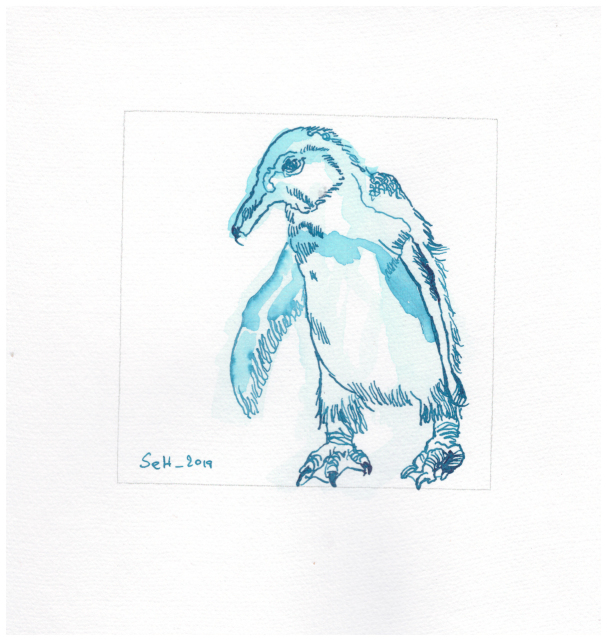
Die Pinguine lassen mich nicht los – Zeichnung von Susanne Haun

Lovely penguins- really sweet!!

Susanne Haun's avatarSusanne Haun

Es hört sich an als ob der nächste Salon am 29. Oktober 2019, 18 Uhr (Klick) in meinem Atelier noch in weiter Ferne scheint, jedoch weiss ich, wie schenll die Zeit vergeht und zeichne weiter an meine Afrika Impressionen.

Die Pinguine lassen mich nicht los. Die Beobachtung der Pinguine gehört zu meinen schönsten Erinnerungen an die Afrika Reise vor nun schon fast zwei Jahren. Hier ist der Link (Klick), der zum Blogbeitrag führt, in dem ich über diesen besonderen Tag berichte.

Afrika, Pinguin, Zeichnung von Susanne Haun (c) VG Bild-Kunst, Bonn 2019Afrika, Pinguin, Zeichnung von Susanne Haun (c) VG Bild-Kunst, Bonn 2019

Ich zeichne für die kleinen Arbeiten immernoch in der Größe 15 x 15 cm. Da ich meine Blätter immer voll ausnutze, muss ich mir tatsächlich einen Bleistiftrahmen dieser Größe zeichnen, damit ich innerhalb meines Passepartoutausschnitts bleibe. Das amüsiert mich etwas, vor dem Rahmen wird der Ausschnitt wieder ausradiert.

View original post

Categories
Uncategorized

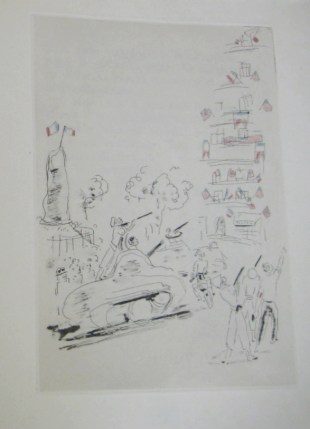
The Liberation of Paris, 19-29 August 1944: “Images de notre délivrance” by Georges Duhamel and Claude Lepape

Inspiring time- worth recalling just now!

europeancollections's avatarLanguages across Borders

1On the 75th anniversary of the Liberation of Paris, we would like to talk about Images de notre délivrance (Liberation.a.7), published in December 1944 by the Editions du Pavois (the publisher in 1946 of L’Univers concentrationnaire by David Rousset, which was awarded the Renaudot prize, Liberation.c.119 and Liberation.c.918). The book, clearly of a bibliophile nature, is presented by the editor as a documentary, the result of an accidental collaboration between a writer, Georges Duhamel (1884-1966), and an artist, Claude Lepape (1913-1994), both reacting to a unique historical event:

Ce livre est un document. Il est né de la rencontre fortuite de deux sensibilités. L’Ecrivain et le Dessinateur ne se sont pas concertés, mais leurs réactions, si diverses et en même temps si proches, constituent l’un des documents les plus émouvants sur les glorieuses journées de la libération.

View original post 665 more words

Categories
Uncategorized

Our Lady of the Nile, by Scholastique Mukasonga, translated by Melanie L. Mauthner

Looks very interesting!

Lisa Hill's avatarANZ LitLovers LitBlog

This is a heart-breaking book. Our Lady of the Nile is a prelude to the Rwandan Genocide against the Tsuti, depicting in fiction the divisions in Rwandan society in the microcosm of an elite girls’ school. Scholastique Mukasonga is a Rwandan refugee now living in France, and I have previously read her searing memoir Cockroaches (2006, translated into English in 2016).  This novel (Notre Dame du Nil) followed in 2012 and was translated in 2014.
Our Lady of the Nile draws on the author’s own experience at the Lycée Notre-Dame-de-Citeaux, which she attended as one of the Tutsi quota. It was because she had fled to Burundi after being attacked by Hutu students at that school, that she did not witness the genocide, and escaped the slaughter of her family.

Like the elusive source of the Nile, the causes of ethnic hatred in Rwanda are hard…

View original post 1,291 more words

Categories
Art Exhibition Reviews Uncategorized

Felix Valliton

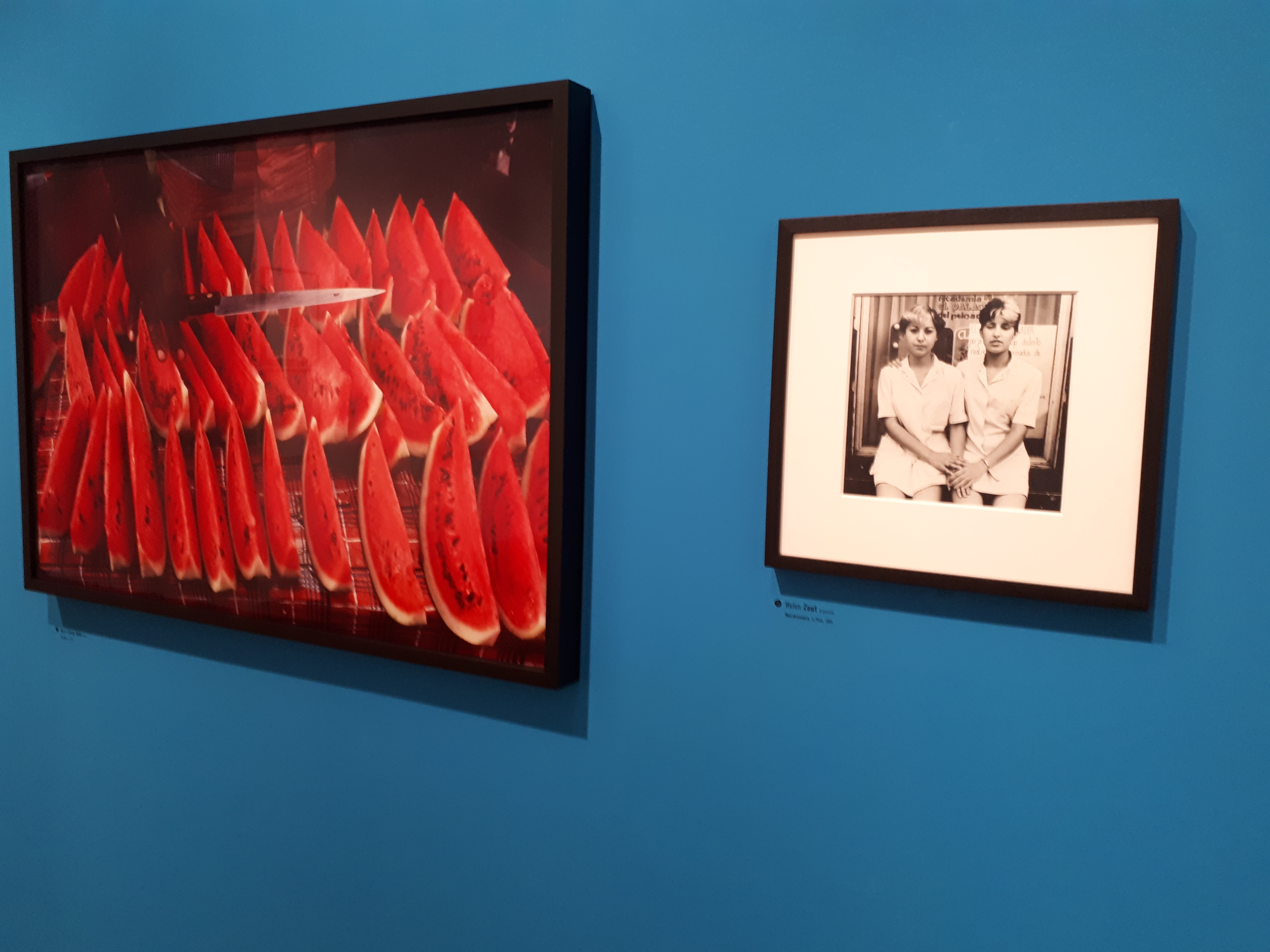
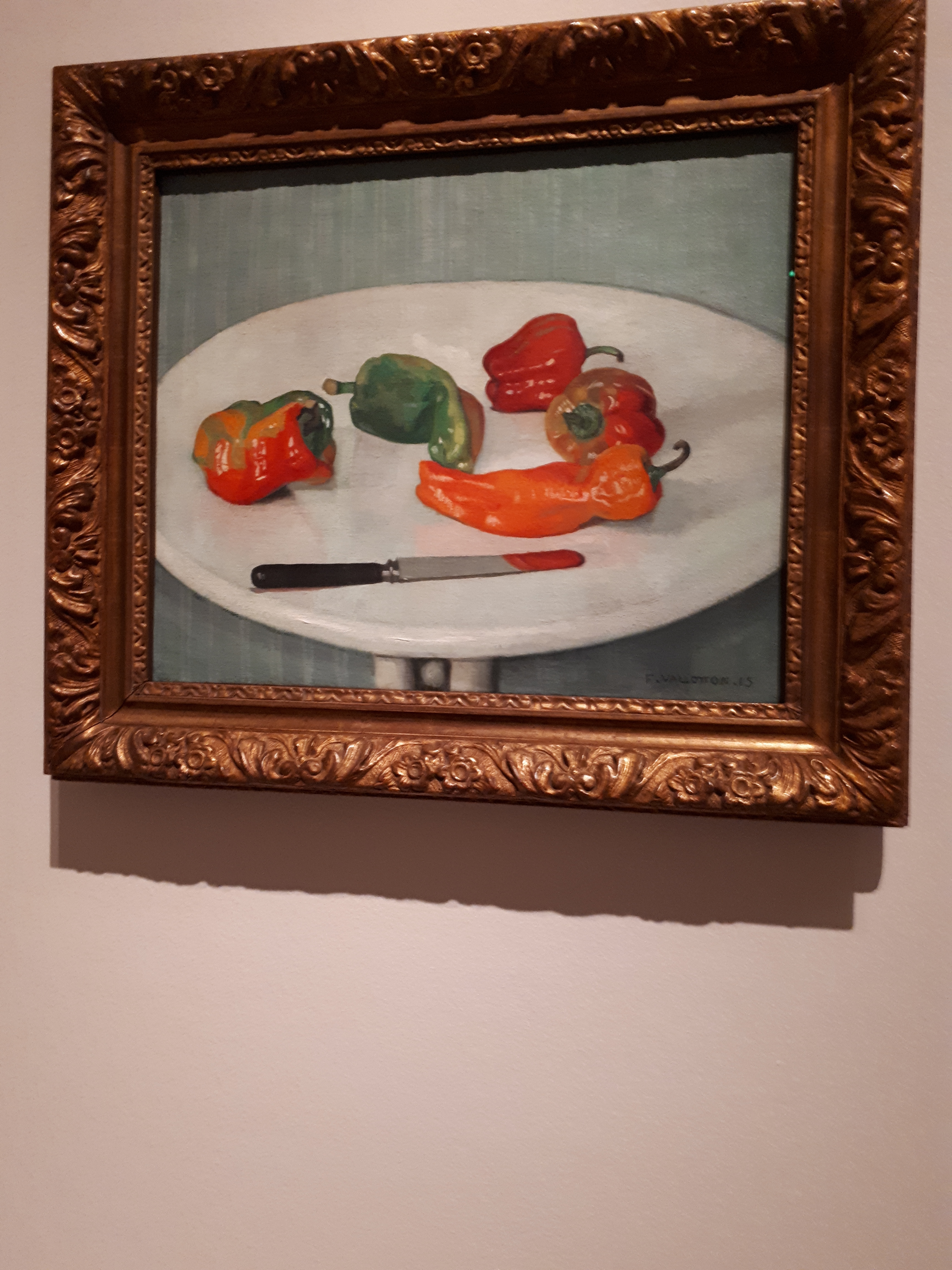
From the Latin American Expo at Photographer’s Gallery, the above photograph in the context of Latin American history brings up all the associations with the colour red. Melons with a knife implies the violence of the troubled history of South America. It also recalled the painting by Valliton which he painted upon the outbreak of the First World War- also a bloody image with another fruit/vegetable. I had seen this just a few hours before at the R.A. I ask myself what it is about these images that was so affecting. Perhaps it was that I was about to visit the Stanley Kubrick exhibition, perhaps also that they are reminders of how easily, in the current situation politically matters could go wrong.

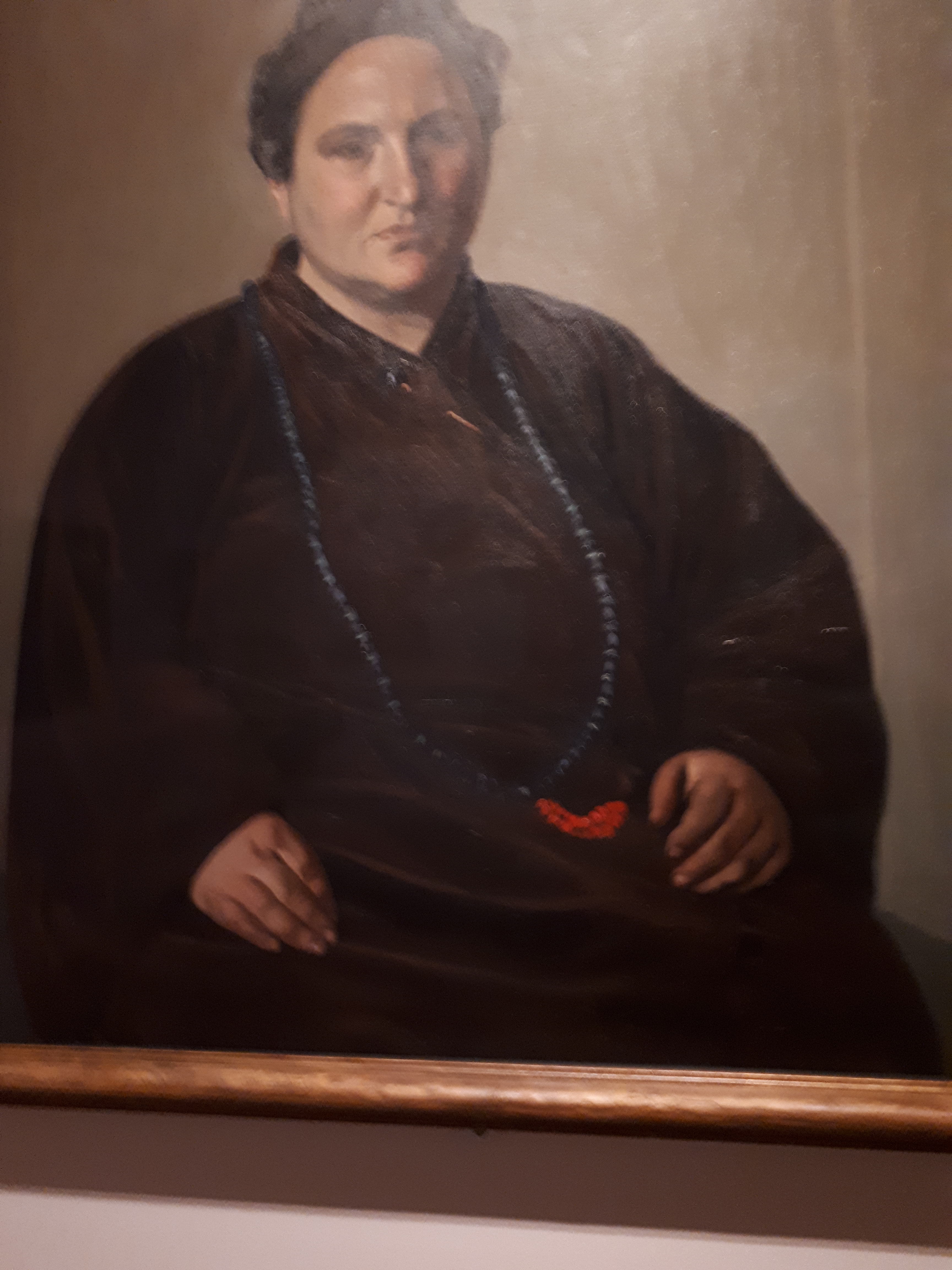
Here are some further images of the Valliton from the R.A. I found his work dramatic and affecting on so many levels. A true modernist with a thoughtful face according to his self-portrait.

Valliton 1914
Gertrude Stein by V
Gertrude Stein by Valliton
Landscapes