Gives a new meaning to constantly connected!
Author: penwithlit
Freelance writer and radio presenter
Categories
BERLIN PAST: BORSIG IN MOABIT
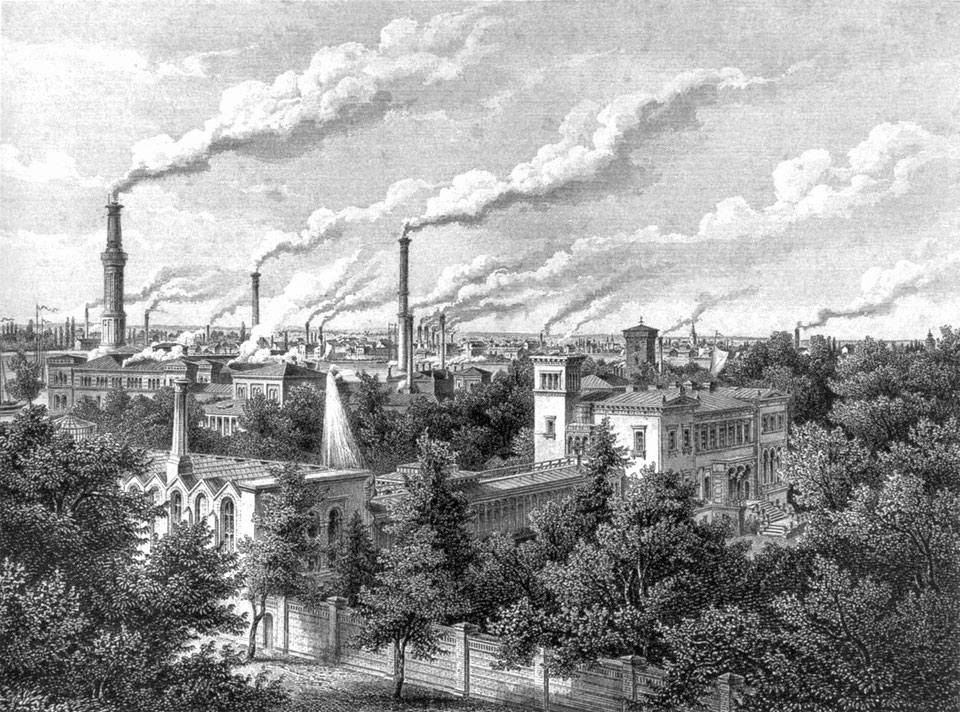


Villa Borsig in Berlin-Moabit in a neighbourhood known as Westfälisches Viertel. Built in 1849 forAugust Borsig in what is now Elberfelder Straße, the grand mansion was erected on Borsig’s land together with company’s own ironworks.
Both were surrounded by an elegant park designed by none other than Peter Joseph Lenné (the Berlin garden and park architect and father of, among many others, the Tiergarten). The villa, first out of three magnificent Borsig Villas, survived for less than a century: after the company’s rapid expansion it became necessary to find a bigger site and Borsig’s own property trust, Neu-Bellevue-Aktiengesellschaft, subdivided the land in Moabit into smaller plots, demolished the villa as well as other buildings and before building new streets, felled nearly all the trees in the old Lenné park.

The tiny section…
View original post 19 more words

Like the Putz painting very much!
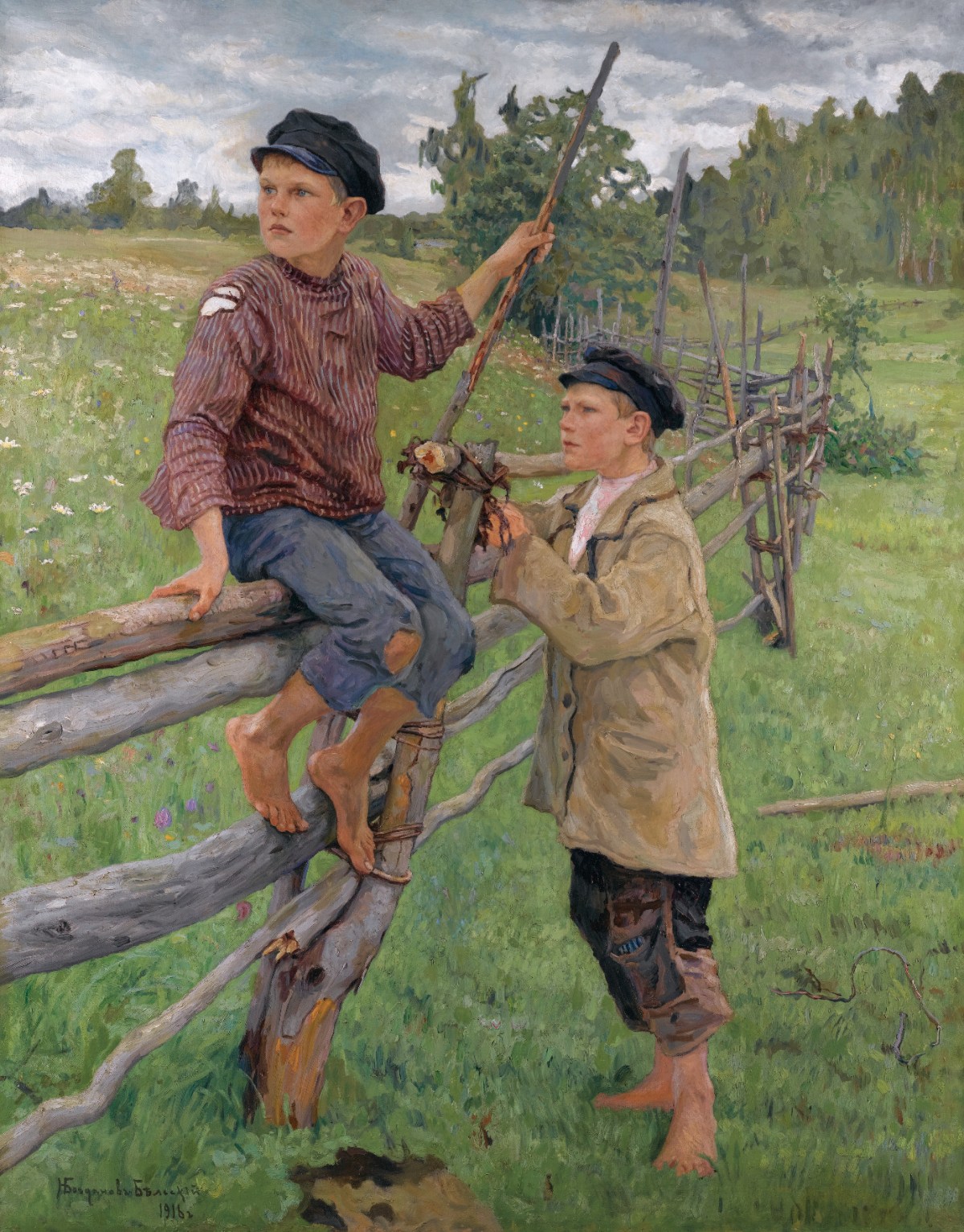


- Nikolai Petrovich Bogdanov-Belsky, (1868-1945), Country Boys, signed in Cyrillic and dated 1916 l.l., oil on canvas, 153 by 124cm, 60 1/4 by 48 3/4 in., Source: Sotheby’s.
Bogdanov-Belsky’s Best: Pre-revolution
Bogdanov-Belsky’s pre-revolutionary works include some of his most striking canvases, the scale alone often an indication of his artistic confidence. The present lot is an exceptional example of the qualities that mark out these rare, early paintings – tight brushwork, vivid blues and greens, and an impact that would grow gradually more diffuse with the looser strokes and muted palette that appear at times in his later works. Source: Sotheby’s.
![Screenshot_2018-11-04 6bogdanov-belsky-nikolai-petrovi-figures-sothebys-l12111lot6f6xfen-e1541387788711 jpg (JPEG Image, 31[...]](https://atsunnyside.files.wordpress.com/2018/11/screenshot_2018-11-04-6bogdanov-belsky-nikolai-petrovi-figures-sothebys-l12111lot6f6xfen-e1541387788711-jpg-jpeg-image-31.jpg?w=580)
Faces Reflect Coming Chaos
In the present lot there is an unmistakable sense of resolve in the boys’ expressions. Their tightly-pursed lips and concentration ground the pair to a pre-Revolutionary epoch: alert in the face of uncertainty rather than the glazed look of Soviet youth.Source: Sotheby’s.
![aScreenshot_2018-11-04 screenshot_2018-11-04-bogdanov-belsky-nikolai-petrovi-figures-sothebys-l12111lot6f6xfen jpg (JPEG Ima[...]](https://atsunnyside.files.wordpress.com/2018/11/ascreenshot_2018-11-04-screenshot_2018-11-04-bogdanov-belsky-nikolai-petrovi-figures-sothebys-l12111lot6f6xfen-jpg-jpeg-ima.jpg?w=766&h=1482) Nikolai Petrovich Bogdanov-Belsky, (1868-1945),
Nikolai Petrovich Bogdanov-Belsky, (1868-1945), View original post 262 more words
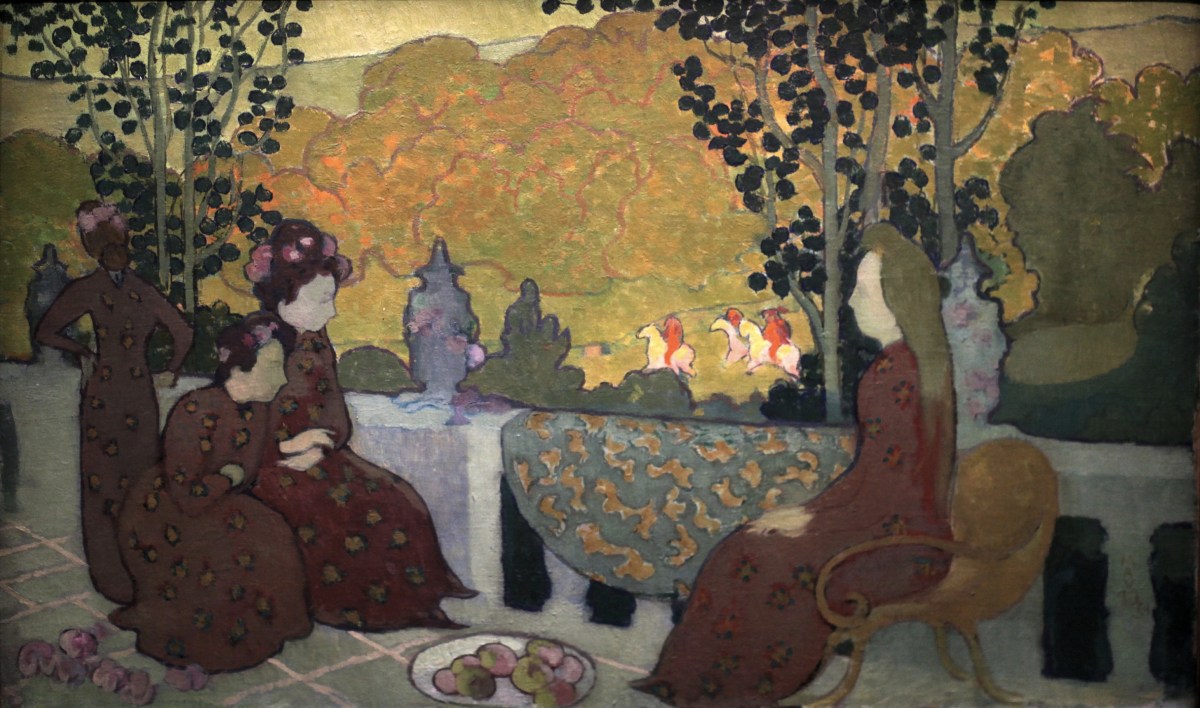
 , September Evening, (1891), Musée d’Orsay, Maurice Denis CC BY-SA 2.0 fr (https://creativecommons.org/licenses/by-sa/2.0/fr/deed.en)%5D, via Wikimedia Commons
Who Is Maurice Denis?
Maurice Denis (November 1870 – 1943) was a French painter, decorative artist and writer who was an important figure in the transitional period between impressionism and modern art. He was associated with Les Nabis then the Symbolist movement, and then with a return to neo-classicism. His theories contributed to the foundations of cubism, fauvism, and abstract art. Following the First World War, he founded the Ateliers d’Art Sacré (Workshops of Sacred Art), decorated the interiors of churches, and worked for a revival of religious art. Maurice Denis died November 13, 1943.
 , September Evening, (1891), Musée d’Orsay, Maurice Denis CC BY-SA 2.0 fr (https://creativecommons.org/licenses/by-sa/2.0/fr/deed.en)%5D, via Wikimedia Commons
Click for Enlarged Detail:
Details:
- Name: Maurice Denis
- Title: September Evening…
View original post 76 more words
Categories
Die Kerzen brennen fröhlich weiter…
Richly romantic!

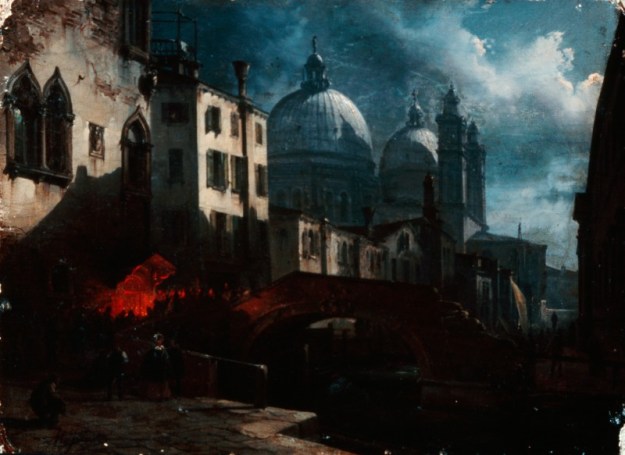 Giovanni Migliara: Scene veneziana (ca. 1830)
Perücke, Spiegel und Masken
Die Angst geht um in Schön-Venedig,
Denn hübsche Frauen, jung und ledig,
Verschwinden spurlos in der Nacht;
Es trifft nur bessrer Häuser Töchter,
Ein Mörder geht, nur diese möcht er,
Ist bald schon schrecklicher Verdacht.
Man findet lange keine Leichen,
Wie sich die Taten aber gleichen:
Ist immer stiller Mondenschein,
Kein Wind weht her aus der Lagune,
Das Wasser ruht an Pfahl und Buhne,
Die Gondeln schimmern schwarz und fein.
Vergeblich ihre Eltern warnen,
Dass sich die schlimmsten Teufel tarnen,
Auf Bälle gehn die Töchter doch;
Dort steht er, der die Angst verbreitet,
Maskiert und tadellos gekleidet,
Das Haar gepudert noch und noch.
Er schaut sie an und spricht sehr vage
Und tanzen kann er ohne Frage,
Er scheint aus einem noblen Haus,
Ist höflich und auch gut erzogen –
Wie sehr der Anschein doch gelogen,
Er sucht ja schon…
View original post 215 more words
Very interesting!

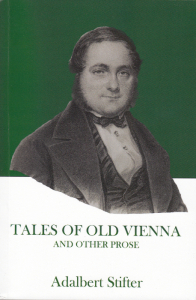
At one point I was seriously considering reading Witiko, Stifter’s six hundred page book set in medieval Bohemia, for this year’s German Literature Month but in the end I plumped for this shorter book, a collection of stories and prose which was published in 2016 by Ariadne Press in California. The contents of Tales of Old Vienna and Other Prose were translated by Alexander Stillmark who also provides an introduction. This collection contains five short stories and four short prose works including a personal account of an eclipse of the sun in 1842. The first story in the collection is The Condor (1839), Stifter’s first published story, which is quite interesting initially but one which soon becomes a pretty standard nineteenth century story of doomed love. The shortest story, at only five pages, is Confidence an entertaining tale of unwitting parricide followed by suicide. But the bulk of the…
View original post 1,333 more words
 One of the ones that Midas touched,
Who failed to touch us all,
Was that confiding prodigal,
The blissful oriole.

So drunk, he disavows it
With badinage divine;
So dazzling, we mistake him
For an alighting mine.
A pleader, a dissembler,
An epicure, a thief, —
Betimes an oratorio,
An ecstasy in chief;
The Jesuit of orchards,
He cheats as he enchants
Of an entire attar
For his decamping wants.
The splendor of a Burmah,
The meteor of birds,
Departing like a pageant
Of ballads and of bards.
I never thought that Jason sought
For any golden fleece;
But then I am a rural man,
With thoughts that make for peace.
But if there were a Jason,
Tradition suffer me
Behold his lost emolument
Upon the apple-tree.
Some beautiful lines in this poem and I find myself wondering about what sort of mine might be “lighted”. Also, verse 4 which puzzles me but I find entirely beautiful too.

Charming portrait!
 Nikolai Petrovich Bogdanov-Belsky (1868-1945), The Schoolgirl, , signed in in Cyrillic l.l., oil on canvas, 158 by 119cm, 62 1/2 by 46 3/4 in., Image source: Sotheby’s.
Successful Exhibition 1917-1918
Nikolai Bogdanov-Belsky showed his paintings, including The Schoolgirl, at the 46th Itinerant Exhibition in 1917-1918, which was a time of great social and political upheaval. According to Sotheby’s catalogue, the success was surprising:
Against all odds the show was a great success:‘We assumed that during the revolutionary events people would be indifferent to art and that we would struggle to sell anything. Fortunately, we were wrong… our exhibition was well-attended and many of the works sold. […] Connoisseurs flocked to the venue, so much so that the exhibition administrator could hardly keep up with the purchases, and all this despite the high prices.’ (quoted in V.Vegenov, ‘N.P. Bogdanov-Belsky u «peredvizhnikov»’, Russkii vestnik, no.13 (79), 1943, p.4).
 Nikolai Petrovich Bogdanov-Belsky, The Schoolgirl, (1868-1945), signed in in Cyrillic l.l., oil on canvas, 158…
View original post 166 more words
Categories
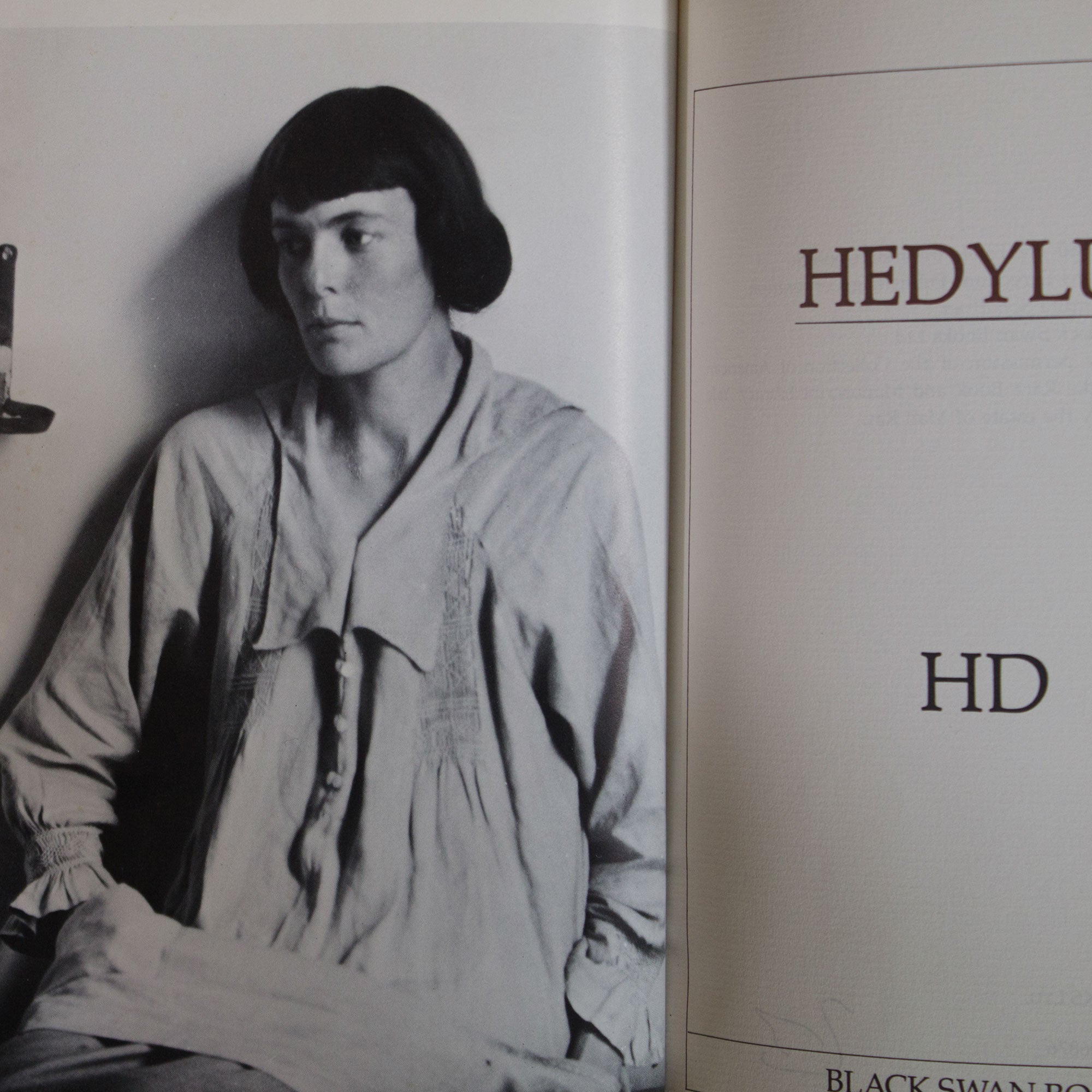
Sea Poppies by H.D.

Amber husk
fluted with gold,
fruit on the sand
marked with a rich grain,
treasure
spilled near the shrub-pines
to bleach on the boulders:
your stalk has caught root
among wet pebbles
and drift flung by the sea
and grated shells
and split conch-shells.
Beautiful, wide-spread,
fire upon leaf,
what meadow yields
so fragrant a leaf
as your bright leaf?
 penwithlit
