Categories
Uncategorized

THE LUMINOUS COSMOS OF ALEXANDER VON HUMBOLDT

A great man subject of two recent books and a film-I think!

Berlin Companion's avatarKREUZBERGED - BERLIN COMPANION

Here´s a man who needs no introduction. In fact, it would be far easier to name the things Alexander von Humboldt did NOT do than to properly quote all of his achievements. He was “the last universal man” whose death in 1859 is often said to have marked the end of a great era of science, curiosity and of open-minded intellectual pursuit.

Born in Jägerstraße in Mitte (the house does not exist anymore), he and his equally famous brother, Wilhelm, spent their childhood in Tegel: Schloß Tegel with its beautiful park located on the northern shore of the Tegel Lake was Wilhelm´s and Alexander´s playground and their first site for curious exploration. The park is home to an approximately 800-year-old oak tree – the oldest tree in Berlin – which the boys named “Fat Mary” (Dicke Marie) after the family cook.

Alexander von Humboldt´s travels and the accounts…

View original post 370 more words

Categories
Art and Photographic History Art Exhibition Reviews Penwith St Ives West Cornwall (and local history)

Summer in West Penwith in Black and White

Inspired by this Youtube clip of Berlin taken in 2015 in black and white, I decided to take a look at some, mostly “street” photographs I have taken  out and about in Penzance, Newlyn and St Ives this Summer.

pe

pe1

pe3

pe5pe2

pe6

pe7

pe8

pe9

There are two analogue photography websites i would like to recommend:-

www.ishootfilm.de

and for the forthcoming Newlyn Arts Festival

http://www.homemadeproject.net

the latter will be at the Newlyn Art Gallery

Categories
Art and Photographic History Book Reviews German Matters

Heidegger Reframed by Barbara Bolt

Martin Heidegger (September 26, 1889 – May 26, 1976 is renowned for the complexity and subtlety with which his thoughts on the philosophy of being (ontology) is expressed. His ideas are inspired by numerous sources from the pre-Socratics, Plato, Aristotle and much of his thought dependent upon his early training as a Jesuit. He read and imbibed St Augustine and Duns Scotus. He trained under the phenomenologist, Edmund Husserl at Freiburg and his approach is deeply engaged with German philosophers like Kant, Schopenhauer and Nietzsche. He also read Kierkegaard with close attention.

h


His ideas about the nature of being are in stark contrast with those of Descartes which involve a split between consciousness and the external world. This Cartesian framework or dualism is embedded in modern science and Western thought generally. One result of Descartes philosophy is that Nature is subject by the mind to measurement and calculation and also to manipulation. This borders on what is termed instrumentalism and indeed the consequent exploitation of the environment. This, Heidegger with his alternative view of the direction of philosophy, he deeply and radically opposed. The implication of Heidegger’s thought for the creative artist and the making and meaning of art forms the thrust of Barbara Bolt’s text. His project is illustrated with specific reference to international artists like Sophie Calle, Anish Kapoor and Anselm Kiefer.


Generally considered as a great classic of Twentieth Century philosophy Sein und Zeit, 1927 is not an easy book to read even if you are thoroughly fluent in German. Concerned with existence and the nature of being, it is equally interested in associated questions about time. This central text focuses on the nature of reality and the being-right-there of existence for which Heidegger uses the term Dasein. Part of the difficulty of understanding this central work is that language almost seems to break down under the pressure of difficulty in communicating the awesome nature of human existence, which many would see as essentially spiritual. Barbara Bolt provides a thoroughly useful glossary to such terms in support of her guide.


This glossary contains some eighty terms; it is relatively clear but illustrates some of the difficulties in expounding Heidegger’s collected work,Gesamtausgabe, which itself runs to more than eighty volumes. Barbara Bolt explains in her early chapters concepts associated with Dasein which involvecare for the self and other beings, Sorge, and in the face of personal and certain knowledge of death, the termination of existence on Earth, anxiety or Angst. For Heidegger there are two possibilities, it seems either falling into immersion in the day to day, which he terms ontic existence or striving with resoluteness for authenticity. This bears upon artistic endeavour in several ways; the acceptance of strife when faced with unsettling artworks, the necessity of praxis in art education and research which hopefully produces a practical and respectful understanding of materials by a heuristic approach. Bolt is interesting and thought-provoking in her exposition on this.


A perhaps greater difficulty in appreciating Heidegger, which Bolt mentions, perhaps too briefly, continues in current debate. This was his active involvement with Nazism and his eulogy of Hitler involving praise for his moral regeneration of the Fatherland. This has been, not surprisingly, a sticking point in the appreciation of the Heidegger canon. A discussion of this may be found inInauthenticity: Theory and Practice, contained in JP Stern’s essays on literature and ideology, The Heart of Europe. There is particular concern over his treatment of his German-Jewish teacher, a Christian convert and former colleague, the proponent of phenomenology Husserl, to whom Sein und Zeithad initially been dedicated. He also took a renowned student, Hannah Arendt as his mistress and she it was who later to testified on his behalf at a denazification hearing in opposition to Karl Jaspers.


In a key chapter, Barbara Bolt uses two central concepts of Heidegger to evaluate particular art works. These are ‘enframing’ (Gestellung) and ‘poiesis’-a Greek term for making from which the word poetry is derived. Enframing, according to Heidegger, has negative connotations and is applied to methods like those of modern technology which treats nature solely as a means to an end and shows Heidegger to be an early proponent of environmentalism and certainly a critic of agribusiness. This seems to be echoed by concerns about the manner in which the business of art has been cheapened and debased by commercialisation and celebrity culture. There is, she explains an unholy alliance developing between advertising in late capitalism as evidenced, for instance, by Tracey Emin selling Bombay Sapphire Gin. Enframement also appears to include a criticism of managerialism; disapproval of the manner in which humans are treated often with statistical techniques as mere available resources. Before examining the concept of ‘poesis’, it is worth noting that this book is actually entitled ‘Heidegger Reframed’ and is one in a general series. This tends to give framing a different, presumably positive connotation that sits uneasily with the particular use of the term by Heidegger. Unfortunately, there appears to be no general series editor that could add guidance and cohesion to this demanding project of applying the thought of modern philosophers to art.h1


Bolt sometimes writes convoluted sentences in a somewhat orotund style which may be an understandable effect of propounding the concepts of this demanding, intriguing philosopher. Nevertheless, the style invites the reader to question some of the propositions expounded. There is no doubt that Heidegger had a particular view about the dominance of the scientific method as he conceives it. Also mathematics seems deemed uncongenial, whereas language, and also history with its different conception of time and certainly etymology are viewed by Heidegger as more relevant to his project. It is interesting to speculate how much he might have responded to philosophers of science like Thomas Kuhn whose views on paradigm shift, and those too of Paul Karl Feyerabend, might have influenced him had he been fully aware of them. Heisenburg, a contemporary and also a controversial figure, might have influenced Heidegger on his notion of how preconceived theories operate in science.


Heidegger as Bolt explains was inspired by poetry and must have been sensitive to its lyricism. This makes the reader question his apparent failure to respond to the beauty of mathematics which is in a sense a universal language. In general he was at pains to oppose certain notions of aesthetics associated particularly with the Enlightenment and Romanticism and the artist as an inflated, self-dramatising subject. In his conception of poesis, Heidegger approaches another mode of artistic appreciation and indeed gratitude which is guided by sympathy. The term, as Bolt makes clear is Greek in origin and involves openness to the bringing-forth or unconcealment of being. It is, for example, the sense of wonder when a butterfly emerges from a chrysalis or in the transformation when a flower blossoms from a bud. Heidegger spent a year in 1942 lecturing on Hölderlin’s Hymn “The Ister” which relates to the Danube and examined the limitations of a metaphysical interpretation of art and appears to argue the case for spiritual values in art together with a feeling for place attained by intimate journeying. George Steiner emphasises elsewhere how Heidegger’s titles are those of peregrination and comments, “He has been an indefatigable walker in unlit places”.


Barbara Bolt has written an interesting book on a difficult topic. The publishers might have supported her with somewhat better illustrations than the few disappointing images provided. However, she has shown how Heidegger can illuminate the work of prominent international artists. She has provided an introduction to a highly influential and controversial thinker supported with a sound biography. This work encourages the reader to bravely question art and promote radically innovative ways of observing and researching related issues.


Categories
Art and Photographic History Art Exhibition Reviews German Matters Uncategorized

Some German Photographers of the 1930s


More than twenty years ago there was an excellent bookshop at the bottom of Station Hill in Truro. It was manned by a man who looked like a taller version of Alan Bennet who wore a white pullover and so the shop became known in our family as the “White Man’s”. He may well have read English at University because there was an excellent stock of poetry, criticism and literary collections. It was in the front part of the shop that art and photography books were stocked. It was here that I discovered a magnificent book of photographs by Roman Vishniac. (https://en.wikipedia.org/wiki/Roman_VishniacI }that was called “Children of a Vanished World” and was more than I could then afford. It was, however, quite stunning to peruse and an astonishing invocation of the past. As one reviewer on Amazon writes:-

“In this book we can see the faces of the children who disappeared a few years later in the Shoah. Just look at them, they are children like all the others in the world; beautiful, funny, playing, studying, and so on. Lives which were brutally cut in the most monstrous way in human history. If they had lived, they would have been merchants, rabbis, doctors, lawyers; some of them would have been known as novelists, scientists, and so on. Why had the world to live without their talents they wanted to show us?”

Roman Vishniac
Roman Vishniac

Vishniac photographed many subjects including microscopic biological specimens but it is this collection about the Shtetel which made him famous. In a way it provides a complement to the magical paintings of Chagall. Also I started to read “Shtetel” by Eva Hoffmann which is also interesting on this topic.p2

20131023_130837

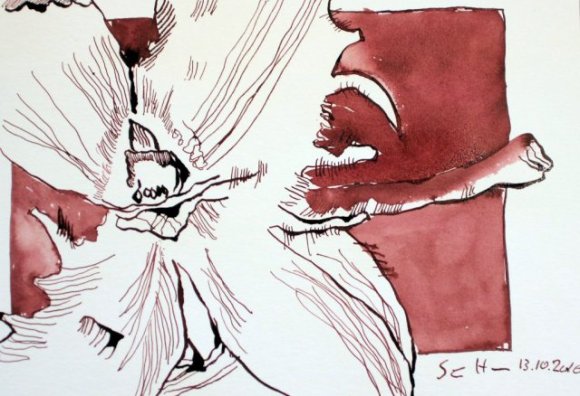
However, more recently,it is the Berlinische Galerie which opened my eyes to two further interesting photographers in their collection-http://www.berlinischegalerie.de/en/museum-berlin/forschung/grant/ These are Steffi Brandl and Erich Salomon. Brandl’s work is remarkable for it’s portrait and figure photography. Her compositions are unfailingly interesting and captivating. So captivating that I made sketches whist viewing them.p4p5 These are sophisticated photographs that work to capture the essence of the subjects in the lens. She was born in Vienna in 1899 as Stephanie Olsen and trained there under Trude Fleischmann and then married an architect, Ernst Brandl   moving to Berlin in 1926. She had a studio at 211 on the Kurfurstendamm and was forced to emigrate to England in 1933-she moved to New York where she died in 1966.

Erich Salomon’s work is similarly of great interest. In talking of his technique, wikipedia.de says the following:-

Übliche Arbeitsgeräte der Pressefotografen waren seinerzeit unhandliche Plattenkameras für Glasnegative bis 13 × 18 cm. Salomon erwarb wenige Monate nach seinen ersten fotografischen Erfahrungen eine Ermanox-Kamera. Diese war ein neu entwickelter, relativ kleiner Fotoapparat mit dem seinerzeit lichtstärksten serienmäßig hergestellten Objektiv (1:2) und einem Schlitzverschluss, der Belichtungszeiten von 1/20–1/1000 sec erlaubte. Mit der Ermanox waren Momentaufnahmen auch bei schwachem Licht, Fotos in Innenräumen ohne Stativ und Blitzlichtmöglich. Als fotografisches Bildmaterial dienten Glasplatten von 4,5 × 6 cm in Einzelkassetten, von denen man problemlos eine größere Anzahl bei sich tragen konnte. 1930 kam eine Leicahinzu – noch leichter und unauffälliger als die Ermanox.

Esentially this says that press photographers used to have to use large glass plates 13x18cm in size, However, Salomon developed the technique by using a newly developed Ermanox camera which was small with a mass produced lens that allowed exposure times of 1/20 to 1/1000 sec and could therefore be used in low light conditions i.e. indoor photography using flash so that the size of the plates were considerably reduced.and a number of plates could be stored in the box which the photographer manhandled. Hence a series of shots might be made.By the 1930s the even smaller and less conspicuous Leica was developed.

erich_salomon

Much more can be said about the dramatic life of this photographer who would indeed make a good subject for a film. Among the images which interested me that Salomon made was a photograph in 1938 taken in the Austrian Embassy in London. It shows, of course King George and the young Queen but also the Austrian Chancellor Kurt Alois Josef Johann Schuschnigg whose attempts to keep Austria independent were just about to fail before the Anschluss. After the invasion by Nazi Germany he was arrested, kept in solitary confinement and eventually interned in various concentration camps. Salomon’s fate was worse- as a Jew attempting to escape he was caught in 1940 in the Low Countries and died in Auschwitz in 1944. erich

Categories
Uncategorized

DORA CARRINGTON

“Lytton Strachey” by Michael Holroyd is a wonderful biography-very moving about Carrington. “Carrington” is also a great DVD.

beautybellezzabeaute's avatarBeauty Bellezza Beauté

Dora Carrington (1893-1932).

dora4doradora2dora9dora5dora6dora7dora91dora92dora8

View original post

Categories
Uncategorized

Paper Pencil Life #4 is HERE!

These look very lively!

summer's avatarPaper Pencil Life

PPL4 front CoverIMG_6172IMG_6171IMG_6173

Excuse me while I do a little dance! My latest collection of comics and diary comics, Paper Pencil Life #4, is at last available to purchase! 52 pages of comics in beautiful black and white! Stories about road trips, the artistic life, strange mothers, anxiety, and so much more! All for just $8.00!

I have to tell you that I am immensely proud of this work–I think it is my best issue yet. It has my favorite stories I’ve made in it–plus I just love how it looks!

Also–THIS JUST IN: I’ve also added a limited edition 4 pack of all 4 issues of Paper Pencil Life in my shop–4 issues for the price of 3! This way you can get the whole shebang and for a cheaper price!

IMG_6168

I’m thinking about not reprinting Issue #1 after this conference season to make room for more stuff (although the jury is…

View original post 88 more words

Categories
Uncategorized

In which there are some tips on travelling in Eastern Europe

Useful background for travellers here:-

Postcards's avatarPostcards from the Edge (of the West Country)

13920276_10157295357110343_6788695114108371303_o

As part os Eastern Europe, particularly the Balkans, are still developing when it comes to tourism, I thought I’d pass on some tips for fellow travellers that may be of use if you’re planning a similar trip to our recent one.

Initially we thought about picking up a hire car in Split and then driving it all the way to Belgrade, but the problem was that in going to another country, every company then whacked a relocation fee on top of the hire fee, making it too expensive to justify. Public transport it was then.

Travelling around Bosnia and Serbia is not the easiest, however, as the infrastructure just isn’t there yet, so it’s harder to be spontaneous about how to get to places. Trains are pretty much non-existent, but there are buses, and with some forward planning you should be fine.

It’s always a good idea to have…

View original post 1,411 more words

Categories
Uncategorized

Postcard from Budapest and Vienna

Reading Charles Wasserman “Tagebuch der Freiheit” -a journalist writing about Hungary in 1956-fascinating.

Postcards's avatarPostcards from the Edge (of the West Country)

I can’t believe that someone hadn’t made me go to Budapest before — it really is the most amazing city and I urge you to visit at the earliest opportunity if you haven’t already!

IMG_8586

Split into two parts by the Danube, Buda and Pest, it’s full of amazing architecture and green spaces. Budapest is also renowned for its hot springs and there are loads of places where you can take to the water.

IMG_8591IMG_8607DSC_0070

I also got to fulfil a long held dream and eat soup out of a bread bowl!

IMG_8611

On the second of our two full days there we bought a 24 hour city card which gave us unlimited travel plus free access to the St Lukacs baths (and some free and discounted museum entries, but the weather was so glorious that we didn’t go to any of these). We started off with our visit to the baths, which…

View original post 924 more words
Categories
Uncategorized

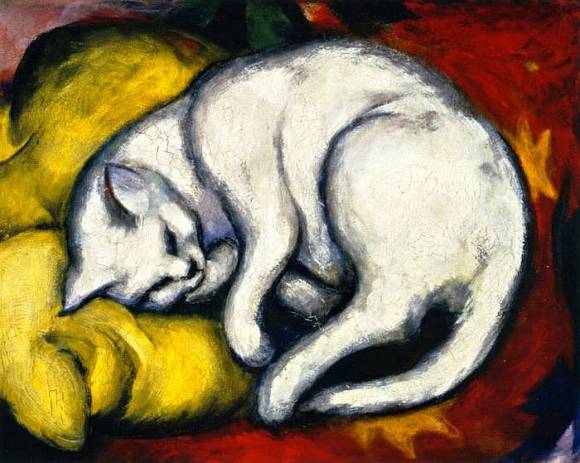
Lou Andreas Salomé (1861-1937) on Love, Philosophy, and Friendship

Currently reading about Bauer, her and Nietzsche in the novel “When Nietzsche Wept” by Yalom at https://www.amazon.co.uk/When-Nietzsche-Wept-Irvin-Yalom/dp/0062009303/ref=sr_1_1?s=books&ie=UTF8&qid=1472836675&sr=1-1&keywords=when+nietzsche+wept

Categories
Uncategorized

SEPTEMBER ISSUE OF THE EXBERLINER: POLISH VIBE IN GERMAN CAPITAL

Feeling upset by racist attacks in the UK-so little informed memory of the past

Berlin Companion's avatarKREUZBERGED - BERLIN COMPANION

Today is a difficult day for Poland – September 1st marks the beginning of one of the most tragic chapters in the country´s history as well as in the history of the world: at dawn on September 1,1939 German war planes bombed a sleeping little town in the west of the country, Wieluń.
 
The Second World War did not begin with the Wehrmacht troops breaking the border barrier on a sandy road between the two countries as the propaganda photos had people believe. It began with the German Luftwaffe dropping bombs on sleeping civilians. What followed was the Weltuntergang – the End of the World as the world had known it.
 
That is why it is particularly touching and inspiring to see that Berlin´s most popular English magazine, the EXBERLINER, devoted its whole September issue to Poles living in Berlin. We are the second biggest nationality group…

View original post 90 more words