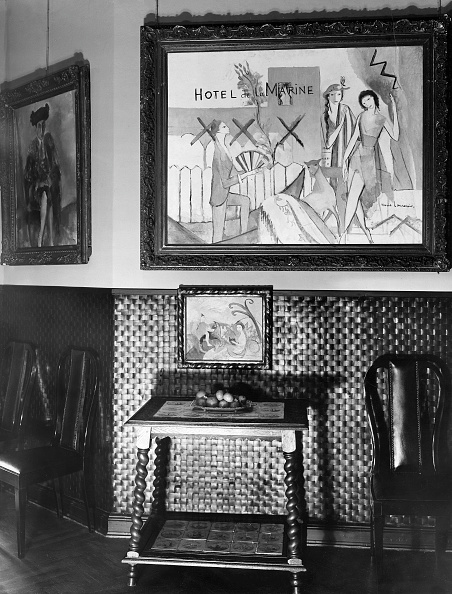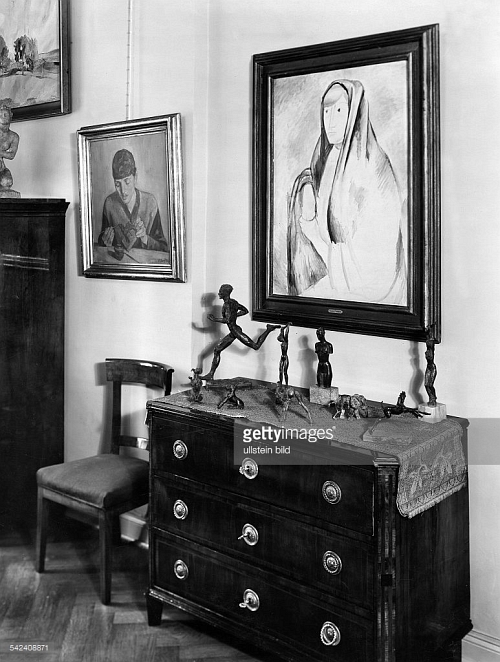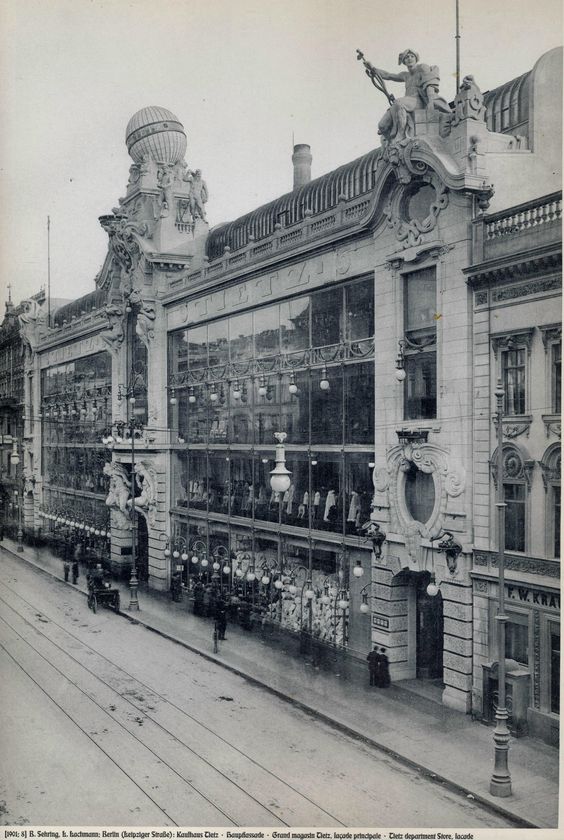
“I never had a “project.” I would go out and shoot, follow my eyes—what they noticed, I tried to capture with my camera, for others to see.” Helen Levitt, an American photographer who was particularly noted for street photography around New York City, and who has been called “the most celebrated and least known photographer of her time”, was born on August 31, 1913.
I have just been skim reading the Wikipedia.de entry about Mascha Kaleko and how she visited the famous literary Romamian Cafe which was in what is now Breitscheidplatz near the even more famous Kaiser-Wilhelm-Gedächtniskirche, Also that she had attended a Volksschule in Frankfurt and then attended in Berlin the Humboldt University. In the fateful year 1933, her book, Lyrische Stenogrammheft or “Lyrical Shorthand Notebook”-was published and the philosopher Heidegger wrote to her to say that he thought it showed that she understood everything that being mortal meant. Remarkably her work escaped the Nazi book burnings in May because they had not realised she was Jewish.
Afterthewar, KalékoinGermanyagain aquiredareading public.Lyrische Stenogrammheft was published byRowohlt(1956). By 1960 it was hoped togivehertheFontane prizeof theAkademiederKünstein WestBerlin. Since aformerSS member wasinthejury,HansEgonHolthusen,sherejectedthis offer.TheManaging Directorof theAcademy,HerbertvonButtlar somewhat excusedHolthusens SS membership and it seems undiplomatically recommended such “emigrants”tostay away. That sameyearshe left America for the sake ofherhusband and went withhimtoJerusalem.There, shesufferedmuchunderthelinguisticandculturalisolationandliveddisappointedandlonely.
Mascha Kaléko: Kinder reicher Leute
Sie wissen nichts von Schmutz und Wohnungsnot,
Von Stempelngehn und Armeleuteküchen.
Sie ahnen nichts von Hinterhausgerüchen,
Von Hungerlöhnen und von Trockenbrot.
Sie wohnen meist im herrschaftlichen Haus,
Zuweilen auch in eleganten Villen.
Sie kommen nie in Kneipen und Destillen
Und gehen stets nur mit dem Fräulein aus.
Sie rechnen sich schon jetzt zur Hautevolée
Und zählen Armut zu den größten Sünden
– Nicht mal ein Auto…? Nein, wie sie das finden!
Ihr Hochmut wächst mit Pappis Portemonnaie.
Sie kommen meist mit Abitur zur Welt
– Zumindest aber schon mit Referenzen –
Und ziehn daraus die letzten Konsequenzen:
Wir sind die Herren, denn unser ist das Geld.
Mit vierzehn finden sie, der Armen Los
Sei zwar nicht gut. Doch werde übertrieben–.
Mit vierzehn schon! – Wenn sie nur vierzehn blieben.
Jedoch die Kinder werden einmal groß…
I have been reading about a Canadian reporter visiting Hungary in 1956 and thinking about visiting the city myself. This is a useful and informative posting-thanks!
Are you planning a trip to Europe? I’m sure, your top destinations would be Paris, Italy and Spain. Hungary wont even cross your mind, that’s because it’s never much talked about. But it is definitely one hidden gem of Europe and you are soon going to know why.
1. It’s very very inexpensive: You can live like a king in Budapest. Since, 1 Euro = 315 Hungarian Forint, so it may feel like you’re spending a wodge of a cash but in reality it’s, as they say “peanuts”. Everything in Budapest from food to hotels are quite inexpensive but that doesn’t mean it’s not good. So that’s No.1 reason why you must visit Budapest. (Taxi’s are still a rip off so beware about spending on that). The shopping is even crazier here.2.Party on a Bridge: Yes you read that right. I’m sure you’ve attended a lot of parties in…
‘Le Cimetiere marin’ is about mortality and immortality, body and soul, life and death, the inexorable passage of time. It was published in 1920, when Paul Valery was nearly 50, although he had started work on it some years before after revisiting the graveyard by the sea at Sete, a town on the Mediterranean coast, where he had been born and brought up and was later to be buried. It begins on a note of supreme tranquillity as Valéry gazes out between the pine trees and the tombs over the calm, roof-like expanse of the sea, stretching away into infinity, with what seem to be doves moving slowly and peacefully across it:
I have a neat little book called ~” Poems of Cornwall” withdrawn from the County Library Service. The preface is by W.Herbert Thomas and is dated, “Penzance July !892”. A couple of months before the last down train from Paddington on Brunel’s broad gauge had run. It is a collection of some 30 poets of whom photographs of 18 appear inside the front cover. There is a poem by Sir Humphry Davy beneath an engraving of his statue.
St Michael’s Mount
Majestic Michael rises – he whose brow
Is crown’d with castles; and whose rocky sides
Are clad with dusky ivy: he whose base,
Beat by the storm of ages, stands unmov’d
Amidst the wreck of things-the change of time.
That base, encircled by the azure waves,
Was once with verdure clad; the towering oaks
Here waved their branches green: the sacred oaks ,
Whose awful shades among the Druids stay’d
To cut the hallowed mistletoe, and hold
High converse with their gods.
Sketch of the Mount last week and my leg!
Interesting this connection that early scientists felt for poetry and nature. Most obviously found in Goethe perhaps. Davy enjoyed angling and travelled widely across Europe to fish, I believe on the Dalmatian coast-Shakespeare’s Illyria from Twelfth Night. Which information I seem to recall from that fascinating book,”The Age of Wonder” by Richard Holmes. Count Orsino’s castle became the Mount in that great production of Twelfth Night by Trevor Nunn in 1996. Returning to Davy’s poem, I suppose some of the vocabulary now sounds antiquated, although the original “awful” sounds like that recent commonly used word,”awesome”. I rather like the line -“Amidst the wreck of things-the change of time.” which reminds me somehow of that biography of Malcom Muggeridge which he entitled “Chronicles of Wasted Time”. A title which comes from the lovely sonnet 106 of Shakespeare:-
When in the chronicle of wasted time
I see descriptions of the fairest wights,
And beauty making beautiful old rhyme
In praise of ladies dead and lovely knights,
Then, in the blazon of sweet beauty’s best,
Of hand, of foot, of lip, of eye, of brow,
I see their antique pen would have express’d
Even such a beauty as you master now.
So all their praises are but prophecies
Of this our time, all you prefiguring;
And, for they look’d but with divining eyes,
They had not skill enough your worth to sing:
For we, which now behold these present days,
Have eyes to wonder, but lack tongues to praise.
Returning to the main thread -what is otherwise called (aus den „Wahlverwandtschaften“ von Johann Wolfgang von Goethe:) the roter Faden -“Poems in Cornwall”, the editor W.Herbert Thomas was in fact a journalist who is described as “the son of a mine-smith of St Day. For seven years a mining clark, he was afterwards a reporter for two years on the San Francisco “Examiner” and is now on the staff of the” Cornishman” -however I would like to draw attention to a short poem by W,F.Woodfield. It is rather poignant and all that is said of him is that he lived in Penzance, he wrote a collection called “Serpentine Worker” and ,”is now in Australia”.
The Emigrant’s Farewell to Mount’s Bay
Farewell Mount’s Bay! A long farewell
I bid thy rock-bound shore;
My heart nigh breaks with grief to think
I ne’er may see thee more.
From infancy I have watched thy waves,
And roamed thy rocks and sands;
But I must leave thee beauteous bay,
To toil in other lands.
My heart grows faint-tears blind me so,
Words fail my love to tell;
My very soul so yearns for thee
I scarce can say -farewell.
But Manhood bids me dry my tears,
And brace me for the fight;
Adieu, adieu belove’d bay!
Farewell my heart’s delight.
Sincerely felt lines at any rate. It gives us a feeling of the process of uprooting that is involved in emigration and ought, I think, make us consider the plight of refugees with sympathy and support.
Monday was washday. For many Cornish women, the busiest day of the week. The first day of the week one of strenuous activity after a long, quiet and for many a Methodist Sunday. The thought of washday recalls images of raw, red hands, buckets of “blue” whitener and the dangerous possibility of fingers getting crushed in the mangle. In this book from the Penwith Local History Group, “Women of West Cornwall”, all the of the back breaking effort of domestic routine, to which women were tied, is vividly recalled. In earlier days before washing machines and even hot water, it might involve catching and hauling buckets of rainwater. For women in large Victorian families catering for brothers fishing or sons toiling on the land it meant restoring heavily soiled work clothes. It was truly hard labour.
This fascinating 100 page book gives the impression that many women’s lives were run along pre-determined tracks. Who you married decided rigidly the pattern of your future life. Also according to medieval laws, up until the late 19th century your property and dowry became your husband’s. It recalls the lines of Joan Baez’s “Waggoner’s Lad” – a folk song that was much heard around Penwith in the sixties:-
“Oh, hard is the fortune of all womankind
She’s always controlled, she’s always confined
Controlled by her parents until she’s a wife
A slave to her husband the rest of her life”
Yet, in spite of destiny, which sometimes included injury or loss of a husband, perhaps in war, womenfolk were determined not just to survive. “Women in West Cornwall” shows how they were intent upon improving their lot and also that of their sisters, real and metaphorical. Even in small villages like Ludgvan there were successful attempts to create a Friendly Society by means of which women might alleviate difficult times or dire emergencies. In a similar manner, women who managed large families, adapted their skills to run businesses in larger towns like Penzance. Despite educational discrimination and rigid stereotyping, these ladies showed an enterprising spirit, determination and courage. They pursued their rights to preserve their privacy, dignity and reputation through the complexities of Church Court system.
In this splendid little volume, it is truly encouraging to read of the maternal care that one Mousehole women showed in wartime to a number of Jewish children entrusted to her care, showering them with love and understanding. Bearing in mind the current refugee crisis, this story moves the reader to meditate upon the nature of human progress and the transformative power of kindness.
Aste Nielsen- Die Suffragette (1913)
In a short review it is difficult to mention all the useful studies in this fascinating and moderately priced book. It is delightfully illustrated with informative diagrams and background material. It is worth mentioning that it contains passages of humour, like the surreal yet socially revealing clash between Penzance carnival queens in the 1930s. There is an informative chapter on the vicissitudes of being the model of a famous artist and her later experiences. These ten chapters all written by women show, in a variety of styles, empathy and imagination, much systematic and painstaking research into primary sources. Such materials, wills and deeds, being hand written are challenging to decipher. There is in addition a productive use of personal recollection and family memories. This is a great contribution both to Cornish and Women’s Studies. Equality, sadly, is still a work in progress but this neat volume marks, in a touching manner, the distance travelled towards that goal.
According to the Web Museum in Paris,”He had only modest success early in his career (when a private income enabled him to work for little payment), but he went on to achieve an enormous reputation, and he was universally respected even by artists of very different aims and outlook from his own. Gauguin, Seurat, and Toulouse-Lautrec were among his professed admirers. His reputation has since declined, his idealized depictions of antiquity or allegorical representations of abstract themes now often seeming rather anaemic. He remains important, however, because of his influence on younger artists. He influenced, for instance, the German artist Ludvig von Hoffman https://en.wikipedia.org/wiki/Ludwig_von_Hofmann and perhaps the Cornish based artist Thomas Cooper Gotch.
Ludvig Von Hoffman
His simplified forms, respect for the flatness of the picture surface, rhythmic line, and use of non-naturalistic color to evoke the mood of the painting appealed to both the Post-Impressionists and the Symbolists.”
Hope by Puvis de ChavannesWoodburytype after a negative by Étienne Carjat (1808-1906)
I like rooting around in secondhand shops, in fleamarkets and car boot sales-see my posting on Rosudgeon market. The Arcade building at the top of Chapel Street is often missed by visitors in search of other delights such as the Exchange Gallery. A long time ago-I will need to consult the Penwith Local History Group to discover when-certainly before the Srcond World War this building was W>H.Smith as the photograph shows.Chapel Street. Chapel Street Further details of the intriguing history of this street may be found at http://www.chapelstreet.co.uk/accommodation.html In any event the upstairs and downstairs regions are well worth a visit-these photographs show some sketches that I was able to purchase for a very modest price.
On the hunt for books rather than pictures, much fun is to be had in the Fleamarket in Prinzessinnengarten-close to Moritzplatz on the U-bahn. It always seems to be very hot weather when I have visited and a good reason to have a cool Weissebier at the trestle tables under the trees and to read the Sunday newspapers. There is always an interesting range of literature in at least three languages. There are a good range of other items including records, CDs, dresses and jeans. There is often a music group on hand and the atmosphere reminds me of St Ives in the Sixties or the summer exhibition at Falmouth Art School. There is a big emphasis on green issues, multiculturalism and the folk all seem jolly and entspannend. Further details may be found at http://prinzessinnengarten.net/de/was-passiert-im-garten/projekte/regelmaessige-veranstaltungen-in-der-gartensaison/