Categories
Uncategorized

András Schiff: Schubert, Beethoven, and Bach

Lovely music!!

At Sunnyside - Where Truth and Beauty Meet's avatarAt Sunnyside - Where Truth and Beauty Meet

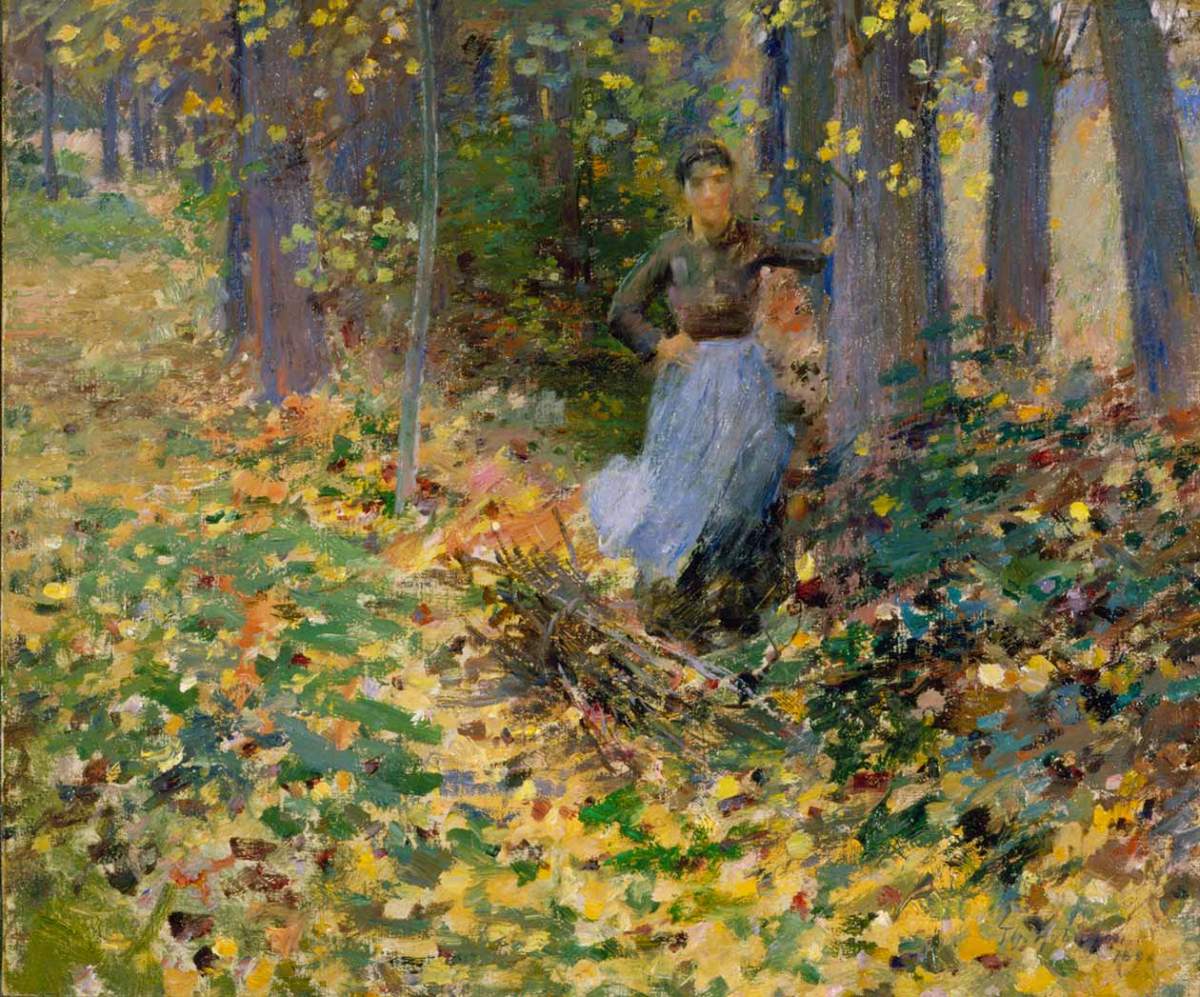
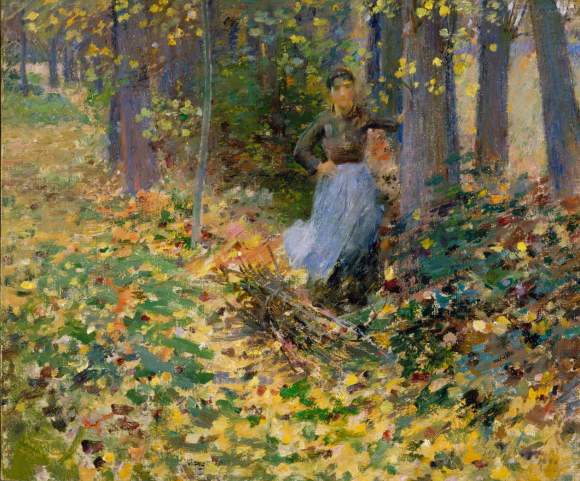
Theodore Robinson, Autumn Sunlight, (c1888), Source: Wikimedia and Florence Griswald Museum

Robinson, a Vermont native, painted this scene in France, perhaps at Giverny, where he was a friend of Claude Monet. The woman recalls the peasants of Barbizon art but confronts us as they do not. Women who appear to blend with a natural setting are seen often in American Impressionism.

Florence Griswald Museum

Franz Schubert: Piano Sonata No.21 in B-flat, D.960

  • 01:21 I. Molto moderato
  • 20:57 II. Andante sostenuto
  • 29:29 III. Scherzo, Allegro vivace con delicatezza
  • 33:48 IV. Allegro ma non troppo

Ludwig van Beethoven: Piano Sonata No.32 in C minor, Op.111

  • 43:53 I. Maestoso / Allegro con brio ed appasionato
  • 53:11 II. Arietta, Adagio molto semplice e cantabile

Encores: Johann Sebastian Bach: Well Tempered Clavier Book I Prelude and Fugue in C Major, BWV 846

  • 01:13:09 Prelude
  • 01:14:54 Fugue Franz Schubert: Piano Sonata No.20 in A, D.959
  • 01:18:15…

View original post 13 more words

Categories
Uncategorized

Painted Stories in Britain 6: Benjamin West and Modern Histories

hoakley's avatarThe Eclectic Light Company

While Joseph Wright of Derby was painting his unusual chiaroscuro narratives of the Enlightenment, a new American artist stopped off in London, on his way home to Philadelphia. Over the next fifty-seven years he was among the leading history painters in Britain, painted for the King of England, and became the second President of the Royal Academy in London.

When Benjamin West was born in Springfield, Pennsylvania, in 1738, the edge of European ‘civilisation’ was only a hundred or so miles to the west. As the tenth child of an innkeeper, with little formal education, limited training in painting, and almost no knowledge of classical history or mythology, he seems an implausible figure. Quite how he became the eminent artist that he was when he died in 1820 isn’t clear either: the most detailed contemporary account of his life and work was written by a novelist, John Galt, who compiled…

View original post 2,601 more words

Categories
Uncategorized

The Bombing of St. Ives Cornwall and the Strafing of it’s Beaches by the Luftwaffe August 1942 .

This raid was much talked about when I was growing up in the town in the 1950s

poundcoin's avatardjwilson22

bomb damage

Owing to censorship in WW11 , many details were left out of newspaper reports of enemy action over the British Isles .

The full report below in The Cornishman 3rd September 1942 only gave scant details of locations and buildings damaged in the raid by two German fighters . St. Ives was just loosely referred to as a “South-West town” .

It was only by checking the names of the injured and the one lady killed and then locating them on the previous 1939 Register , that I was able to pin-point the report to be the of St.Ives .

The attack appears to have started with strafing of Porthminster Beach by machine gun fire . The pilots must have known that being the end of August there would be many children  and holidaymakers on the beach but nevertheless went ahead with their attack . Miraculously it appears no-one was…

View original post 2,617 more words

Categories
Uncategorized

Tchaikovsky: Serenade for Strings in C major

Important to respect Russian culture and people despite Putin’s attack on Ukraine.

At Sunnyside - Where Truth and Beauty Meet's avatarAt Sunnyside - Where Truth and Beauty Meet

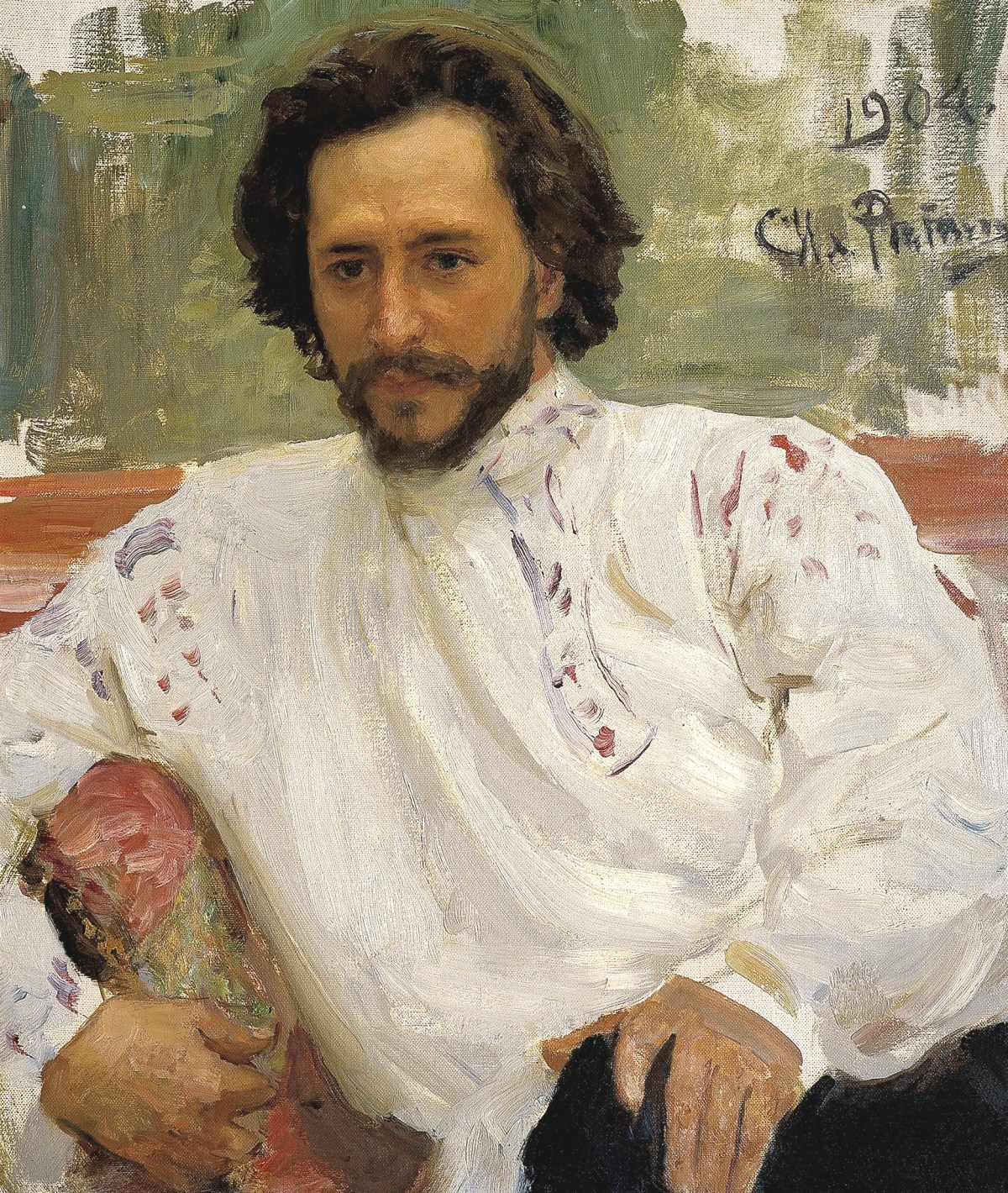
Portrait of L.N.Andreev.,1904, by Ilya Repin, Canvas, oil, 76 x 66 cm, State Tretyakov Gallery, Moscow

Serenade for Strings in C Major (Tchaikovsky) played by Norwegian Chamber Orchestra Terje Tønnesen, artistic director

Thanks for Visiting 🙂

~Sunnyside

View original post

Categories
Uncategorized

Croatia photo gallery

Beautiful images!!

Categories
Uncategorized

17th Century House, Tuscany, Italy

Categories
Uncategorized

Portrait of the artist’s wife 1

hoakley's avatarThe Eclectic Light Company

Painting portraits is lucrative if dangerous. Striking the right balance between faithfulness and flattering the sitter can’t be easy, and on more than one occasion has got the painter into deep trouble. It takes an even braver artist to paint the portrait of the person they know best, their partner, historically almost always the wife. This weekend, in this article and its sequel tomorrow, I show some of my favourite portraits of the artist’s wife, and a couple of husbands too.

rubensartistwife Peter Paul Rubens (1577–1640), Honeysuckle Bower (The Artist and His Wife) (1609-10), oil on oak, 178 x 136.5 cm, Alte Pinakothek, Munich, Germany. Wikimedia Commons.

When Peter Paul Rubens married for the first time, to Isabella Brant in the autumn of 1609, he painted this touching celebration, the Honeysuckle Bower, which was the closest that he could come to the modern wedding photo of bride and groom. Honeysuckle was…

View original post 1,429 more words

Categories
Uncategorized

In search of Hemingway and Midnight in Paris – The Full Story

Having read “Moveable Feast” quite recently, I am struck by how the scenes in that short memoir keep returning over and again.

Categories
Uncategorized

Reflection, Meklinburg, Germany

Categories
Uncategorized

Painted Stories in Britain 5: Joseph Wright, the enlightened artist

At the museum in Derby you get a tremendous feel for the energy of the Industrial Revolution. An inquisitive and explorative spirit.

hoakley's avatarThe Eclectic Light Company

William Hogarth’s death in 1764 brought to an end a new tradition of narrative painting in British art, which had started with James Thornhill (1675–1734) in the early years of that century. Although a few British painters in the middle of the eighteenth century made the occasional narrative work, those appear to have been almost accidental, and years passed before another British artist set out to tell stories in paint.

The next painter also doesn’t appear to have made any conscious decision to tell stories, but became fascinated by contemporary science and chiaroscuro light. As a portraitist and painter of landscapes, Joseph Wright of Derby (1734–1797) at his best was a match for his more famous contemporary Thomas Gainsborough (1727-1788), but Wright also painted very differently when he chose to.

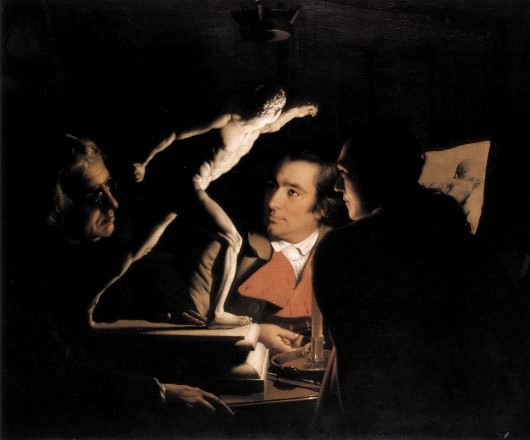
jwrightviewinggladiator Joseph Wright of Derby (1734–1797), Three Persons Viewing the Gladiator by Candlelight (1765), oil on canvas, 101.6 x 121.9 cm…

View original post 1,479 more words