
My neuropathy is back with a vengeance, so I barely knocked this one out.
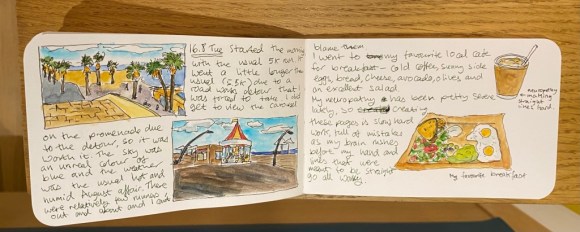
Close-ups of the pages:
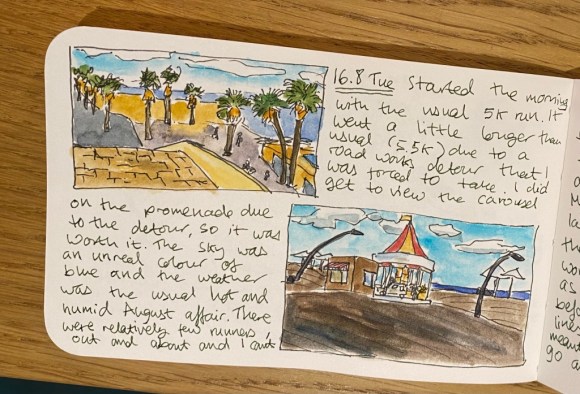

My neuropathy is back with a vengeance, so I barely knocked this one out.
Close-ups of the pages:


~Sunnyside
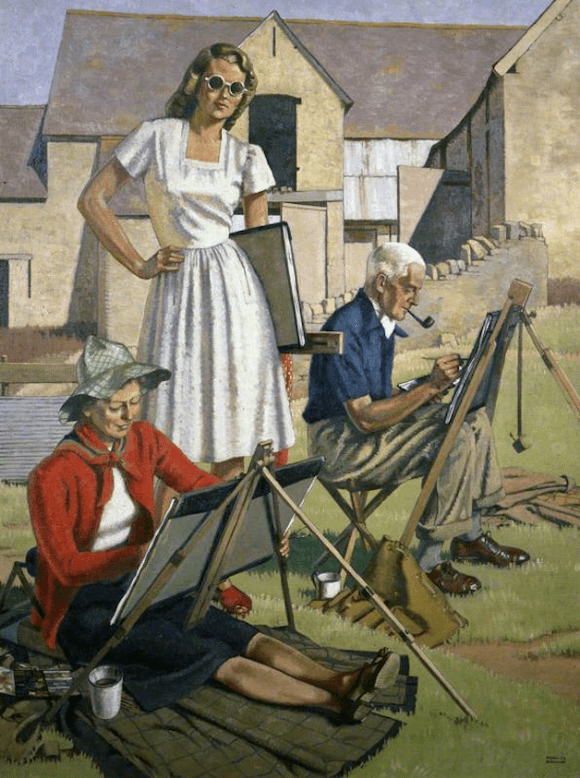
During this peculiar August weather, I have been reading David Boyd Hancock’s remarkable account of young British Artists and the Great War. Firstly, the account has introduced me to the Slade Artists whose work I was fortunate to see a few year’s ago in the Dulwich Art Gallery. So I have become acquainted with the critical instructor Henry Tonks whose sarcasm of student’s drawing was interlaced with great conviction about fostering the development of fine talents. I have learned much about the deep courage of Stanley Spencer, the lyrical regard of Paul Nash and his brother for the countryside, and of how Nevinson subverted Futurism to convey the mechanical dreadfulness of modern warfare.
Secondly, Boyd Haycock is excellent on the personal relationships affecting the development and interaction between the painters. The upbringing of Mark Gertler and his passion for the wayward and difficult Dora Carrington, I found fascinating as the figures of Bloomsbury enter the scene: Strachey, Fry and of course, Ottoline Morrell. Rupert Brooke and D.H.Lawrence are included too and the various links with art dealers, sponsors and critics completely convey the vivid and sometimes lurid time.

Thirdly, the response of these sensitive souls to the destruction so suddenly released in 1914 is powerfully conveyed. Minds as well as bodies are for ever traumatised and the pictures generated under fire have enormous power. Reading about the stalemate which ensued and the trench warfare, the horrors suffered under artillery bombardment and perhaps especially, the unnatural distortion of countryside inevitably bring contemporary issues to mind.
One interesting exhibition which has displayed the artwork in relation to the Ukrainian conflict has taken place in Brussels and is the subject of an engaging article from The Guardian- Making sense of the senseless: Ukrainian war-art exhibition arrives in Brussels and may be viewed at https://www.theguardian.com/world/2022/jul/31/ukrainian-war-art-exhibition-arrives-brussels-captured-house
Another which well repays viewing and includes outstanding sketches by George Butler may be seen on this BBC website and shows extensive video clips with further artists at
https://www.bbc.com/news/av/entertainment-arts-61347805
Finally, there is this academic discussion relating Ukranian artist’s work with issues of Russian colonialism from Columbia University. It also includes Music and Film.
Lovely photograph!!
Always good to keep your Latin up to scratch!
 I have two A-levels in Latin, and was originally accepted to read Latin and French at university, but that is another story. And Winnie the Pooh was either the first or second book I ever owned as a small child. This book I acquired over thirty years ago; I’ve dipped into it occasionally, but something made me pick it up and (attempt to) read it from cover to cover. It was hard.
Having wrestled successfully with Virgil, Tacitus and Cicero – the three most challenging authors I met – I suppose I expected it to be relatively easy, a children’s book after all… It is fifty years this year since I passed the last of my A-levels, and it shows: I’ve done nothing with my Latin ever since, apart from reading church inscriptions and the inscriptions in museums or at Hadrian’s Wall, and occasionally looking at Church…
View original post 276 more words
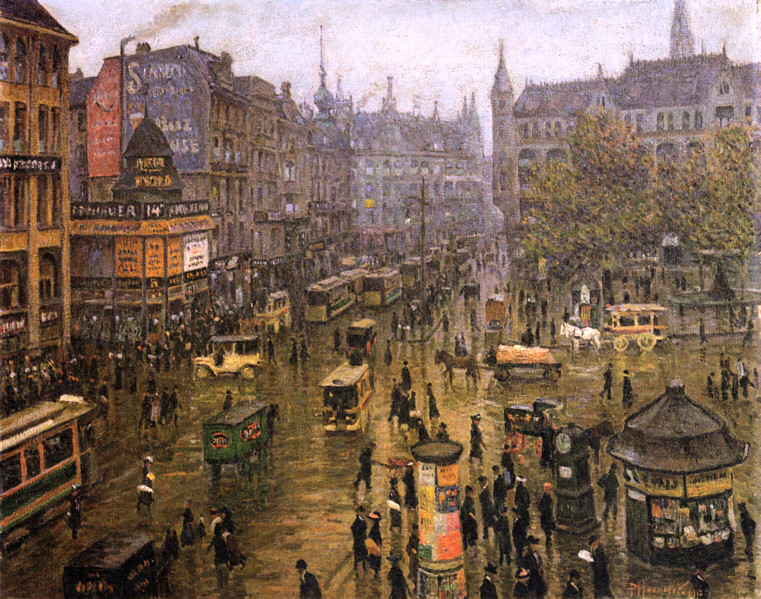
Prompted me to think of Sir Terry Frost’s controversial design for a tailplane!
In the first of these two articles illustrating the history of transport in paintings, I had reached 1875, when steam was at its height and roads were being prepared to carry more traffic, including the increasingly popular bicycle.
Railways brought major change to countries across the world. In France fast steam trains enabled Paul Cézanne to travel between Paris and his family estate at Aix-en-Provence, and they took many artists, including Pierre Bonnard and the Neo-Impressionists, south to develop the Midi as the centre of avant-garde painting.
 Vincent van Gogh (1853–1890), The Blue Train (Viaduct in Arles) (1888), oil on canvas, 46 x 49.5 cm, Musée Rodin, Paris. Wikimedia Commons.
In 1888, Vincent van Gogh painted the everyday sight of The Blue Train (Viaduct in Arles), another of the towns made accessible by its railway.
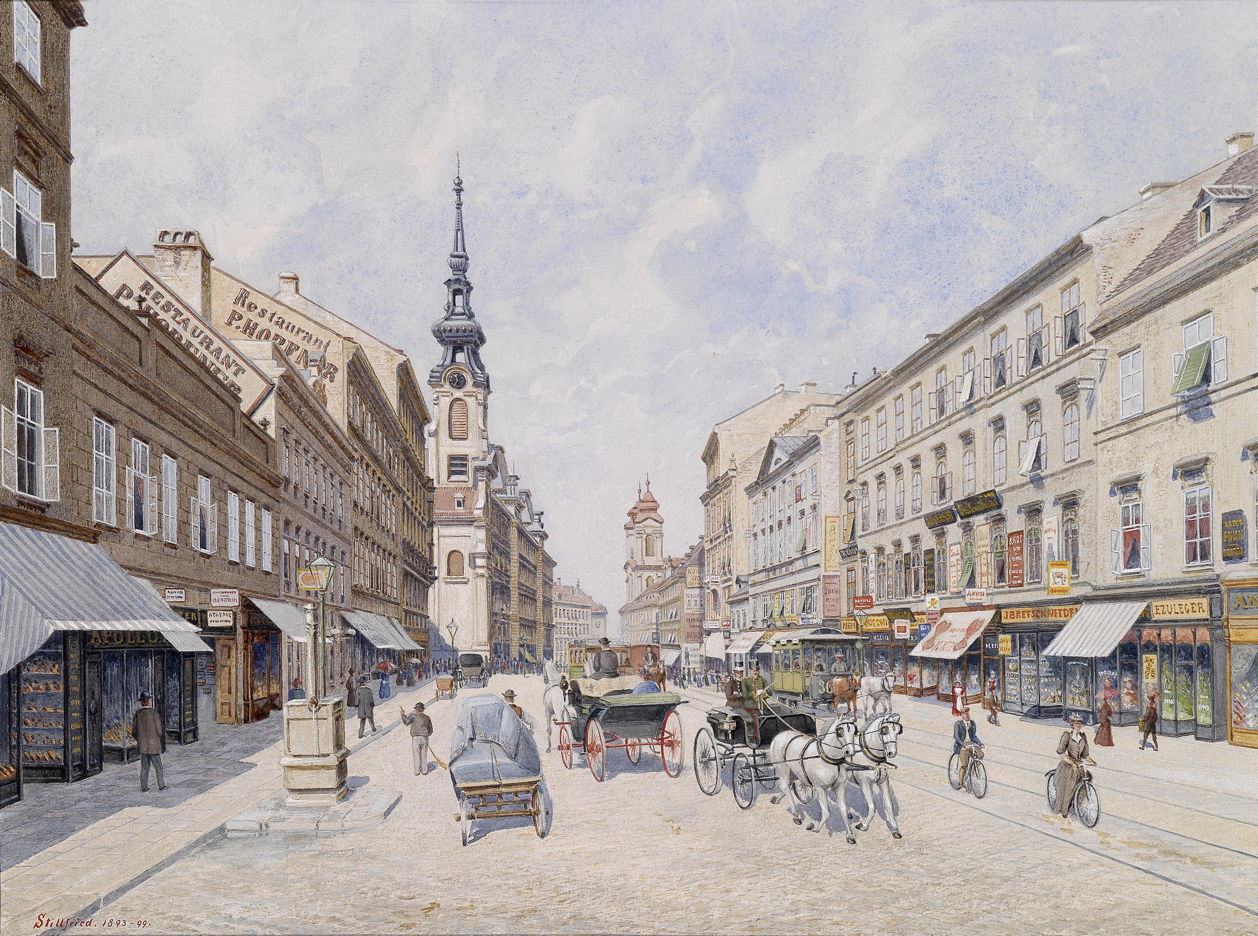 Raimund von Stillfried (1839–1911), The Inner Mariahilferstraße (1893-1899), watercolor on paper, 34 x 46 cm…
View original post 881 more words

Love these interiors- very cosy and gemutlich!
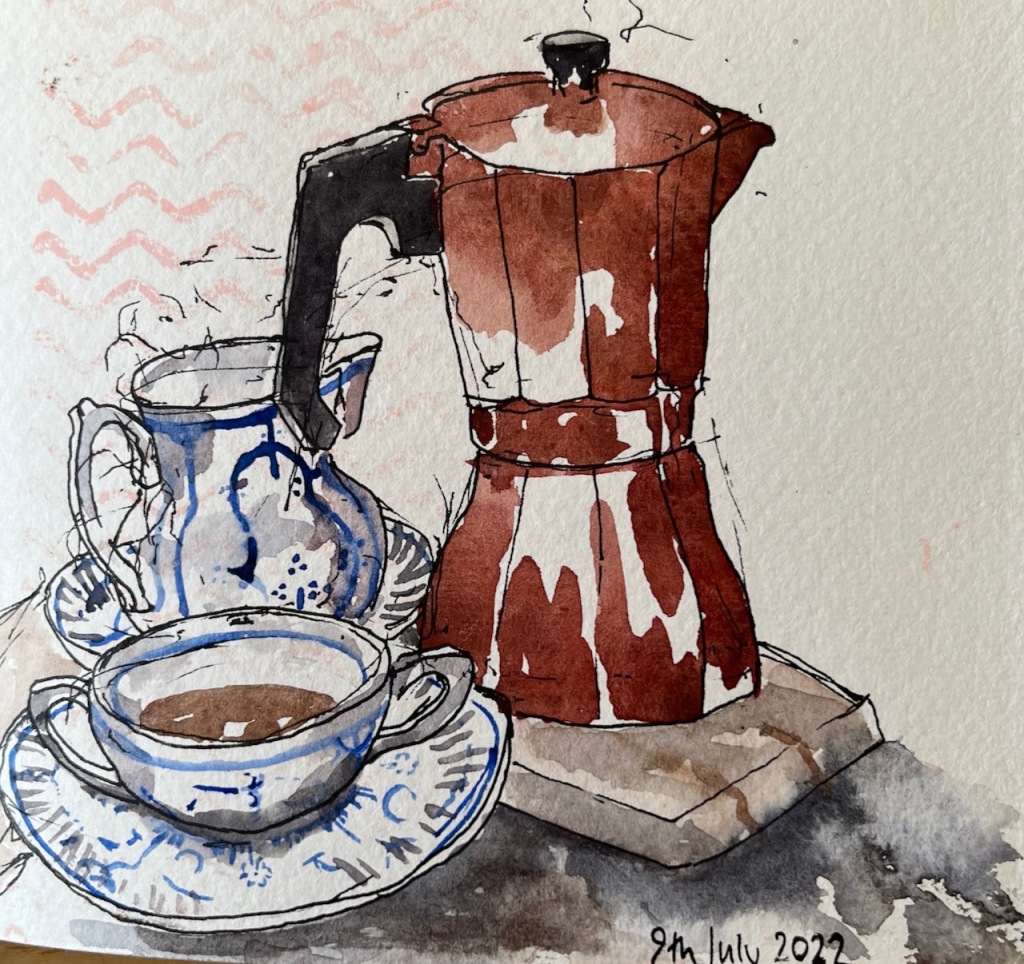
Here is a drawing I made after breakfast:
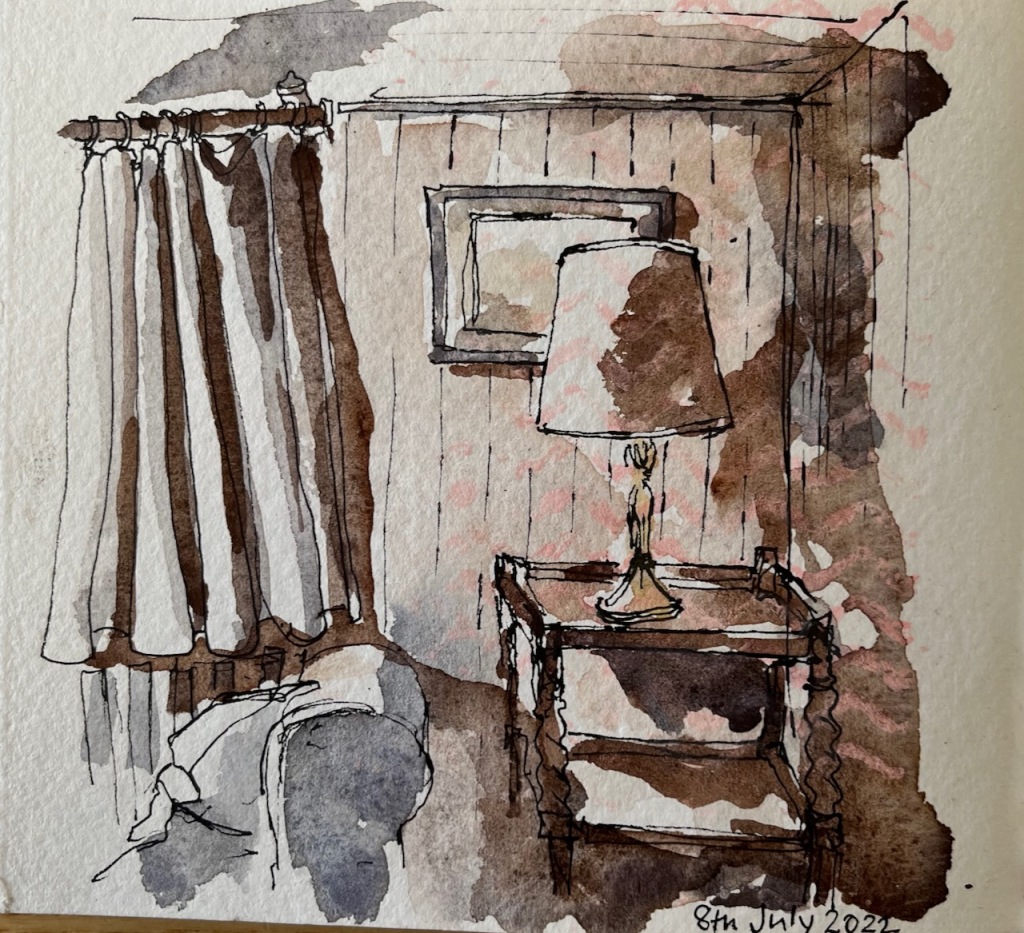
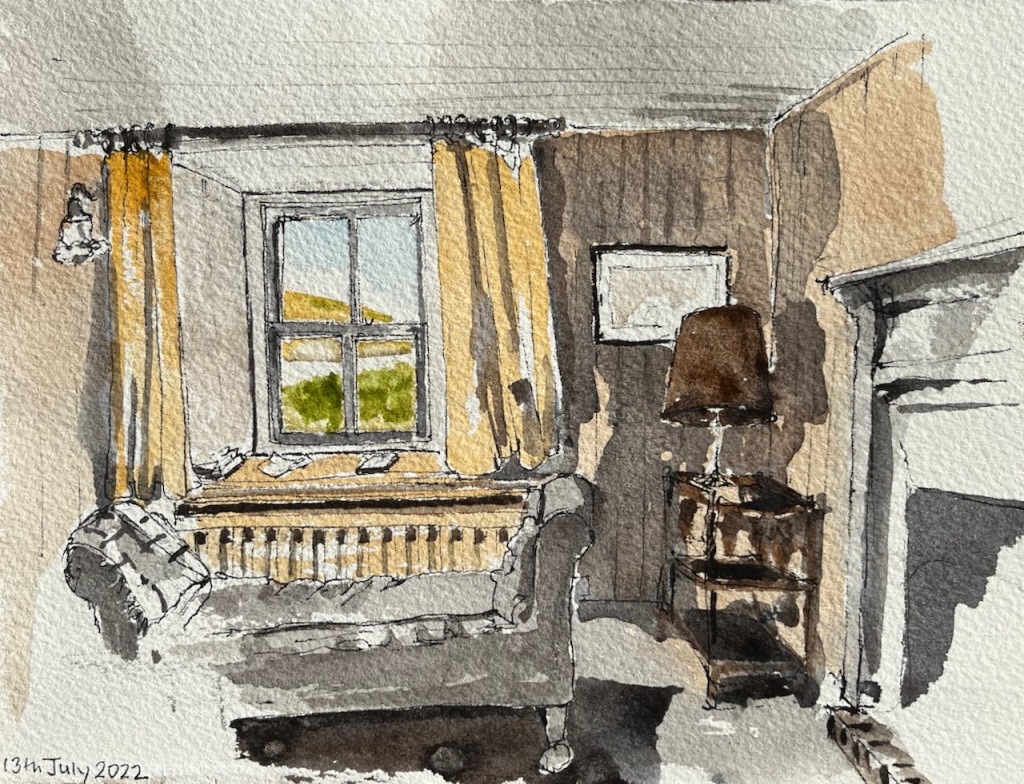
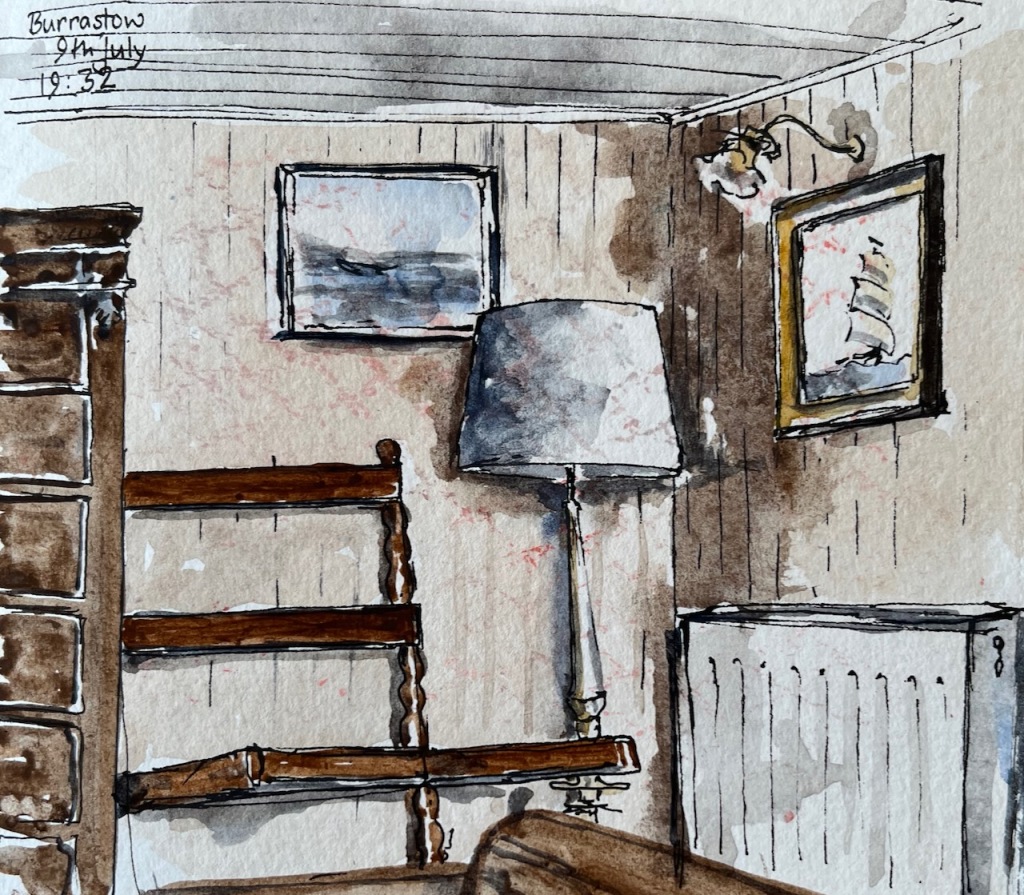
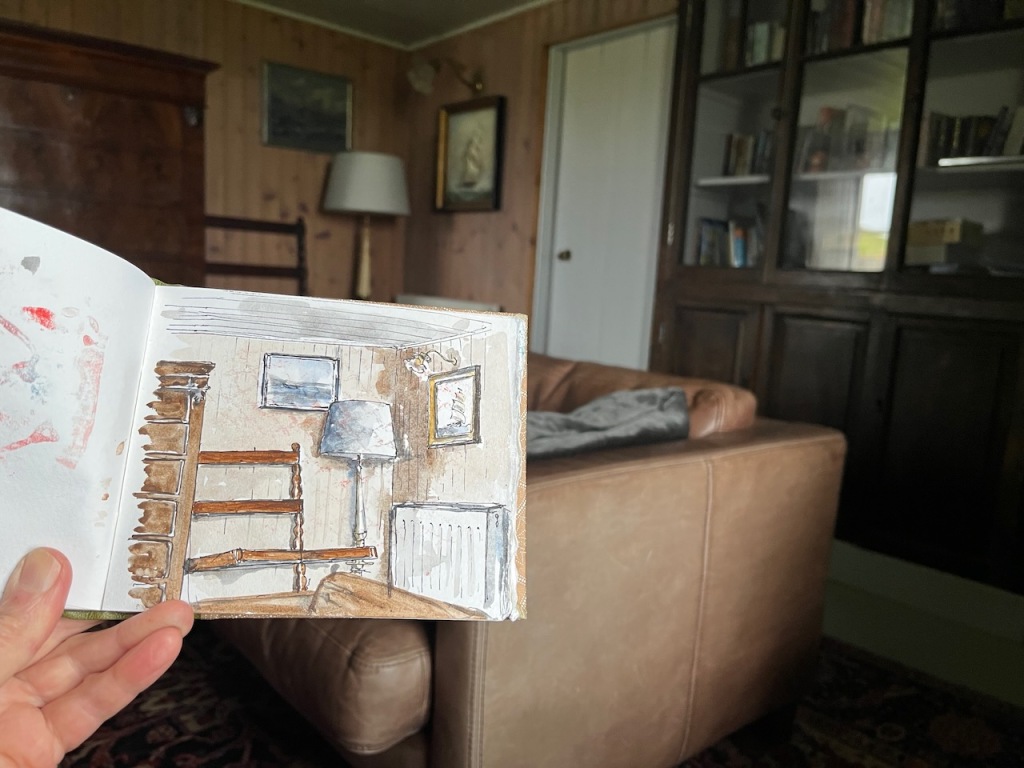
I drew some pictures indoors:
A glass of wine:
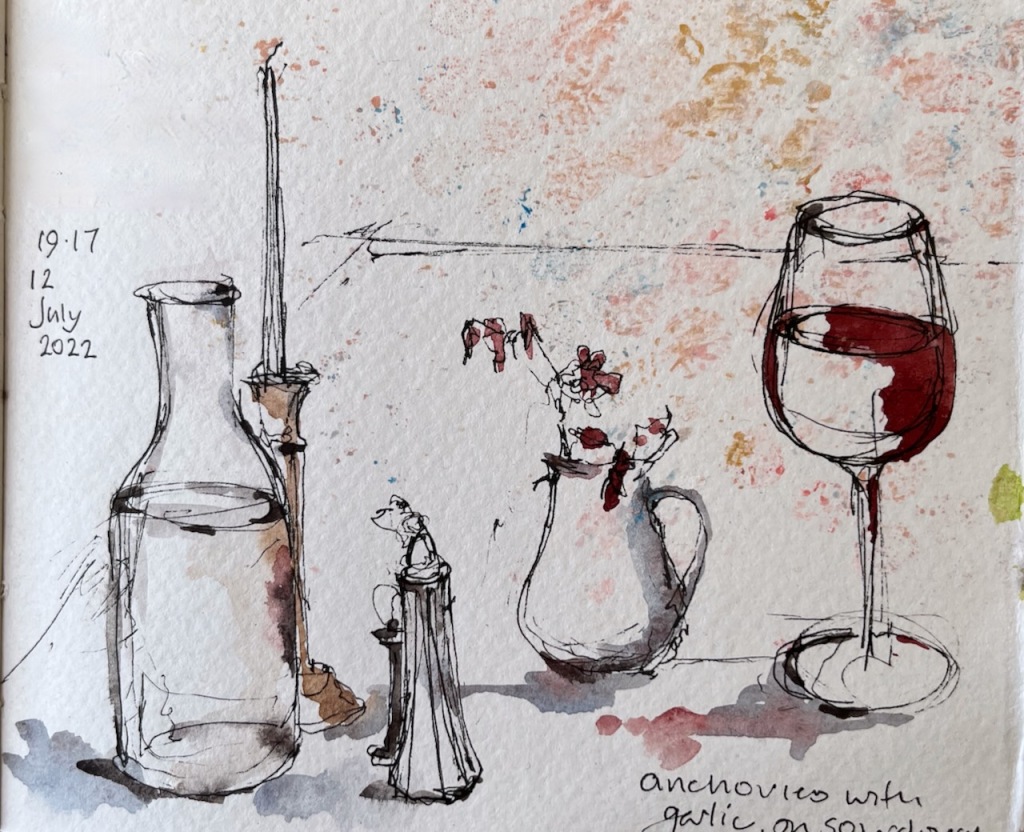
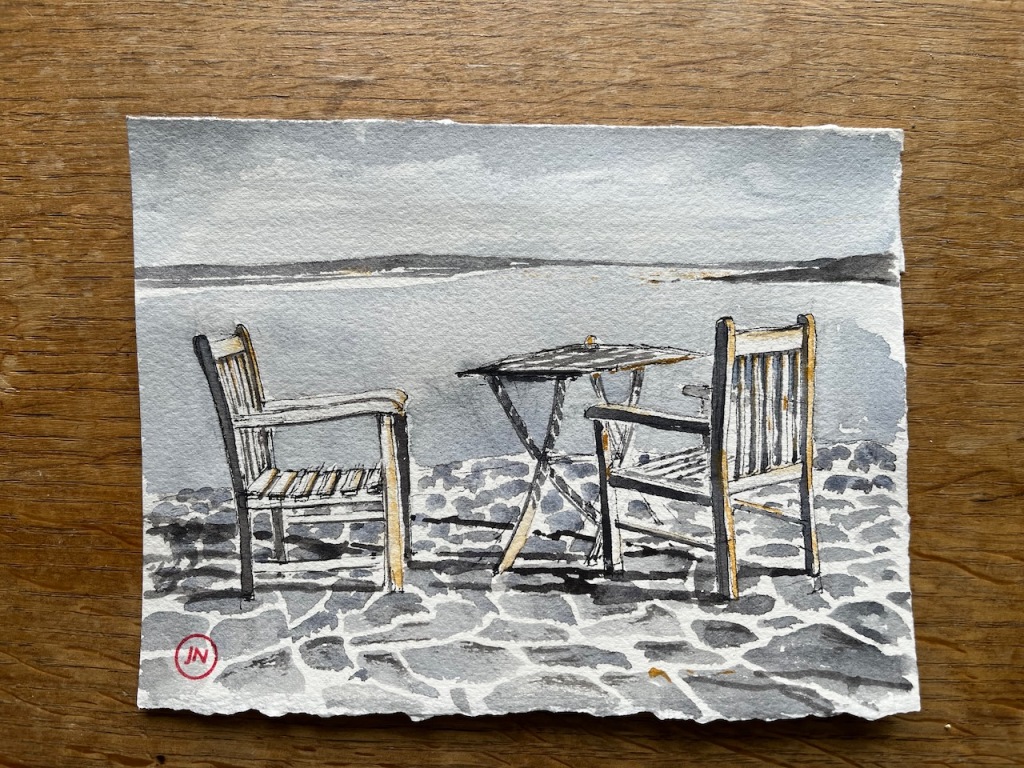
An evening on the terrace….


 penwithlit