Categories
Uncategorized

Three Steps in Drawing

Aletha Kuschan's avatarFantabulous Koi

drawing after Cezanne’s Apples & Oranges, 1899, at the Musee d”Orsay

Choose an artist whose work you admire deeply. This is Step One. Find a specific picture that is a favorite and copy some part of it. If you can find a detail in a book or on the internet, you can focus your attention on a manageable portion of the picture. I chose a detail that includes several apples, but I think I might focus on just one apple later today… because I’m in a Cezanne mood and individual Cezanne apples are deep.

Step Two involves taking chances. Here the apples are circles. Considerable time passed before I noticed that Cezanne apples are not apple shaped. They’re more Platonic. They are beautiful renditions of a kind of ideal roundness with beautiful gradations of red and yellow. So you can put the apples where you think they go. And if…

View original post 154 more words
Categories
Uncategorized

Highway to the Sea, Sorrento, Italy

Categories
Uncategorized

Paintings of Paul Signac 14: Watercolours 1918-1924

These are very lovely, colourful and light.

hoakley's avatarThe Eclectic Light Company

By the end of the First World War, Paul Signac (1863-1935) was painting more finished watercolours than he was oils. This change was encouraged by a successful exhibition of those watercolours in Paris in November 1921.

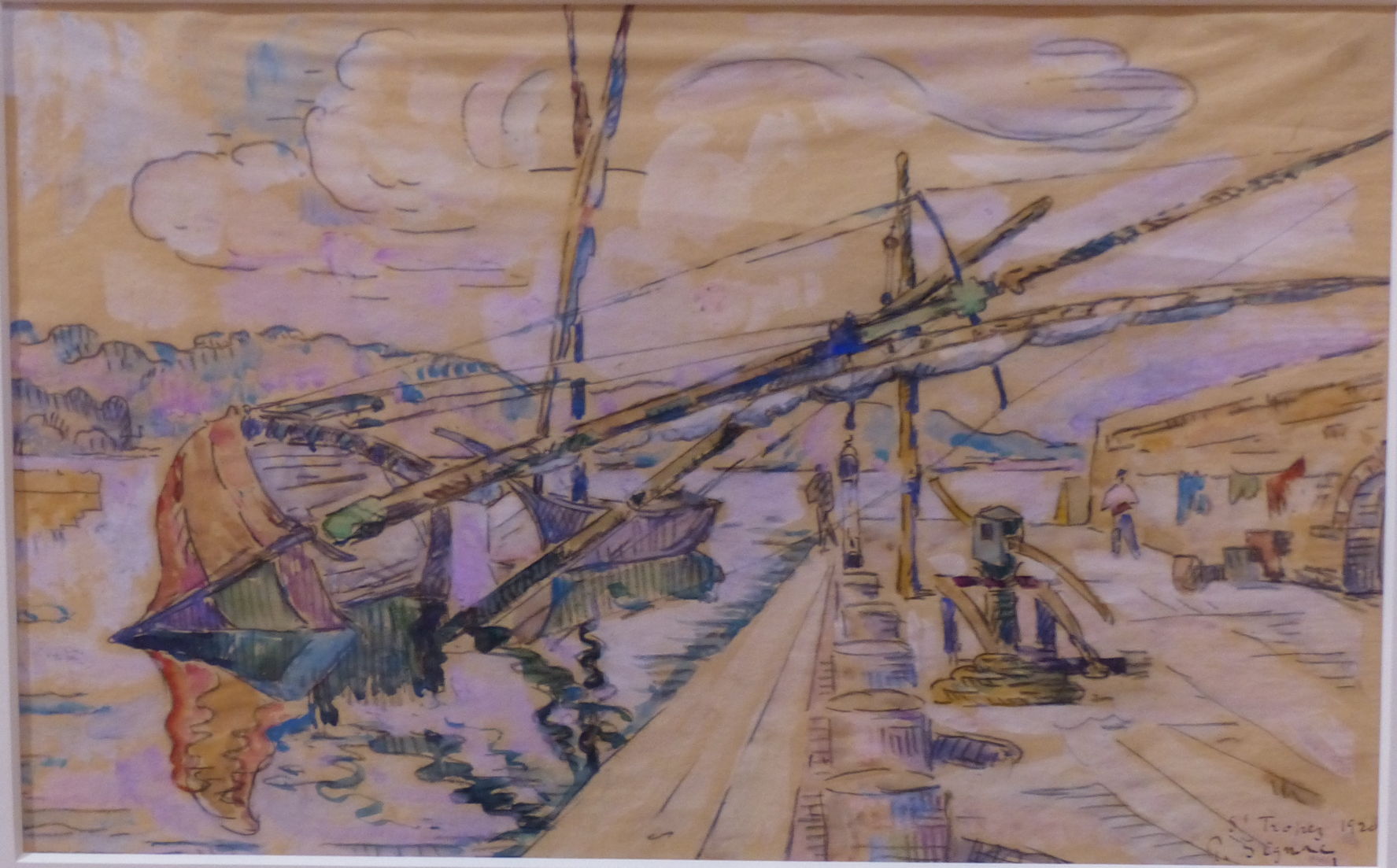
signacsainttropezboatcareenage Paul Signac (1863-1935), Saint-Tropez, Boat being Careened (1920), further details not known. Image by Finoskov, via Wikimedia Commons.

Signac’s Saint-Tropez, Boat being Careened from 1920 is an unusual view of a boat which has been deliberately grounded alongside the quay, to allow maintenance to be performed on its hull. As a longstanding yachtsman he had considerable insight into this procedure.

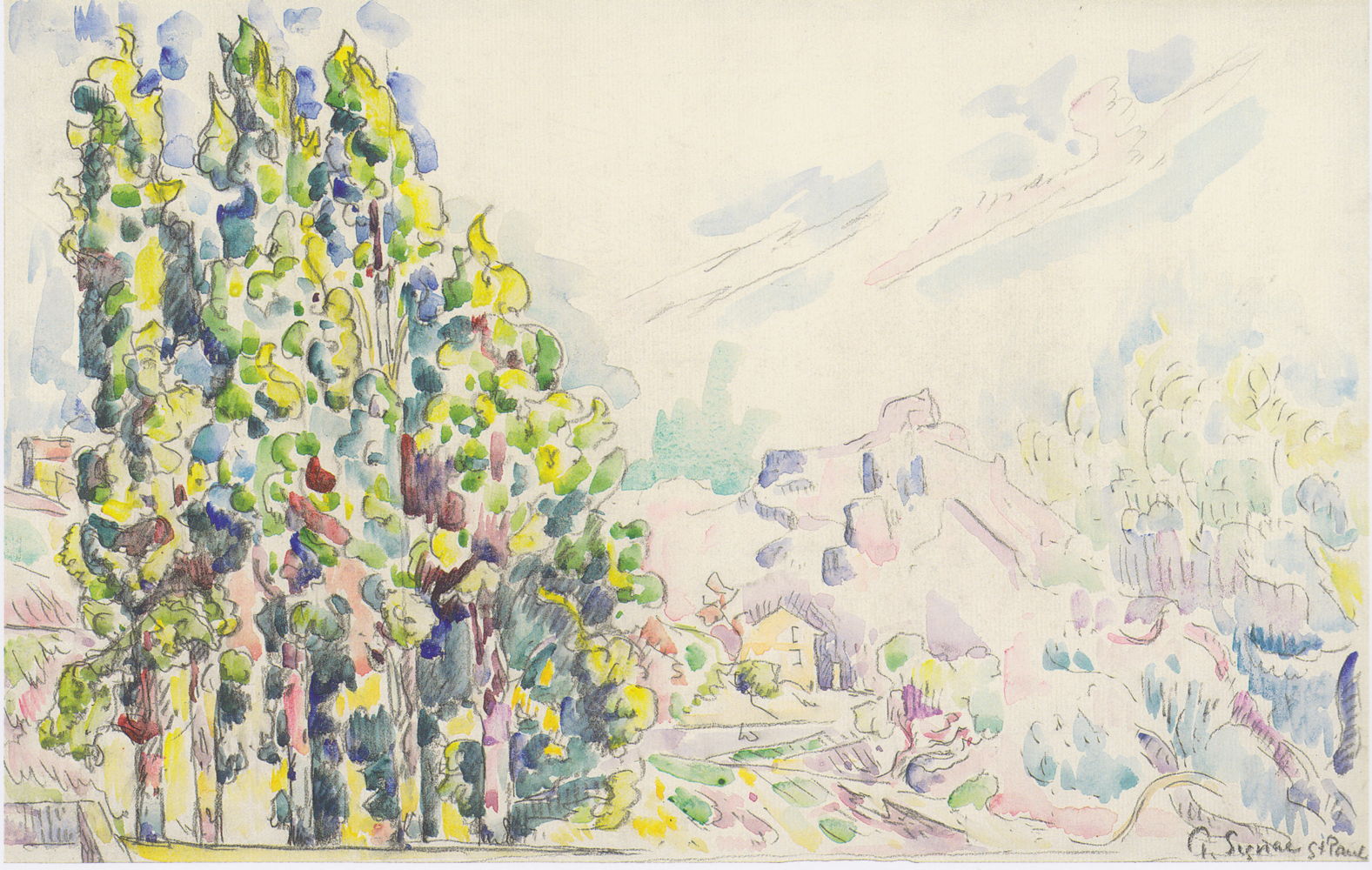
signacsaintpauldevence Paul Signac (1863-1935), Saint-Paul-de-Vence (c 1921), black chalk and watercolour, 28.4 x 44.7 cm, Albertina, Vienna, Austria. Wikimedia Commons.

Saint-Paul-de-Vence is a sketch of this hilltop mediaeval town on the Côte d’Azur, close to the border with Italy, painted in about 1921.

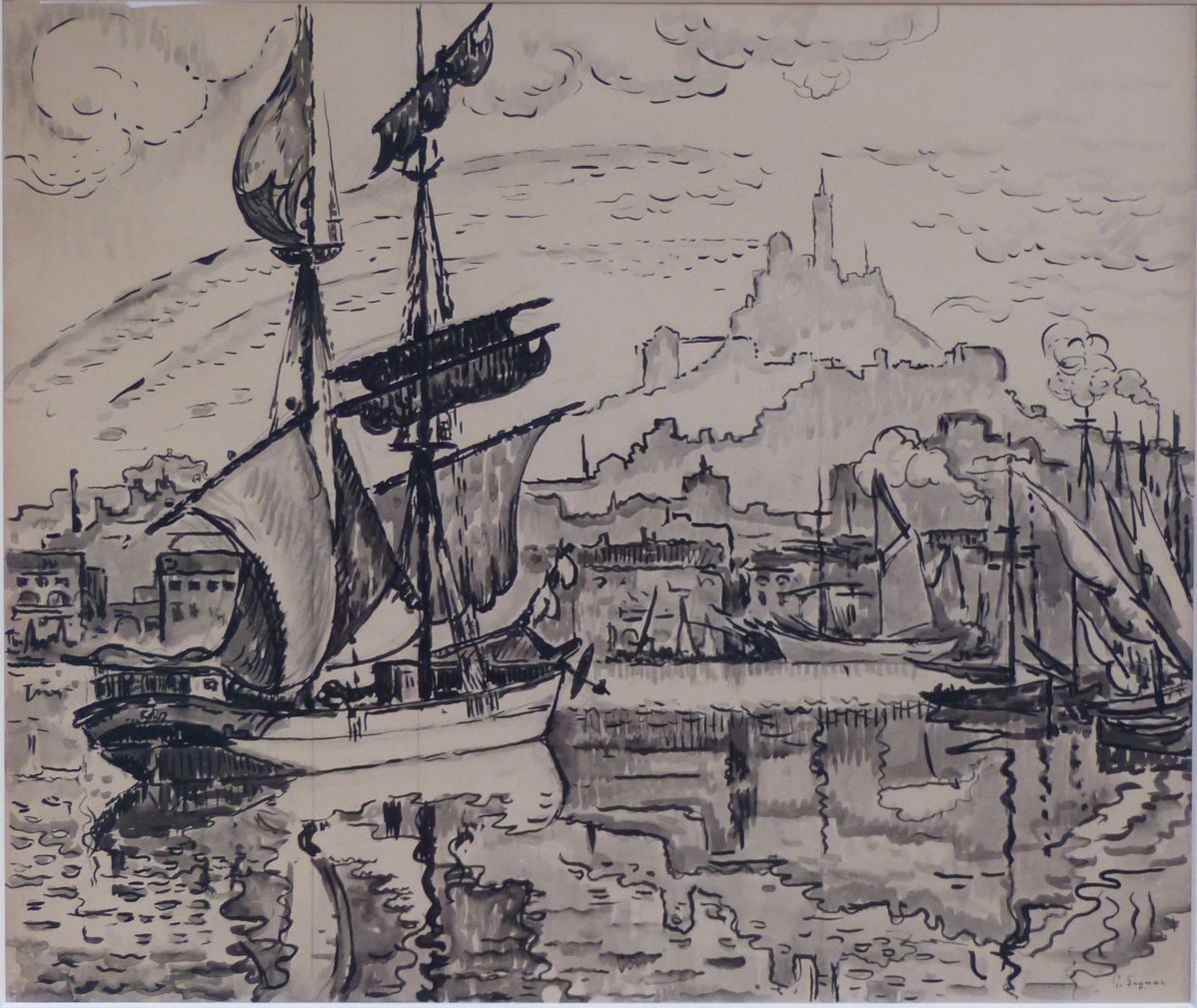
signacmarseillebonnemere1922 Paul Signac (1863-1935), Marseille, Bonne Mère (1922), further details not known. Image…

View original post 537 more words

Categories
Uncategorized

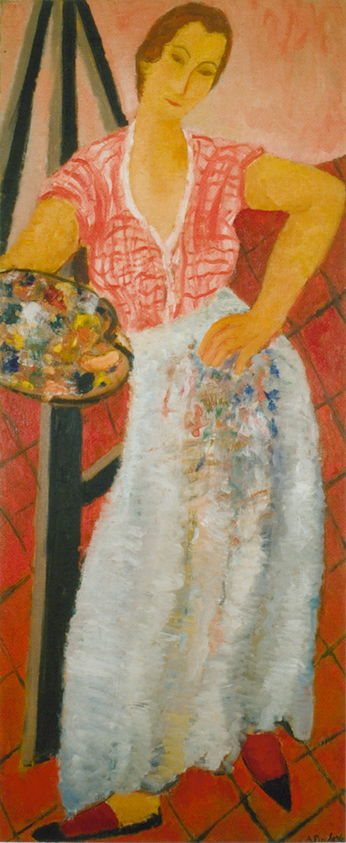
Autoportrait Day 202~ Adriana Pincherle

Categories
Uncategorized

Forest Path, Pennsylvania

This looks very beautiful like a dream!

Categories
Uncategorized

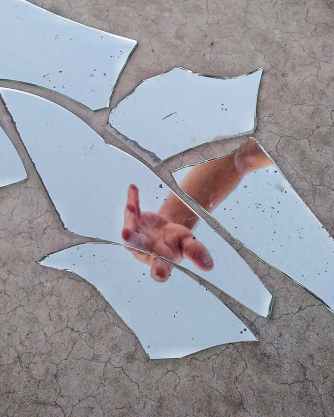
Broken by Lynn White

Why does this remind me of Melville’s Captain Ahab?

Tiffany Renee Harmon's avatarEphemeral Elegies

The crack became a slash

almost splitting her in two.

She could have sought help,

could have driven to heal it,

But after a while she quite liked it.

It had become part of her

and she felt it became her

and who knew what would emerge 

to wriggle 

and squeeze

though the gap.


*First published in The Drabble, May 2021*

Photo by Thiago Matos on Pexels.com

About the Poet:

Lynn White lives in north Wales. Her work is influenced by issues of social justice and events, places and people she has known or imagined. She is especially interested in exploring the boundaries of dream, fantasy and reality. She was shortlisted in the Theatre Cloud ‘War Poetry for Today’ competition and has been nominated for a Pushcart Prize, Best of the Net and a Rhysling Award. Her poetry has appeared in many publications including: Apogee, Firewords, Capsule Stories, Light Journal…

View original post 10 more words

Categories
Uncategorized

Watkins Glen, New York

Categories
Uncategorized

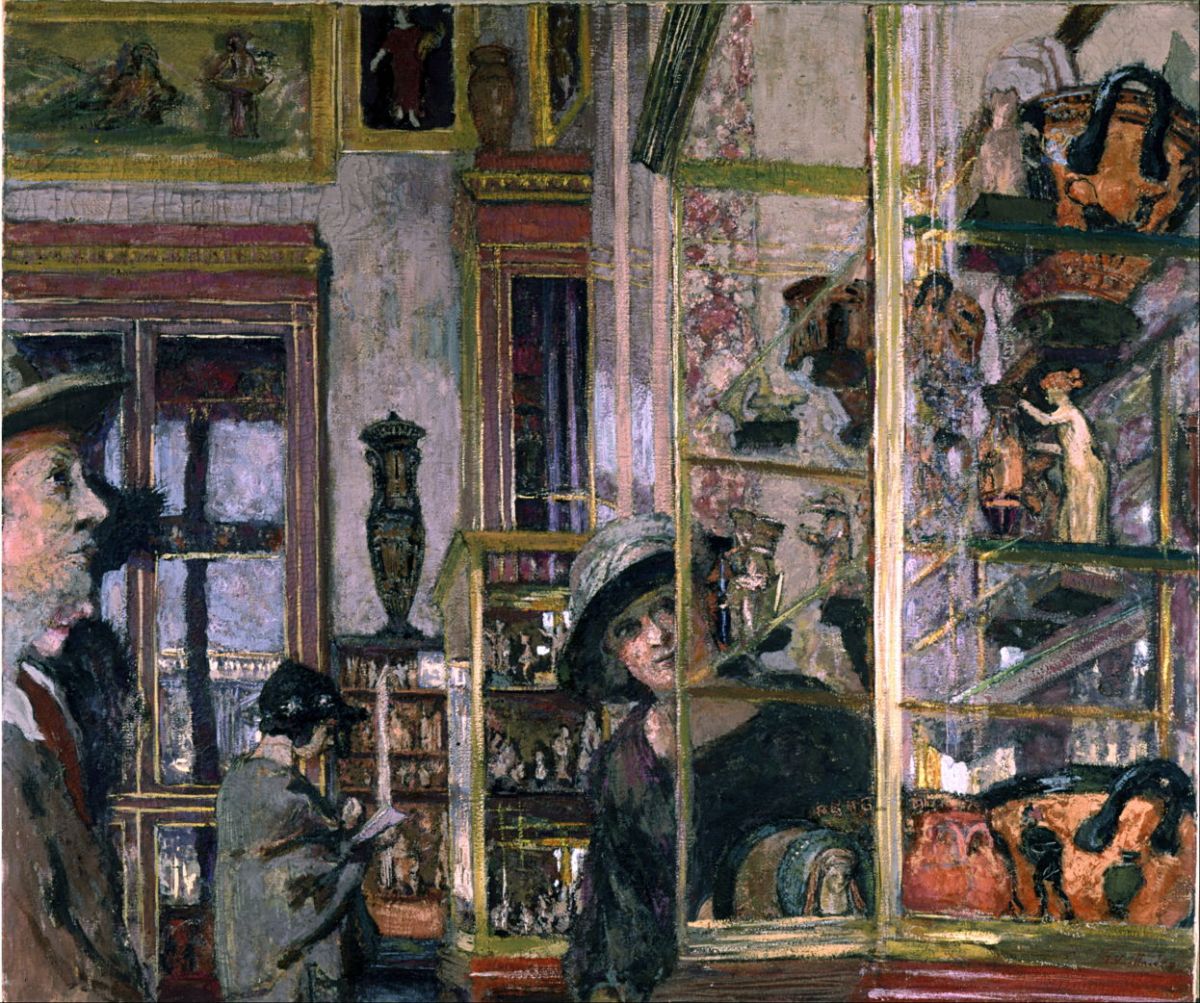
Glue tempera paintings 2: Nabis

Like the perspective in “In Front of the House” which has a touch of Bloomsbury about it too.

hoakley's avatarThe Eclectic Light Company

In the first of these two articles looking at paintings using glue as the binder in the artist’s paint, I showed examples from the Renaissance, and from William Blake’s revival of the medium around 1800. During much of the nineteenth century, ‘glue tempera’ fell into disuse, with oils, watercolour and pastels proving far more popular until a group of young French artists started experimenting with different media.

bonnardstorkfrogs Pierre Bonnard (1867-1947), Stork and Four Frogs (c 1889), distemper on red-dyed cotton fabric in a three paneled screen, 159.5 x 163.5 cm, Private collection. The Athenaeum.

Among the first of these is Pierre Bonnard’s extraordinary and exquisite three-panelled Japoniste screen of The Stork and Four Frogs in about 1889, as the Nabis were forming. Using more modern pigments, Bonnard has achieved very high chroma, comparable to anything in oils, and quite unlike traditional glue tempera.

vallottonmisiadressingtable Félix Vallotton (1865–1925), Misia at Her Dressing…

View original post 507 more words

Categories
Uncategorized

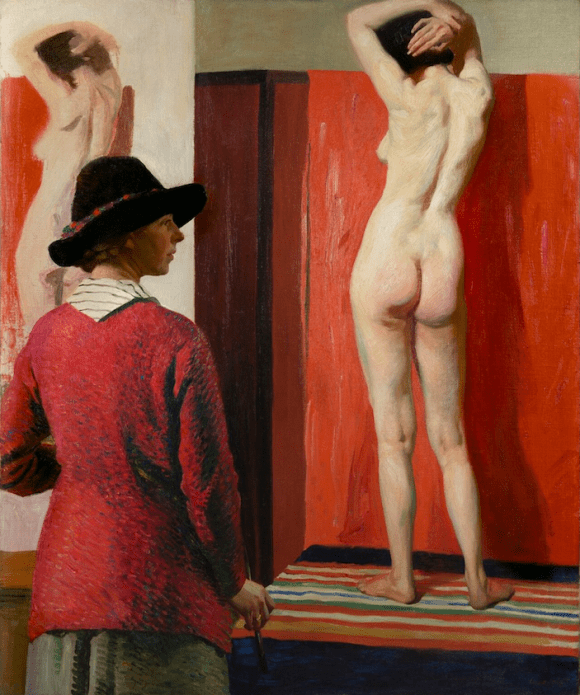
Autoportrait Day 198~ Laura Knight

Categories
Uncategorized

Wood Cuts/Wood Engravings

Great images and interesting background too.

httpartistichorizons's avatarArtistic Horizons

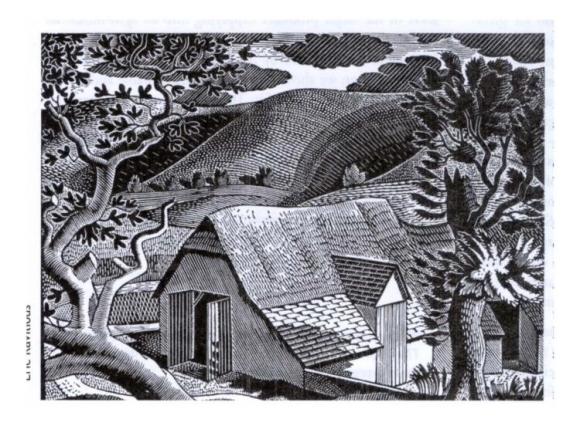
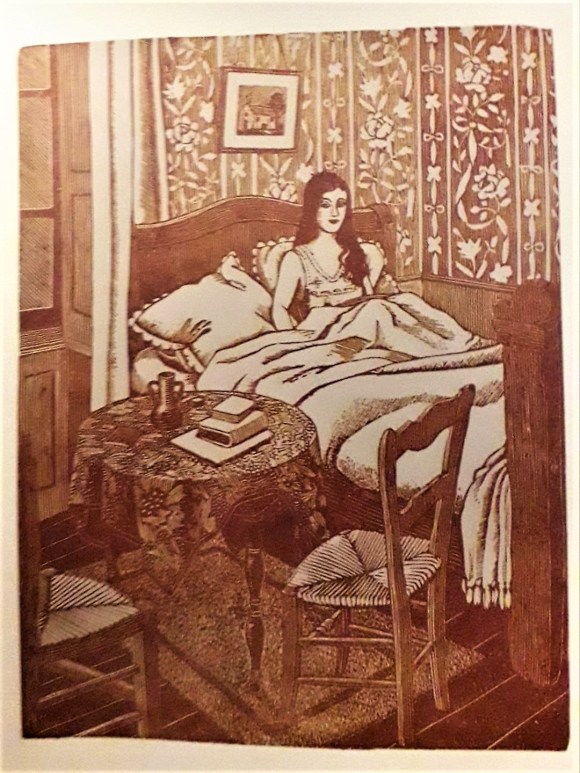
Wood Engravings: Eric Ravilious ‘Sussex Landscape.’ 1931. Tirzah Garwood ‘The Wife.’ 1929.

The term woodcut is often used to cover the woodcut proper and wood engraving which came much later, consequently a useful distinction is lost.

With woodcuts the design is drawn on a block and the parts which are white are cut out, cutting with the grain of the wood, leaving the surface in relief. The surface is then covered with ink and printed.

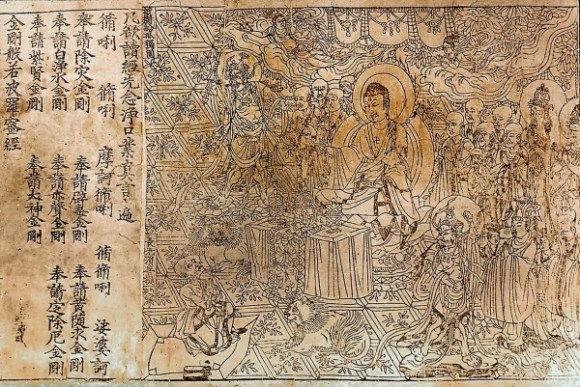
Wood-cuts are the oldest method of Relief Printing, the Chinese practised printing from wood long before moveable type was used in Europe. Just exactly when wood cuts were first used is not known but in the British Museum a Chinese manuscript bears a woodcut dated AD. 868, the earliest known illustration in a printed book. The illustration shows Buddha discoursing to Subhiti amongst a crowd of figures, all drawn in flowing black line.

Wood…

View original post 672 more words