Categories
Uncategorized

What is True Self and False Self?

Andrew Marshall's avatarMental Health Matters

Introduction

True self (also known as real self, authentic self, original self and vulnerable self) and false self (also known as fake self, idealised self, superficial self and pseudo self) are psychological concepts, originally introduced into psychoanalysis in 1960 by Donald Winnicott.

Winnicott used true self to describe a sense of self based on spontaneous authentic experience and a feeling of being alive, having a real self. The false self, by contrast, Winnicott saw as a defensive façade, which in extreme cases could leave its holders lacking spontaneity and feeling dead and empty, behind a mere appearance of being real.

The concepts are often used in connection with narcissism.

Characteristics

Winnicott saw the true self as rooted from early infancy in the experience of being alive, including blood pumping and lungs breathing – what Winnicott called simply being. Out of this, the baby creates the experience of a sense of…

View original post 1,418 more words

Categories
Uncategorized

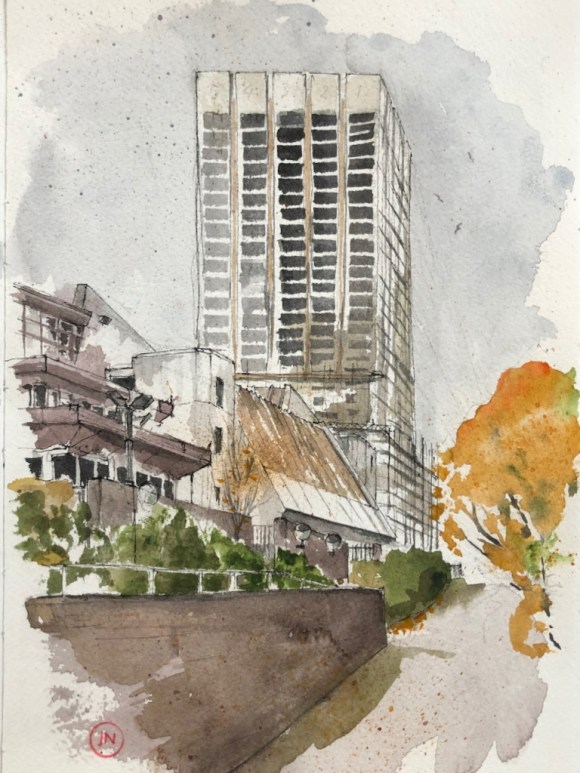
London Television Centre SE1

I very much like how you have captured the heavy and wintry skies. London landscape rapidly changing; a poignant story.

Jane's avatarJane Sketching

Here is a view of the London Television Centre, 60-72 Upper Ground, SE1. It is on the South Bank of the river Thames, a little to the East of the National Theatre and the Royal Festival Hall. It was completed in 1972 to the design of Elsom Pack & Roberts.1

London Television Centre, 30 November 2021, 10″ x 7″ in Sketchbook 11

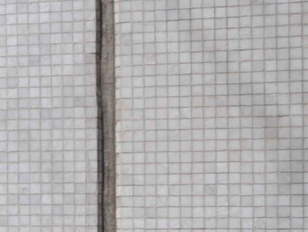
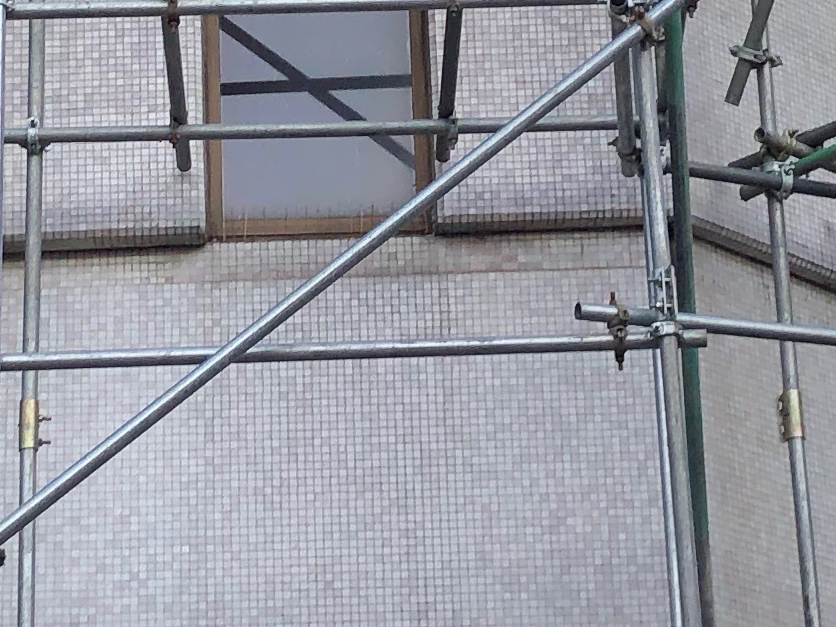
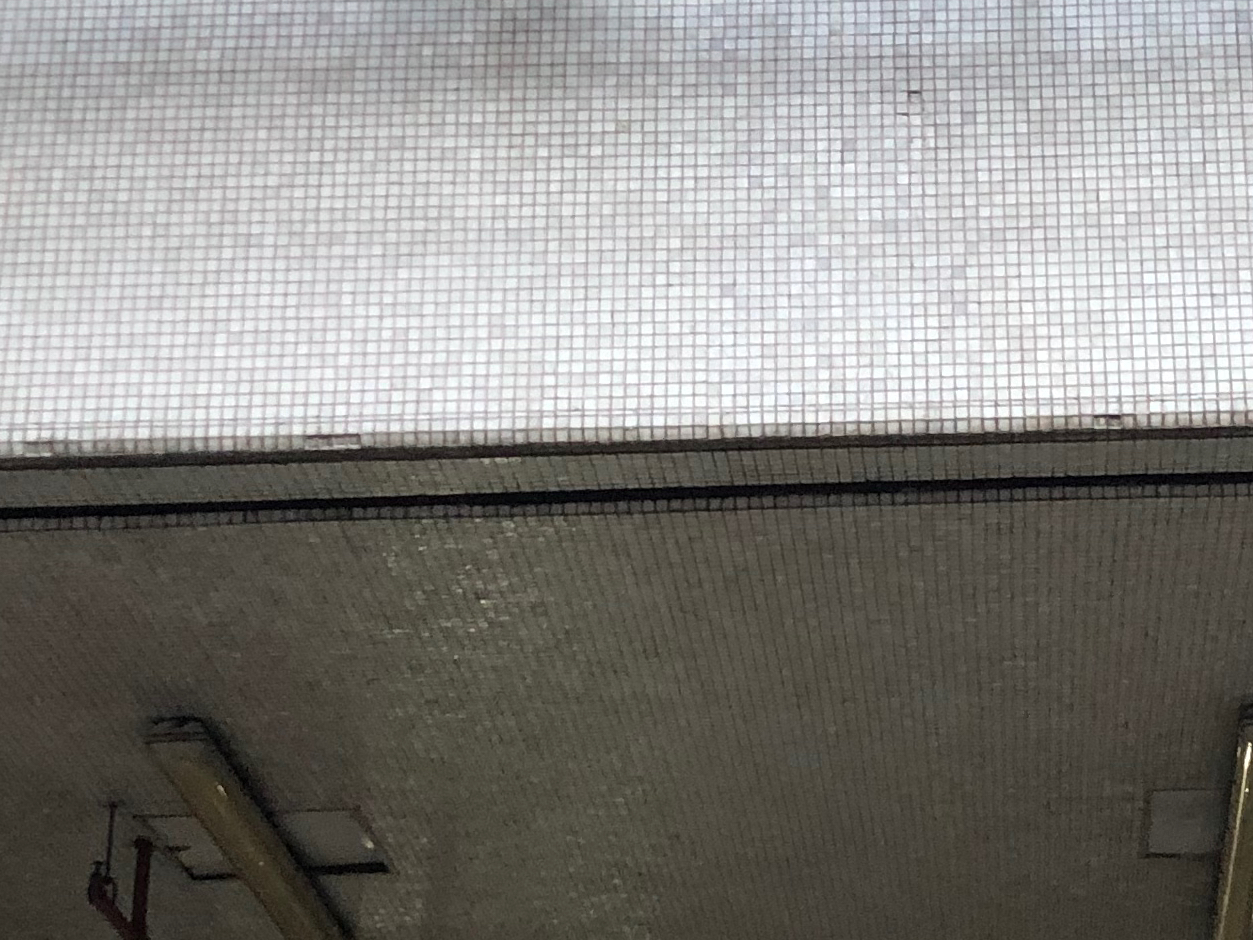
Appreciate this building while you can – it is bring demolished. Admire the variety of the sloping roofs, the unexpected angles, the terraces overlooking the river. Appreciate the unexpected finish: it is covered in tiny, white, glistening tiles.

The history of this and two other buildings due for demolition is documented in the excellent “London Inheritance” post: Three Future Demolitions. (May 16th 2021).

The planning application reference is “21/02668/EIAFUL” submitted to Lambeth Council on 5th July 2021. It says:

Demolition of all existing buildings and structures for…

View original post 511 more words

Categories
Uncategorized

Negative Capability – a Romantic Concept

Categories
Uncategorized

Elif Shafak’s novel ’10 Minutes 38 Seconds in this Strange World’ (Turkey)

Shafak, I have heard at JBW and have really intended to get around to reading. She sounds creative, original and thought provoking. Many thanks for reviewing!!

imogen's avatarImogen is Reading and Watching the World: On Books, Film, Art & More

NORTH AFRICA, MIDDLE EAST AND CENTRAL ASIA

This is a bit of a throwback post, as some of it was first posted by me in 2019, and was in fact my fifth ever review on the blog. I’m re-posting with some additional discussion of publication prospects in the West for Turkish authors, as part of my month of Turkish cultural appreciation.

Translator from the Turkish Nicholas Glastonbury, writing in the Los Angeles Review of Books in May 2021, noted that “In various conversations with translators, agents, and colleagues, publishers often articulate that they have informal quotas for writers beyond Europe (e.g., ‘We already have a Turkish author’)”. Elif Shafak of course is “the” Turkish female writer read most widely in the UK and other Western nations, fairly or not.

Shafak is living effectively in exile from her homeland: by writing about controversial topics, such as the Armenian genocide, she…

View original post 687 more words

Categories
Uncategorized

The Impasse of Diagnosis

This is very interesting. It is worth noting that in common parlance terms like O.C.D. and P.T.S.D. have gained a certain popular understanding. Although limited it may show a greater familiarity and dialogue about mental states. The fact that electorates are aware of overt narcissism amongst political leaders is not entirely negative! A diagnosis of autistic tendencies might also entitle a youth to better educational resources, support etc. Nonethless, I agree with the direction of your posting.

leonbrennerblog's avatarLeon Brenner

It is not uncommon today to meet a person in a psychoanalytic context who desires a diagnosis. And indeed, some people spend a lot of time and earn large sums of money by providing subjects with the signifiers of diagnoses. One can say that “Diagnosis” is a name of an industry and, wherever there is an industry, there are desiring subjects willing to pay.

However, I believe that those who call themselves psychoanalysts should take the desire for diagnosis with a grain of salt and always remain prudent when asked for one. Basically, the question of diagnosis in psychoanalysis has not to do with the subject’s identifications with a particular signifier but with the direction of the treatment. In other words, in terms of diagnosis, psychoanalysts must always ask themselves how does a diagnostic criteria assist in the direction of the treatment, rather than just providing the subject with a…

View original post 212 more words

Categories
Uncategorized

on loneliness (melancholia 1)

I think this concerns a late paper of Klein’s. I am partly re-blogging so that I can refer to this myself in relation to Lacan and Rose et al. I can’t absorb all these points at one read through!

Categories
Uncategorized

The Art of Loving

Great posting. I am a great admirer of Erich Fromm – there is now a number of clips on You Tube by him or about his work. His German is relatively easy to follow too.

Categories
Uncategorized

Born November 24~ Wilhelmina Weber Furlong

Categories
Uncategorized

Turkey month

Interesting! I visited both Greece and Turkey back around 1970. It was in a mini-trek, the inexpensive travel of a group in a van that was prevalent at that time. I found the people friendly and Gallipoli deeply sad, leaving an unforgettable impression. Most astoundingly beautiful was Prices Island whose history I learnt of since.

imogen's avatarImogen is Reading and Watching the World: On Books, Film, Art & More

In the summer, feeling wistful for a holiday abroad and wanting to think of something to interest the kids now they’re not little, I signed up for a subscription service called Snack Surprise. Every month they send me a box of snacks from a mystery country.

The box that we received in September was full of Turkish treats, including Turkish delight, of course, but also a new (to us) version of Doritos, a can of mysterious fizzy drink, some chocolate, sweets. It was actually genuinely quite exciting to open up the box and found out what was inside, and what country everything was from.

There was a little booklet with interesting, possibly dubious facts about Turkey (“Camel wrestling tournaments, held throughout the Aegean region in the winter, and bull wrestling near the Black Sea, are also popular”), and a list of all the items in the box, with the option…

View original post 254 more words

Categories
Uncategorized

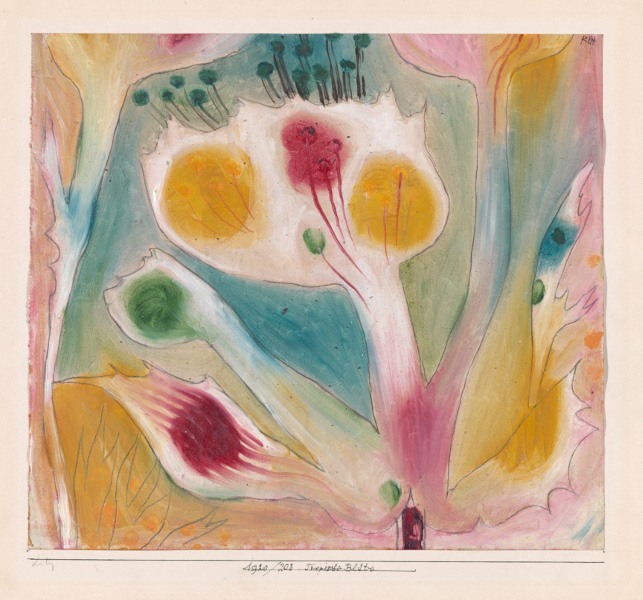
Paul Klee: Tropical Blossom (1920)

Lovely painting and useful links- many thanks for the post.

At Sunnyside - Where Truth and Beauty Meet's avatarAt Sunnyside - Where Truth and Beauty Meet

Paul Klee ( Swiss-German, 1879-1940),Tropical Blossom, 1920. Oil and pencil on primed paper on cardboard, 26 x 28.5 cm. Source: Zentrum Paul Klee, Bern Switzerland. Courtesy of the Phillips Collection.

Color possesses me. I don’t have to pursue it. It will possess me always, I know it. That is the meaning of this happy hour: Colour and I are one. I am a painter.

Paul Klee: Quote (Tunisia, 16 April 1914), # 926, in: The Diaries of Paul Klee, 1898-1918, transl. Pierre B. Schneider, R.Y. Zachary and Max Knight; Berkeley and Los Angeles, University of California Press, 1964

Read More

The Diaries of Paul Klee – Part One (- of Seven!): a Publishing Success, by Francesco Mazzaferro

Paul Klee at Wikiwand

List of works by Paul Klee

Thanks for Visiting 🙂

~Sunnyside

View original post