Sometimes E.U. money has not be wisely spent- not their fault, of course.
Cornwall, with a population of 530,000 people, received more than €654m from Brussels during the EU’s 2007 to 2013 budget cycle. This is more than the West Midlands and the East of England combined. Up until Brexit it was set to receive at least another €600m between now and 2020, that’s €1,209 per person. This is a county in which 56.5% of voters chose to back Brexit and leave their biggest benefactor. I was interested to look briefly into why this might have been the case and reflect on some of the consequences this might have for one of the poorest areas of the United Kingdom.
Firstly, it might be worth reflecting on some of the positive and tangible things that Cornwall has received from being a member of the EU. The construction of Exeter University’s Penryn Campus was partly funded with around £100million of EU money. £50million of EU money has been spent on
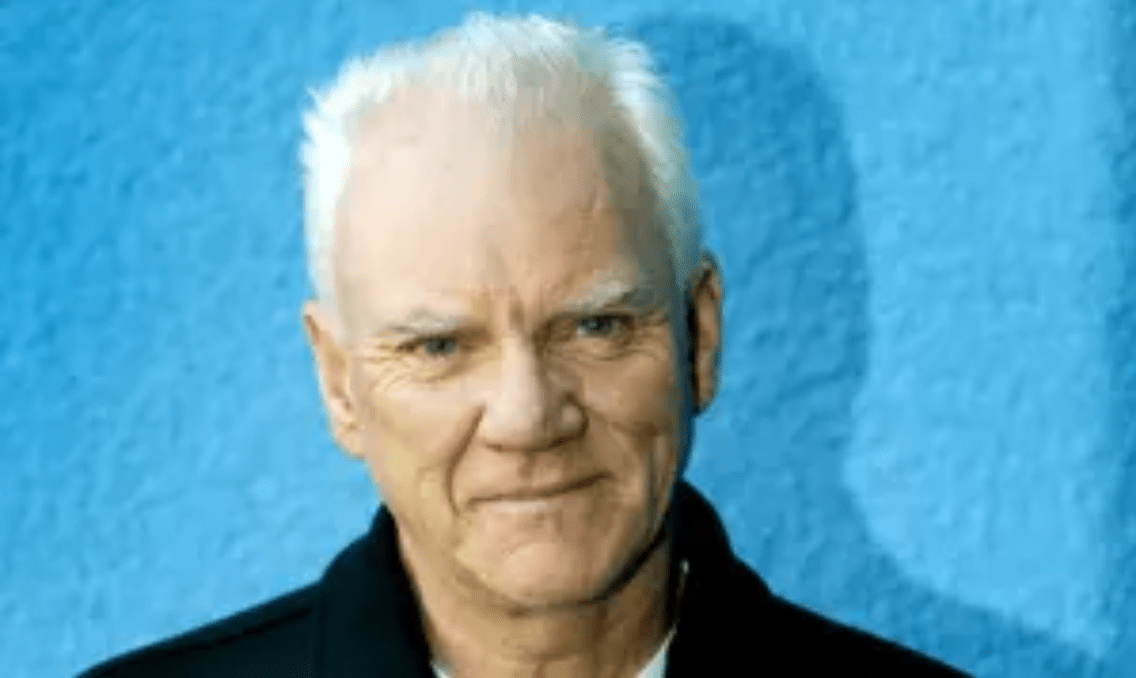
Malcolm McDowell was the insolent prince of early-70s cinema, the Liverpool salesman who stormed the establishment’s barricades. You can see him on screen in Lindsay Anderson’s If…., kickstarting a bloody revolution inside an English public school. You can see him in Stanley Kubrick’s A Clockwork Orange, hanging with his droogs at the Korova milk-bar, making up his rassoodock what to do with the night. The sky was the limit. The world was his oyster. One felt he could achieve pretty much anything…
…McDowell’s imitation of Gielgud is perfect. He catches the man’s mellifluous delivery and querulous top note. “He’d say: ‘Oh, my accountant says I have to make cutbacks but I don’t see where I can.’ And I’d say, “Well, you’ve got a huge house, John.’ He’d say: ‘Oh yes, but I can’t sell that.’ ‘Well OK, but don’t you have a chauffeur-driven Rolls?’ ‘But, but –…
Mein Herr Marquis, ein Mann wie Sie
Sollt’ besser das verstehn,
Darum rate ich, ja genauer sich
Die Leute anzusehen!
Die Hand ist doch wohl gar zo fein, hahaha.
Dies Füsschen so zierlich und klein, hahaha.
Die Sprache, die ich führe
Die Taille, die Tournüre,
Dergleichen finden Sie
Bei einer Zofe nie!
Gestehn müssen Sie fürwahr,
Sehr komisch dieser Irrtum war!
Ja, sehr komisch, hahaha,
Ist die Sache, hahaha.
Drum verzeihn Sie, hahaha,
Wenn ich lache, hahaha!
Ja, sehr komisch, hahaha
Ist die Sache, hahaha!
Sehr komisch, Herr Marquis, sind Sie!
Mit dem Profil im griech’schen Stil
Beschenkte mich Natur:
Wenn nicht dies Gesicht schon genügend spricht,
So sehn Sie die Figur!
Schaun durch die Lorgnette Sie dann, ah,
Sich diese Toilette nur an, ah
Mir scheint wohl, die Liebe
Macht Ihre Augen trübe,
Der schönen Zofe Bild
Hat ganz Ihr Herz erfüllt!
Nun sehen Sie sie überall,
Sehr komisch ist fürwahr der Fall!
Ja, sehr komisch, hahaha
Ist die Sache, hahaha
Drum verzeihn Sie, hahaha,
Wenn ich lache, hahaha!
Ja, sehr komisch, hahaha,
Ist die Sache, hahaha etc.
English Translation
My Lord Marquis, a man like you
should better understand that,
Therefore I advise you to look more
accurately at people!
My hand is surely far too fine, hahaha.
My foot so dainty and small, hahaha.
In a manner of speaking
My waist, my bustle,
The likes of things you’ll never find
on a maid!
You really must admit,
This mistake was very funny!
Yes, very funny, hahaha,
This thing is, hahaha.
You’ll have to forgive me, hahaha,
If I laugh, hahaha!
Yes, very funny, hahaha
This thing is, hahaha!
Very comical, Marquis, you are!
With this profile in Grecian style
being a gift of nature;
If this face doesn’t give it away,
Just look at my figure!
Just look through the eye-glass, then, ah,
At this outfit I am wearing, ah
It seems to me that love
Has clouded your eyes,
The chambermaid image
Has fulfilled all your heart!
Now you see her everywhere,
Very funny indeed, is this situation!
Yes, very funny, hahaha
This thing is, hahaha.
You’ll have to forgive me, hahaha,
If I laugh, hahaha!
Yes, very funny, hahaha
This thing is, hahaha!
(The Pool of Bethesda was a pool in Jerusalem known from the New Testament story of Jesus miraculously healing a paralysed man, from the fifth chapter of the Gospel of John, where it is described as being near the Sheep Gate, surrounded by five covered colonnades or porticoes.)
This cobbled hill leads down to the harbour and affords a view of the pier and the more recent lighthouse at the end. These are fisherman’s cottages essentially, and there was a sail loft- now Bradbury’s architects with a small raised forecourt from which artists would frequently paint the attractive view. Fore-sand is just at the bottom of the Hill and very popular with tourists. Just to the right of the exit at the bottom was an area often occupied by a horse and cart selling vegetables. Yet another horse and cart was used for unloading the catch of fish directly from the punts- very useful in this tidal harbour. The horse had no problem in a depth of water of the order of a metre. The catch was weighed at the platform in front of the Sloop- an area now completely occupied by the customers. The small weigh-house is still there; now entirely unknown except to a small number of locals.
The house itself backed onto a concrete lined fish cellar, into part of which, coal was delivered by Bennetts merchants and sold by the hundred weight. Its price, a constant source of worry for my parents. As far as I can recall, the house was purchased from my Uncle around about 1953 though I had slept there before whilst my Mother had to go suddenly into West Cornwall for an appendix operation. I think she was in hospital for some two weeks or so and probably operated upon by Mr White, the esteemed surgeon who perfected his skills in the Western Desert.
The coal cellar under the house occupied much of my time in childhood. It had my father’s tool kit – he had worked as a plumber and an aircraft fitter during the war. The was a steel ARP helmet and a washday mangle which became my “spaceship”, but I had been well drilled in health and safety. The lighting and ventilation were poor. I should perhaps explain that when my parents moved in, there was no bath and no hot water. Mr Brian Stevens, now a distinguished St Ives historian assisted in the building of a kitchen and bathroom at the rear of the property. My father installed a boiler system behind one of the coal fires and this was supplemented by a cylinder with an immersion heater. This rapidly used up 2-shilling pieces in the coin slot meter. Every time this ran out, my Mother would ask, “Where was Moses when the lights went out?”
It is perhaps worth mentioning that the walls between houses were very thin. We could easily hear, each Sunday evening our neighbour’s son playing Elvis whilst his parents were at Chapel. The small house was overfilled with visitors for many years and sometimes we all had to sleep downstairs. This was the era of Bed and Breakfast when everywhere was packed during for instance, Swindon week when railway workers had free transport to St Ives.
The Hill had two or three interesting features. There was a small meeting house tucked away in a small courtyard which was said to be used by a small Jewish community. There was at the top of the Hill on the way to the Island several larger guest houses and a shop where I was frequently sent where saffron cake was cooked each week and sold, there was often a long ash on the cigarette of the gentleman stirring the mixture and I often wondered if it fell in with the other ingredients. Cheese was sliced through by a wire and quarter a pound of sweets served into small paper bags from large tin boxes which had glass lids. On the doorstep milk was delivered in glass bottles and potato skins collected from a bin regularly by the “pig-man” in return at Christmas we sometimes received a pork joint. Ray (Skate) wings were often hung up for a day or two -said to improve its taste but also attractive to flies.
Monday was wash-day and sheets would sometimes be taken to the Island to dry. At this time there were some difficulties as fisherman used much the same space for drying freshly tarred nets!! The fisherman’s loft above Porthgwidden Beach -close to where Sven Berlin once worked was where the netting was stored. During the war, camouflage nets were made here and in the early 60s there grew a cottage industry in making up Brussel sprout bags with thick cord drawstrings. I remember helping my Mum a little by carrying rolls of 100 nets for which she was paid just a penny, I think. I would also load up bone needles- cut by my Father’s fret-working skills from ribs-with string. I could do a number of these quite quickly. The string was bound the thick cord around the net which was suspended from a cup-hook at a convenient height in the wooden door frame.
We left left the house which then still had round pin 15 Amp plugs in 2002. It is now, I think, an Air B’n’b cottage and house prices are currently above a third of a million.
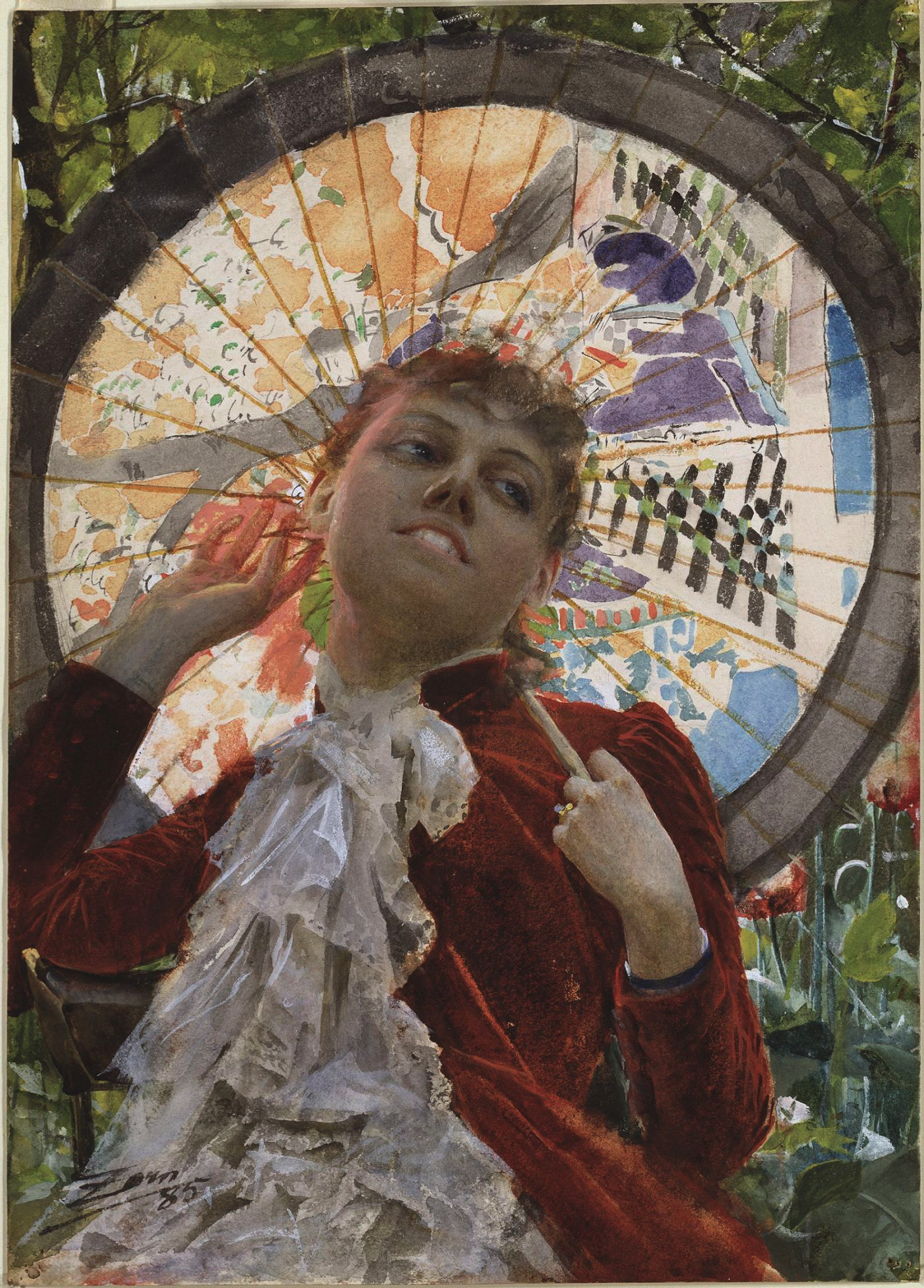
I think it worth pointing out that Zorn painted fishermen and fish sales in 1888 in St Ives, Cornwall. David Tovey remarks that his painting in the Luxembourg, Paris brought many visitors to the town.
The story of the career of Swedish artist Anders Zorn (1860–1920) isn’t quite rags-to-riches, but he was born to an unmarried mother, and never even met his father, a Bavarian brewer who met her when she was doing seasonal work in a brewery in Uppsala. Zorn was brought up on the family farm near the village of Mora, in Dalarna, central Sweden. His itinerant father died in 1872, providing his son with a small legacy which enabled education at a grammar school in the distant town of Enköping.
While he was there, Zorn must have showed artistic talent, as in 1875, at the age of only fifteen, he won himself a place to study sculpture at the Royal Swedish Academy of Fine Arts in Stockholm. He left the beautiful rolling lakelands of Dalarna for the crowded capital. It was there that he discovered that watercolour painting was his forte, and…
As far as I can discern JGF is a fine writer. Interesting to compare with Elizabeth Bowen. The English have a huge lapse of memory with respect to Ireland.
An occasional series, cross-posting my reviews from The Complete Booker.
To see my progress with completing the Complete Booker Challenge, see here.
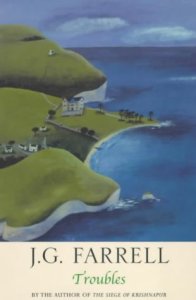
Troubles, by J G Farrell, was the retrospective winner of the Lost Booker Prize in 1970.
July 7th, 2003
Troubles is the predecessor to The Siege of Krishnapur which won the Booker, and this one won the Faber Memorial Prize in 1970 (and posthumously, the Lost Booker Prize, one which has zero credibility with me because it was determined by popular vote).
Troubles is not as good as The Siege of Krishnapur, but it’s very good in parts. It’s set in Ireland just after WW1 when the Troubles were just beginning. Major Bernard Archer goes to the ill-named and shabby Majestic Hotel (a symbol of the declining British Empire) to sort out an intemperate engagement but ends up falling in love with…







 penwithlit