Categories
Uncategorized

Robert Frost and the Fitzgerald Rule

Itsonlychemo's avatarIt's only chemo

Robert Frost left Harvard due to illness and worked on a farm for nine years. During that time he wrote a lot of poetry. He didn’t get much published and he was a poor farmer. After a few years working as a teacher, he sailed for England. He was 39 when his first book of poetry was published by Ezra Pound. He had been born in the 1870s and he was published shortly before the Great War.

He was then on the track to becoming the great Robert Frost, winning his first Pulitzer Prize ten years later.

Opinions on Frost have not always been so uniformly positive. Frost is a very traditional poet who published not in his youth when the forms and styles of his poetry were current, but during the high water mark of Modernism.

His favourite anthology was the Oxford Book of Victorian Verse, full of…

View original post 153 more words

Categories
Art and Photographic History Film Poetry

Robert Doisneau – Poetry in Photographs

3

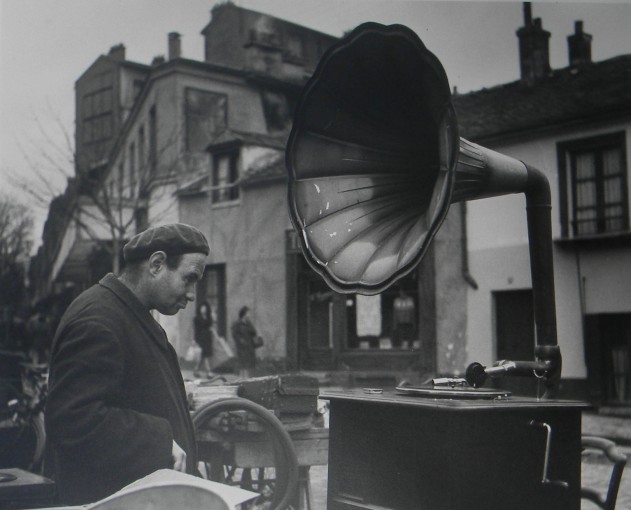
The above photograph comes from an interesting website called http://www.streetphotographyintheworld.com/masters-of-street-photography-by-carlo-traina/masters-of-street-photography-robert-doisneau/

How might we read such a photograph? It has a surreal quality about it that we might associate it with Magritte. The artist, musician and his instrument appear in a classical composition like the three graces. They are starkly outlined against the white Paris sky in front of the descending staircase. The two men seem isolated in their solitude and their is a feeling of expectation and a gentlemanly respect for the instrument whose feminine shape seems implied.

<span class="title">Man at Flea Market with Vinyl Player, France<span class="title_comma">, </span></span><span class="year">c.1950</span>

There is a humane quality which suffuses Doisneau’s work- a magical charm. The photograph makes a nice comparison with the famous HMV poster. It is impossible to say weather the subject is more enchanted by the splendid device or the music emerging from the cumbersome, jolly gramophone. Probably he is entranced by both. His posture and beret adds to the general levity of the scene.

Les Pains de Picasso, 1952

Doisneau photographed many great artists and this photograph captures the master, Picasso in his characteristic striped jersey with his penetrating gaze. The photographer makes a marvellous joke with the distorted fingers of bread rolls. It seems likely that this was contrived between them. A morphic distortion and also an interesting game with perspective too.


Categories
Uncategorized

National Poetry Month~ April 11

A great and noble portrait!

Christy's avatarThe Misty Miss Christy

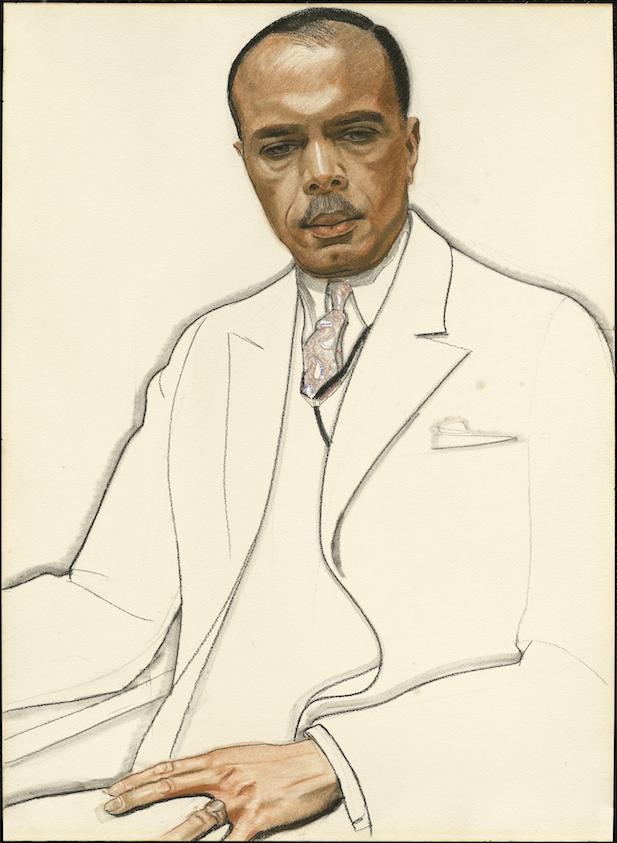
James Weldon Johnson by Winold Reiss

c.1920 / Pastel on illustration board / 30 1/16″x21 9/16″ / National Portrait Gallery, Smithsonian Institution, DC

[There are three embedded links above]

James Weldon Johnson~https://www.poetryfoundation.org/poets/james-weldon-johnson

View original post

Categories
Uncategorized

Jazz Appreciation Month: Album Cover Art~ April 10

Christy's avatarThe Misty Miss Christy

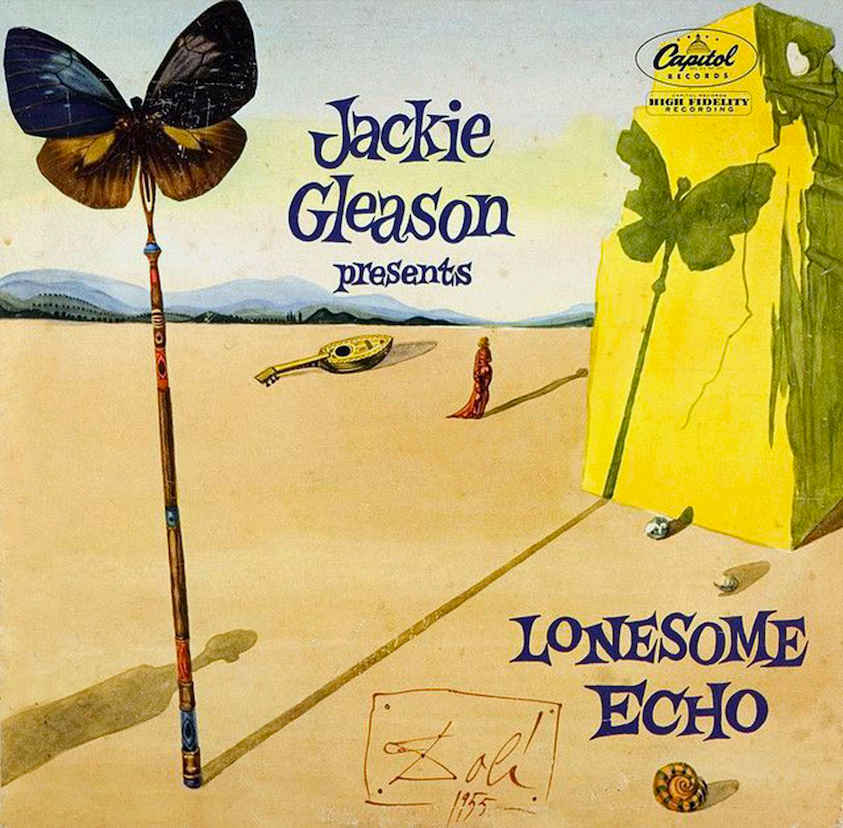
Jackie Gleason Presents Lonesome Echo

1955 / Capitol Records W-627 / 12″ 33 1/3 RPM / Artwork & Liner Notes by Salvador Dalí

[There are four embedded links above]

View original post

Categories
Uncategorized

Farewell Uderzo, illustrator of Asterix

europeancollections's avatarLanguages across Borders

Albert_Uderzo_2012 Albert Uderzo in 2012 (via Wikipedia)

Albert Uderzo, illustrator of the popular Asterix adventures saga, passed away on March 24th at the age of 92, a few months after the comic strip, co-created with René Goscinny, turned 60 years old. This anniversary was much celebrated last year in France. Furthermore, 2020 is the bande dessineé (BD) year at the BnF (this will be covered later in another post).

The Asterix adventures have entertained, amused and captivated generations of young and less young readers. The two protagonists of the series, Asterix and Obelix, and their village of indomitable Gauls who always repel the Roman troops, have become universally known, and their series is one of the most popular created in the history of comics. Its remarkable success has not faded with time, it is the best selling European bande dessinée saga (370 million copies) and the most translated comic (111 languages).

View original post 623 more words

Categories
Uncategorized

Jazz Appreciation Month: Album Cover Art~ April 9

Christy's avatarThe Misty Miss Christy

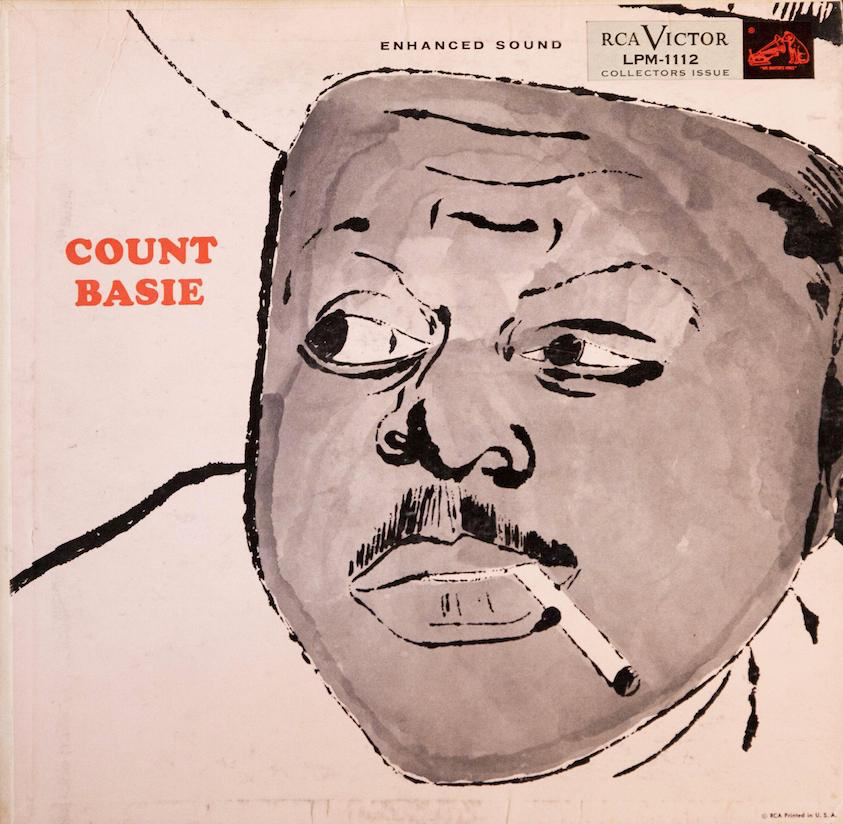
Count BasieAnd His Orchestra

1955 / RCA Victor LPM-1112 / 12″ 33 1/3 RPM / Cover Illustration by Andy Warhol

[There are four embedded links above]

View original post

Categories
Art and Photographic History Art Exhibition Reviews

Musee Antoine Bourdelle- Montparnasse -Entry Nine Euros

I did not know when I arrived here that students in the 18th Century used to stand on a nearby hill  and recite their poems. Hence the nickname Mount Parnassus. Like many a modern flaneur, however. I associated the quartier with the jazz loving Americans of the 1920s. The habitués of the Café du Dôme rubbed shoulders with the ‘crowd’ as they called themselves; Ernest Hemmingway, Sylvia Beach, John Rodrigo Dos Passos and Ezra Pound. This was the Lost Generation fleeing prohibition living it up in cheap dodgy hotels – later to be followed by Henry Miller. These fading lyrical echoes in the shade contrasted with the undistinguished entrance to the hidden charms of the Musee.

Once into the museum, you enter the creative space of Antoine Bourdelle(1861-1928), the pupil of Rodin and the teacher of both Matisse and Giacometti. It was in 1926 that this typical Parisian atelier was to be turned into a museum. The quiet sanctuary of the front garden gave me the first glimpse of four sculpted figures including La Victoire (Victory) and l’Eloquence (Eloquence) surrounded by a secluded peristyle. At the time of my visit, I was unaware that there were over 500 works of art here. I simply sat and made a few sketches of the first few of these impressive statues.

Passing into the Great Hall, which was built in 1961, for the centenary of the artist’s birth, I encountered an impressive array of magnificent figures some of which towered way above the visitors. Interspersed between these at the further end were brightly colourful dresses by famous contemporary couturiers. This museum has frequently had special exhibitions and this focussed on the fashion of dresses from the back. (Dos à la mode}.However my attention was taken by the famously energetic sculpture of Hercules the Archer.

Bourdieu made some 12 versions of this dynamic sculpture. The model was a certain athletic Commandant Doyen-Parigot who twisted his muscular body into the required difficult posture. He contorted his body in demanding fifteen-minute sessions. Bourdelle also famously used his rather primitive Kodak camera to facilitate his project. A wealthy financier, Gabriel Thomas was deeply impressed by this statue of Hercules in 1910. Thomas together with Gabriel Astruc, the impresario that brought Rubenstein, Caruso, Toscanini and famously Diaghilev to Paris, set up a real estate company to build a new theatre. This became the Theatre des Champs-Elysee, the façade and inner atrium were, under Thomas auspices, to be decorated by Bourdelle. This was to be the debut of Art Deco style, a feature of the new modernism.

Returning through the studios there were many fine sketches by Bourdelle including those he made of the dancer Isadora Duncan. Proceeding through an outlying corridor I came across the Beethoven heads. These imaginative and expressive works began around the time he started his association of 15 years with Rodin. Altogether he made some 40 of such masterpieces.

In the tranquillity of the ivy leafed inner garden I encountered a huge and towering bronze. This was the statue of Centaure Mourant. From just where I stood, I could not see more than the torso of the horse and only by moving gingerly around the piece could I discern the twisted direction in which the head lay. Inspired by classical myth and considering its construction in 1914, Bourdelle was asked why does the centaur die? Bourdelle replied in Nietzschean mode, “He dies like all the gods- because no one believes in him any more.”


Categories
Literature Penwith Poetry St Ives West Cornwall (and local history)

West Penwith by Adrian Stokes

This poem interests me and looks fairly simple – let us  consider one or two lines and see if we can explore some more deeply. Indeed, this is a poem about surfaces and depth with a number of words that suggest rest- abolish pace, slow, apart and torpor. There is too a general feeling for sculpture as is expressed in his remarks about stone and it’s weathering or erosion by water. Details about Stokes may be found at his Wikipedia entry where it states about his early writing;” In The Quattro Cento he characterized the intense Early Renaissance feeling for material and space as ‘mass-effect’ and ‘stone-blossom’. The stone—deeply respected as a medium – is, he said, ‘carved to flower’ thereby bringing to the surface the fantasies the artist reads in its depths.” Let us continue to dig beneath the surface of these lines.

There seems to be a general feeling of relief perhaps reflecting Stokes returning to Cornwall. The lines about outhouses and stone retrace unmeagre time seems somewhat demanding. Does this mean that such structures seem and suggest aeons of time? Meagre is a synonym for sparse. So this may mean that the scene implies the extensive nature of time. As Stokes studied philosophy, then it is quite possible that some sort of Bergsonian concept of time.{See https://www.bbc.co.uk/programmes/m0004s9w }

In the next line herd is somewhat unusual- maybe the light from the shining mica in the granite is being collected by the eye. It also is a homophone for heard which brings a whimsical feeling of  synaesthesia together with the metal clang of time colliding with rhyme. In the next stanza there is hoard and heart which may be associated with the unusual word hurd, the coarse parts of flax or hemp that adhere to the fiber after it is separated. — called also hards. This sounds very much like the Golden Fleece and adds to the reference to the early Cornish tinners. A milksop is a person who is indecisive and lacks courage. Milksop can be a piece of bread dipped in milk. The flower might mean a milkwort  or just a general term for any flower in a field which may have cows in it!

Cow Dairy Happy Stock Photos - Download 2,051 Royalty Free Photos

The word also brings to mind that Stokes was deeply interested in psychoanalysis and was in fact an analysand of Melanie Klein whose work focused around infantile phantasy at the breast. He was also a friend of Barbara Hepworth whom he brought to St Ives where he lived near The Cornish Arms pub with his wife Margaret Mellis, The feelings of support, skin texture and associated tactile imagery come out in the second section where closeness is increased by the use of our. This underlying emotion of support and nursing passivity brings to an end this interesting poem.

The background about Adrian Stokes and his leading contribution to modernism in St Ives may be found at https://www.stivesart.info/lyrical-light/

A useful discussion on Margaret Mellis is at http://www.artcornwall.org/interviews/Margaret_mellis.htm

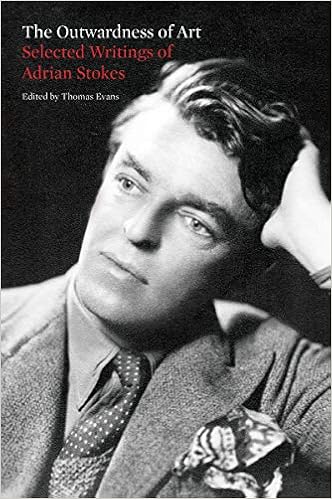
The Outwardness of Art: Selected Writings of Adrian Stokes: Amazon ...


Categories
Uncategorized

Wayne Gudmundson (b. 1949)

Categories
Art and Photographic History Poetry

A Rispetto on Edward Hopper’s Cape Cod Morning, 1950

From window bay she looks out towards morning

light.  Sun rays illuminate pale blue wooden

cladding. Bent forward in desperate longing,

she seeks relief from her worries. Chiming ten

the clock is unheard by the woman leaning,

scanning beach and beyond  urgently searching

for her son’s return.She discerns no footstep

nor boy coming with wet net dragging to drop.


I have been reading about John Berryman and Robert Lowell on the Cape and looking at photographs of this interesting location. Next day, after trying to write this fairly simple verse form I came across an article about the topicality of Edward Hopper in The Guardian and this can be seen at https://www.theguardian.com/artanddesign/2020/mar/27/we-are-all-edward-hopper-paintings-now-artist-coronavirus-age

Details of the Italian form Rispetto can be found along with other simple fotms at

https://owlcation.com/humanities/10-Types-of-Short-Poetic-Forms