Man and Wife, Robert Lowell, ‘blossoms on our magnolia ignite/the morning with their murderous five days’ white’. (Lowell was a master of the three-part-line)
What is there to say, Jack Gilbert, ‘there is this stubborn provincial singing in me’
The Muse, Anna Akhmatova, ‘When in the night I await her coming/my life seems stopped.’
Psalm 143, King James Version, ‘Quicken me, O Lord, for thy name’s sake: for thy righteousness’ sake bring my soul out of trouble.’ (Purcell, ‘Thy Word is a Lantern’)
Sonnet, Robert Hass, ‘Outside, white,/patient animals, and tangled vines, and rain.’
The Eve of St Agnes, John Keats, ‘A casement high and triple-arch’d there was,/ All garlanded with carven imag’ries/ Of fruits, and flowers, and bunches of knot-grass,/ And diamonded with panes of quaint device…’
The toome road, Seamus Heaney, ‘O charioteers, above your dormant guns,/It…
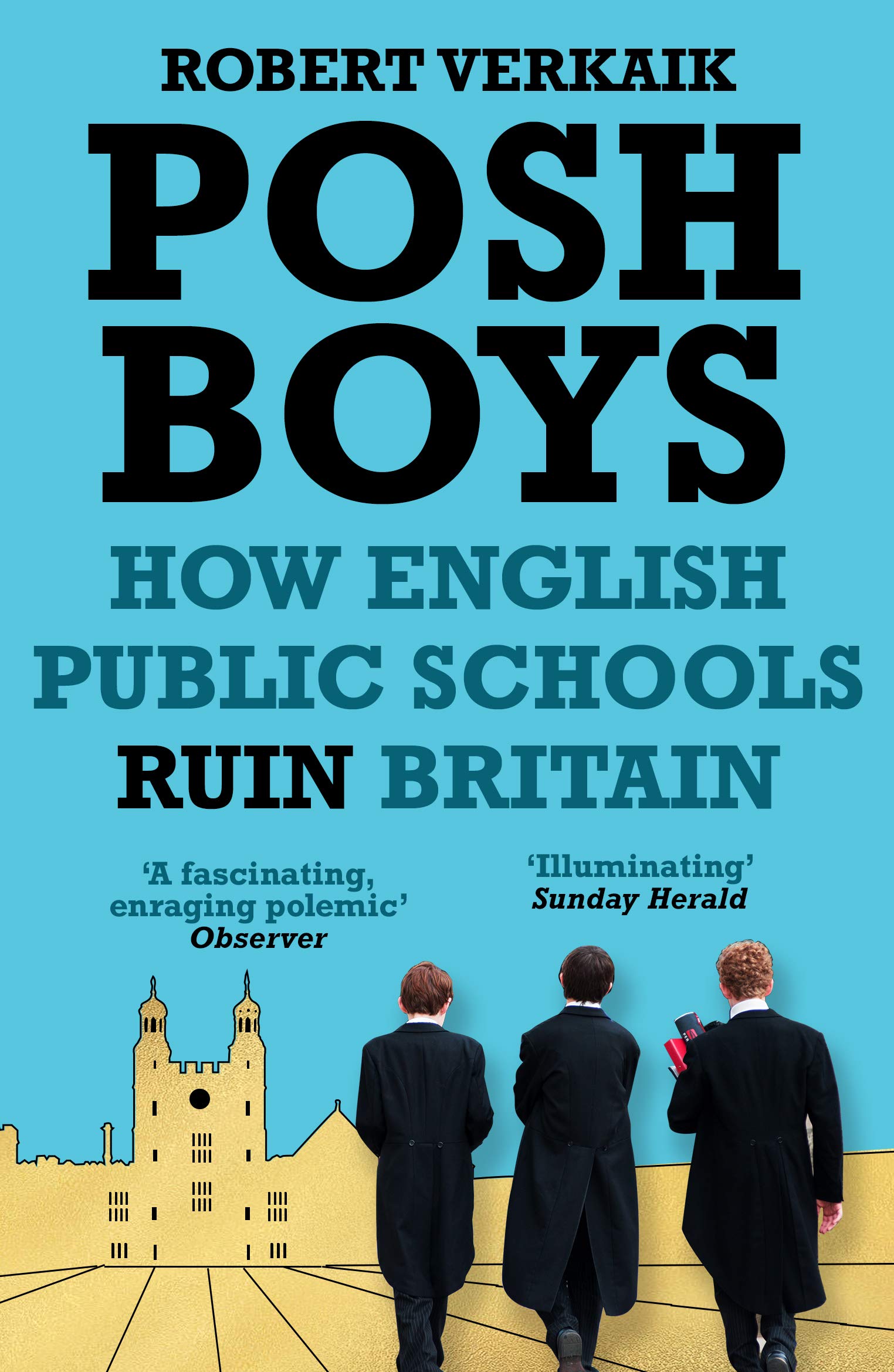
Arte is a brilliant source of great programmes on various topics, many of which are cultural or historical, in French and in German. Here is one in French in which it is possible to hear the absurd inequalities of the English class system spoken in French. This naturally has the effect of being somewhat amusing. The voyeuristic pleasure which the lower orders are supposed to derive from the spectacle is supposed to distract from other concerns- like properly funded public services.
The French and German subtitles are useful too, Here is another view of one aspect of English education by a great teacher, novelist and poet.
The Oxford Voice by D.H. Lawrence
When you hear it languishing
and hooing and cooing, and sidling through the front teeth,
the Oxford voice
or worse still
the would-be Oxford voice
you don’t even laugh any more, you can’t.
For every blooming bird is an Oxford cuckoo nowadays,
you can’t sit on a bus nor in the tube
but it breathes gently and languishingly in the back of
your neck.
And oh, so seductively superior, so seductively
self-effacingly
deprecatingly
superior.
We wouldn’t insist on it for a moment
but we are
we are
you admit we are
superior.
A more gentle and highly amusing perspective on a smaller scale perhaps is the radio series Plum House. It is a Comedy about the eccentric and inept staff at Plum House, former country home of minor 18th-century poet George Pudding. Written by Ben Cottam and Paul Mckenna. It may be found at https://www.bbc.co.uk/programmes/b07hk30x
Autumn, T.E. Hulme, ‘i walked abroad,/And saw the ruddy moon lean over a hedge.’
Eurydice, H.D.,’Fringe upon fringe/of blue crocuses,/crocuses, walled against blue of themselves,/blue of that upper earth,/blue of the depth upon depth of flowers,/lost;’
Blizzard, William Carlos Williams, ‘Hairy looking trees stand out/in long alleys/over a wild solitude.’
The Blue Scarf, Amy Lowell, ‘How loud clocks can tick when a room is empty, and one is alone!’
Madrigal, Richard Aldington, ‘But daylight brought no slumber to my pain.’
Baudelaire wrote of the strolling poet in the Paris crowd:-
The poet enjoys the incomparable privilege of being able to be himself of someone else, as he chooses. Like those wandering souls who go looking for a body, he enters as he likes into each man’s personality. For him alone everything is vacant; and if certain places seem closed to him, it is only because in his eyes they are not worth visiting.
The solitary and thoughtful stroller finds a singular intoxication in this universal communion. The man who loves to lose himself in a crowd enjoys feverish delights that the egoist locked up in himself as in a box, and the slothful man like a mollusk in his shell, will be eternally deprived of. He adopts as his own all the occupations, all the joys and all the sorrows that chance offers.
The Paris, a few years after Baudelaire’s passing is shown in these remarkable pictures taken between 1900 and 1917. Baudelaire died in 1867 but his remarks are interesting and pertinent to some of the following photographs, which were shot in direct colour using the Autochrome process developed by the famous Lumière brothers in 1903.
In the original French from Spleen (1869)
Le poète jouit de cet incomparable privilège, qu’il peut à sa guise être lui-même et autrui. Comme ces âmes errantes qui cherchent un corps, il entre, quand il veut, dans le personnage de chacun. Pour lui seul, tout est vacant ; et si de certaines places paraissent lui êtres fermées, c’est qu’à ses yeux elles ne valent pas la peine d’être visitées.
Le promeneur solitaire et pensif tire une singulière ivresse de cette universelle communion. Celui-là qui épouse facilement la foule connaît des jouissances fiévreuses, dont seront éternellement privés l’égoïste, fermé comme un coffre, et le paresseux, interné comme un mollusque. Il adopte comme siennes toutes les professions, toutes les joies et toutes les misères que la circonstance lui présente.
Rain, Ted Hughes, ‘Every half-ton cow/Sinks to the fetlock at every sliding stride.’
Rain, Don Paterson, ‘I love all films that start with rain:/rain, braiding a windowpane/or darkening a hung-out dress…’
Rain, Jack Gilbert, ‘Joy has been a habit./Now/Suddenly/This rain.’
Rain, Edward Thomas, ‘Blessed are the dead that the rain rains upon.’
Marengo, Mary Oliver, ‘When I have to die, I would like to die/on a day of rain.’
Rain Light, W.S. Merwin, ‘look at the old house in the dawn rain/all the flowers are forms of water’ (audio/video)
Sestina, Elizabeth Bishop, ‘the child/is watching the teakettle’s small hard tears/dance like mad on the hot black stove,/the way the rain must dance on the house.’
Spring Storm, William Carlos Williams, ‘It collects swiftly,/dappled with black/cuts a way for itself/through green ice in the gutters.’
This line from Little Gidding— ‘The first-met stranger in the waning dusk’— is always mis-read. We dusk think it means evening, but it means dawn. Eliot struggled to get this right, and sent a series of letters about it.
As he said, ‘it is surprisingly difficult to find words for the shade before morning.’ English describes the dusk better than the dawn.
Dusk can refer to the morning. It means ‘the darker stage of twilight’, which itself only ‘esp.’ applies to the evening, according to the OED. But Eliot was relying on precedent from Tennyson and knew it didn’t really work. But he was stuck.
He was going to write, ‘The first-met stranger at lantern end’, because he was thinking very specifically of the time of day when people put night lanterns out. But it was ‘too quaint’ and there ‘is so much ending at the beginning.’…

 penwithlit