Our visit to Haarlem coincided with the annual Jazz Festival which started on the Wednesday and ran through until Sunday. We’d hoped to catch some of the music on the Wednesday and Thursday before we headed for home on Friday. On Wednesday evening, however, it poured down more or less continuously so after spending some time watching one of the acts on the opening night, we decided to call it quits and retreated to Tierney’s bar! The next night was much better. It didn’t rain and we were able to sample some of the music and atmosphere.
On the Wednesday there was only one stage, set up in the Grote Markt, but the next night three more stages opened up. 2 other stages around the Grote Kerk – on Oude Groenmarkt and Klokhuisplein – and another venue at the Pletterij , on the outskirts of the town centre.
The Old Town was 90% destroyed by these armies and by the Russian forces seeking to wrest Gdansk away from Nazi Germany. My understanding is that the sensitive restoration of the city after 1945 did reduce some of the Prussian influences in the architecture, but that most of the buildings looked exactly as they did before 1939.
Drawings, paintings, and old plans were used to reconstruct whole neighbourhoods, as was the case with most Polish cities after WWII, and as I walked along each street, strolled through the parks, and admired every church I gave thanks to the restorers for making such great efforts to reproduce their city of the pre-war years. It would have been easier to build Stalinist blocks, but the planners wanted their city back as it was in early 1939. It took over 30 years to complete, but the Old Town is now old again.
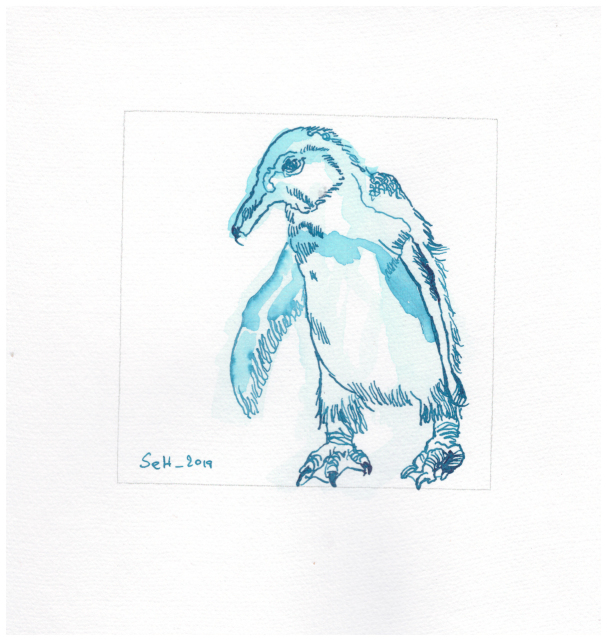
Es hört sich an als ob der nächste Salon am 29. Oktober 2019, 18 Uhr (Klick) in meinem Atelier noch in weiter Ferne scheint, jedoch weiss ich, wie schenll die Zeit vergeht und zeichne weiter an meine Afrika Impressionen.
Die Pinguine lassen mich nicht los. Die Beobachtung der Pinguine gehört zu meinen schönsten Erinnerungen an die Afrika Reise vor nun schon fast zwei Jahren. Hier ist der Link (Klick), der zum Blogbeitrag führt, in dem ich über diesen besonderen Tag berichte.
Ich zeichne für die kleinen Arbeiten immernoch in der Größe 15 x 15 cm. Da ich meine Blätter immer voll ausnutze, muss ich mir tatsächlich einen Bleistiftrahmen dieser Größe zeichnen, damit ich innerhalb meines Passepartoutausschnitts bleibe. Das amüsiert mich etwas, vor dem Rahmen wird der Ausschnitt wieder ausradiert.
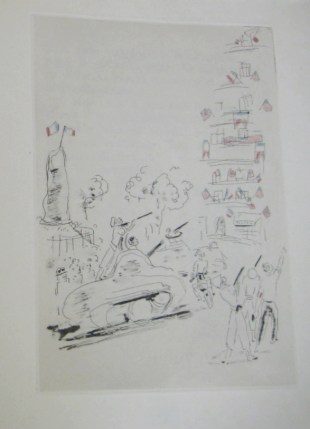
On the 75th anniversary of the Liberation of Paris, we would like to talk about Images de notre délivrance (Liberation.a.7), published in December 1944 by the Editions du Pavois (the publisher in 1946 of L’Univers concentrationnaire by David Rousset, which was awarded the Renaudot prize, Liberation.c.119 and Liberation.c.918). The book, clearly of a bibliophile nature, is presented by the editor as a documentary, the result of an accidental collaboration between a writer, Georges Duhamel (1884-1966), and an artist, Claude Lepape (1913-1994), both reacting to a unique historical event:
Ce livre est un document. Il est né de la rencontre fortuite de deux sensibilités. L’Ecrivain et le Dessinateur ne se sont pas concertés, mais leurs réactions, si diverses et en même temps si proches, constituent l’un des documents les plus émouvants sur les glorieuses journées de la libération.
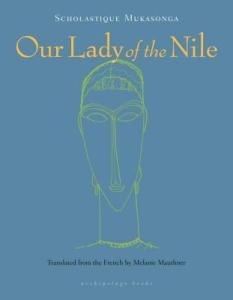
This is a heart-breaking book. Our Lady of the Nile is a prelude to the Rwandan Genocide against the Tsuti, depicting in fiction the divisions in Rwandan society in the microcosm of an elite girls’ school. Scholastique Mukasonga is a Rwandan refugee now living in France, and I have previously read her searing memoir Cockroaches (2006, translated into English in 2016). This novel (Notre Dame du Nil) followed in 2012 and was translated in 2014.
Our Lady of the Nile draws on the author’s own experience at the Lycée Notre-Dame-de-Citeaux, which she attended as one of the Tutsi quota. It was because she had fled to Burundi after being attacked by Hutu students at that school, that she did not witness the genocide, and escaped the slaughter of her family.
Like the elusive source of the Nile, the causes of ethnic hatred in Rwanda are hard…
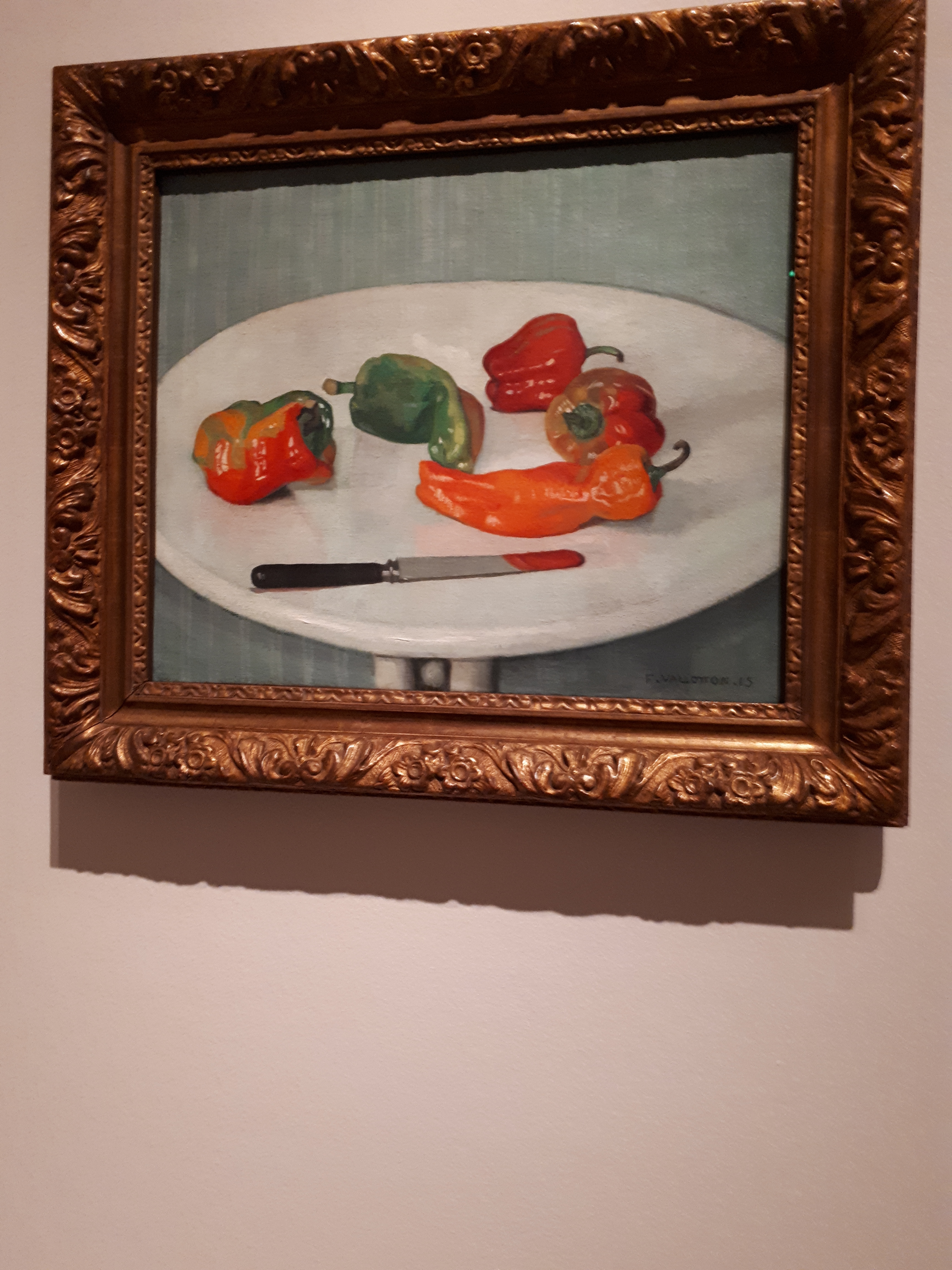
From the Latin American Expo at Photographer’s Gallery, the above photograph in the context of Latin American history brings up all the associations with the colour red. Melons with a knife implies the violence of the troubled history of South America. It also recalled the painting by Valliton which he painted upon the outbreak of the First World War- also a bloody image with another fruit/vegetable. I had seen this just a few hours before at the R.A. I ask myself what it is about these images that was so affecting. Perhaps it was that I was about to visit the Stanley Kubrick exhibition, perhaps also that they are reminders of how easily, in the current situation politically matters could go wrong.
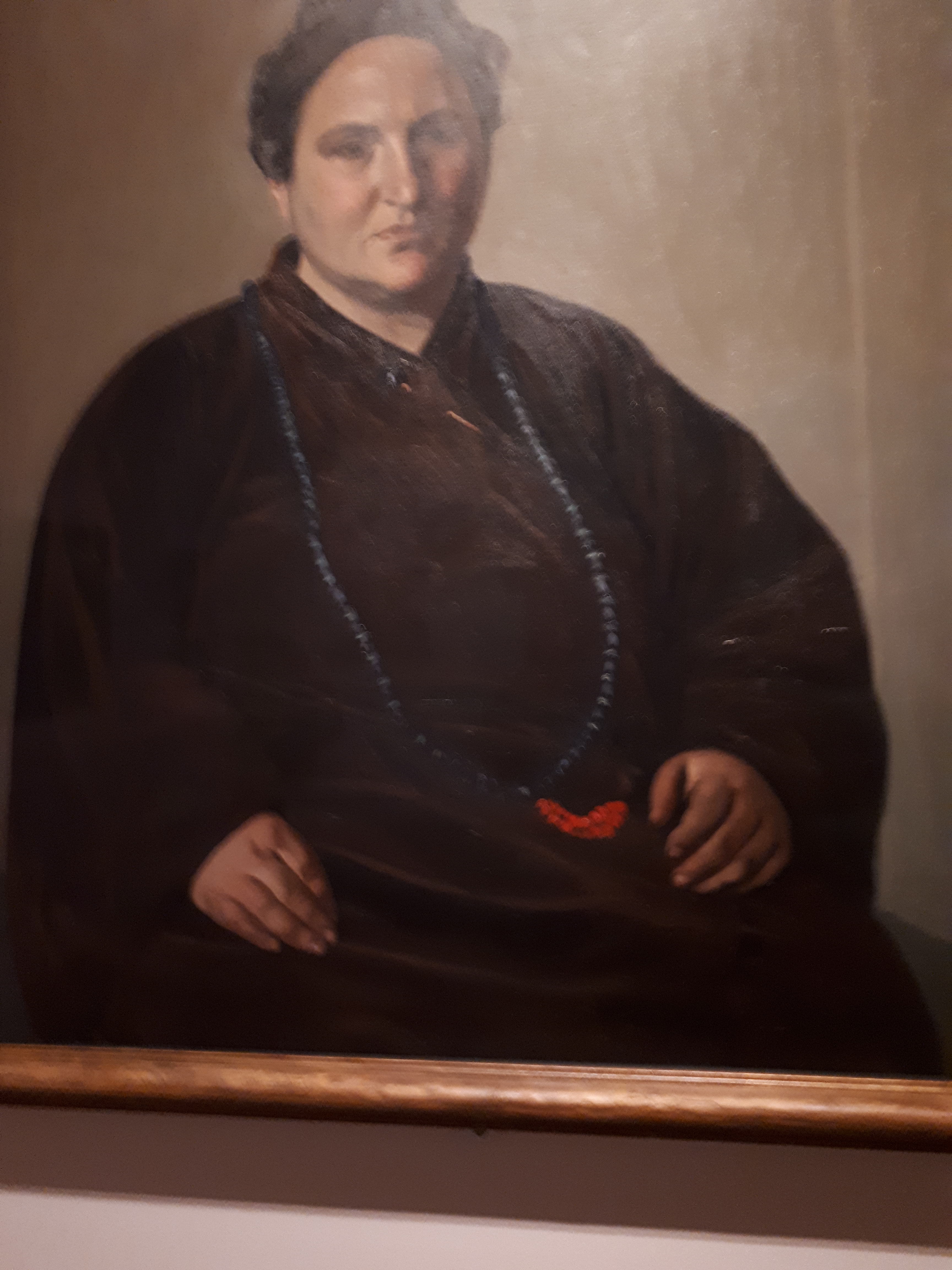
Here are some further images of the Valliton from the R.A. I found his work dramatic and affecting on so many levels. A true modernist with a thoughtful face according to his self-portrait.
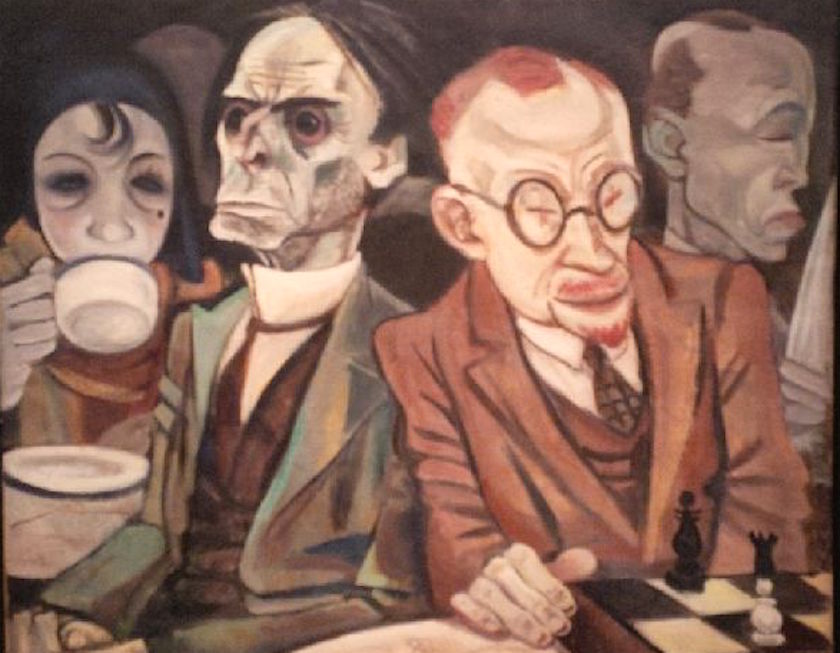
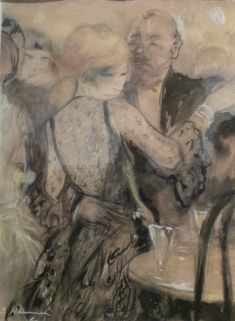
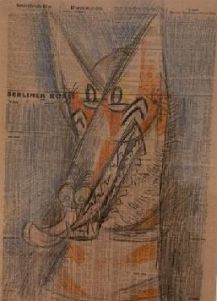
Jeanne Mammen (1890-1976) was a Berlin-based artist, most famous for chronicling life in the city during the 1920s.
Born in Berlin, she studied art in Paris and Rome and lived in France until the outbreak of World War One forced her to move. While her family relocated to Amsterdam, she chose to return to Berlin.
At first, Mammen struggled to support herself as an artist, and she took any work she could, creating artwork for movie posters, satirical magazines, books, and fashion plates.
Particularly striking are her sketches and watercolours that depict people from all walks of life with a sympathetic yet unsentimental eye. Much of her focus was on women. Some her works, which capture swinging, glittering 1920s Berlin could be mistaken for contemporary party scenes.
But in addition to these more well-known works, the retrospective at the Berlinische Gallerie also shows how the artist’s work developed over decades, with 170…
I have to confess I hadn’t heard of Sean O’Brien until recently, when I found out he’d won last year’s Forward prize for poetry. So it seemed appropriate to start with his prize-winning collection, The Drowned Book.
The blurb says that much of this collection ‘takes [its] emotional tenor and imaginative cue from [Sean O’Brien’s] acclaimed translation of Dante’s Inferno‘. Unfortunately I haven’t actually read the Inferno, so I felt like I was on a bit of a back foot from the start. That said, the opening poems – all about water, rivers, the sea – are undeniably compelling, drawing you into their dark, subterranean world. Water seems to be a place of memory, haunted by the dead – perhaps the borderlands between this world and another… I loved the dark, knowing, and, in places, comic tone of these poems.
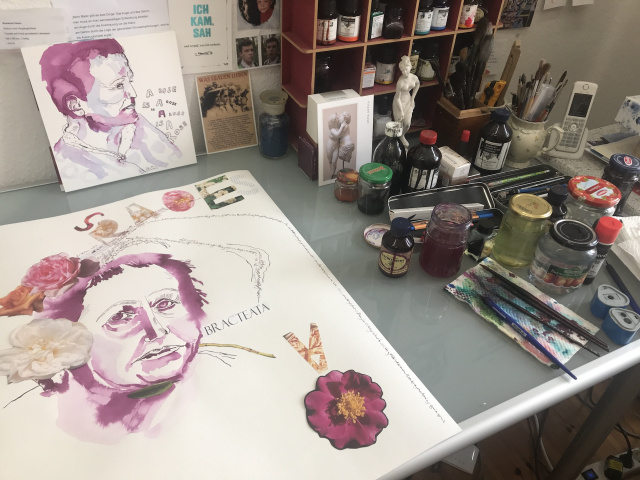
Entstehung Mein Sinnbild von Gertrude Stein, 65 x 50 cm, Tusche auf Hahnemuehle Aquarellkarton, Collage von Susanen Haun (c) VG Bild-Kunst, Bonn 2019
Gertrude Stein war die Mutter der modernen Literatur.
Im großen von Uda Strädling herausgegebenen Gertrude Stein Lesebuch bezeichnet die Autorin die Literatin als “Sprachversucherin”, eine sehr gelungene Definition, wie ich finde. Hier eine Kostprobe ihres experimentellen Stils:
„Und worum geht es. Darum was vorgeht. Was vorgeht führt ein anderes Wort ein und das ist so gut wie ja. Gertrude Stein, »Hört doch“
Bekannt dürfte Gertrude Stein vor allem durch den Textauszug “A Rose is a Rose is a Rose is a Rose …” sein. Die Anzahl der Rosen variiert dabei je nach Veröffentlichung. Diese simple Aussage begleitet mich schon eine geraume Zeit durch mein Leben und hat mir tatsächlich des öfteren als Weisheit in meinem Werdegang geholfen.
Die Collage von Gertrude Stein sollte eigentlich schon zur Ausstellung
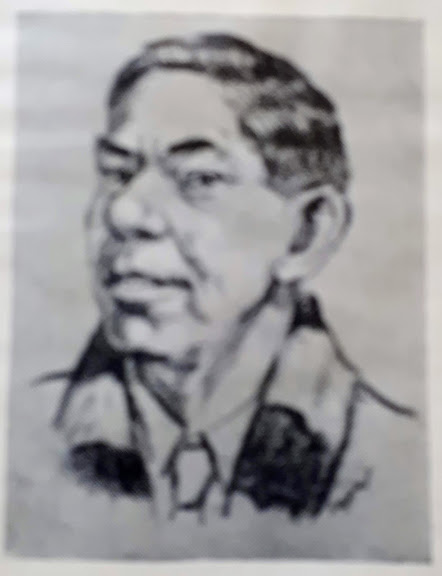
This uniquely illustrated pamphlet of around 20 pages offers a brilliant summary of life in St Ives just after the War. The town’s Silver Age it might be termed. This fascinating time period is manifest in the vivid sketches by the well-known St Ives artist, Hyman Segal.https://cornwallartists.org/cornwall-artists/hyman-segal
Segal is probably best remembered for his African paintings as well as for his skill in portraying cats with sweeping economical lines. A Daily Mirror photographic frontispiece shows him, an Art Therapist at West Cornwall Hospital, helping the recovery of a young lad at Tehidy Sanatorium in Camborne. This classic photograph by Bela Zola indicates the pride in the newly created NHS.{Zola was a leading photographer who recorded later the Aberfan Disaster and the profumo Affair among other renowned assignments.) https://www.worldpressphoto.org/collection/photo/1956/28663/1/1956-Bela-Zola-GN1-(1)
The first sketch in the pamphlet is of our celebrated Town Crier, Abraham Curnow -here just 54 years old. This is accompanied by a sketch of his Father-in-Law, Ernest James Stevens, popularly known as “Jimmy Limpets”. This drawing with others by Segal now hangs in the Sloop Inn.
On the following page is an image of Thomas Tonkin Prynne who had been the manager of Lanham’s picture framing business which in previous years supplied the Royal Academy and other galleries with canvases by inter alia , Julius Olsen, Louis Grier and Moffat Linder. In addition to running an efficient business, he worked for 16 years as a member of the volunteer fire brigade, had a blue Persian cat and loved fishing.
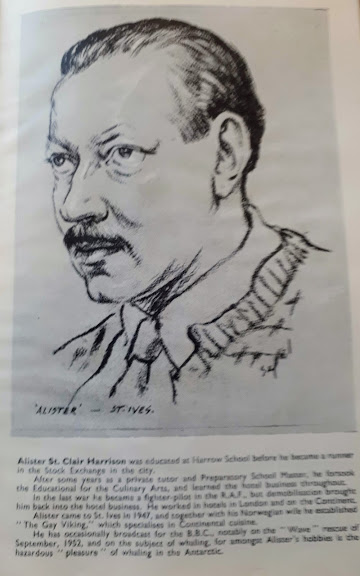
There is also a magnificent sketch of Alistair St Clair Harrison, like Churchill, an old Harovian who had been a fighter pilot during the Second World War. It was Harrison who broadcst for the BBC about the rescue of HMS Wave in September 1952 and also about his interest in Antartic whaling. It was with his Norwegian wife that he established “The Gay Viking”;almost as famous for its colourful clientele as its innovative continental cuisine. ( Gay Viking was incidentally one of eight vessels that were ordered by the Turkish Navy, but were requisitioned by the Royal Navy to serve with Coastal Forces during the Second World War)
Alistair St Clair Harrison by Hyman Segal
Frank Edward Endell Mitchell, appropriately portrayed with bow-tie, fashionable in the 1950s, was known as “Micheal” and was the tenant of the Castle Inn. His friendship with Dylan Thomas must have been firmly established in the bohemian atmosphere of the bar there, then opposite Lanham’s and the Scala Cinema (presently Boots). Mitchell who was the brother, I believe of the eminent sculptor, Denis Mitchell, offered the Castle lounge for the display of art works and in his spare time, he himself did pastels and was occupied in breeding Boxer dogs.
The donation of this little pamphlet to the Morrab Archive offers members the opportunity to recreate for themselves the ambience of the Fifties through “The Familiar Faces of St Ives”.





 On the 75th anniversary of the Liberation of Paris, we would like to talk about Images de notre délivrance (
 This is a heart-breaking book. Our Lady of the Nile is a prelude to the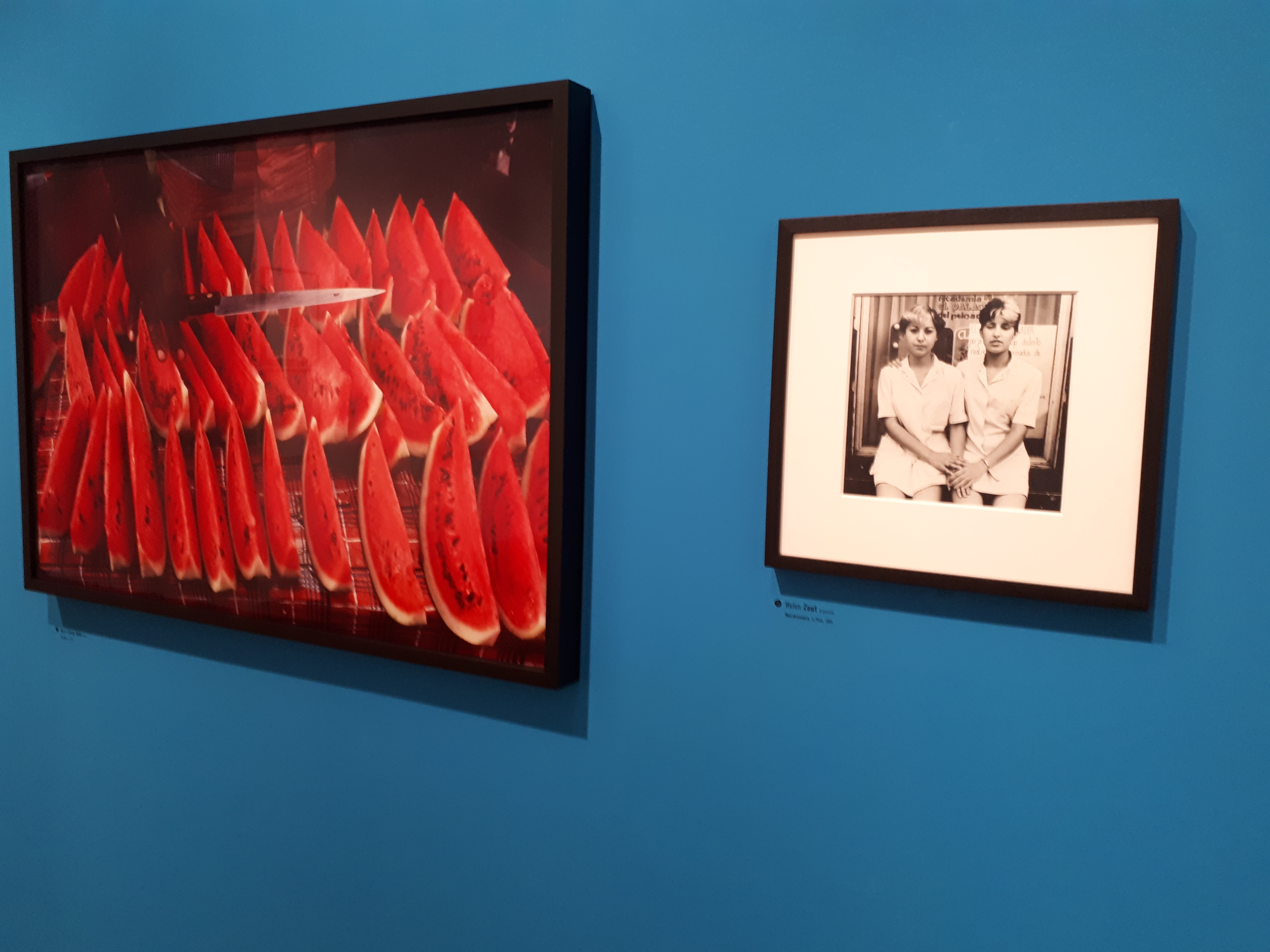


 But in addition to these more well-known works, the retrospective at the


 penwithlit