Categories
Uncategorized

Elisha

apolla13's avatarNames Throughout the Ages

Elisha is a Hebrew male name meaning “my God is salvation” and is the name of a prophet in the Hebrew Bible, the New Testament, and the Quran. Although it’s more commonly used as a male given name, it has had use as a female given name, surging in popularity in the 1980s. I don’t know whether the name was inspired by the Biblical figure or whether it was used as a variant spelling of Alicia or a combination of both, although in Hebrew Elisha is pronounced e-LIE-sha (similar to Elijah).

Origin: Hebrew

a13feb576f03c09acc8be4d14feb7ce8Pinterest

Variants:

  • Elysha (English)
  • Elishua (Biblical Hebrew)
  • Eliseus (Biblical Latin, Latin)
  • Eliseo (Italian, Spanish)
  • Elisie (Macedonian)
  • Elissaios (Ancient Greek)
  • Alyasa (Arabic)
  • Elyesa (Turkish)

View original post

Categories
Uncategorized

Indio

apolla13's avatarNames Throughout the Ages

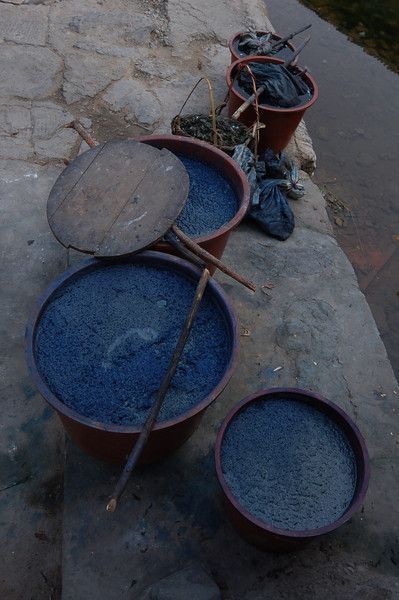
Indio seems to be either a male form of India, the name of a country in South Asia; the name comes from Sanskrit Sindhu meaning “river, stream; flood, waters; sea, ocean”. I’ve also seen it listed as a variant form of Indigo, the color of a purplish-blue color. The word comes from Ancient Greek indikon meaning “of India” or “Indian dye” in reference to the dye extracted from plants and exported from India to the Ancient Greeks and Romans. Indio is also a Spanish, Galician, and Portuguese word meaning “Indian”.

Origin: Sanskrit

57e4dc4386a1757d23f8789a9bf2ec79Pinterest

Variants:

  • Índio (Portuguese)
  • India (English)

View original post

Categories
Uncategorized

After The Rain: The Impressionist streets of Lesser Ury, 2

Captured much of the essence of Berlin which remains still today- for example Nollendorfplatz- the same today.

hoakley's avatarThe Eclectic Light Company

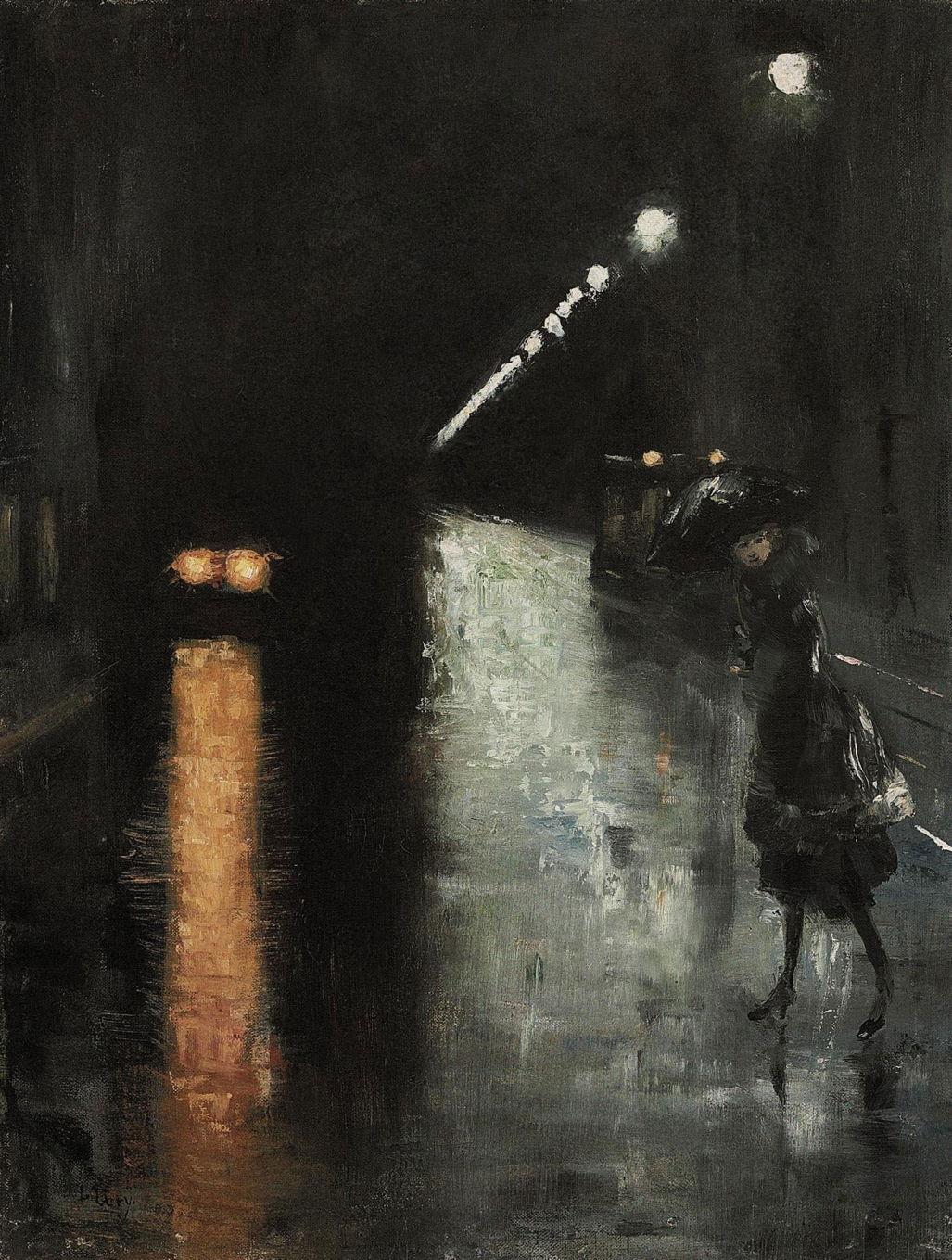
In the first of these two articles about the life and work of the German Post-Impressionist painter Lesser Ury (1861–1931), I looked at his paintings up to 1903.

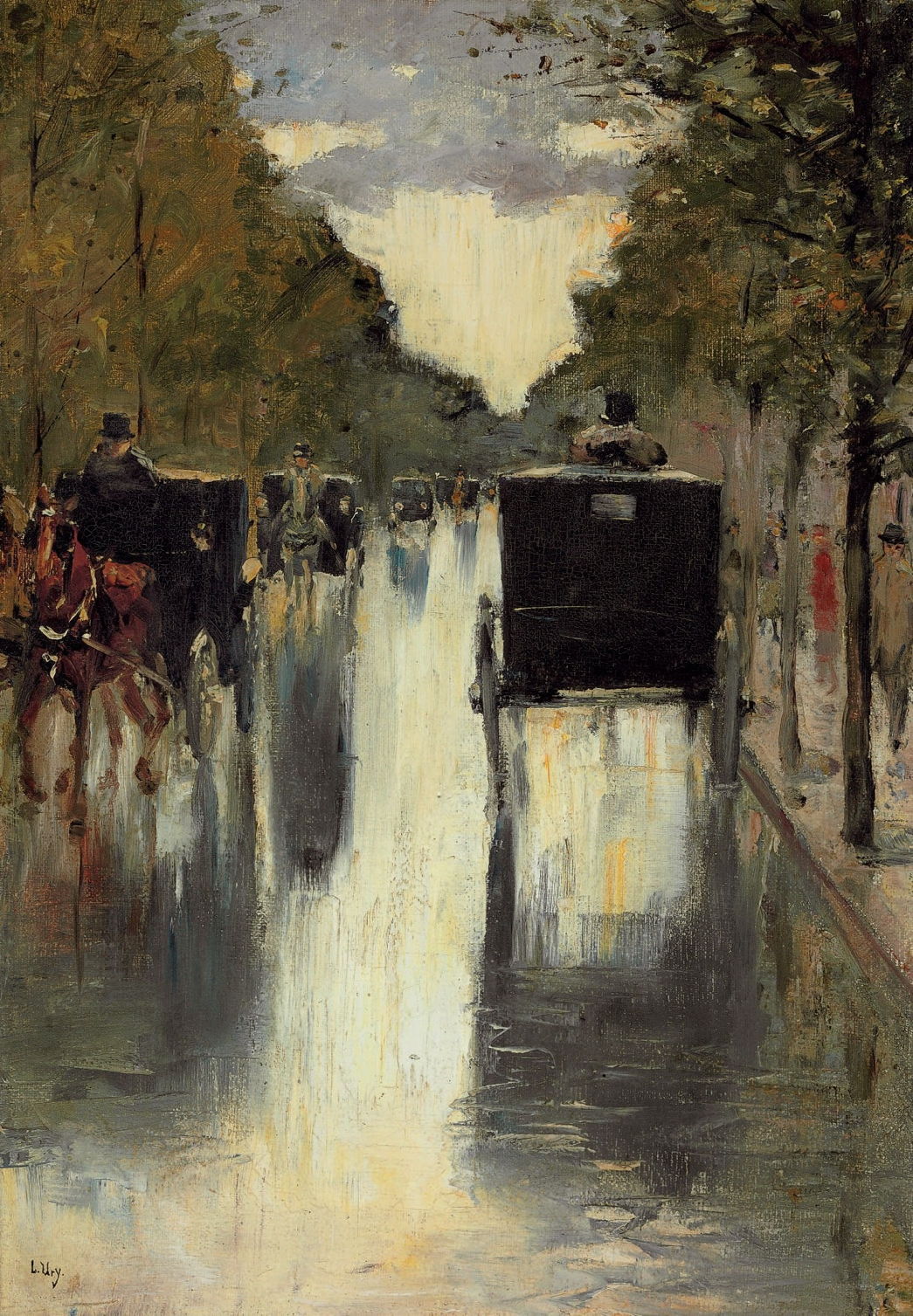
uryberlinstreetscenetaxis Lesser Ury (1861–1931), Berlin Street Scene with Horse-Drawn Cabs (1900-10), oil on canvas, 50.8 x 35.6 cm, location not known. Wikimedia Commons.

Painted sometime during the first decade of the twentieth century, Ury’s Berlin Street Scene with Horse-Drawn Cabs closes in on his formula for success. Although he retains considerable detail in the trees and horse-drawn cabs, the wet road now looks like a real water surface, with its reflections perfect. The dull daylight makes it hard to simplify the image any further, though.

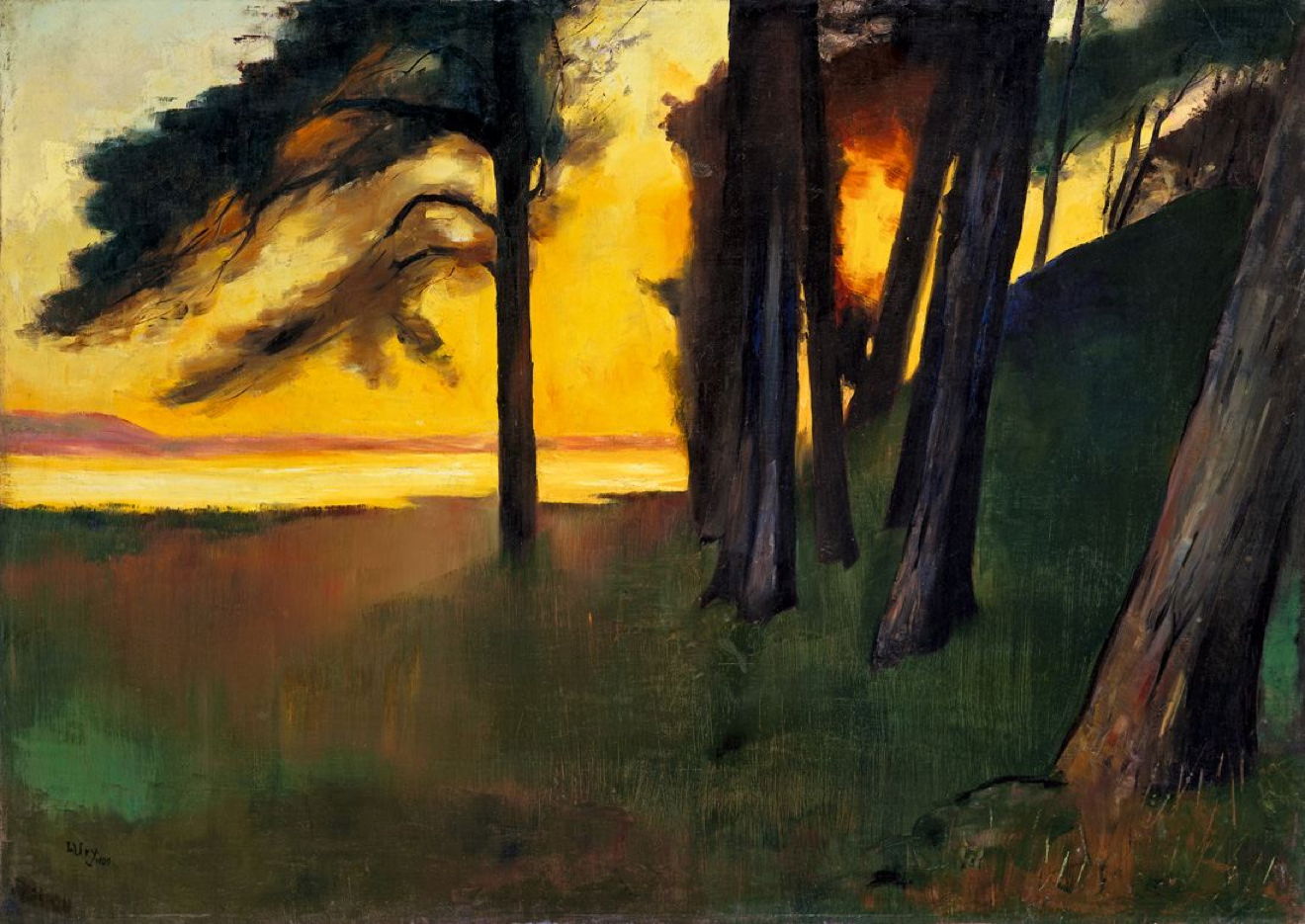
urybyalake Lesser Ury (1861–1931), Evening at a Lake with a Pine Forest (Grunewaldsee?) (1909), oil on canvas, 75.5 x 106.5 cm, location not known. Wikimedia Commons.

His other landscapes of this period were also becoming more distinctive and memorable.

View original post 717 more words

Categories
Uncategorized

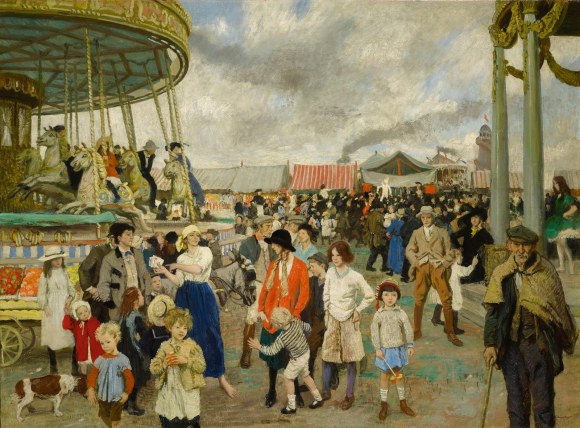
Dame Laura Knight: The Fairgrounds, Penzance

Marvellous Laura Knight who drew so well from an early age.

At Sunnyside - Where Truth and Beauty Meet's avatarAt Sunnyside - Where Truth and Beauty Meet

Irina Dame Laura Knight - The Fairground, Penzance by irina Dame Laura Knight, The Fairgrounds, Penzance, (c.1916), Source: Sotheby’s

Who Was Dame Laura Knight?

Dame Laura Knight (1877-1970) was an English artist who worked in oils, watercolours, etching, engraving and drypoint. Knight was a painter in the figurative, realist tradition who embraced English Impressionism. As a teenager, she initially started painting to help support her financially struggling family in her home town of Nottingham, England.

The Fairground

Dating back to the fourteenth century, a fair was regularly held in Penzance in Cornwall, England. Common sights included merry-go-rounds, acrobats, clowns, peddlars, beer-sellers, and men performing card tricks.

screenshot_2 Dame Laura Knight, The Fairgrounds, Penzance, (c.1916), Source:Sotheby’s(detail)

According to Sotheby’s

Travelling fairgrounds, carnivals, circuses and side shows, often operated by gypsies, were, of course, a common feature of English towns and villages at the turn of the twentieth century. Many, such as that at Penzance, had venerable histories.

screenshot_19 Dame Laura Knight…

View original post 249 more words

Categories
Uncategorized

Bald ist es Herbst…

Delightful!

Wolfregen & Constanze's avatarDas poetische Zimmer

Foto:©lzc 029538 / pixabay.com

~ Ein Hauch von Sommer ~

Bald ist es Herbst und Nebel atmet klamm
die späte Blume auf den Fluren an,
nur einmal noch möcht ich vom Sommer schreiben,
ein kleiner Hauch wird immer von ihm bleiben,
ein Funke Licht im Blattwerk, in der Hand
entfacht in kalten Nächten einen Brand,
der wärmt an Herz und Seele karge Tage
und Sehnsuchtsblicke lesen ohne Frage
die Knospen himmelwärts und blaue Weiten
aus allen Strophen der verblassten Zeiten;
das Meer in mir hat seine Spur gefunden,
ich seh mich an im Spiegel dieser Stunden
und Südwind säuselt sacht im Winterohr
sein altes Lied ins Flechtwerk dunkler Zweige;
Erinnerung bringt alles neu zum Blühn
und hoffnungsfroh ein frisches Frühlingsgrün
berührt, verströmt den Duft von zartem Flor
und letztes Grau geht irgendwann zur Neige…

©Constanze

View original post

Categories
Uncategorized

Holz aus Skandinavien

Sehr interessant- in Hayle- in der Nähe von Penzance haben wir “Norway Quay”. Holz war in alten Zeit gebracht.

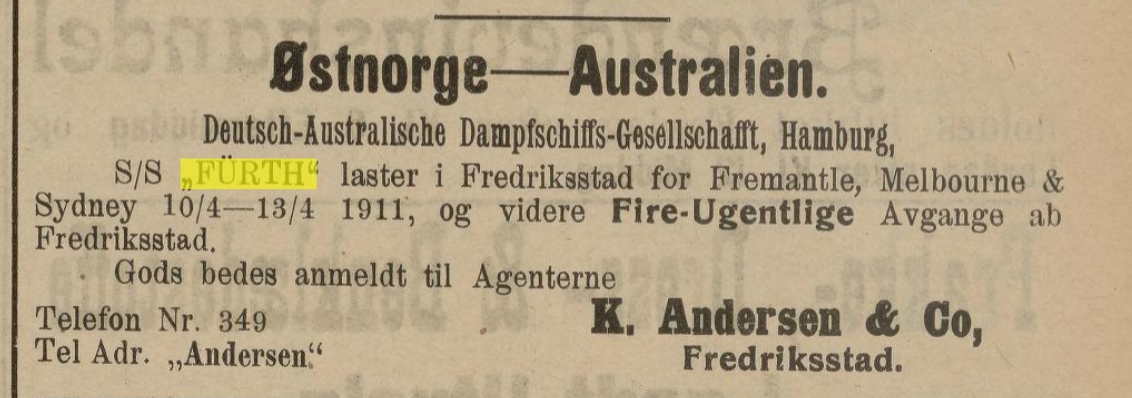
juergenfeytiat's avatarDas kurze, aber bewegte Leben des Frachtdampfers „Fürth“

Die neunte Fahrt des Dampfschiffes „Fürth“ vom 5. April 1911 bis 24. September 1911 ist jetzt online. Es ist die einzige Fahrt der „Fürth“ auf der Skandinavien-Linie der Deutsch-Australischen Dampfschiffs-Gesellschaft.

In Schweden wurden Gothenburg (Göteburg) und in Norwegen Frederikstad angelaufen und dort große Mengen Holz geladen. Aber auch reichlich Sprengstoffe waren mit an Bord. In Australien gab es ebenfalls zwei neue Destinationen: Geelong in Victoria und Port Pirie in Südaustralien.

Leider taucht die „Fürth“ im Hafen von Geelong auch in der Kategorie „Schiffs-Unfälle“ auf.

Zum Abschluss werden wir noch erfahren, was es mit „Macassar Boengie“ auf sich hat.

Alle Details jetzt auf folgender Seite: In Skandinavien

View original post

Categories
Uncategorized

Pierre Bonnard: The world beyond

Wonderful, remarkable

hoakley's avatarThe Eclectic Light Company

My final selection of paintings by Pierre Bonnard looks at one of his most interesting pictorial devices: the landscape view through French or other windows.

Bonnard developed a taste for views from high points in his cityscapes of Paris during the last years of the nineteenth century. Many of his paintings from that time adopt a high viewpoint from the second or third floor, and look down on bustling people, carriages, and pets in the street. But as far as I can see, he didn’t include the frame of the window in those views.

bonnardstreetscene1910 Pierre Bonnard (1867-1947), Street Scene (The Auteuil Viaduct) (c 1910), oil on canvas, 61.5 x 46.3 cm, Private collection. The Athenaeum.

The first sign of him framing a view in this way is in an unusual painting of this Street Scene (The Auteuil Viaduct) made in this town to the west of Paris in about 1910…

View original post 839 more words

Categories
Uncategorized

Tycho

Interesting, naturally one thinks of the Danish Nobleman and Astronomer whose observations helped Kepler formulate his famous laws.

apolla13's avatarNames Throughout the Ages

Tycho is the Latinized form of Danish Tyge, itself the Danish form of Tóki which comes from Old Norse element Þórr meaning “thunder” which comes from Proto-Germanic *Þunraz (thunder) which derives from a PIE root word. I’ve also seen it listed as possibly being a Latinized form of Greek Tychon meaning “to hit a target; hitting the mark” deriving from PIE root word *dʰewgʰ- (to produce; to be strong, have force). In Greek mythology, Tychon is the name of a daemon of fertility; there’s also another Tychon who is the daemon of chance or accident, who is similar to Tyche, a Greek goddess of fortune,  chance, providence, and fate (even their names come from the same root word).

Origin: Proto-Indo-European

086d4e71c2dd72edd9db27d54d2153d1Pinterest

Variants:

  • Tyge (Danish)
  • Thyge (Danish)
  • Tyko (Finnish)
  • Tóki (Ancient Scandinavian)
  • Tychon (Ancient Greek)

View original post

Categories
Uncategorized

Odilon Redon: Etruscan Vase With Flowers (1900-1910)

At Sunnyside - Where Truth and Beauty Meet's avatarAt Sunnyside - Where Truth and Beauty Meet

DT323419_17
Odilon Redon, “Etruscan Vase With Flowers”, (1900-1910),Metropolitan Museum of Art, Maria DeWitt Jesup Fund, 1951; acquired from The Museum of Modern Art, Lillie P. Bliss Collection

Quotes from Odilon Redon:

“I have often, as an exercise and as a sustenance, painted an object down to the smallest accidents of its visual appearance; but the day left me sad and with an unsatiated thirst. The next day I let the other source run, that of imagination, through the recollection of the forms and I was then reassured and appeased.”   Odilon Redon from The Art Story

“My originality consists in bringing to life, in a human way, improbable beings and making them live according to the laws and probability, by putting – as far as possible – the logic of the visible at the service of the invisible.”  Odilon Redon from The Art Story

Mission Accomplished!

This painting, like…

View original post 381 more words

Categories
Uncategorized

WHEN GÖRLI WAS A BAHNHOF: THE STORY OF A VANISHED STATION

Herbst kommt;Oy in Berlin zu sein!!

Unknown's avatar

Herbst kommt;Oy in Berlin zu sein!!

View original post