I find this scene by Sir Cedric Morris interesting in so many ways. The setting and perspective are intriguing and the atmosphere from the time and dress also are fascinating. The bohemian atmosphere reminds me of the novel, “The Horse’s Mouth” the 1944 novel by Joyce Cary that curiously I have never managed to finish.
Here are three of my own sketches from coffee bars, restaurants and so on:-
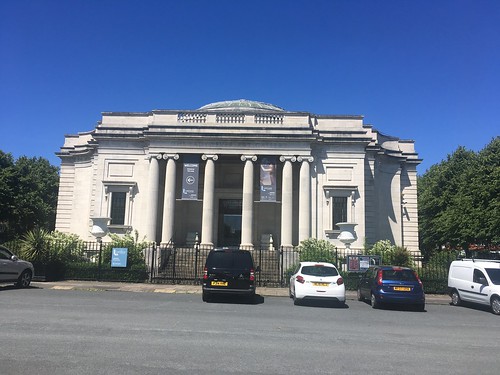
Last weekend we were stayed with our friends Steve and Anne who live in Waverton near Chester. We were expected in the evening so decided to have an afternoon in Port Sunlight on the Wirral, a “model” village built during the late 19th and early 20th Centuries to house workers at the Lever Brothers soap factory. The Lady Lever art gallery, opened in 1922, built as a memorial to Elizabeth, the wife of William Hesketh Lever, the founder of the Lever Brothers Empire, is in the middle of the village and we decided to go and have a look inside.
The gallery was originally built around Lord Lever’s collection of mainly British Victorian art, but also including examples of Chinese art, Roman sculpture and Greek vases. Today it’s part of Liverpool Museums group but Lever’s collection still forms the core of the collection. Consequently, the exhibits are dominated by…
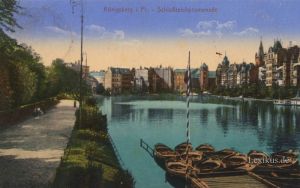
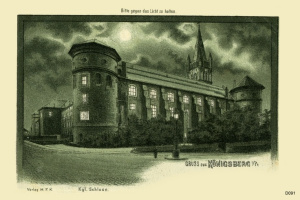
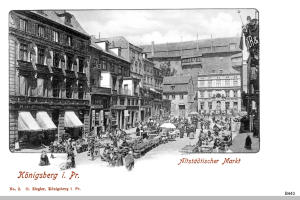
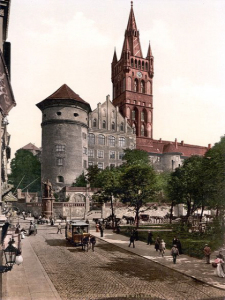
As an Englishman, albeit one that has no interest in football, I would hope that some of the English football fans might give a moment’s thought to the old city of Königsberg as their team play there today. Destroyed by the RAF in 1944 and now occupied by the Russians.
You know how this is:
if I look
at the crystal moon, at the red branch
of the slow autumn at my window,
if I touch
near the fire
the impalpable ash
or the wrinkled body of the log,
everything carries me to you,
as if everything that exists,
aromas, light, metals,
were little boats
that sail
toward those isles of yours that wait for me.
Well, now,
if little by little you stop loving me
I shall stop loving you little by little.
If suddenly
you forget me
do not look for me,
for I shall already have forgotten you.
If you think it long and mad,
the wind of banners
that passes through my life,
and you decide
to leave me at the shore
of the heart where I have roots,
remember
that on that day,
at that hour,
I shall lift my arms
and my roots will set off
to seek another land.
But
if each day,
each hour,
you feel that you are destined for me
with implacable sweetness,
if each day a flower
climbs up to your lips to seek me,
ah my love, ah my own,
in me all that fire is repeated,
in me nothing is extinguished or forgotten,
my love feeds on your love, beloved,
and as long as you live it will be in your arms
without leaving mine.
Un plato para el obispo, un plato triturado y amargo,
un plato con restos de hierro, con cenizas, con lágrimas,
un plato sumergido, con sollozos y paredes caídas,
un plato para el obispo, un plato de sangre de
Almería.
Un plato para el banquero, un plato con mejillas
de niños del Sur feliz, un plato
con detonaciones, con aguas locas y ruinas y espanto,
un plato con ejes partidos y cabezas pisadas,
un plato negro, un plato de sangre de Almería.
Cada mañana, cada mañana turbia de vuestra vida
lo tendréis humeante y ardiente en vuestra mesa:
lo apartaréis un poco con vuestras suaves manos
para no verlo, para no digerirlo tantas veces:
lo apartaréis un poco entre el pan y las uvas,
a este plato de sangre silenciosa
que estará allí cada mañana, cada
mañana.
Un plato para el Coronel y la esposa del Coronel,
en una fiesta de la guarnición, en cada fiesta,
sobre los juramentos y los escupos, con la luz de vino de la madrugada
para que lo veáis temblando y frío sobre el mundo.
Sí, un plato para todos vosotros, ricos de aquí y de allá,
embajadores, ministros, comensales atroces,
señoras de confortable té y asiento:
un plato destrozado, desbordado, sucio de sangre pobre,
para cada mañana, para cada semana, para siempre jamás,
un plato de sangre de Almería, ante vosotros, siempre.
A dish for the bishop, a crushed and bitter
dish , a plate with traces of iron, with ashes, with tears,
a submerged dish, with sobs and fallen walls,
a dish for the bishop, a dish of blood from
Almería.
A dish for the banker, a plate with
children’s cheeks of the happy South, a dish
with detonations, with crazy waters and ruins and horror,
a dish with split axes and trodden heads,
a black dish, a dish of blood from Almeria.
Every morning, every cloudy morning of your life
you will have it steaming and hot at your table:
you will separate it a little with your soft hands
so as not to see it, so as not to digest it so many times:
you will separate it a little between bread and grapes,
this plate of silent blood
that will be there every morning, every
morning.
A dish for the Colonel and the wife of the Colonel,
in a party of the garrison, in every party,
on oaths and squirts, with the light of early morning wine
so that you can see it trembling and cold on the world.
Yes, a dish for all of you, rich here and there,
ambassadors, ministers, atrocious diners,
ladies with comfortable tea and seats:
a dish smashed, overflowing, dirty with poor blood,
for each morning, for each week, forever never,
a dish of Almeria’s blood, before you, always.
(A translation of this poem by the famous Nany Cunard is available in The Penguin Book of Civil War Verse}
During the Spanish Civil War the city of Almeira was shelled by the German Navy, with news reaching the London and Parisian press about the “criminal bombardment of Almería by German planes”.[6]Almería surrendered in 1939, being the last Andalusian capital city to fall to Francoist forces.
Don’t go far off, not even for a day, because —
because — I don’t know how to say it: a day is long
and I will be waiting for you, as in an empty station
when the trains are parked off somewhere else, asleep.
Don’t leave me, even for an hour, because
then the little drops of anguish will all run together,
the smoke that roams looking for a home will drift
into me, choking my lost heart.
Oh, may your silhouette never dissolve on the beach;
may your eyelids never flutter into the empty distance.
Don’t leave me for a second, my dearest,
because in that moment you’ll have gone so far
I’ll wander mazily over all the earth, asking,
Will you come back? Will you leave me here, dying?
Pablo Neruda, original name Neftalí Ricardo Reyes Basoalto, (born July 12, 1904, Parral, Chile—died September 23, 1973, Santiago), Chilean poet, diplomat, and politician who was awarded the Nobel Prize for Literature in 1971. He was perhaps the most important Latin American poet of the 20th century.
“There is something infinitely healing in the repeated refrains of nature — the assurance that dawn comes after night, and spring after winter.”
― Rachel Carson, Silent Spring
A little while ago, I wrote about the return of a pair of black-backed gulls to the roof-tops opposite our apartment. Since then, we have been keeping a keen eye on proceedings and I am delighted to be able to provide an update (click on any image for a closer look).
To give some context, you can see in the photo below our vantage point across to the gulls’ nest, which has been built in front of the third chimney pot to the right of the gull in the centre of the picture:
Hub is the ‘proper’ photographer in our house and has been magnificently putting up with my nagging gentle encouragement to take some pictures of events as they have unfolded…
Löwenmäulchen des Lebens – 13 x 18 cm – Tusche auf Hahnemuehle Aquarellkarton Burgund (c) Zeichnung von Susanne Haun
Mein Balkon ist nicht einfach zu bepflanzen, im vierten Stock meiner Atelierwohnung ist es Nachmittags sehr sonnig und dazu weht ein strammer Wind.
So habe ich schon seit Jahren Hängegeranien in meinen Kästen. Die hängen, wie es der Name verspricht, herunter. So bin ich dazu übergegangen zwischen den Geranien andere Blumen wie Nelken, Löwenmäulchen oder auch Phlox zu pflanzen. Dieses Jahr dominieren – wie die meisten Jahre – die Rottöne.
Hier (Klick) könnt ihr umfassend meinen Balkon im Jahr 2016 sehen.






 Löwenmäulchen des Lebens – 13 x 18 cm – Tusche auf Hahnemuehle Aquarellkarton Burgund (c) Zeichnung von Susanne Haun
 penwithlit