 A major and intelligent novelist like Penelope Fitzgerald has happily become the subject of a sensitive and engaging biographer, Hermione Lee. The result is enthralling; a work which is entertaining, informative and profound. In an earlier essay, A Quiet Ghost, Lee mentions interviewing Fitzgerald on the radio in 1997. Two impressions struck the interviewer. First, how her novels always seemed to leave something unsaid. They contained some mysterious, perhaps even transcendental quality to stimulate the reader’s imagination. On the other hand, Fitzgerald thought that the writer ought not to be impartial and indeed should be clear about her own moral position. This viewpoint drew her to write both eloquently and sympathetically, of those who are born to be defeated, the weakness of the strong and the tragedy of…..missed opportunities.
Penelope Fitzgerald came from an earnest and renowned academic family, the Knoxes, which included several prominent clerics; her grandfather was the Bishop of Manchester. A considerable biographer herself, she wrote a book on the Knox brothers, these included two Oxford pastors (one of whom, Ronald Knox, converted to Catholicism, was famous as a biblical translator and whilst chaplain at Trinity College became a mentor to the future prime minister, Harold Macmillan), a top Bletchley cryptographic analyst and Penelope’s own eminent father, ‘Evoe’ who was editor of Punch. Fitzgerald wrote prolifically from childhood and fulfilled some of these high expectations by gaining a brilliant First at Somerville. Graduating in 1938, she was already known for her membership of the smart set, for her student journalism and a reticent, indeed peremptory manner. Women could not actually graduate at Oxford until a statute was passed in 1920. Hence she was amongst Oxford’s early women graduates. Her striking appearance within the smart set earned her the nickname of the blonde bombshell.
Hermione Lee usefully reminds her readers of other contemporary writers throughout her account; that Iris Murdoch was to arrive at Somerville in 1939. A.S.Byatt is referred to somewhat wryly and the influences of Rose Macaulay and Stevie Smith as friends outlined. This is an unashamedly literary biography and wonderfully so. The importance of the Georgian poets and the Poetry Bookshop in Bloomsbury to Charlotte Mew, whose biography Fitzgerald’s wrote, are entertainingly conveyed. Hermione Lee conveys her subject’s deep capacity for diligent background research and put this across deftly. Her account too shows great depth of feeling for the plight of that generation of women who had to face both the devastation of bombing and the scars of war on men like her husband, Desmond, who had fought bravely in Italy with the Irish Guards. Post traumatic stress was not then fully recognised. Her attempts to cope with his drunkenness and criminality and still look after her three children underline Penelope Fitzgerald’s tenacity and courage.
During the Blitz, Fitzgerald was writing as a recording assistant at the ocean liner of Broadcasting House. The courage shown by the staff, their tasks and relationships, quarrels and difficulties became the material for her novel, Human Voices. This work showed her ear for conversation, propaganda and announcements. Not only was this a war where radio played a historical role in rallying the nation, it broadcast De Gaulle’s speeches to invigorate the Free French. Hermione Lee is magnificently instructive on how the writer’s experiences are turned into a thought-provoking novel.
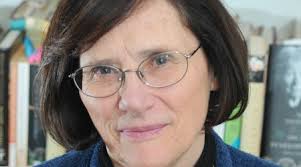
In the early fifties Desmond Fitzgerald, then an Irish lawyer, became the editor of an influential literary review. However, Penelope provided the drive behind the international World Review. This project was successful in publishing a panoply of significant authors including major figures like Bertrand Russell and Walter de La Mare as well as the about to become successful J.D.Salinger. Not only did this publication crumble in this era of austerity but it seemed to herald the most distressing period of her career. Although, she was associated in two great enlightened projects that many will recall; BBC school broadcasting and writing for Marcus Morris who brought out the Eagle, Girl and Swift. Not the least of the pleasures of perusing this book is the facsimile reproductions, little drawings and evocative photographs.
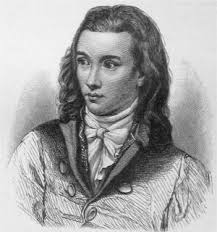
The difficulties which the Fitzgerald family faced in the early Sixties culminated in the sinking of the houseboat on which they were living in Battersea. This and the consequent homelessness are heart-rending to read. However, the resulting novel, Offshore was to win her the Booker Prize in 1979. Her greatest work is considered to be her short enigmatic historical novel, The Blue Flower (1995). It retells the entrancing love story of the German Romantic poet, Novalis. Hermione Lee’s exposition of this short work is a tour de force in itself. To conclude, this is a marvellous biography that shows how Fitzgerald’s remarkable determination finally gained her recognition in her sixties. Author and subject demonstrate the same exuberant curiosity.












 penwithlit