There is another sky,
Ever serene and fair,
And there is another sunshine,
Though it be darkness there;
Never mind faded forests, Austin,
Never mind silent fields—
Here is a little forest,
Whose leaf is ever green;
Here is a brighter garden,
Where not a frost has been;
In its unfading flowers
I hear the bright bee hum:
Prithee, my brother,
Into my garden come!
by Emily Dickinson
This French painter studied at the School of Fine Arts and under Henri Lehmann, Fernand Cormorant and Léon Bonnat. His entrance to the salon of 1880, Portrait of MO (“without a trace”), reflected his early attraction the realist tradition of Spanish painting of the 17th century. Impressionism’s impact encouraged him to lighten his palette and paint outdoor landscapes. At the end of the decade of 1880, Habibo cultivated the friendship of several symbolist poets and the well-known painter Puvis de Chavannes, which made him abandon his naturalist approach and adopt the aesthetic idealism of poetic painting. Abandoning topics extracted from daily life, Osbert proposed to transmit personal visions and developed his own set of pictorial symbols. Inspired by Puvis, simplified forms of landscape, which served as backgrounds for static and isolated figures dissolved by a mysterious light. A pointillist technique, taken from Seurat, a friend of Lehmann’s, tended to dematerialize forms and add luminosity. However, Osbert avoided the full range of nuances of the so called “divisionists” of their choice of blues, violets, yellows and silvery green. The mysticism of Osbert is located in the center of the painting. The Rosacrucian ideal of “art as an evocation of mystery, as a prayer” finds no better expression than the virginal figure of faith, often interpreted as Saint Geneviève or Saint Jeanne, situated in a meadow with a lamb and wrapped in a supernatural radiance. Such works were praised by the Symbolist writers who considered them as visual counterparts of the poetry of Paul Verlaine, Stéphane Mallarmé and Maurice Maeterlinck. Osbert was called “painter of the Nights ” “Alma artist ” and “Poet of Silence” for his evocation of an atmosphere of mystery and reverie.
(With thanks to the incomparable Ines Vigo for this transcription from You Tube)

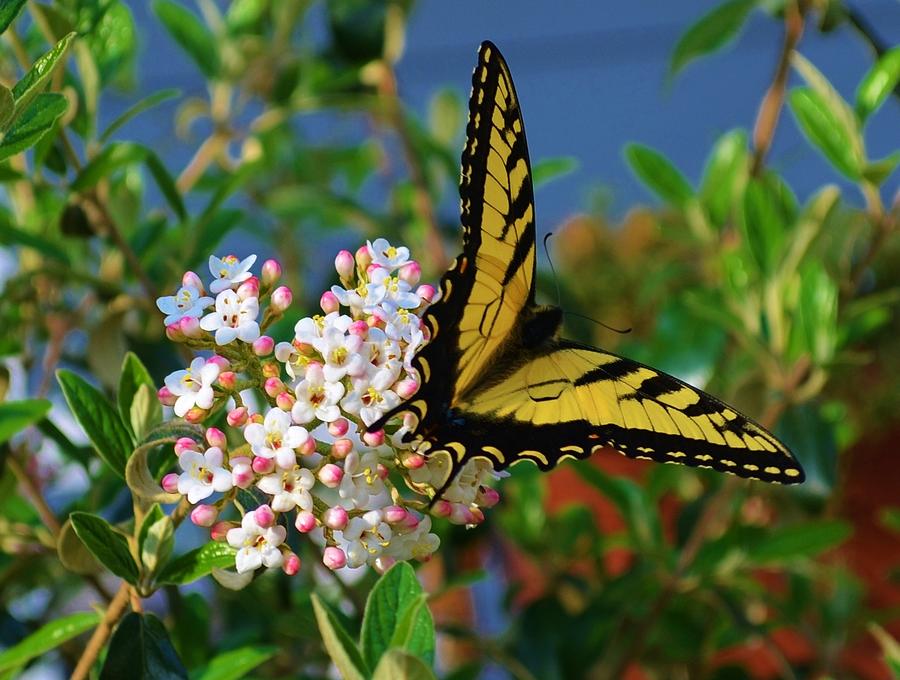
Butterfly escaped his attention
that foggy night, whilst his ears
were ringing from the singing of “The Mikado“,
so his splendid new automobile skidded
over the edge on the road near Lucca.
So in February of 1903 Puccini plunged
off the embankment and
fell down fifteen feet.
Having had that five metre fall
he found his right shin bone fractured.
In May he was disconsolate and complaining-no surprise
as it was badly set
had to be broken again
and reset.
In deep depression he wrote again
to Illica, his versifying lyricist;
“Addio tutto, addio Butterfly, addio vita mea”
Not easy to catch this fleeting insect-girl,
but in June, he slowly began once again
and by December,
the orchestration was finally complete.

Source
The Complete Operas of Puccini
by Charles Osborne
Here is my Mother’s Aunt Vera
as though for a test on the screen
like a Hollywood Star, pure smile;
happy, serene, genteel like a heroine-
war survivor, positively engaged
with the future a dream.
Turning the page where a collection
of ladies, mostly hatted with one man
wait on the wharf for Crimson Tours to bring the charabanc.
One lady, in control, in the centre
banters with the photographer, another
has her back turned as the shutter clicks.
The next, a street party, circa 1960
or before, all festive with my mother
looking happy serving a group of pensioners
who look like they are reliving a Sunday School band-tea.
Everyone wears hats and there is a lovely bunch of flowers,
one lady glowers, a man has his customary
goofy smile and there are delivered milk in bottles
unlikely to be stolen on the step behind.
By 1970 the future seems to be arriving more suddenly,
when standing with camera on the end of the quay,
and almost unbelievably four or five
ducks carry a squadron of marines
into the harbour. What have we done
to be thus invaded? History approaches
us on a stormy day and I bury my chin
into my duffel coat.
Loss
Loss is waiting everywhere,
Because I’ve felt the shape it makes
I try to lose it in the crowd,
Taking shortcuts down alleyways,
Wearing black and changing my hair.
I relish the rain because it covers everything,
Only stopping to linger in a stranger’s stare,
I try to keep all my pages blank, then perhaps
Loss will not know that I’m still there.
![]()
Leave –a sonnet
Another coast, some late hour, my feet bare.
Someone loved this place,
there are colours everywhere.
I am drifting in a shipwrecked bed,
an exposed room, a worn wooden floor.
The light fell in, still and unbroken, a silent day,
except for the footsteps, that stopped at the door,
now turning, now walking quietly away.
Once my body knew a rough song,
the sound of our staggered breaths.
Since I sighed a hundred little deaths,
rootless, I went the way of the birds.
Empty places I have known, what could’ve been,
once wound tight, an unravelling dream.


Auf einmal ist aus allem Grün im Park
man weiß nicht was, ein Etwas fortgenommen;
man fühlt ihn näher an die Fenster kommen
und schweigsam sein. Inständig nur und stark
ertönt aus dem Gehölz der Regenpfeifer,
man denkt an einen Hieronymus:
so sehr steigt irgend Einsamkeit und Eifer
aus dieser einen Stimme, die der Guß
erhören wird. Des Saales Wände sind
mit ihren Bildern von uns fortgetreten,
als dürften sie nicht hören was wir sagen.
Es spiegeln die verblichenen Tapeten
das ungewisse Licht von Nachmittagen,
in denen man sich fürchtete als Kind.
Before the Summer Rain
Suddenly, from all the green around you,
something-you don’t know what-has disappeared;
you feel it creeping closer to the window,
in total silence. From the nearby wood
you hear the urgent whistling of a plover,
reminding you of someone’s Saint Jerome:
so much solitude and passion come
from that one voice, whose fierce request the downpour
will grant. The walls, with their ancient portraits, glide
away from us, cautiously, as though
they weren’t supposed to hear what we are saying.
And reflected on the faded tapestries now;
the chill, uncertain sunlight of those long
childhood hours when you were so afraid.
More analysis of this poem in German may be found at http://www.rilke.de/forum/viewtopic.php?t=137
I want you to know
one thing.
You know how this is:
if I look
at the crystal moon, at the red branch
of the slow autumn at my window,
if I touch
near the fire
the impalpable ash
or the wrinkled body of the log,
everything carries me to you,
as if everything that exists,
aromas, light, metals,
were little boats
that sail
toward those isles of yours that wait for me.
Well, now,
if little by little you stop loving me
I shall stop loving you little by little.
If suddenly
you forget me
do not look for me,
for I shall already have forgotten you.
If you think it long and mad,
the wind of banners
that passes through my life,
and you decide
to leave me at the shore
of the heart where I have roots,
remember
that on that day,
at that hour,
I shall lift my arms
and my roots will set off
to seek another land.
But
if each day,
each hour,
you feel that you are destined for me
with implacable sweetness,
if each day a flower
climbs up to your lips to seek me,
ah my love, ah my own,
in me all that fire is repeated,
in me nothing is extinguished or forgotten,
my love feeds on your love, beloved,
and as long as you live it will be in your arms
without leaving mine.


Bee white buzzes – drunk with honey – in my soul
and you twist in slow spirals of smoke.
I am the desperate, the word without echoes,
the one who lost everything, and the one who had everything.
Last bind, cries in you my last anxiety.
In my desert land you are the last rose.
Oh silent!
Close your deep eyes. There the night flies.
Ah, undress your body of a fearful statue.
You have deep eyes where night alloy.
Fresh flower arms and pink lap.
Your breasts look like white snails.
A butterfly of shadow has come to sleep in your belly.
Oh silent!
Here the solitude of where you are absent.
Rains. The sea wind hunts wandering gulls.
The water goes barefoot through the wet streets.
From that tree the leaves complain as sick.
White bee, absent, you still buzz in my soul.
You live in time, thin and silent.
Oh silent!
More Neruda poems and a timeline may be found at https://www.poemas-del-alma.com/