Stefan Zweig has been the subject of new interest in recent years. Two new biographies have appeared quite recently and in addition his friendship with Joseph Roth has been the subject of fierce debate after an article in The London Review of Books by Michael Hoffmann. “Ostende. 1936, Sommer Der Freundschaft” by Volker Weidermann is a magnificent read on this relationship and the plight of exiles from Nazi Germany was published just last year and has been translated into English as “Summer before the Dark, Ostend Stefan Zweig and Joseph Roth;Ostend 1936“(Reviews may be read at https://www.amazon.co.uk/Summer-Before-Dark-Stefan-Joseph/dp/1782272038/ref=pd_bxgy_14_2?ie=UTF8&psc=1&refRID=JA0N7E4NR05FFN2CAHF9 )It was also Radio4’s Book of the week. The Sunday Times, for instance, said of this book;
‘For such a slim book to convey with such poignancy the extinction of a generation of “Great Europeans” is a triumph’. However Zweig’s life experiences also formed the background and leitmotif for the zany film and also a book by Wes Anderson, The Grand Budapest Hotel. One reader comments, “I also feel like I owe this movie a great deal, in that it turned me on to the works of Stefan Zweig, master Austrian storyteller, and my new favorite author”
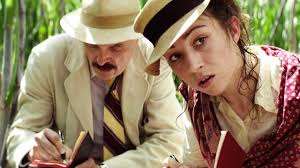
The new film just screening in Germany is called “Vor der Morgenroete” and features Josef Hader as Stefan Zweig and is produced by the actress, Maria Schrader who recently played a prominent role in the Channel 4 series, Deutschland 83.
The film consists of episodesfromthelifeof theAustrianwriterStefanZweiginexile. Attheheight of hisworldwidefame, heisdriventoemigrateand grows desperate in the faceofknowledge ofthedownfall of Europe, which like Rothhe already attempts to forsworn his fellow European intellectuals.This then is thestory of arefugee,thestoryofthelossof theold world of the Hapsburg K und Kandthesearchforanewhome in America.
StefanZweigwasa renownedauthorGermantogetherwithThomasMannthemost translated in histime.Already in 1934, ZweiglefthisnativeAustriatogointoexilefromwhichhedid not return. Inher compellingandsensual opulentfilmMariaSchradershowstheworld-famousauthorinsixepisodes from hislife;hisfirststayinBrazilandtheparticipation in theP.E.N.-CongressinBuenosAires in 1936aboutvisitingNewYork CityandhisfirstwifeFriderikein1941untilhisdeath in 1942in Petrópolis. There, Zweigwrotehisfamouswork“The Chess Game“.JosefHadershinesinthetitle roleof thefamousAustrianwriterandpacifistStefanZweig.BarbaraSukowaashisfirstwifeFriderike, also gave a convincing performance. Another strong impression was given by Aenne Schwarz as Zweig’s delicate and alluring second wife.http://www.youtube.com/watch?v=3wLiyFyfuB4
The film impressed me on several different levels. In 2015,I had visited in Munich, the following exhibition which showed much of the material, Zweig had collected and details of his first trips to America-http://www.literaturhaus-muenchen.de/ausstellung/items/141/vars/id-2015-stefanzweigausstellung.html It is clear that despite the recognition of his fame, Zweig found it difficult to settle in America;either in New York or in Yale or later in Brazil. (Verloren war die Welt von Gestern.) Yesterday’s world had disappeared, the Hotel Metropole in Vienna was now a Gestapo headquarters. Notably in Die Welt von Gestern, he noted how money came so readily to the Brownshirts and living in Salzberg he knew just how the racist menace grew. Sadly there are parallels with today and as Zweig remarked, Wer die Vergangenheit nicht versteht, versteht nichts wirklich.
Dein Mund, der schön geschweifte,
Dein Lächeln, das mich streifte,
Dein Blick, der mich umarmte,
Dein Schoß, der mich erwarmte,
Dein Arm, der mich umschlungen,
Dein Wort, das mich umsungen,
Dein Haar, darein ich tauchte,
Dein Atem, der mich hauchte,
Dein Herz, das wilde Fohlen,
Die Seele unverhohlen,
Die Füße, welche liefen,
Als meine Lippen riefen -:
Gehört wohl mir, ist alles meins,
Wüßt nicht, was mir das liebste wär,
Und gäb nicht Höll noch Himmel her:
Eines und alles, all und eins.
Information and a great photograph of Klabund, Alfred Henschke, appears at http://www.salonkultur.de/termine/autoren/Alfred_Henschke/56/#.V3TCc7grLIU
One translation by computer gives this in English as:-
Yourmouth,thebeautifullycurly
Yoursmilethattouchedme,
Yourlookthatembracedme,
Yourlap,whichmeattention
Yourarm,whichwrappedaround,.
YourWordthatmeumsungen
Yourhairin thereIpopped up,
Yourbreaththatbreathedme,
Yourheart,thewildfoals,
Thesoulopenly,
Thefeet,whichwere,
Whenmylipscalled: –
Mine, probably,everythingismine,.
Notknowwhataboutmethedearest,
And instead of hellwashereyetHeaven:
Oneandall,allandone.
Maybe Line 6 means something like “Your speech that rings around in my head”
Spiel mir eine alte Melodie
voll Gefühl und Harmonie
Himmelblau und rosa möcht ich sie
zärtlich und voll Poesie
Spielen auch heut ganz andre Lieder die Leut als in der Postkutschenzeit
nichts auf der Welt war so schön als sich zur Polka zu drehn
Man steckte Veilchen ans Kleid die Röcke waren ganz weit o Gott war das eine Zeit
die alte Bahnmelodie ja die vergesse ich nie
Spiel mir eine alte Melodie
voll Gefühl und Harmonie
Himmelblau und rosa möcht ich sie
zärtlich und voll Poesie
Man steckte Veilchen ans Kleid die Röcke waren ganz weit o Gott war das eine Zeit
die alte Bahnmelodie ja die vergesse ich nie
Spielen auch heut ganz andre Lieder die Leut als in der Postkutschenzeit
nichts auf der Welt war so schön als sich zur Polka zu drehn
Man steckte Veilchen ans Kleid die Röcke waren ganz weit o Gott war das eine Zeit
die alte Bahnmelodie ja die vergesse ich nie
Old Meg she was a gipsy;
And liv’d upon the moors:
Her bed it was the brown heath turf,
And her house was out of doors.Her apples were swart blackberries,
Her currants, pods o’ broom;
Her wine was dew of the wild white rose,
Her book a church-yard tomb.Her brothers were the craggy hills,
Her sisters larchen trees;
Alone with her great family
She liv’d as she did please.No breakfast had she many a morn,
No dinner many a noon,
And ‘stead of supper she would stare
Full hard against the moon.But every morn, of woodbine fresh
She made her garlanding,
And every night the dark glen yew
She wove, and she would sing.And with her fingers old and brown
She plaited mats o’ rushes,
And gave them to the cottagers
She met among the bushes.Old Meg was brave as Margaret Queen,
And tall as Amazon:
An old red blanket cloak she wore,
A chip hat had she on.
God rest her aged bones somewhere–
She died full long agone!
A serviette, a glass of champagne taken outside a fish restaurant in the open-air Viktualienmarkt in Munich, all taken to celebrate the first day of spring, prompt Cees Nooteboom into Proustian reverie. Upon the paper napkin is written in blue capitals the word POSEIDON, the Greek god who has preoccupied Nooteboom’s thoughts for several summers. The blue colour reminds him of the sea viewed from Mediterranean garden of his villa in Menorca. Taking this prompting as a moment of benign synchronicity, he later begins a correspondence with this sea-deity. He seeks to inquire how this somewhat unreliable ancient Greek Olympian sees aeons of time and sends him letters and legenda; meditations and stories to be read, both poetic and tragic, from the arts and the contemporary world. He is not expecting a reply.
In the Odyssey, Poseidon is renowned for hating Odysseus who had blinded the Cyclops, Polyphemus who happened to be the god’s son. This is Homer’s view. Ovid would have known the god as Neptune and wrote about him in the ‘’Metamorphoses’’. Kafka wrote an essay in which he imagines Poseidon constantly submerged. So, Nooteboom wonders, in a notably poetic passage, how would he have viewed the first passage of the first boat on the surface above him. How does he feel about the decline of those very Greeks who worshipped him? Is he melancholy about his timeless vigil already an old man beneath the sea with only occasional excursions pulled about by tiny sea-horses, nature’s experiment in trans-gender parturition? Fascinated by the rhythms of animal behaviour and curious plants, Nooteboom’s meditative writing is enlivened by his close observation of the natural world.
Letters to Poseidon juxtaposes thoughts which are essentially theological with ponderings on inexplicable tragedies in the contemporary world from the Challenger disaster to the Arab spring. Uncomfortable topics of puzzling cruelty are subject to persistent interrogation which is addressed to an ancient deity- often depicted in statuary with his face turned away. However, there is also an interesting wrestle between belief and doubt beneath the surface. Here is an attempt to figure the Christian deity in relation to the ancient gods. It is almost that the averted gaze of the sea-god makes him more accessible to questioning. Dante and the early-German Christian mystic, Seuse are invoked and discussed whilst the reader is provided with routes to his own investigations from Nootebbom’s well-stocked mind.
The author is prominent as a novelist, art historian and as a traveller. Successive pieces are situated in, for example, in Seoul Museum of Art, a Zen garden in Kyoto, back in his study in Menorca, an island of the Dutch East Indian company in Nagasaki and back once more to Menorca to watch a blood moon. This continuous movement appears to have given rise to a certain Weltschmerz and in particular to a fascination with time and memory. This connection between time and space fascinates him as do geological aeons. He uses the Poseidon figure as a means to attempt to grasp the manner in which rocks are metamorphosed and ground to sediment over aeons. This is done in a leisurely discursive style that produces its own poetry. It requires that the reader find the patience to enjoy such digressions.
Here is a small example:-
‘’The curlews begin to call. I know they are close to the sea, but I have not yet seen them. Their Dutch name ‘’griel’’ is a much better match than ‘’curlew’’ for that drawn out, pleading sound they make. The owl I can hear nearby is another member of the secret service; it wears the darkness like a uniform and makes itself invisible.’’
The relaxed and tentative tone of the writing is at times penetrated by an image carrying anxiety which frequently refers to contemporary concerns. This is shown above where even an owl might appear as a Stasi interrogator. Despite its metaphysical tone, the prose mostly remains vivid. The issues addressed are the concerns of a man, possibly an elderly man, in search of a soul.
An unexpected feature of this book is the fifty or so pages at the end which provide photographs and reference material. I was some 30 pages into the book before I discovered these. This brought to mind the work of W.G.Seebald whose elegiac tone, Nooteboom’s travel memoir sometimes resembles. There are touches which reminded me of Lawrence Durrell’s ‘’The Alexandrian Quartet’’ and of the mysterious symmetries of Anne Michael’s ‘’Fugitive Pieces’’. This book will not be to everyone’s taste, as by nature, it is inconclusive but thought provoking. It asks fundamental questions about human behaviour ‘’’sub specie aeternitatis’’’-Baruch Spinoza’s term for the eternal perspective.
Reading Edith Hall’s book on the Ancient Greeks, develops a deep respect for the power of poetry. No poet was more effective in this regard than Homer recounting the sea adventures contained in the ‘’The Odyssey’’. It shaped the self-definition of a nation and engendered self-confidence. The mariners set out in their beautiful ships across the Aegean and established colonies to the West, in the Mediterranean as far as the Pillars of Hercules, to the East as far as the Levant and built trading cities in natural harbours along the fertile edges of the Black Sea. They were, as Plato wrote in the Phaedo, “around the sea, like frogs and ants around a pond.” They were encouraged by Delphic oracles and inspired by the company of diving dolphins.
The structure of Hall’s account is clearly set down at the start with a useful chronology from the Myceneans in 1500 B.C. to the close of the Delphic oracle in 395 A.D. providing a clear context for the following text. It also gives a framework that neatly conveys the interaction between individuals, resources, military conflicts, the arts, sports, social upheavals and importantly the contributions of recent research. Anyone reading this book will discover how much our understanding of the Greeks has developed currently from new excavations, discoveries and recent scientific techniques. The first four strongly interconnected qualities that Hall ascribes to the Greeks are that they were seagoing, suspicious of authority, individualistic and inquiring. Further, they were open to new ideas, witty, competitive, admired excellence in people of talent, were exceptionally articulate and were also addicted to pleasure.
This is, perhaps, an ideal book to take upon a Mediterranean cruise. Reading it is arguably a cheaper but comfortable substitute and it will certainly improve your geographical understanding. Some of the ancient names may well be unfamiliar to us today. Most will have heard of Knossos on Crete where back in the early Mycenean period the cattle were called by ironic names like Swift and Talkative or ‘’Oinops’’ which means wine-dark, just as Homer describes the sea. Then there is Massalia where the Greeks imported the vine and thus founded the French wine industry. Sicily, however, provided the setting for particularly notorious tyrants. Olbia, on the Black Sea, which is situated in Ukraine today, was difficult to colonise but eventually provided a sanctuary area for the worship of ‘’Apollo Delphinios’’, a sea-god of music, healing and prophecy.
Spartan Girls challenge Boys by Edgar Degas
In an interesting chapter on the Spartans, Edith Hall writes of the famous battle at Thermopylae where the courage of 300 sacrificed warriors, led by King Leonidas, created the conditions whereby Greece was saved from the influx of marauding Persians. The excellence of these Spartans consisted in their stern self-discipline and their blunt and pithy sense of humour which is therefore referred to as laconic. In a similar manner, the admiration of the Spartans is called Lacophilia after the area of Laconia which these Dorian Greeks subdued in the eighth century B.C. Spartan women appeared to have attained a degree of independence from their men folk and cultivated the worship of Artemis and festivals involving hyacinths. However, when you read of the treatment meted out to the wretched helots (slaves), recorded by Plutarch and also from Xenophon and Herodotus of the vicious clash of the armoured scrum that constituted hoplite battles, the reader begins to understand why the Spartans are summed up by the author in one adjective-inscrutable.
The adventurous Greek mind appears to have exerted its strength when the kingdom of Macedonia fell to Roman power after AD168. But as Horace wrote, ‘’Graecia captum ferum victorem cepit’’ –captive Greece took her fierce conqueror captive. It was the fluency of the Greek which made it not only the language of business but dominated both rhetoric and prose. Hegemony is after all a Greek word. Recounting these later times the account becomes even more vivid. The writings of the self-assured physician Galen were influenced the development of medicine for many centuries to come. The touching story of rhetorical superstar, as Hall terms Aristides, the inventor of the personal memoir but also a hypochondriac, has a contemporary appeal. It is nice to know that his faith in the benevolent healing deity, Asclepius, quieted his inner turmoil.
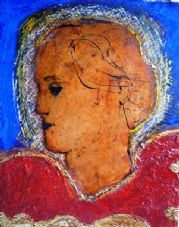
Classical Head by John Emanuel
Reading Edith Hall on the Ancients is a stirring adventure; a contemporary correspondence to what Keats must have felt when he opened Chapman’s translation of Homer. The experience is reminiscent too of a poem from the classicist Louis MacNeice who in his poem about the maritime mercenary Greek cry ‘’Thalassa, Thalassa’’ penned the following:-
This poem by Heinrich Heine is simple and clever. It is maybe the kind of poem to which Karl Krauss might have taken exception. It has also been set to music by Robert Schumann in Dichterliebe, op. 48 Nr. 11.
Ein Jüngling liebt ein Mädchen,
Die hat einen Andern erwählt;
Der Andre liebt eine Andre ,
Und hat sich mit dieser vermählt.
Das Mädchen heiratet aus Ärger
Den ersten besten Mann,
Der ihr in den Weg gelaufen;
Der Jüngling ist übel dran.
Es ist eine alte Geschichte,
Doch bleibt sie immer neu;
Und wem sie just passieret,
Dem bricht das Herz entzwei.
Themeterisnotregular and alternatesbetween iambsand anapests.Masculine andfemininecadences are interwoven andthefirstverseofeachstanza always has afeminineending.
For some reason this reminded me of one of the amusing poems by Gavin Ewart whom I heard one delightful evening during the St Ives Festival at the Penwith Gallery in the early nineties. The poem is called “Office Politics”.
Eve is madly in love with Hugh
And Hugh is keen on Jim.
Charles is in love with very few
And few are in love with him.
Myra sits typing notes of love
With romantic pianist’s fingers.
Dick turns his eyes to the heavens above
Where Fran’s divine perfume lingers.
Nicky is rolling eyes and tits
And flaunting her wiggly walk.
Everybody is thrilled to bits
By Clive’s suggestive talk.
Sex suppressed will go berserk,
But it keeps us all alive.
It’s a wonderful change from wives and work
And it ends at half past five.
Dein Kuß hat mir den Frühling gebracht. Denk’ an dich bei Tag und bei Nacht,
denk’ an dich, an dich immerzu. All mein Träumen bist nur du!
Und gehst du eines Tages von mir, geht auch meine Sehnsucht mit dir.
Herbstwind wird die Blätter verweh’n – unsre Liebe wird besteh’n.
Ich fühle mehr und mehr daß ich nur dir gehör’,
daß ich dir ganz verfalle, daß ich von allen dich nur begehr’.
Ich höre dein helles Lachen, und mir wird ums Herz so weh.
Sag mir, was soll ich machen, daß ich vor Sehnsucht nicht vergeh’?
Die Liebe kommt, die Liebe geht, solang’ ein Stern am Himmel steht,
solang am Strauch die Rosen blüh’n, wird stets ein Herz in heißer Lieb’ erglühn.
Und fühlst du dich geliebt, dann frag’ nicht. Und bist du mal betrübt, verzag nicht,
denn immer wird’s so sein wie heut’: Auf Liebesleid folgt Liebesfreud’!
Dein Kuß hat mir den Frühling gebracht. Als du mir entgegengelacht,
lag in deinem zärtlichen Blick eine ganze Welt voll Glück.
Nur du bist für mich das Leben. Kann nicht mehr ohne dich sein.
Alles will ich dir geben, denn dir gehör’ ich, dir allein!
Die Liebe kommt, die Liebe geht, …
Genau wie heut, für alle Zeit.
 However Zweig’s life experiences also formed the background and leitmotif for the zany film and also a book by Wes Anderson, The Grand Budapest Hotel. One reader comments, “I also feel like I owe this movie a great deal, in that it turned me on to the works of Stefan Zweig, master Austrian storyteller, and my new favorite author”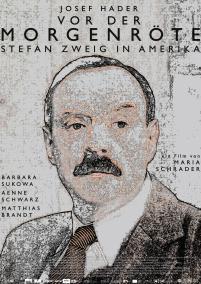






 penwithlit