Categories
Uncategorized

T.S.Eliot and a footnote to the dawn. (Writing in the plain style is hard work.)

Interesting!

Itsonlychemo's avatarIt's only chemo

This line from Little Gidding— ‘The first-met stranger in the waning dusk’ — is always mis-read. We dusk think it means evening, but it means dawn. Eliot struggled to get this right, and sent a series of letters about it.

As he said, ‘it is surprisingly difficult to find words for the shade before morning.’ English describes the dusk better than the dawn.

Dusk can refer to the morning. It means ‘the darker stage of twilight’, which itself only ‘esp.’ applies to the evening, according to the OED. But Eliot was relying on precedent from Tennyson and knew it didn’t really work. But he was stuck.

He was going to write, ‘The first-met stranger at lantern end’, because he was thinking very specifically of the time of day when people put night lanterns out. But it was ‘too quaint’ and there ‘is so much ending at the beginning.’…

View original post 170 more words

Categories
Uncategorized

Robert Frost and the Fitzgerald Rule

Itsonlychemo's avatarIt's only chemo

Robert Frost left Harvard due to illness and worked on a farm for nine years. During that time he wrote a lot of poetry. He didn’t get much published and he was a poor farmer. After a few years working as a teacher, he sailed for England. He was 39 when his first book of poetry was published by Ezra Pound. He had been born in the 1870s and he was published shortly before the Great War.

He was then on the track to becoming the great Robert Frost, winning his first Pulitzer Prize ten years later.

Opinions on Frost have not always been so uniformly positive. Frost is a very traditional poet who published not in his youth when the forms and styles of his poetry were current, but during the high water mark of Modernism.

His favourite anthology was the Oxford Book of Victorian Verse, full of…

View original post 153 more words

Categories
Uncategorized

National Poetry Month~ April 11

A great and noble portrait!

Christy's avatarThe Misty Miss Christy

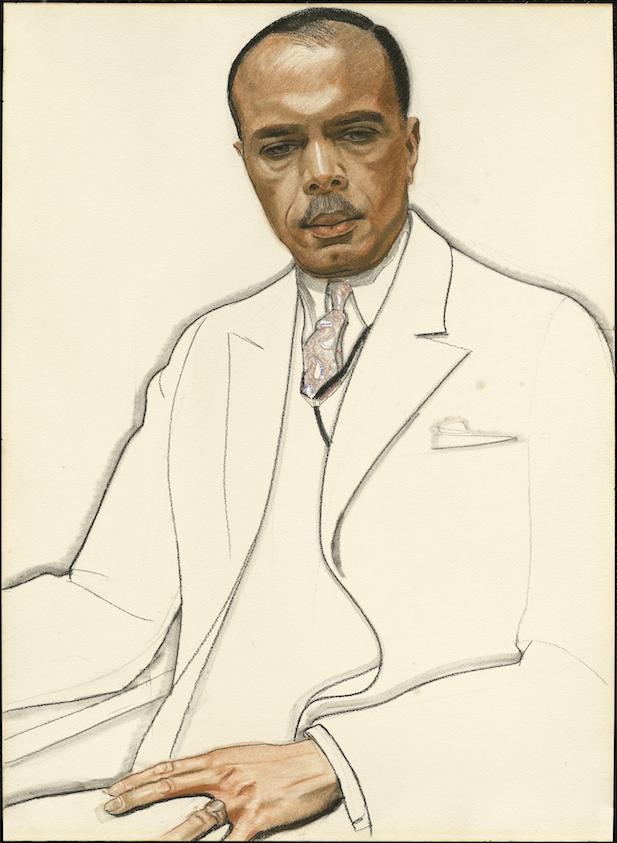
James Weldon Johnson by Winold Reiss

c.1920 / Pastel on illustration board / 30 1/16″x21 9/16″ / National Portrait Gallery, Smithsonian Institution, DC

[There are three embedded links above]

James Weldon Johnson~https://www.poetryfoundation.org/poets/james-weldon-johnson

View original post

Categories
Uncategorized

Jazz Appreciation Month: Album Cover Art~ April 10

Christy's avatarThe Misty Miss Christy

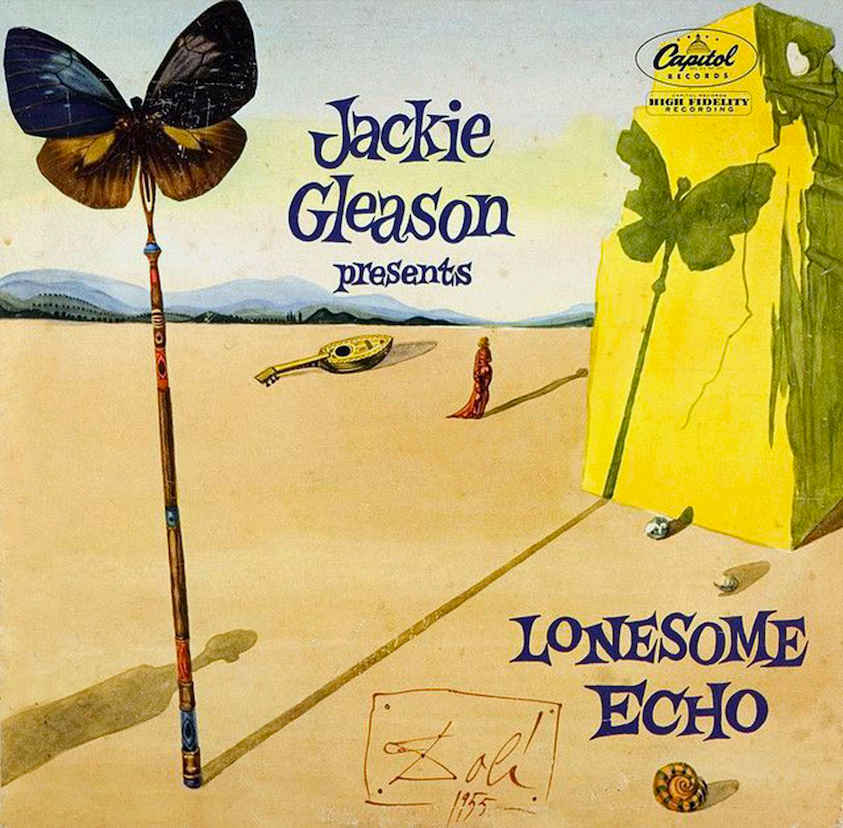
Jackie Gleason Presents Lonesome Echo

1955 / Capitol Records W-627 / 12″ 33 1/3 RPM / Artwork & Liner Notes by Salvador Dalí

[There are four embedded links above]

View original post

Categories
Uncategorized

Farewell Uderzo, illustrator of Asterix

europeancollections's avatarLanguages across Borders

Albert_Uderzo_2012 Albert Uderzo in 2012 (via Wikipedia)

Albert Uderzo, illustrator of the popular Asterix adventures saga, passed away on March 24th at the age of 92, a few months after the comic strip, co-created with René Goscinny, turned 60 years old. This anniversary was much celebrated last year in France. Furthermore, 2020 is the bande dessineé (BD) year at the BnF (this will be covered later in another post).

The Asterix adventures have entertained, amused and captivated generations of young and less young readers. The two protagonists of the series, Asterix and Obelix, and their village of indomitable Gauls who always repel the Roman troops, have become universally known, and their series is one of the most popular created in the history of comics. Its remarkable success has not faded with time, it is the best selling European bande dessinée saga (370 million copies) and the most translated comic (111 languages).

View original post 623 more words

Categories
Uncategorized

Jazz Appreciation Month: Album Cover Art~ April 9

Christy's avatarThe Misty Miss Christy

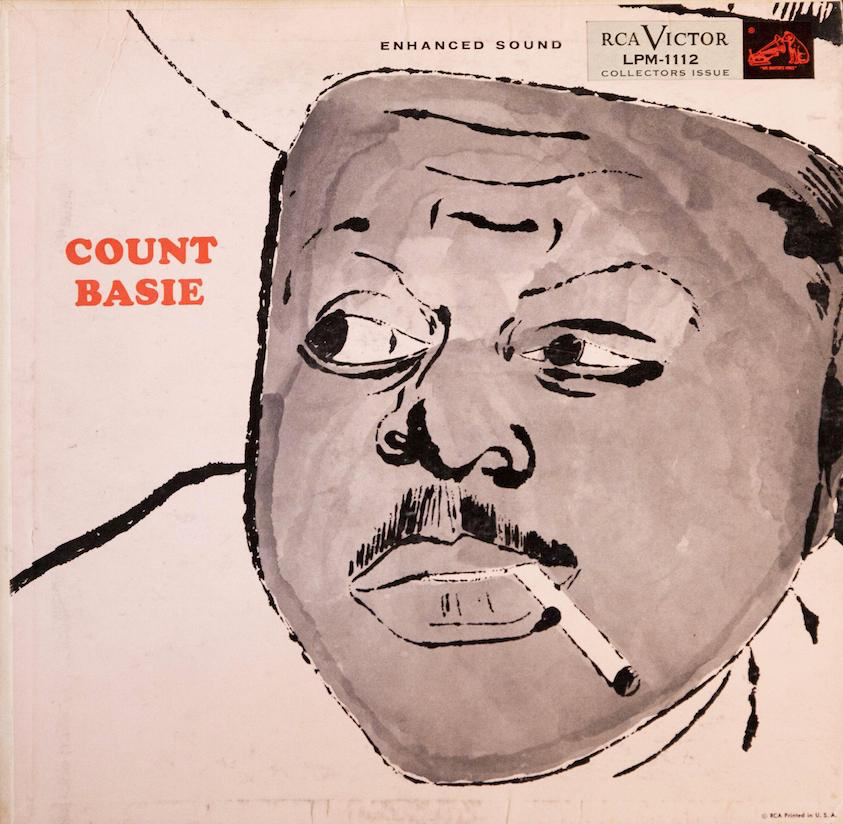
Count BasieAnd His Orchestra

1955 / RCA Victor LPM-1112 / 12″ 33 1/3 RPM / Cover Illustration by Andy Warhol

[There are four embedded links above]

View original post

Categories
Uncategorized

Wayne Gudmundson (b. 1949)

Categories
Classics Literature Poetry Uncategorized

More Lowell and some recommended reading

Sailing Home from Rapallo
BY ROBERT LOWELL
[February 1954]

Your nurse could only speak Italian,
but after twenty minutes I could imagine your final week,
and tears ran down my cheeks….

When I embarked from Italy with my Mother’s body,
the whole shoreline of the Golfo di Genova
was breaking into fiery flower.
The crazy yellow and azure sea-sleds
blasting like jack-hammers across
the spumante-bubbling wake of our liner,
recalled the clashing colors of my Ford.
Mother traveled first-class in the hold;
her Risorgimento black and gold casket
was like Napoleon’s at the Invalides….

While the passengers were tanning
on the Mediterranean in deck-chairs,
our family cemetery in Dunbarton
lay under the White Mountains
in the sub-zero weather.
The graveyard’s soil was changing to stone—
so many of its deaths had been midwinter.
Dour and dark against the blinding snowdrifts,
its black brook and fir trunks were as smooth as masts.
A fence of iron spear-hafts
black-bordered its mostly Colonial grave-slates.
The only “unhistoric” soul to come here
was Father, now buried beneath his recent
unweathered pink-veined slice of marble.
Even the Latin of his Lowell motto:
Occasionem cognosce,

seemed too businesslike and pushing here,
where the burning cold illuminated
the hewn inscriptions of Mother’s relatives:
twenty or thirty Winslows and Starks.
Frost had given their names a diamond edge….

In the grandiloquent lettering on Mother’s coffin,
Lowell had been misspelled LOVEL.
The corpse
was wrapped like panettone in Italian tinfoil.


There is a truly fascinating analysis of this poem in one of my favourite books. That is to say -The Secret Life of Poems by Tom Paulin. This useful book gives an excellent insight into the way poetry works. That may sound a cliche but in Paulin’s review of this poem you can see just how the critic discovers the levels of meaning within the poem and finally expresses his open appreciation of it. There are a number of introductions to poetry that I have found helpful – Ruth Padel has done this for me in her two anthologies-

52 Ways Of Looking At A Poem: or How Reading Modern Poetry Can Change Your Life

and

The Poem and the Journey: 60 Poems for the Journey of Life

Poetry In The Library Michael Hofmann - Events - Shakespeare and ...

Michael Hofmann (photo) is yet another poet and critic as well as a brilliant translator. Yesterday I was reading his introduction to John Berryman’s Selected Poems which was also very clear and enlightening.


Categories
Uncategorized

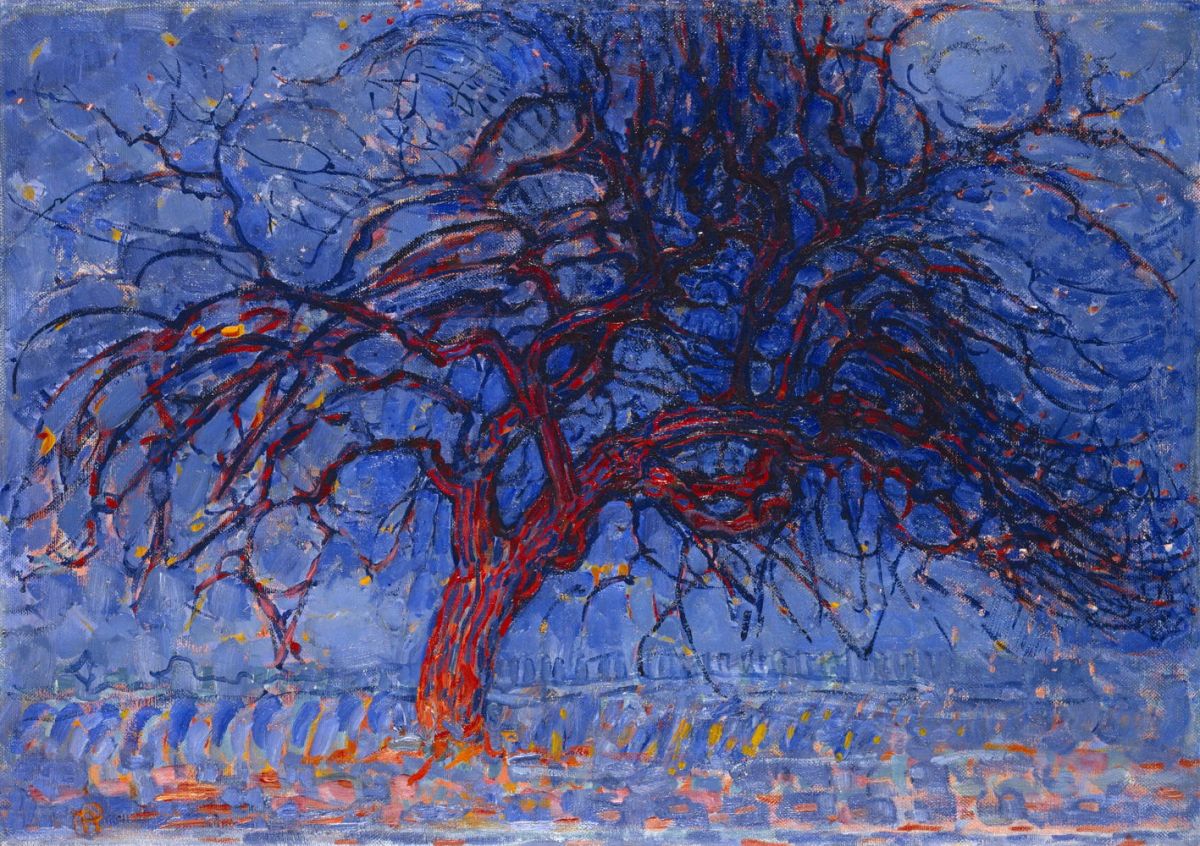
Realist Paintings of Piet Mondrian 2

hoakley's avatarThe Eclectic Light Company

Around 1908, the Dutch artist Piet Mondrian (1872–1944) started to paint his first works which radically departed from the realist landscapes which he had been painting over the previous decade or more. He had also become increasingly attracted to spiritual movements, including the writing of Helena Petrovna Blavatsky, who founded the theosophical movement, and Rudolf Steiner’s Anthroposophy. These emphasise the attainment of deeper knowledge of nature by spiritual means, which was significant to his exploratory painting.

mondrianwinkelmill1908 Piet Mondrian (1872–1944), The Winkel Mill (Pointillist Version) (1908), oil on canvas, 44.4 x 34.2 cm, Dallas Museum of Art, Dallas, TX. Wikimedia Commons.

In this ‘Pointillist’ version of The Winkel Mill which he painted in 1908, his brushstrokes have become shorter and more prominent, resembling the small tiles used by some of the Divisionists, and his chroma has become almost shockingly intense.

Devotion, by Piet Mondriaan Piet Mondrian (1872–1944), Devotion (1908), oil on canvas, 94 x 61…

View original post 463 more words

Categories
Uncategorized

Siddhartha, Herman Hesse

Itsonlychemo's avatarIt's only chemo

If we could divide books into two genres, Odyssey books and Iliad books, Siddhartha would be an exemplary Odyssey book. However, Siddhartha departs from Odysseus. He goes on a circular journey, encounters isolation, a courtesan and a wealthy merchant. He is detained by water and eventually realises that the world is an illusion to be detached from. Odysseus wants no such detachment. Hesse’s biggest argument here is against modern individualism, of which the Odyssey is the founding myth.

Siddhartha is like a well researched, post-Enlightenment version of Rasselas. I think of it as, in some ways, the opposite of Ulysses. It is no surprise that Hesse spent time in an asylum when he was young and spent periods of his life in isolation. Like many other Western wisdom-literature books (think Thoreau) this is a late-Romantic work that probably smuggles its beliefs past casual readers.

Hesse’s real challenge to readers…

View original post 31 more words